

Phone Case Vending Machine with Custom Branding: Price Guide
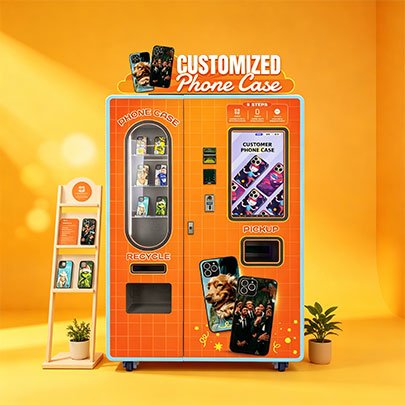
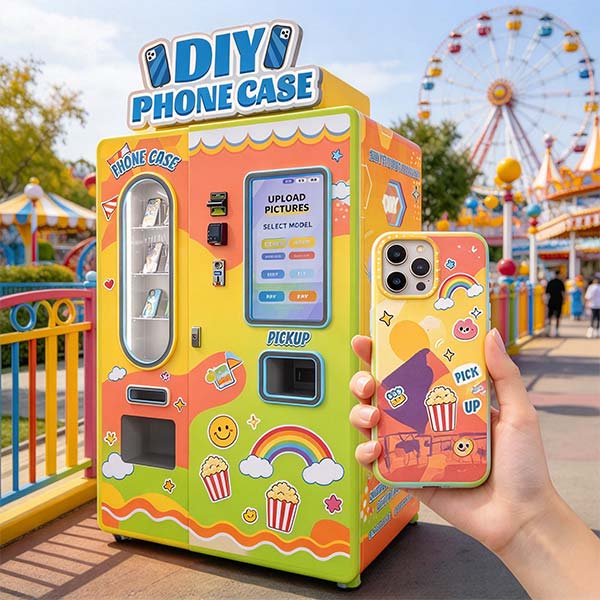
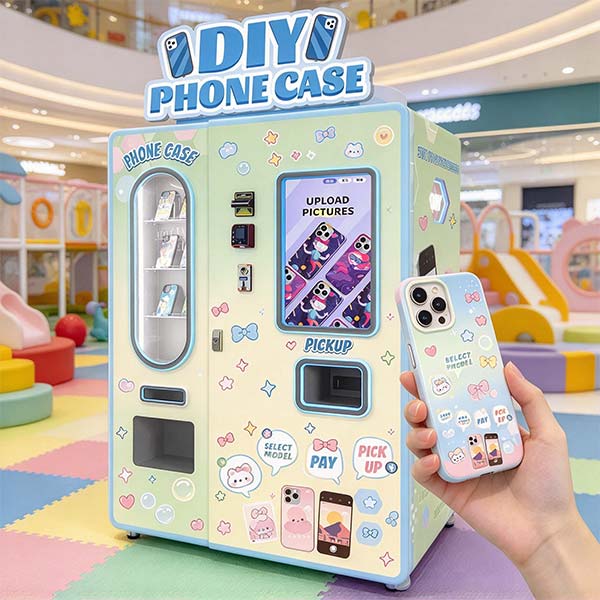
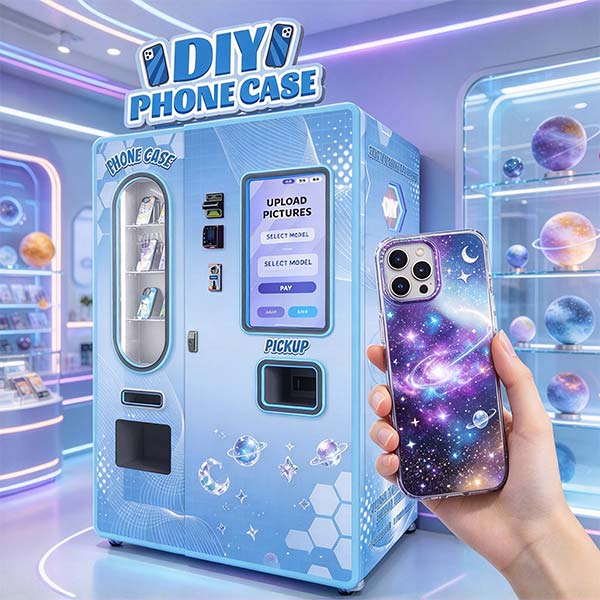
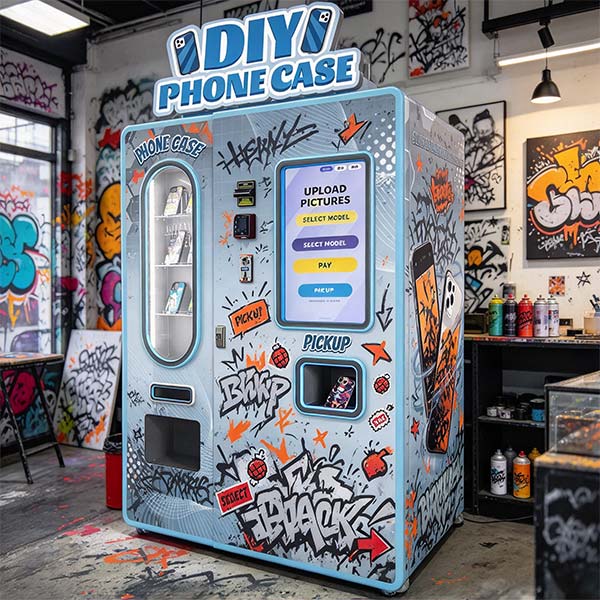
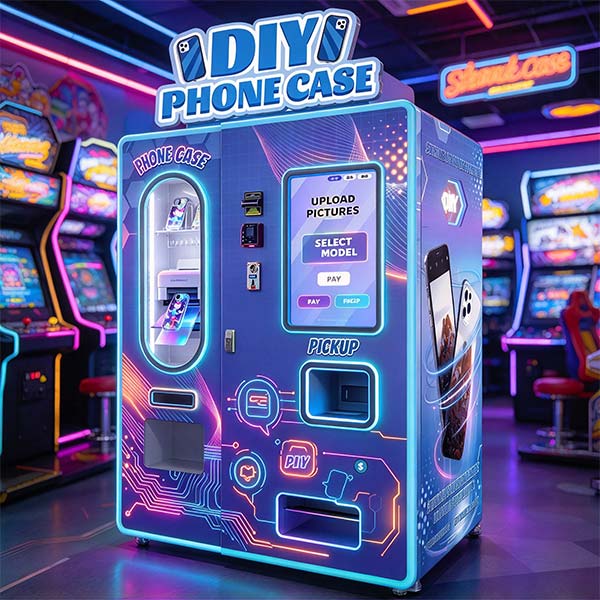
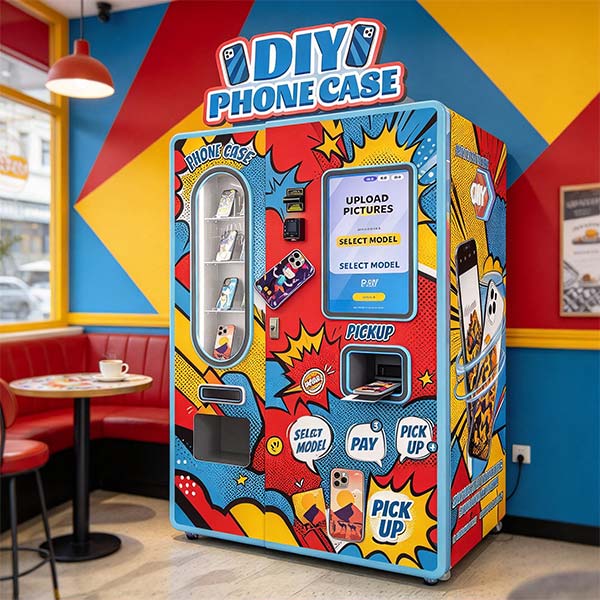
Every project is unique — tell us your needs and we'll provide a tailored solution.
- 📋 Custom specs, branding & color options available
- 🌍 Shipped to 130+ countries worldwide
- 🤝 Dedicated account manager for your project
- 💰 Contact us for the latest promotional pricing
Our partners typically recover their investment within 2–4 months. Start earning from day one with a proven, low-maintenance vending solution.
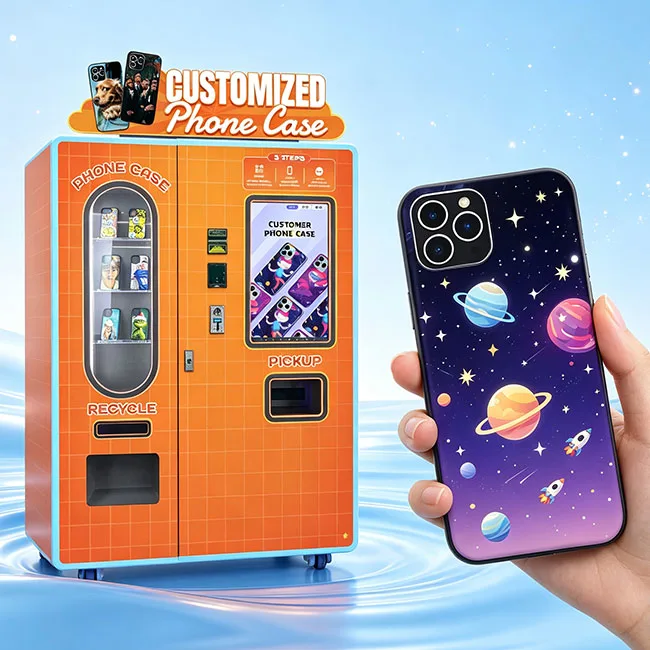
A woman at a mall kiosk scans a QR code with her phone. On the screen she picks iPhone 15, uploads a photo from her camera roll, and taps pay. The card reader beeps, the printer inside gets to work, and a few minutes later she walks away holding a case printed with her own picture. Nobody helped her. There was no counter, no staff member, and no shelf of pre-printed stock to choose from.
That machine is a phone case vending machine with custom branding, and it does two jobs at once. Any machine in this format sells a personalized product on the spot. What the branding adds is the second job: keeping a brand in front of every person who walks past it, from the moment the venue opens until it closes.
Personalization is what stops people. A phone case is already an identity product, since people choose cases to say something about themselves, and a machine that prints their own image turns that choice into something they watched being made. The accessory itself is a repeat purchase, and the question of whether phone cases are in demand answers itself every time a new phone model launches.
The format also answers a problem that online printing never solved: immediacy. A customer who cracks a case at lunch can have a new one, printed with their own image, before the afternoon meeting. That is a different purchase from ordering a case online and waiting three days, and it is why these machines keep finding floor space in venues that already sell accessories.
None of this makes the machine a guaranteed seller. Location, pricing, and the case mix decide that, and the sections below stay honest about which parts the buyer controls and which parts depend on the site. What the machine delivers is a format people stop for, a product nobody else on the floor sells, and a cabinet that carries a brand all day without a salary.
If you are thinking about buying a phone case vending machine with custom branding, the questions that matter are practical. What does the branding cover? What does the hardware do? What do the machine and its consumables cost? Where do these machines work best? And how do you tell a real factory from a trading company? The sections below work through those questions using the manufacturer’s own documentation for the WM880, the model built by Wider Matrix in Guangzhou, China.
What custom branding covers on this machine
Branding on a phone case vending machine with custom branding works on two levels, and the second one matters more than the first.
The cabinet is the advertisement
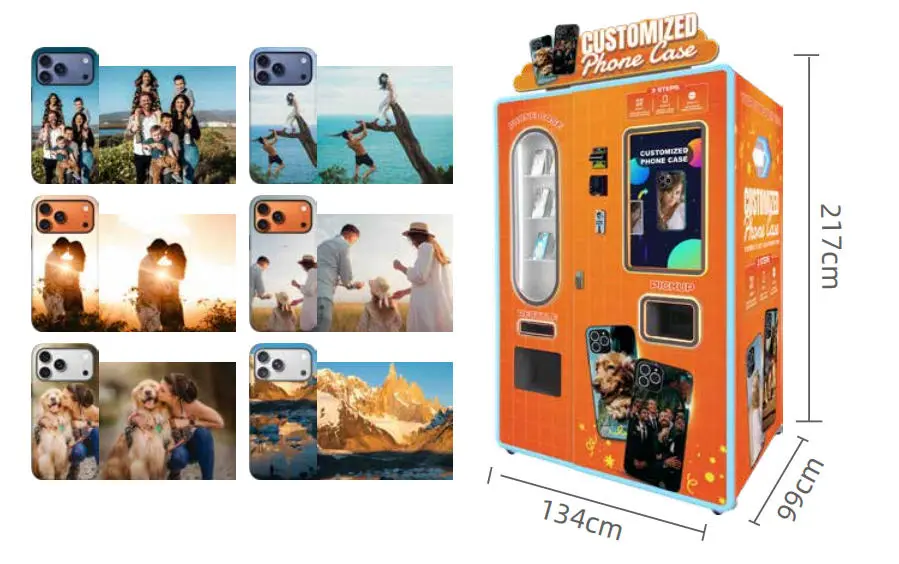
The machine stands 2170 mm tall and 1340 mm wide, which turns the body into a large advertising surface in any venue. The factory applies a full wrap to your artwork: side panels, logo, luminous characters, and color scheme, all matched to your brand guidelines. The minimum order is one unit, so a single machine can carry a complete brand identity without a bulk commitment.
The wrap is not a one-way door. Rebranding later means sending new artwork and applying a new skin, which is how operators keep a machine looking current across seasons and campaigns. The interface is part of the experience too. Screen language can be set to English, Russian, French, Arabic, Korean, and other languages, and the currency setting follows the market where the machine stands.
In high-traffic venues the wrap takes punishment from carts, cleaning crews, and curious hands. Plan a refresh cycle rather than waiting for the wrap to look tired, because a scuffed cabinet reads as a neglected machine even when the printer inside is fine. The luminous characters and the logo panel are the parts people recognize from a distance, so those get replaced first when the skin is redone.
The product carries whatever design you approve
Every case is printed after the customer pays, so the catalog is not a fixed stock list. The default design is the customer’s own photo, and that same upload path can carry any image the rights holder approves: a company logo for corporate gifts, event or team artwork for an activation, or seasonal graphics for a promotion. One machine can print a different design every day of a campaign without a single case being pre-printed in advance.
That is the part resellers rarely explain. They sell the box. The value sits in how the machine produces a different product for every customer while your brand stays on the cabinet, on the screen, and on the packaging. If you want the full OEM picture, the factory’s own write-up on factory customization for phone cases covers the options in detail.
One misunderstanding is worth clearing up early. Custom branding changes how the machine looks and what it prints, not how it prints. The print engine stays an Epson head, the payment stack stays the same, and the dashboard stays the same. Buyers who expect branding to include a different printing technology are comparing the wrong things, and a supplier who implies otherwise is usually covering a weaker specification.
How the machine works from the customer’s side
From the outside, a phone case vending machine with custom branding runs the same four steps for every customer. The customer scans a QR code on the screen, selects the phone model, uploads a picture, and pays. Coin, cash, credit card, NFC, and QR payment are all supported, so the same machine fits markets where cards dominate and markets where cash and QR codes still carry most transactions.
Print positioning is handled by visual recognition, which reads the case and aligns the image so the print lands without white borders. The cases are TPU and PC composite with two optional lens cover protection designs, and the structure is built so cases seat cleanly during printing and loading.
Your side of the operation is lighter than most people expect. Cases load flat with the back facing up, below the red line indicator, and push straight in. At moderate volume a full cabinet of 1020 to 1025 cases lasts between restocks, and the optional camera module means you see slot-level counts without opening the door. Ink sits in a 2000 ml system, so ink handling is periodic rather than constant. The most common interventions are clearing a misfeed and reloading a case that sat crooked, and both take minutes.
Ink deserves its own habit. Order a set before the machine runs dry rather than after, because a machine that cannot print cannot sell, and the 2000 ml system gives you enough warning through the dashboard. Once the machine settles into a steady sales pattern, keep two or three sets on hand and treat ink like any other stock item with a reorder point.
If you want the machine to track its own stock, the optional inventory identification module adds a camera on top that monitors cases per slot and reports the numbers to the dashboard for an extra US$200. That option reduces the manual work of counting, which matters most when one person manages several machines across different cities.
The WM880 specification sheet
The phone case printing vending machine WM880 is documented as follows.
| Item | Specification |
|---|---|
| Model | WM880 |
| Dimensions (W x D x H) | 1340 x 990 x 2170 mm |
| Weight | 380 KG |
| Input voltage | 110V to 220V |
| Power consumption | 410W |
| Ink capacity | 2000 ml |
| Case storage | 1020 to 1025 cases |
| Payment | Coin, cash, credit card, NFC, QR |
| Print heads | Epson F1080, i1600-U1, or i3200-U1HD |
| Remote management | PC and mobile app |
A few of these numbers decide whether the machine fits your venue. At 410W it runs from a standard power outlet. The 110V to 220V range means the same machine works in North America, Europe, and most other markets without electrical changes. The 380 KG weight matters for floor loading and for doorways and elevators during delivery, so measure the route into the room before the machine ships, not after it arrives.
For context on size, the WM880 sits in the middle of the factory’s range. A popcorn machine weighs about 70 KG and a large ice cream machine weighs 640 KG, while this cabinet comes in at 380 KG. That weight buys the case storage and the print system, and it is the number to plan around when you book delivery and check the floor. Most venues can take it, but the check has to happen before the order, not on the delivery day.
Power planning is simple but worth doing early. The machine draws 410W, which is a modest load, but it needs an outlet that nobody unplugs during cleaning. In venues where the only outlet sits behind a display, agree on access in the site agreement, because a machine that loses power overnight loses the morning trade with it.
Print head versions, pricing, and the upgrade path
Three print head versions are available, and the choice changes both the purchase price and the running costs over time. The F1080 version uses the Epson F1080-A1 head and is built for photo resolution with clear detail and vivid color. The i1600 version uses the Epson i1600-U1, which prints three times faster, lasts four times longer, and delivers twice the clarity of the F1080. The i3200-U1HD goes further again on speed and upgrades losslessly from the i1600.
| Version | Print head | Case storage | Price (1 to 3 units) |
|---|---|---|---|
| F1080 | Epson F1080-A1 | 1020 cases | US$4,999 |
| i1600-U1 | Epson i1600-U1 | 1025 cases | US$5,999 |
| i3200-U1HD | Epson i3200-U1HD | 1025 cases | Lossless upgrade from i1600 (+US$680) |
Both versions can add the optional inventory identification camera for US$200, and an i1600 machine can be upgraded to the i3200 head later for US$680. That upgrade path is worth understanding before you buy, because it protects the rest of your investment. If volume grows, you replace the head rather than the cabinet, the screen, and the payment stack.
How to choose between them comes down to expected use. A machine that prints a handful of cases a day, in a hotel lobby or a boutique, does not need the fastest head, and the F1080 covers it at a lower entry price. A machine in a mall corridor or on a campus that prints through the whole day pays back the US$1,000 difference, because the i1600 clears customers faster and the head lasts four times longer before replacement. If you expect to start small and grow, buy the i1600 and keep the i3200 upgrade in reserve.
The choice also changes the customer experience at busy hours. A faster head clears the queue between classes, between films, or between flights, and a customer who waits too long walks away and remembers the machine as slow. Head lifespan changes the operator experience instead: a head that lasts four times longer means fewer service calls and fewer hours of downtime, which is the cost that never shows up on the quotation.
Orders of four to six, seven to ten, and eleven or more units move into volume tiers, so the unit price drops as the order grows. For exact numbers at your quantity, the factory quotes each order. Two references help while you compare: how much does a phone case printing vending machine cost and the breakdown of the price of a custom phone case printing vending machine.
What the consumables cost
The machine is the visible cost of a phone case vending machine with custom branding. The quiet one is the per-case cost, and that is the number that decides whether a location works.
| Quantity | Standard case | Magnetic case |
|---|---|---|
| 1,000 pieces | US$1.30 each | US$2.30 each |
| 5,000 pieces | US$1.20 each | US$2.20 each |
| 8,000 pieces | US$1.10 each | US$2.10 each |
Ink is the other consumable. The standard version runs Epson UV hard ink in four colors at US$100 per set, and the F1080 version runs six colors at US$160 per set. With 2000 ml of ink capacity in the machine, ink changes are a periodic task rather than a daily one.
Put plainly, a standard case costs between US$1.10 and US$2.30 depending on volume and type, and a magnetic case costs about a dollar more. What you charge for a printed case is your decision, and the honest answer is that results depend on your location, your pricing, and your foot traffic. Operators who want to model the numbers properly should read the analysis of what is the profit margin on phone cases and the realistic profit guide for custom phone cases before committing to a site.
A simple way to size the consumable budget is to multiply expected case volume by the case price at the tier you would order. A machine selling 300 cases a month at the 1,000-piece standard price spends about US$390 a month on cases. The same volume bought at the 5,000-piece tier, once stock justifies the larger order, costs about US$360. The monthly saving looks small until you run several machines, and the ink cost sits on top at US$100 or US$160 per set depending on the version. None of this is a revenue projection. It is the cost side of the sheet, which is the half buyers can control.
Order consumables from the same source as the machine where you can. Case dimensions and feed geometry are matched to the cabinet, and a batch of cases that sits a millimeter proud of the red line will misfeed and waste prints. Storage is simple: keep cases flat, dry, and out of direct sun, and rotate stock so the oldest cases print first.
Magnetic cases cost about a dollar more than standard cases, and the decision comes down to the phones in your market. Where magnetic accessories are common, the magnetic case is an easy upsell and customers pay the difference without argument. Where they are rare, the standard case does the job at a lower cost per sale. Stocking both in a rough split, weighted toward whatever your market prefers, covers most customers without tying up cash.
Which phones the cases fit
A case machine is only as useful as its model coverage, and this is where many cheap imports fall short. WM880 cases fit iPhone 16, iPhone 15, iPhone 11, and other Apple models, plus Samsung, Google Pixel, Xiaomi, Huawei, and OPPO. The TPU and PC composite holds print quality and survives daily handling better than plain plastic.
Print quality and case quality fail together. A warped or thin case gives the UV ink an uneven surface, and the customer notices immediately because the print sits on the back of the phone they carry every day. The composite used here is stiff enough to feed reliably and flexible enough to install without tools. The two lens cover designs matter more than they sound: a raised lip around the camera cutout is the difference between a case that protects a lens and one that scratches it.
Replenishment efficiency is the quieter half of model coverage. The case structure is optimized so stock loads quickly and seats consistently, and that matters when a restock happens during opening hours with customers waiting. Availability is the other half: a customer whose model is out of stock does not buy a different case, they walk away, and the machine never records the sale it lost. Keep the fast-moving models stocked first and review the mix monthly against real sales.
UV hard ink is the standard for this format because it bonds to the case surface and stands up to daily handling, which matters when the print is the product. The customer judges the machine by the case they walk away with, and a print that smudges or flakes within a week undoes the whole demonstration. That is why the ink specification and the case material belong in the same conversation as the machine price, not in a footnote.
When you plan your first case order, match the mix to your market. A mall in the United States skews heavily toward recent iPhone and Samsung models, while other markets carry a wider spread of Android brands. Buying the wrong mix ties up cash in cases nobody picks up, so ask the factory for a recommended starting mix based on your destination. For background on the materials themselves, see what material to print a phone case.
Payments, remote management, and running without a counter
The payment stack covers coin, cash, credit card, NFC, and QR code. Between card readers and QR payment, the machine serves markets at different stages of cashless adoption, which matters if you plan units in more than one country.
The management system runs on PC and phone. The dashboard shows revenue statements by day, week, and month with charts, complete order history and status, live machine status including printer operation, alarms, and connectivity, and promotion settings where you set discount rules, time periods, and quantity limits. Currency and language settings adjust per market. The mobile app adds remote monitoring of equipment status, sales data, and print records, so you can check a machine in another city without driving to it.
Multi-currency support means one machine can run in a market where prices are shown in dirhams and another where they are shown in euros without new hardware. The language list covers English, Russian, French, Arabic, and Korean among others, which matters at venues with heavy tourist traffic. Promotion settings are the marketing lever most operators underuse: time-limited discounts, quantity limits, and discount rules can be pushed to the machine from the dashboard, so a campaign change no longer means a site visit.
Day to day, the dashboard answers three questions without a site visit. What sold, what is running low, and whether anything is wrong. The revenue statement breaks sales down by day, week, and month with charts, so a slow Tuesday shows up next to a strong Saturday instead of averaging out. The order history lists every transaction with its status, which settles questions about a declined payment or a failed print. The machine status view reports printer operation, alarms, and connectivity, so a machine that drops offline raises a flag before a customer finds it dead.
When something does go wrong at the machine, the record already exists. Every transaction sits in the order history with its status, and print records are visible through the app, so a disputed payment or a failed print can be checked without opening the cabinet. The customer sees a screen that tells them what happened, and you see the same record from wherever you are. That shared record is what makes remote support practical rather than guesswork.
Running without a counter does not mean running without management. Someone still restocks cases and ink, clears the occasional misfeed, and checks the dashboard. What the machine removes is the staffed point of sale: the customer completes the purchase alone, at two in the afternoon or two in the morning. The optional inventory identification module cuts the manual work further by tracking stock per slot automatically.
Where these machines earn their floor space
A phone case vending machine with custom branding works where people wait, walk with time to spare, or gather in numbers. Shopping malls are the classic placement, followed by airports and transit hubs, university campuses, cinemas and entertainment venues, hotels, tourist areas, and event floors. Gift shops and concept stores use them as a service point that needs no staff. The placement notes in custom phone case vending machine for malls and mall phone case vending machines go deeper on venue detail.
In malls, the machine works best near fashion and phone accessory tenants, where the intent to buy a case already exists. Airports and transit hubs deliver constant new traffic, though rents are higher and the customer is usually in a hurry. Campuses deliver volume at price-sensitive levels, and cinema and entertainment venues catch people before and after a film. Hotels and tourist areas sell the memory more than the case, which is why the photo upload matters there. Event floors are the shortest placements with the highest intensity: a three-day activation can print hundreds of cases, and the wrap becomes part of the booth design.
Three things decide whether a site works. Dwell time beats raw foot traffic: a corridor with ten thousand passers-by an hour can lose to a food court corner where people sit for half an hour with their phones out. The commercial deal matters just as much, since some venues charge rent, some take a revenue share, and some place the machine for free because it improves the customer experience, and the spread is wide enough to negotiate in both directions. Then there is the practical fit: the machine needs a standard power outlet and a delivery route that can handle a 380 KG cabinet measuring 1340 mm wide and 2170 mm tall.
Permits and site permission vary by city and country, and that check belongs at the start of the process rather than after the machine arrives. Useful reading includes where to put vending machines, vending machine location strategies, and where you can legally put a vending machine.
When you approach a venue, bring three things: the foot traffic and dwell time argument for your spot, a sample printed case, and a mockup of the machine with your wrap. Venue managers approve machines they can picture in their space, and a sample case does more selling than any spec sheet. If the venue asks for rent, ask what it includes, because security, cleaning, power access, and placement near the entrance all change what a site is worth. A machine tucked behind a pillar is a different asset from one facing the main walkway.
Temporary placements follow the same logic with a shorter clock. Event floors, festivals, and pop-up activations run for days rather than years, and the wrap can be built for the event instead of the year. The machine still needs power and a level floor, and the site agreement still needs to be in writing, but the sales intensity during a well-run event is hard to match anywhere else. Some operators keep one permanent site to cover the base costs and add event placements on top.
How custom branding gets applied
The process for a phone case vending machine with custom branding starts before the machine is built. You send the factory your logo files, brand colors, and any campaign artwork. The factory prepares the wrap layout for the cabinet and the screen for your approval, then applies the branding during production. The minimum order is one unit, so branding is not reserved for large fleets.
Send vector files where possible, because a low-resolution logo turns into a blurry wrap at full cabinet size. Ask for a layout preview before production and check three things: the logo is not cut by a panel seam, the text is readable from a distance, and the colors match your brand values rather than the closest available vinyl shade. Lead times depend on order size and the complexity of the artwork, so confirm the schedule in writing along with the price.
A few practical notes from operators who have done this well. Keep the wrap text short and readable from a distance, because a phone number nobody can read from three meters away is wasted space. Treat the screen as the main advertising surface, since it is what customers look at while they wait for the print. Plan the wrap as part of the marketing calendar: a seasonal skin keeps the machine looking maintained, and the dashboard’s promotion settings let you run time-limited discounts that match the campaign. The machine ships fully assembled and tested, so once it is plugged in and loaded, it starts working.
Who buys phone case vending machines
The buyer list is broader than most people assume. Vending route operators add the format because a personalized product sits alongside snacks and drinks without competing for the same purchase. Retail chains and mall operators place branded machines as a customer service that needs no staff. Marketing and event agencies use them at activations, where printing a branded case on site does more for a booth than any banner. Franchise and gift businesses run them as an extra revenue line, and corporate buyers use them to print logo cases for staff and promotions.
For a vending route operator, a phone case vending machine with custom branding adds a category that nobody buys instead of a drink, so the snack business stays intact. Retail chains like it because a branded machine improves the customer experience without adding headcount. Agencies like it because the machine is the activation: the printing happens in front of the booth, and the queue becomes the attraction. Campus retailers like it because students are exactly the audience that buys cases on impulse when a phone is new or a term is starting.
Each buyer type should evaluate the machine against its own bottleneck. A route operator checks route density and restocking time, because labor per machine is the constraint. An agency checks delivery and setup logistics, because an activation lives or dies on the schedule. A retailer checks floor space and power, because the machine competes with shelving. A corporate buyer checks case model coverage and artwork handling, because the output is a branded item with a deadline. The hardware serves all four, but the questions differ.
Whatever the buyer type, the sensible first order is one machine in the best available site. One machine produces real data: which case models move, which hours are busy, how often the cabinet needs a restock. That data shapes the second order far better than any projection, and it costs one machine instead of five. The operators who struggle are usually the ones who scaled before the first site taught them anything.
Two business models sit behind most of those buyers. The first is pure placement revenue: site the machine, set the price, and let the format do the selling. The second is the service model, where the machine prints cases on demand for customers who bring their own designs or order brand artwork, closer to the print on demand cell phone cases business than to traditional vending. Both models work, and the same hardware serves either one. If you are weighing the first model against starting a conventional route, the step-by-step advice in how to start a vending machine business is a useful comparison.
Buying from the factory or from a trading company
A phone case vending machine with custom branding is sold by factories, trading companies, and resellers, often with the same photos and similar prices. The difference shows up when something breaks or when you want to change the machine later.
A factory controls the specification, the spare parts, the firmware, and the upgrade path. A trading company can place an order, but when a print head fails or a wrap needs reprinting, the answer depends on someone else’s schedule. The difference also shows in the boring middle of the machine’s life. Print heads wear. Card readers need replacement units. A wrap gets damaged in transit or by a cleaning cart. A factory stocks those parts because it built the machine, and it can tell you the price of a print head before you buy the first cabinet. A reseller often discovers the answer after the failure, which is the worst moment to start negotiating.
Before you pay a deposit to any supplier, ask five questions. Who manufactures the machine, and can the factory be verified? Can the print head be upgraded later, and at what price? What do spare parts cost, and how long do they take to ship? What does the warranty cover, and for how long? What support hours are offered, and in which languages?
Verifying a factory is easier than most buyers think. Ask for a video call walk-through of the production line, check the business registration, and ask for references from buyers in your region or at least your continent. A factory that ships to more than 130 countries has customers who will take a reference call, and it has shipment records it can show. A supplier who cannot arrange any of these is a supplier whose answers to the five questions above deserve extra scrutiny.
Factory-direct pricing also means the tiers are visible. A single machine, a handful of machines, and a larger fleet sit at different prices because production and shipping economics change, and the factory states an entry price rather than hiding everything behind a negotiation. That transparency is useful when you compare quotes, because a supplier who will not state any starting price is usually planning to judge how much you are willing to pay.
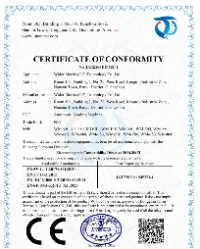
Wider Matrix runs its own factory in Panyu, Guangzhou, has worked on AI vending machines and smart robots since 2016, and has shipped more than 3,000 units to over 130 countries with a team of more than 50 engineers. The WM880 carries CCC, CE, ISO, RoHS, and PSE certifications, and the company holds five or more independent R&D patents and more than 30 industry awards.
Support is the part overseas buyers worry about most, and it is where the factory model pays off. The machine comes with a one-year warranty and lifetime technical support, backed by round-the-clock manual support that answers at any hour. Installation training, video guides, and remote monitoring through the app are part of the package. Published shipment records cover orders to markets including Germany, France, Poland, the United States, the United Kingdom, Canada, Australia, and the Middle East, with 15 units shipped to France in a single order as one example.
For a deeper comparison, read choosing the right phone case vending machine manufacturer, the overview of China phone case printer manufacturers, and the checklist in finding the most reliable phone case vending machine supplier.
Common mistakes when ordering
Most bad purchases of a phone case vending machine with custom branding come from five avoidable decisions.
Comparing sticker prices only. The F1080 saves US$1,000 against the i1600, but it prints slower and has a shorter head life. At real volume the cheaper machine can cost more per case, so compare the head, the warranty, and the consumable prices, not just the cabinet price.
Buying the wrong case mix. A stock order built for the wrong market fills the cabinet with cases that sit. Ask for a recommended mix based on your destination before the first order ships.
Ignoring the physical logistics. The cabinet weighs 380 KG and stands 2170 mm tall. Doorways, elevators, and floor loading decide whether the machine reaches the room, and that check costs nothing before shipping.
Skipping the permit and site agreement check. Permission rules differ by city, and a machine that arrives before the paperwork is a machine in a warehouse.
Accepting a plain wrap without an approval step. Branding that goes straight to production without your sign-off is how typos end up on a cabinet for the next five years.
Other machines from the same factory
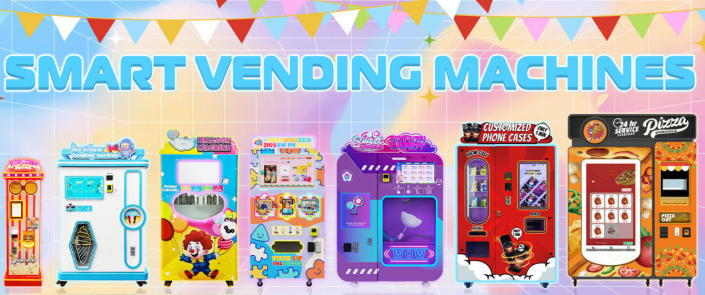
If you already run a route or want a second category in the same venue, the factory builds several other unattended machines on the same payment stack, dashboard, and support model as the phone case vending machine with custom branding.
| Machine | Model | What it sells | Price |
|---|---|---|---|
| Popcorn vending machine | WM680 | Fresh popcorn in about 120 seconds | US$1,800 (1 to 5 units) |
| Balloon vending machine | WM688 | Inflated balloons, 360 capacity | US$3,200 |
| Protein shake machine | WM186 | Shakes in 60 seconds, 7 hoppers | US$4,150 |
| Cotton candy vending machine | WM980 | 36 candy patterns | US$4,800 (WM980+ US$4,999) |
| Ice cream vending machine | WM550 | Cups in 15 seconds, up to 300 cups per batch | US$5,799 (WM550+ US$6,799) |
| Nail printer vending machine | WM860 | Printed press-on nails | US$5,800 (1 to 4 units) |
| Jigsaw puzzle machine | WM520+ | Printed paper puzzles | US$5,500 (1 to 5 units) |
| Smoothie machine | WM666 | 63 flavors, 90 seconds per cup | Contact for current price |
Model pages with full specifications: popcorn vending machine WM680, automatic ice cream vending machine, and customized jigsaw puzzle vending machine WM520. Mixing categories in one venue can raise revenue per square meter, though each machine still needs its own power, space, and restocking routine.
A second machine in the same venue makes sense when the purchase moments do not overlap. A case machine next to an ice cream or popcorn machine catches different urges at different times, and the venue deals with one operator instead of two. It makes less sense when the two machines compete for the same wallet or the same floor space, so walk the site before you double the order.
The range matters for another reason: it shows what the factory builds. A company that ships only one machine has one product to defend. A factory with popcorn, ice cream, cotton candy, balloon, nail printing, puzzle, protein shake, and smoothie machines is building payment systems, dashboards, and support processes that get tested across categories, which is why the same support team can answer a question about a print head on one machine and a sugar tank on another.
Order a phone case vending machine with custom branding for your market
The next step is a conversation about your numbers rather than a generic price list. Send the factory your target market, the quantity you are considering, your branding requirements, and the payment methods your customers use.
Orders start at a single machine, so a one-unit test in a strong location is a reasonable way to begin. What you get back after you write in is a written quotation covering the machine version, the branding layout for your artwork, consumable prices at your volume, and shipping terms for your destination. If you are planning more than one machine, say so in the first message, because volume tiers apply to larger orders. If you are comparing suppliers at the same time, ask each of them the same five questions and compare the answers side by side, because the gaps show up quickly. Contact Wider Matrix with your details, and if you want to check the company first, the about Wider Matrix page covers the factory and its history.
Note: Product specifications, pricing, and configurations are subject to change as we continuously improve our technology. Contact our sales team for the latest pricing, promotions, and a custom quote.
Specifications
| Model | WM880 |
| Device Dimensions | 134cm × 99cm × 220cm |
| Device Weight | 220 KG |
| Power | 410W |
| Voltage | 220V / 110V (Optional) |
| Payment Methods | Coin / Cash / Credit Card / NFC / WeChat / Alipay |
| Printing Technology | 6-color UV printing |
| Printing Resolution | 1440 DPI |
| Printing Speed | 2–3 minutes / piece |
| Supported Phone Models | 96 mainstream models |
| Case Storage Capacity | 300–500 pieces |
| Display Screen | 27-inch touch display, supports video ad rotation |
| Remote Management | Supports cloud monitoring and management |
Product Certificates
CE
JAT2209011545EC-1
2022.09 – 2027.09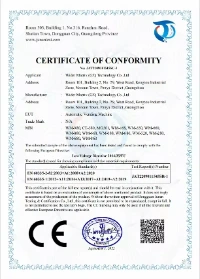
CE
JAT2209011545SC-1
2022.09 – 2027.09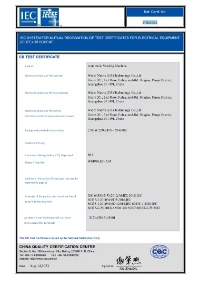
CB
CN61098
2023.08 – 2028.08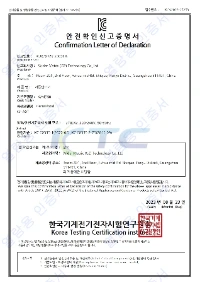
KC
XU070729-23001A
2023.08 – 2028.08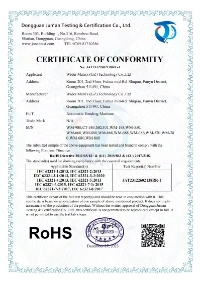
RoHS
JAT23122602138RC-1
2023.12 – 2028.12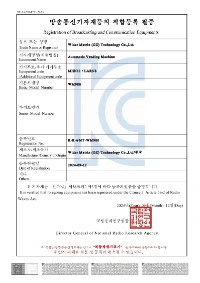
KC
R-R-wMT-WM980
2024.09 – 2029.09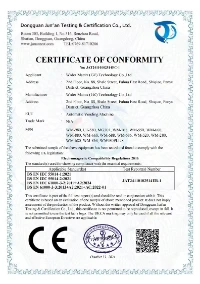
UKCA
JAT24110102514EC-1
2024.10 – 2029.10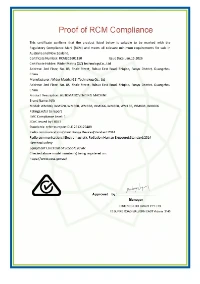
RCM
RCM202601150
2026.01 – 2031.01Company Introduction
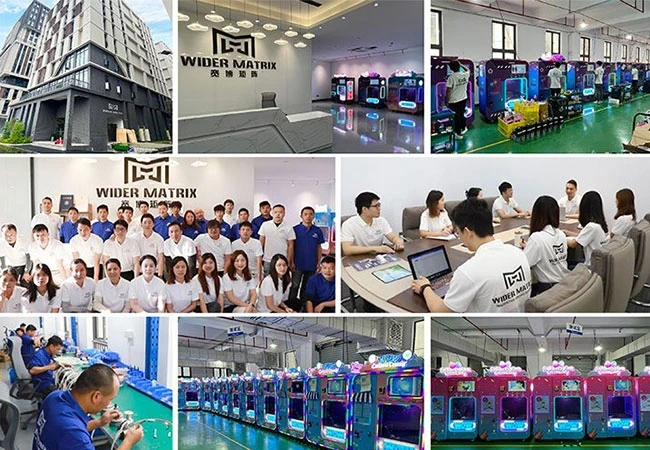
Wider Matrix (Guangzhou) Technology Co., Ltd. is a scientific and technological enterprise that attaches importance to R&D and user experience. We started to research and develop vending machines in 2016, and achieved a leading position in the field of unattended vending machines.
In 2019, we manufactured the first automatic cotton candy vending machine. After testing in domestic market, refining our product for years, the performance of our machines are stable enough and reach the standard for export finally. Till now, our machine has been exported to more than 130 countries.
All machines support remote control, which has the advantages of easy operation, convenient maintenance and high operating efficiency.
Exclusive Services
Overseas Support Service
Local transfer warehouse support, ensuring your operational stability.
Custom Design
We offer machine appearance customization, branding, and large-scale custom packaging services.
Initial Tools & Spare Parts Kit
Machine comes with complementary tools and spare parts kit, including initial consumables package.
Functional Customization & Software Optimization
Custom functionality based on client needs, including hardware and software optimization updates.
Lifetime Technical Support & Updates
We provide lifetime technical support and software update services for all customers.
Frequently Asked Questions
How much does a phone case vending machine with custom branding cost?
Can the machine run without staff on site?
What parts of the machine can carry my branding?
Which phone models do the cases fit?
How much do the consumables cost?
What certifications does the machine carry?
What after-sales support comes with the machine?
Can I upgrade the print head later instead of buying a new machine?
User Reviews
ok so honestly i was kinda nervous spending this much on a vending machine but wow... worth every penny lol. delivery took about 2 weeks to get to my shop in Austin and the packaging was solid. got it set up in like 3 hours and its been running smooth since. my customers love it
So I bought this for my barbershop, figured guys waiting for cuts would grab stuff right? well gotta say it actually works better than I expected, been doing about $200 a week in sales which is pretty good for basically doing nothing lol. the touchscreen looks really nice and WiderMatrix helped me customize the wrap with my shop logo. only thing is wish the setup manual was more detailed, had to call support twice but they were cool about it. overall yeah would recommend
I am buy this machine for my phone repair shop in Manila. Was worry about shipping to Philippines but WiderMatrix arrange everything nice. Machine is very good quality, strong build. My customer can buy phone case and screen protector easy now. Sales good, about 30-40 case per month. Support team answer my question fast even with time difference. Very happy!
Machine works fine and looks great in my mall location, but honestly the shipping was kind of a nightmare. took almost 5 weeks when they said 2-3 and the freight company was hard to deal with. once it got here setup was easy enough and its been reliable for 3 months now. knocked off a star for the shipping hassle but the machine itself is solid
Listen if you're on the fence about buying one of these just DO IT. I put mine in a busy laundromat in Phoenix and its been a cash cow. phone cases sell like crazy, markup is insane compared to what I pay for inventory. already paid for itself in 4 months!! the payment system works perfect, takes cards and apple pay no problem. my only complaint is I wish I bought TWO of them honestly lol
Really impressed with the build quality on this thing, its heavy duty and looks premium. was worried it'd look cheap but the custom branding came out amazing, very professional looking. Setup was straightforward, took me and my brother maybe 2 hours to get it going. Had one issue with the card reader after about a week but WiderMatrix support sent a replacement part fast and walked me through installing it over video call. been running perfect since then. 5 stars easy, would buy again
Why Choose Us
Why Operators Choose WiderMatrix
See how we compare to the industry average
| Feature | WiderMatrix | Industry Average |
|---|---|---|
| Machine Lifespan | ✓ 2× longer than standard machines | Standard lifespan |
| Maintenance | ✓ Ultra-low cost + remote diagnostics & alerts | High maintenance cost |
| Build Quality | ✓ Premium materials + patented technology | Standard manufacturing |
| Certifications | ✓ CE, UKCA, RoHS, KC, PSE, ISO, FDA (7+) | 1–2 certifications |
| Technical Support | ✓ 24/7 dedicated team + video guidance | Email only |
| AI Management Platform | ✓ Real-time monitoring, analytics & remote control | Basic / no dashboard |
| Software Updates | ✓ OTA lifetime free updates | Paid upgrades |
| Warranty | ✓ 1 year (no part return required) | 3–6 months |
Latest Articles
 NEW
NEW
How Much to Purchase a Vending Machine? 2026 Price Guide
A buyer’s guide to vending machine pricing in 2026 with real factory prices for nine machine types, the...
Oct 12, 2026 NEW
NEW
High Traffic Vending Machine Locations: How to Choose
A practical guide to picking high traffic vending machine locations, covering the difference between walking traffic and buying...
Oct 12, 2026 NEW
NEW
What factors affect vending machine profitability? 7 Numbers That Decide It
Vending machine profitability is decided by cost per sale, throughput, location costs, uptime, refill frequency and payment mix...
Oct 11, 2026Popular Picks
 HOT
HOT
Print on Demand Cell Phone Cases: The Ultimate Guide to Customization & Business Opportunities
The demand for personalized products is skyrocketing, and print on demand cell phone cases stand at the forefront...
Sep 17, 2025 HOT
HOT
Mall Phone Case Vending Machines: Profit Guide 2025
Table of Contents Why Every Mall Needs Phone Case Vending Smart Buying Guide: 5 Key Selection Factors Inside...
Jun 21, 2025 HOT
HOT
Are Phone Cases in Demand? A 2025 Market Analysis & Business Guide
If you’re considering entering the mobile accessories market or looking to expand your retail offerings, the fundamental question...
Sep 23, 2025