



A practical guide to picking high traffic vending machine locations, covering the difference between walking traffic and buying traffic, how foot traffic patterns differ by venue type and machine category, how to count and forecast demand before signing a lease, what placement costs and permits look like, what power and floor loading each machine needs, and the warning signs that a busy spot will still lose money.
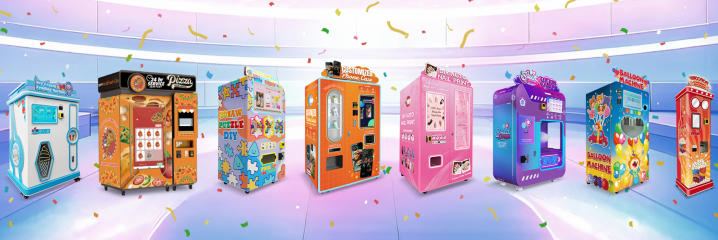
A busy spot and a paying spot are not the same thing
Two machines can sit sixty metres apart and earn very different amounts of money. One stands near a mall entrance where people walk past with full hands and their eyes fixed on the door. The other stands by a cinema lobby where a family waits twenty minutes for a show to start. Both places are crowded. Only one of them sells.
That gap sits at the centre of every profitable route. High traffic vending machine locations are not hard to find in any city of reasonable size. Almost every shopping street, station concourse, and leisure park has a dozen of them. The skill worth developing is judging which of those busy spots will convert passing feet into payments, and then putting the right machine in front of the behaviour you found.
The moving parts are manageable. You need to separate buying traffic from walking traffic, rank venue types by how reliably they pay in your market, measure a candidate spot before you sign anything, understand what a location costs and what the law allows, and match the equipment to the crowd. The specifications quoted here come from current product data, so the arithmetic lines up with the units you would actually install.
Walking traffic, waiting traffic, and buying traffic
Foot traffic is usually reported as a single number. A venue will tell you that forty thousand people pass through each week, and that number means almost nothing on its own. What matters is how those people move, why they are there, and whether the machine answers a need at the moment they see it.
Think about four broad patterns.
Commuter traffic moves fast and in one direction. People on their way to a platform or out of an office have a destination and a schedule. They rarely stop for anything that is not food, drink, or a necessity. A machine that needs three or four minutes of attention will starve here even though the corridor is packed from seven to nine and again from five to seven.
Destination traffic arrives with intent. A gym member came to train. A cinema guest came to watch a film. A family came to the water park. Intent does not guarantee a purchase, but the person is already in a spending frame of mind, and the machine can attach to the reason they came.
Captive traffic is the most valuable pattern, and it is the one most operators overlook. Captive traffic is people who cannot leave and have time to fill. A passenger at a gate who arrived early, a parent waiting through a ninety-minute swimming lesson, a patient in a clinic queue, a diner waiting for a table. They are stationary, bored, and often willing to spend a few dollars to pass the time. A nail printing machine that takes five minutes per customer does badly in a corridor of walkers and very well in a waiting area full of people with nothing else to do.
Leisure traffic drifts. Shoppers on a weekend, tourists following a map, families at a festival. They browse, they slow down, they act on impulse. This is where colourful, visible machines earn their keep, and where the appearance of the unit does as much work as its location.
Ranked by how often they convert, the order usually runs captive, then destination, then leisure, then commuter. A spot with thirty thousand commuters a week can lose to a spot with four thousand waiting people, because the second group has time and attention to spare.
There is one more factor worth naming: the distance between the impulse and the machine. If someone decides they want a cold smoothie and the machine is behind them or around a corner, the moment passes. High traffic vending machine locations work best when the machine is inside the decision zone, meaning it enters the field of view before the person reaches the exit, the gate, or the car park ramp.
That distance is what separates the high traffic vending machine locations you read about from the ones that actually pay. A count is a starting point. The decision zone is what turns it into money.
What counts as high traffic changes with the machine
Operators who run snack and drink machines learn to think in units per day per location. Specialty machines behave differently, because the customer has to stop, interact, and wait. A machine that occupies a customer for five minutes needs a very different crowd from one that completes a sale in twenty seconds, and both need a different crowd from a machine that simply needs to be seen by a lot of hungry people.
The table below sets out what each machine in the Wider Matrix range needs from a location. The time figures come from the machine specifications rather than from guesswork.
| Machine | What it sells | Time per customer | Traffic it needs | Strongest window |
|---|---|---|---|---|
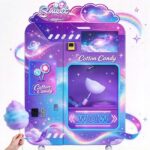
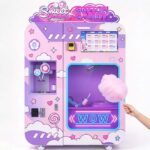
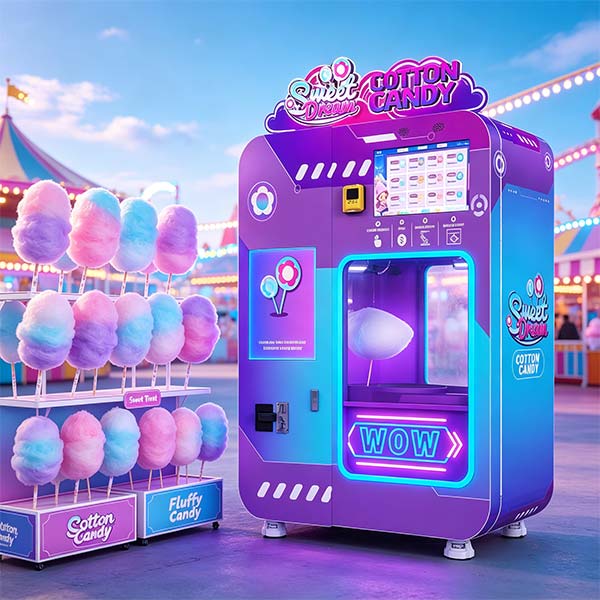
| Cotton candy (WM980, WM980+, WM668) | Robotic cotton candy, 36 patterns | A short wait while the arm works | Families and groups who will watch the process | Afternoons, weekends, school holidays |
| Popcorn (WM680) | Fresh air-popped popcorn, roughly 40 g per 32 oz cup | 120 seconds from order to collection | Cinema, event, and walk-through crowds | Evenings and event nights |
| Ice cream (WM550, WM550+, small unit) | Soft serve with sauces and toppings, up to 300 cups per batch | 15 seconds of cup dispensing per order | Warm-weather leisure traffic with children present | Midday to evening in summer |
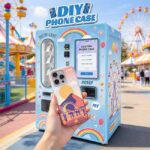
| Phone case printing (WM880) | Photo printed phone case in TPU and PC, 1,020 to 1,025 stored | A few minutes while the print completes | Browsers with three to five minutes to spare | Weekends, tourist hours, mall evenings |
| Jigsaw puzzle (WM520, WM520+) | Photo puzzle printed on paper or wood, 3 minutes per sheet | About 3 minutes | Gift buyers, tourists, couples on a day out | Weekends and holidays |
| Balloon (WM688) | Inflated cartoon balloon, 360 pieces across 6 slots | Under a minute | Children and family groups | Weekends, festivals, school breaks |
| Protein shake (WM186) | Blended shake from 7 powder hoppers, 3 temperature zones | 60 seconds per shake | Post-workout and sports traffic | Early mornings and after-work hours |
| Smoothie (WM666) | Fruit smoothie from 63 flavours, blended in 90 seconds | 90 seconds | Thirst-driven and captive crowds | Midday to evening, warm days |
| Nail printing (WM860) | Printed press-on nails, 48 built-in designs, 720 pairs stored | 5 minutes per customer | Beauty-focused leisure traffic with time to spend | Weekends and evenings |
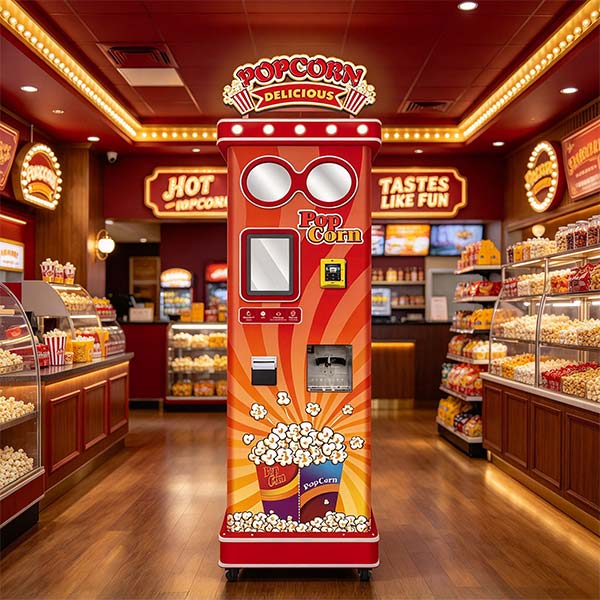
The contrast between the popcorn machine and the nail printer is useful. Popcorn is quick, cheap, and impulse driven, so it wants raw volume at the right hour. It suits a cinema foyer where a queue forms before each screening, and it can also work in an office lobby if the building empties in a predictable wave. The nail printer wants a person who will stand at the screen for five minutes and is comfortable doing that in public. A crowded commuter hall is the wrong room for it, even though the same hall might be ideal for a coffee or drink machine.
Put a different way, high traffic vending machine locations are only high traffic for a particular product. A location that is unbeatable for a smoothie machine could be mediocre for a cotton candy robot, because the crowd is thirsty rather than playful, or in a hurry rather than lingering.
The venue types that produce the strongest traffic
Some venue categories repeat their performance across countries and cities. They are not guaranteed, and a weak operator in a strong venue will still underperform, but the shapes of these places create the conditions that vending depends on: a crowd, a reason to stop, and a moment of downtime. Between them, the thirteen categories below account for most of the high traffic vending machine locations that independent operators end up running.
Shopping malls and retail centres
Malls concentrate a large number of people who have chosen to spend an hour or more indoors. They walk slowly, they browse, and they are used to self-service. A mall is one of the most reliable categories for high traffic vending machine locations, and it is also one of the most competitive, because centre management usually already has a vending or kiosk partner.
The best positions are not always the entrance. Places where people pause are stronger: outside a food court, beside a children’s play area, near the escalator landing on an upper floor, or opposite a cinema entrance. Upper floors often have less raw footfall but longer dwell, which suits a machine that needs three to five minutes of a customer’s time. Before committing, check the power outlet you will use, the centre’s trading hours, and whether the space is inside the camera and cleaning zones that staff already cover. Ask as well how many other high traffic vending machine locations the centre already hosts. A second cotton candy unit in the same hallway splits one crowd between two machines.
Airports, rail stations, and bus terminals
Transit hubs deliver a volume that no other category can match, but they split sharply by zone. Check-in and arrival halls carry people with luggage who will not linger. Gate areas and departure lounges hold people who arrived early and have nowhere to go. That second zone is where transit money is made, and it favours machines that turn a spare half hour into something to do.
Access is the hard part. Airport and major station retail space is usually managed by a concession operator rather than by the building owner, and the tender process can be slow. Small stations, coach terminals, and ferry piers are easier to enter and can still deliver strong volumes because the waiting area is captive by design. Look for the seating zone, not the ticket hall.
Cinemas and entertainment complexes
A cinema has a built-in demand curve. Attendance arrives in waves ahead of each screening, waits in the foyer, and leaves in reverse. That rhythm suits machines that produce quickly and look good in low light. Popcorn is the obvious fit, and a cotton candy robot with an illuminated cabinet holds its own beside it.
Do not overlook the second half of the evening. Guests leaving a late show pass the machine on the way out, and a dessert-type product placed near the exit can catch people who are not ready to go home. If the cinema shares a building with a bowling alley, arcade, or family restaurant, the combined dwell time is longer than the cinema alone, which raises the value of the same square metre.
Gyms, fitness studios, and sports complexes
Sites built around training have a customer whose need is easy to serve. Members finish a session, are thirsty, and are already thinking about recovery. A protein shake machine that doses powder into the cup and mixes in under a minute fits the end of that routine better than a fridge of bottled drinks, because it produces something the customer can customise and it does not tie up staff.
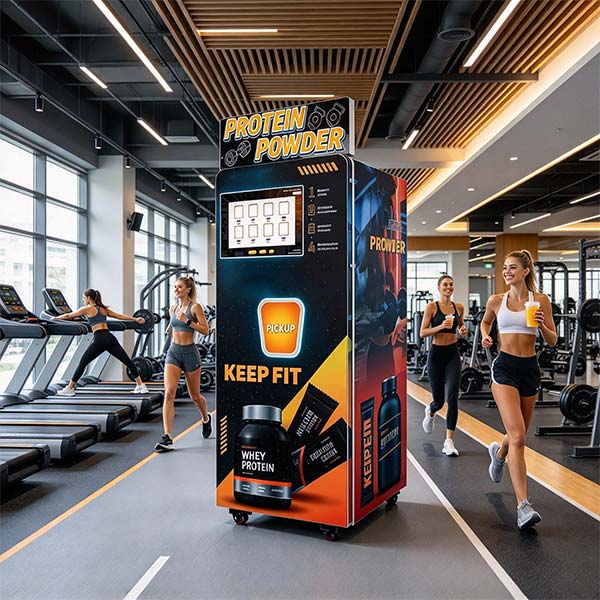
Peak hours matter more than total membership here. A gym with fifteen hundred members that is empty outside two narrow windows will sell less than a smaller club with a steady spread of classes. Ask for the class timetable before you ask for the member count. Sports complexes that host weekend tournaments can spike hard, and a machine placed near the changing rooms or the spectator stand will catch those spikes.
Universities and college campuses
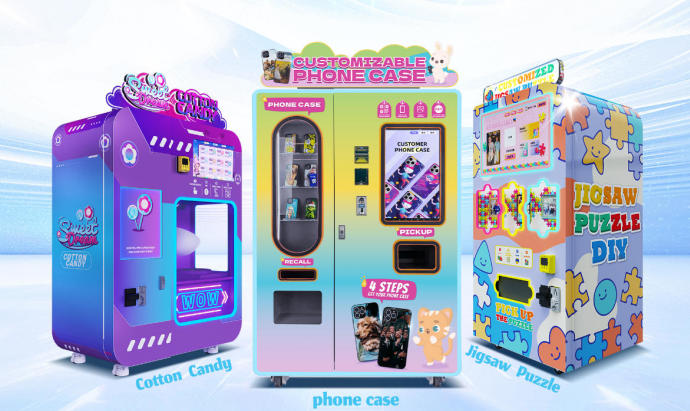
Campuses are predictable in a way few locations are. Term dates, class schedules, and library hours create known rushes. Students are comfortable with app payments and self-service, and they are receptive to novelty, which makes campus sites unusually good for photo-based products such as puzzles and custom cases.
The risk is the holiday gap. A spot that performs well for thirty weeks of the year may sit idle through the long break, so the annual return is lower than a first glance suggests. Buildings that stay open year round, such as student unions, sports centres, and accommodation blocks used by summer programmes, smooth out that curve. Check whether the campus takes a commission and whether the vending contract is managed centrally or by each building.
Hospitals, clinics, and medical waiting rooms
Waiting is the defining feature of medical sites, and waiting is what captive traffic needs. Relatives sitting through an appointment, staff on a break, outpatients with time to fill. These sites tend to value quiet, clean, low-maintenance machines over loud ones, and they often prefer drinks and simple snacks to anything messy.
Expect stricter rules than a shopping centre. Hygiene requirements, noise limits, and the need for approved electrical work are common. A hospital will want proof of certification and a named contact for maintenance. In exchange, the traffic is steady through the week and less seasonal than almost anywhere else, which is valuable for smoothing cash flow across the year.
Theme parks, zoos, and family attractions
Family attractions deliver the strongest emotional buying conditions of any category. Parents who have already spent a day out are unlikely to refuse a two dollar balloon or a cotton candy. Children provide the demand, and the queue provides the time. Attractions are also highly seasonal, so they work best as part of a route rather than as a lone bet.
Weather protection matters. An outdoor unit needs a rainproof design and a bright screen readable in direct sun, which is exactly why an outdoor-rated model exists rather than a standard cabinet with a canopy bolted on. Place near the exit of a ride or the entrance of a playground, where families slow down naturally.
Supermarkets and hypermarkets
A supermarket captures people who are already shopping and already spending. The best position is near the checkout or by the exit, where a customer is finishing a task and relaxing. Drinks, ice cream, and small treats fit the last two minutes of a shopping trip, and cold products do well on a hot day when the car park walk is the next task.
The catch is that many chains have national vending agreements, so an independent operator may need to approach the franchisee rather than head office. Standalone and regional stores are easier to enter, and the manager you deal with is often the decision maker.
Hotels and resorts
Hotels produce traffic that peaks late. Guests return from dinner and look for something small, and they leave early in the morning before outlets open. A machine that runs around the clock fills those two gaps without adding a staff shift. Resorts with pools have obvious demand for cold drinks and ice cream through the day.
Small and mid-sized hotels are usually more receptive than large chains, which have procurement rules and brand standards. Offer a unit that can be dressed to match the lobby rather than a generic cabinet, and expect to discuss who restocks and who clears faults.
Office towers and business districts
Office buildings concentrate a known population with fixed break times. The traffic is reliable rather than exciting, and it rewards machines that serve a need in under a minute. Coffee, drinks, and quick protein options all work. Lunchtime and the mid-afternoon dip are the two windows worth designing around.
Office traffic has thinned in many cities as hybrid work spread, so the building’s current occupancy matters more than its total floorspace. Ask for the badge count and the weekday attendance pattern rather than the tenant list. Buildings with a mix of offices and a ground-floor food retailer often hold up better, because the ground floor keeps some all-day movement.
Family entertainment centres and arcades
Arcades and entertainment centres are built around the same impulse that vending serves. Visitors are there to spend, they move between attractions in short bursts, and they are rarely in a hurry. These venues suit almost every machine in the range, from balloons and cotton candy to photo products and nail printing.
Competition for floor space is the constraint. Managers rent that floor by the square metre and will compare your offer with an arcade cabinet that might earn more on the same patch. Be ready to show how much space your unit needs and what it earns per square metre rather than per day.
Petrol stations, roadside stops, and convenience forecourts
Forecourts trade in short visits with a clear purpose. Drivers stop for fuel, use the washroom, and buy something on the way out. The traffic is spread across the day and across the week, which makes these sites steadier than leisure venues and less dependent on a single peak. Cold drinks, ice cream, and quick snacks fit the pattern, and the customer is already reaching for a wallet.
The constraint is space and control. Many forecourts belong to a fuel brand with its own retail agreement, so the site you can approach is often an independent or a franchisee rather than the brand itself. Outdoor positions need weather protection and a machine built for it, and the position should sit on the path between the pump and the till rather than inside the shop, where staff already stock the shelves. Done well, these sites are unglamorous and reliable, which is a useful combination for a growing route.
Night markets, festivals, and seasonal events
Temporary events are the fastest way to test a machine and the fastest way to lose money doing it. A popular night market can crowd thousands of people into a few streets, and a machine that sells well there may also fail completely at the next event two months later. The variable is not the crowd, it is the mix of people and the moment.
Seasonal placement works best for products that accept power and water easily and can be moved by two people. Check the organiser’s rules on food handling, noise, and trading hours before you book. Treat every event as a live test, log the sales per hour, and decide whether the pattern matches a permanent site you could approach.
Dayparts: the same spot behaves differently at 8 am and 8 pm
Every location is several locations stacked on top of one another. The office lobby at eight in the morning is a river of people heading for the lifts. The same lobby at noon is a queue for coffee. At six in the evening it is a slow trickle of people leaving, and at nine it is a security guard and a cleaning trolley. A machine that earns well in one of those windows may earn nothing in the other three, and the count you took at the wrong hour will mislead you.
For that reason it helps to think about high traffic vending machine locations in terms of dayparts rather than daily totals. A daypart is a block of the day with its own crowd and its own mood. Four blocks cover most sites: the early peak, the lunch block, the afternoon and after-school block, and the evening and late-night block.
The early peak belongs to commuters, gym members, and parents dropping children off. It is short and often hurried, so it rewards machines that finish a sale in under a minute. A protein shake machine at a gym, or a coffee or drink unit in an office, lives in this window and depends on it.
The lunch block is longer and calmer. People leave offices, walk to food, and have twenty minutes to fill. This is a good window for dessert and for anything that can be carried, which is why ice cream and cotton candy do well in shopping districts at midday.
The afternoon and after-school block is the one families drive. Children are out of school, parents are finishing errands, and the pace slows. Balloons, cotton candy, and custom photo products all catch this wave, and family attractions see their strongest numbers in these hours.
The evening and late-night block divides again. Cinema and restaurant crowds are in a spending frame of mind, while people heading home from work are not. A location that is busy at seven because everyone is commuting out is worth far less than one that is busy at seven because people are staying.
Matching the machine to the strongest daypart is often worth more than finding a bigger crowd. A site with three quiet hours and one strong hour can beat a site that is moderately busy all day, because the strong hour supports a higher price and a better margin. When you count traffic, note the hour as carefully as the number, and choose the product that answers the mood of that window.
How to measure foot traffic before you commit
Venue managers will quote you impressive numbers, and property listings will describe a high footfall catchment, but neither tells you what the machine will do at nine on a Tuesday morning. The only reliable method is to stand in the spot and count.
The counting method is simple and takes about a week.
- Pick three windows that match the venue’s rhythm, for example a morning peak, a lunch period, and an evening peak. If the venue is leisure driven, use a weekend afternoon as well.
- Count for fifteen minutes in each window. Count two things separately: the number of people who pass within a few steps of where the machine would stand, and the number who slow down, look, or stop.
- Repeat on a weekday and on a weekend day, and again on a day with an event if the venue hosts them.
- Note the direction of travel and whether people are carrying bags, pushing strollers, or hurrying.
The ratio between the two counts is the number worth remembering. If three hundred people pass and thirty slow down, one in ten is noticing something. Your machine has to sit in that noticing zone, and if the machine would be placed behind a pillar or beyond a doorway, the number you counted on the open floor does not apply.
Two more observations belong in your notes. The first is dwell, meaning how long a person stays within sight of the spot rather than how many people cross it. A bench, a waiting area, or a row of tables extends dwell and gives a slow machine a reason to exist. The second is the ratio of adults to children, which predicts which products will sell. High traffic vending machine locations with a steady flow of families behave very differently from locations full of adults in a hurry, even when the total counts match.
There are shortcuts that support the manual count. A map app’s popular times chart shows when a venue is crowded, which helps you choose your counting windows but says nothing about dwell. Asking a shop assistant or site manager when the place is busy is often more accurate than a published figure, because they watch the room rather than the entrance. Delivery drivers and cleaning staff know the quiet hours and the busy ones better than anyone. If the venue has a turnstile or a car park counter, ask for the hourly split rather than the daily total.
Turning a count into a forecast
Once you have a count, convert it into an expected daily figure using an assumption you set yourself rather than a number someone else supplied. Say a spot sees four hundred passers each day and you expect one in fifty to buy. That is eight sales a day. If the average sale is five dollars and the consumable cost is one dollar twenty, the gross is about thirty dollars a day, or roughly nine hundred dollars a month.
That arithmetic is crude, and it should be. Its value is that it forces you to name the sales figure you are betting on before you sign, so you can compare it with the rent the venue asks for. A spot that needs twelve sales a day to cover a rent demand, when your count suggests eight, is a spot to walk away from or renegotiate.
The table below shows the same logic applied to two machines where the consumable cost is known. Retail prices are assumed, and the sales needed column is the number of sales required to recover the machine price. Ingredient costs that operators buy locally, such as corn, milk, and ice cream mix, are not included, so treat these as a floor rather than a full break-even.
| Machine | Machine price | Assumed retail per sale | Consumable cost per sale | Gross per sale | Sales to cover the machine |
|---|---|---|---|---|---|
| Protein shake (WM186) | US$4,150 | US$5.00 | About US$1.20 average | About US$3.80 | About 1,092 cups |
| Nail printing (WM860) | US$5,800 (1 to 4 units) | US$8.00 | About US$1.50 per pair | About US$6.50 | About 892 pairs |
| Popcorn (WM680) | US$1,800 (1 to 5 units) | US$3.00 | US$0.10 to US$0.12 per cup | About US$2.88 | About 625 cups |
Spread those numbers across a plausible selling period and the daily requirement becomes concrete. About 1,092 cups over a ninety-day quarter is twelve cups a day. About 892 pairs of nails is ten pairs a day over a quarter, or thirty a day across a single month. Those are useful thresholds, because they translate a vague idea of busy into a target the location either meets or does not.
The paperwork side of finding a spot is covered in more depth in this guide to finding vending machine locations, and the strategy behind reading a catchment is set out in the notes on vending machine location strategies.
Match the machine to the traffic you actually found
The most common mistake is buying a machine first and then hunting for somewhere to put it. The result is a decent machine in the wrong room, and it reads as a failure of the machine when it is really a failure of the pairing. Work the other way round. Read the crowd, then choose the product it wants.
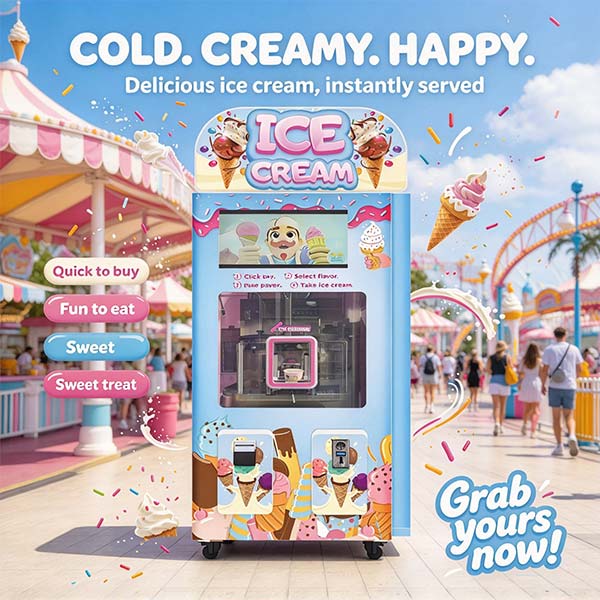
- People waiting with time to fill, in a warm climate: smoothie or ice cream.
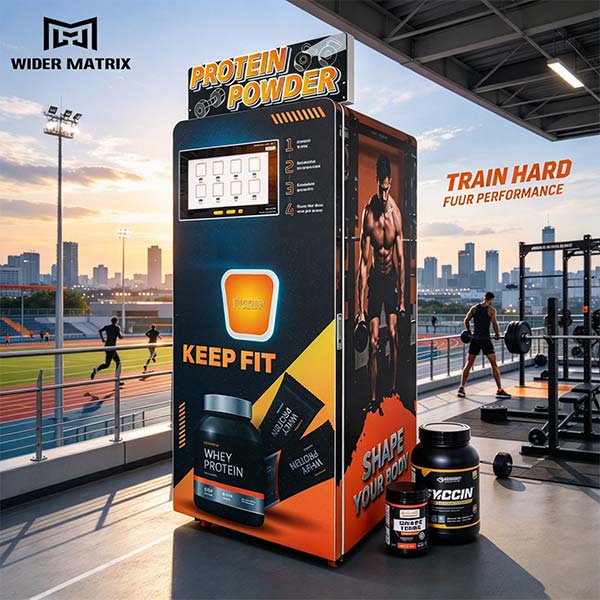
- People finishing a workout: protein shake.
- People waiting for a screening or a show: popcorn, then cotton candy near the exit.
- People browsing with a few minutes free and a phone in hand: custom phone case printing.
- Children and parents moving between attractions: balloon, cotton candy, ice cream.
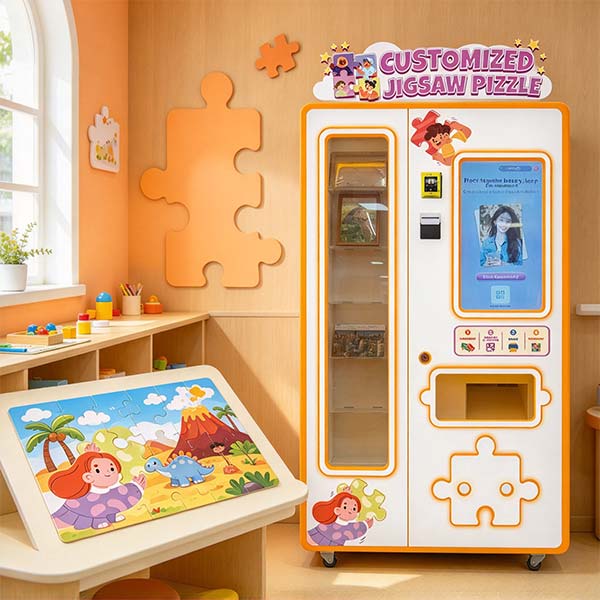
- Tourists and gift buyers with a personal photo to use: jigsaw puzzle printing.
- Beauty-minded visitors with five minutes and a screen to play with: nail printing.
If a site supports two products, the stronger combination is usually one fast item and one slow item. A fast machine keeps a queue moving and a slow machine gives people a reason to stay, which can raise the sales of both. Ice cream beside a custom case printer, or popcorn beside a nail printer, works because the two products attract slightly different people at slightly different moments. Two compatible products also widen the hours a single high traffic vending machine location can sell, because one product covers the quiet window the other misses.
What a location costs, and how the deals are shaped
Placement rarely comes free, even when nobody charges you rent. Venues take their cut in one of three ways, and the form of the deal tells you how the site is managed. It also tells you how much of the value created by a high traffic vending machine location the venue intends to keep.
A flat monthly fee is the simplest and the easiest to plan around. You pay a fixed amount regardless of sales, which is comfortable when the location performs and painful when it does not. Revenue share means the venue takes a percentage of gross sales, so you pay more in good months and less in bad ones. This is common in high-value sites such as malls, airports, and cinemas, where the operator controls access and wants upside. Free placement usually appears where the venue simply wants the service, for example a small gym that gains a member amenity, or a building that wants drinks available without paying for a staffed counter.
Percentage splits vary widely by country and venue type, so treat any number you hear as a starting point for negotiation rather than a rule. The two questions that decide whether a deal is worth signing are what the venue contributes and what it takes. A venue that provides power, a secure position, cleaning around the unit, and genuinely captive traffic can justify a share that a bare corridor cannot. The wider question of who pays for placement, and how often, is examined in the guide to whether vending machine locations are free and in the separate analysis of whether owners pay for locations.
Costs beyond the rent are easy to forget. Insurance is often required before you place anything on site. Restocking fuel, parking, and time add up quickly across a route, and a location that is cheap but two hours from your base can cost more per sale than an expensive one in your own neighbourhood. If you are still assembling the financial model, the overview of vending machine costs covers the capital side, and the step-by-step vending machine business guide covers the operating side.
Pricing the product for the location
A machine price and a location rent are fixed costs. The retail price is the variable you control, and it should be set with the venue in mind rather than copied from another site on your route. A captive customer in an airport lounge and a browsing shopper in a discount store are not the same buyer, and charging both the same amount leaves money on the floor in one place and drives people away in the other.
Captive settings tolerate higher prices. When the next alternative is a ten minute walk, a small premium is easy to accept, which is why airports, cinemas, hospitals, and attractions support pricing above the local retail average. Leisure settings are more price sensitive. A family with children will buy more items at three dollars than at five, so volume often beats margin in a family entertainment centre. If the machine offers several products, tiered pricing gives you both: a low entry price that brings people to the screen, and a premium option for the customer who wants it.
Payment method is part of pricing. Machines that accept cards, contactless, and QR codes remove the need for cash and let you charge non-round amounts without handling coins. Every machine in the range supports card and contactless payment alongside coins and notes, which matters in markets where cash use is falling quickly.
Promotions do the rest of the work. A discount window, a two for one, or a happy-hour rate can pull traffic into a quiet daypart and lift the average across the whole day. Remote promotion settings, available through the cloud management system, let you test these without a site visit, which turns pricing into something you can tune at the same speed you tune stock.
Look as well for revenue that does not come from the product. Many machines carry an advertising screen, and a well-placed unit in a busy building can sell display time to nearby businesses. A cinema foyer, a gym entrance, and a mall corridor are all positions where advertising space has value on its own, and it can cover part of the rent while the product covers the rest. High traffic vending machine locations are worth more to an advertiser than quiet ones for the same reason they are worth more to you.
Permits, licences, and legal limits
Rules on vending are set locally, which means they change at city or state borders, and sometimes between one building and the next. Nothing in a general article can replace a check with your own municipal authority, but the categories of requirement are consistent enough to plan around.
Food and drink machines usually attract health rules. Cotton candy, popcorn, ice cream, and smoothies are prepared on site, so the venue may need to satisfy food handling standards, and the machine must be cleanable and covered. Some jurisdictions require a food business registration even where the machine is fully automated and no staff are present. Drink machines that dispense water also need to be checked against local plumbing rules.
General business requirements apply to everyone. Registering the business, collecting and remitting sales tax, and carrying public liability insurance are the basics. Certain sites add their own conditions. A mall may require proof of insurance and a signed service agreement before it lets a machine through the service door. A hospital will ask about noise and hygiene. A council-owned park may run a tender process. Signage and advertising screens face their own local rules in some places, which matters if you plan to sell advertising space on the machine display.
Where you may not place a machine is often the more useful question. Fire exits, narrow corridors, accessible routes, and listed building interiors are the usual exclusions. Before you promise a venue anything, confirm the electrical work is compliant and that the position does not obstruct an escape route or a wheelchair path. Country-specific guidance on the licence question is worth reading if you operate across borders, such as this guide on vending machine licences in the UK, and this one on where you can legally place a vending machine.
Import and site approval both get easier when the equipment already carries recognised certification. The Wider Matrix range is covered by a combination of CE, RoHS, ISO 9001, and, depending on the model, CCC, PSE, RCM, and CB certificates, along with independent patent filings. For an operator, that paperwork is not a marketing detail. It is often the document a venue or a customs officer asks for first.
Negotiating the placement
Most venue managers are not looking for a vending machine. They are looking for an easy yes. Your pitch works better when it removes their work and their risk rather than when it describes your product.
Start with the facts they care about. How much floor space the unit takes, what it draws from the power supply, who maintains it, and who is responsible if it fails. Then explain what the venue gets: extra revenue, a service their visitors want, and a machine that fits the look of the space. Bring photographs or drawings, a certificate of insurance, and at least one reference from a similar site. If you have operated elsewhere, the sales figures you are willing to share do more than any brochure.
Appearance is part of the negotiation, not a detail. A machine that matches a venue’s colours and signage is easier to approve than a bright generic cabinet, because it becomes part of the room rather than a foreign object in it. Custom skins, branded panels, and illuminated lettering are standard options across the machine range, which lets you show a manager a version of the unit that already looks like it belongs in their building.
Finally, ask for a trial. A thirty or sixty day placement with a clear opt-out clause lowers the venue’s risk and gets your machine through the door faster. If it performs, the conversation about a longer term and a higher share becomes much easier, because you are no longer asking anyone to believe a forecast.
Space, power, and floor loading
The practical details decide which spots are even possible. A machine that weighs six hundred kilograms cannot go up a wooden staircase, and a unit that draws three thousand watts needs more than the nearest wall socket. Check these numbers against the location before you fall in love with it.
| Model | Footprint | Weight | Power | Placement note |
|---|---|---|---|---|
| WM880 phone case printing | 1340 x 990 x 2170 mm | 380 kg | 410 W, 110 to 220 V | Low draw, but tall and heavy. Allow door and lift clearance for delivery. |
| WM980 cotton candy | 132 x 195 x 67 cm | 300 kg | 500 W standby, 3000 W while processing | Peak draw needs a dedicated circuit. |
| WM680 popcorn | 570 x 540 x 1930 mm | 70 kg | 3000 W, 220 V | Light enough to move with two people, but still needs a proper circuit. |
| WM550 ice cream | 227 x 93 x 95 cm | 640 kg | 3000 W, 220 V, 50 or 60 Hz | The heaviest unit in the range. Check floor loading and lift capacity. |
| Small ice cream unit | 81 x 126 x 180 cm | About 240 kg | Not listed in the current specification | Built for tight spaces where the full size unit will not fit. |
| WM688 balloon | 100 x 82 x 210 cm | 110 kg | 250 W, 110 to 220 V | Occupies about one square metre, easy to relocate. |
| WM520+ puzzle | 970 x 1100 x 2200 mm | 370 kg | 245 W, 220 V standard, 110 V optional | Wide footprint. Needs a clear approach so customers can reach the screen. |
| WM666 smoothie | 160 x 98 x 215 cm | Not listed in the current specification | 1500 to 6000 W, 110 to 240 V | Uses water and milk, so it needs a supply line and drainage planning. |
| WM860 nail printing | About 1.5 square metres | Not listed in the current specification | Not listed in the current specification | Compact enough for a kiosk position, but customers stand at it for five minutes. |
Three checks cover most of the risk. First, the delivery route: measure the door, the corridor, and the lift, and remember that the machine arrives on a pallet. Second, the electrical supply: a unit that draws around three thousand watts at 220 volts pulls roughly fourteen amps, which is more than a shared socket should carry, so a dedicated circuit is the safe assumption. Third, the surface: a six hundred kilogram machine spreads its load, but a raised floor, a mezzanine, or a tiled ramp still needs a second look. Getting these three right is what separates high traffic vending machine locations you can actually operate from positions that only look good in a photograph.
Water and waste matter for one machine in the range. The smoothie unit adds water and milk automatically and cleans itself with steam, which makes it an attractive site for a mall or a gym, but it also means the position needs a supply and a plan for the cleaning cycle. This is the kind of detail worth settling with the venue before you sign, because retrofitting a water line after installation is expensive.
Signs that a busy location will still lose money
A crowd is necessary, not sufficient. Several patterns look like high traffic vending machine locations on paper and disappoint in practice, and most of them can be spotted before you sign.
Traffic that never slows is the first. A commuter corridor, a tunnel between a car park and a station, or a walkway beside a road carries thousands of people who are moving with purpose and wearing headphones. The count looks excellent and the sales are near zero, because nobody arrives in the state of mind a purchase requires.
Uniform traffic is the second. A building that empties at five o’clock and stays dark until eight the next morning has a single daily window. That can still work if the machine sells fast and cheap, but it caps the site. A mix of morning, lunch, and evening movement, or a weekend crowd in addition to a weekday one, gives a machine more chances per day.
Third, unsheltered positions in harsh weather. An outdoor unit exposed to direct sun on a hot day, or to rain and wind, will fail more often and sell less. If the site is outdoors, the machine needs an outdoor specification and a position that shelters the customer as well as the cabinet.
Fourth, a site where the only regular customers are staff. Employees at a small office, workers on a night shift, and cleaners in a facility are worth serving, but their numbers are limited and they tire of the same product. This is a site to test, not to build a route around.
Fifth, an existing exclusive contract. Some venues have signed a multi-year vending agreement with another operator, and the manager may not be aware of it. Ask to see the relevant clause before you pay for a survey or order a machine.
Sixth, poor sightlines. A machine tucked behind a pillar, around a corner from the main route, or on a level that customers reach only on their way out will underperform its location on every count you take. Watch where people turn their heads, not just where they walk.
Seventh, seasonal-only demand. Ski towns, beach resorts, and festival grounds can be excellent for a few months and dead for the rest. That is not a reason to avoid them, but it changes the plan: the machine should be part of a route that shifts between sites, rather than a permanent unit waiting through a quiet winter.
Finally, restock difficulty. A busy site that is hard to reach, has no parking, or requires a long walk with a trolley will raise your running cost on every visit. Count the minutes as carefully as you count the customers.
From one machine to a network
The useful shift in thinking comes when you stop choosing addresses and start choosing profiles. A site that worked for a cotton candy robot tells you something about the crowd, the dwell time, and the pricing that suited that product. The next site you look at should match the profile rather than simply sit in another mall. That is how one good high traffic vending machine location turns into a route that can be repeated.
Remote management makes that replication practical. Every machine in the Wider Matrix range reports sales, order history, equipment status, and fault alerts through a cloud dashboard that can be opened on a phone or a computer, and a single dashboard can be used to monitor a group of machines across different buildings. For a route of ten units, that replaces a week of driving with a morning of checking, and it turns a fault into a notification rather than a discovery made by a customer.
That visibility also changes how you read a site. When you can see sales by hour across several high traffic vending machine locations at once, patterns that would take months to notice by hand show up in a week, and you can move stock or adjust a price before a slow stretch becomes a bad month.
Some models add detail that saves time on restocking. The phone case printing machine can be fitted with an optional inventory identification function that watches stock per slot, so you know how many cases remain before you set off. The nail printer tracks ink and inventory and reminds you when levels fall. The smoothie unit monitors ingredient consumption and flags low stock. These are the features that decide whether a route of twenty machines is manageable by one person or becomes a job for three.
Keep the mix deliberate as the network grows. One site may justify a custom case printer, another a smoothie unit, and a third a popcorn machine, and the reason should be the crowd rather than the discount you were offered. Operators who buy machines because the price was attractive, and then look for somewhere to put them, tend to own equipment that does not quite fit anywhere.
Frequently asked questions
What are the highest traffic locations for a vending machine?
The strongest high traffic vending machine locations combine a large crowd with a reason to wait: airport departure lounges, cinema foyers before screenings, gym floors at the end of a workout, hospital waiting areas, and upper-floor mall zones where shoppers slow down. Raw headcount matters less than the amount of time people have to spare.
How many people per day does a vending machine location need?
There is no fixed number, because it depends on the product and the price. Work backwards instead. Take the machine price, divide it by the gross margin per sale, and you get the sales needed to recover the machine. Spread that across your target period to find the daily figure, then compare it with your own traffic count before you commit to a rent. A spot is only a high traffic vending machine location if that count clears the figure.
How do I check foot traffic before renting a spot?
Stand in the exact position and count for fifteen minutes in three different windows, on a weekday and a weekend. Count passers and stoppers separately, and note the direction of travel. A spot where one in ten people slow down is a better bet than a busier corridor where everyone walks straight past.
Can I place a vending machine in a mall or an airport?
Yes, but both are usually managed through a concession partner rather than the building owner, so expect a formal application and a revenue share. Smaller stations, coach terminals, and regional shopping centres are easier to enter and often deliver a similar quality of traffic with less paperwork.
Do I have to pay the venue for a vending machine location?
Often, yes, though the form varies. Some venues take a flat monthly fee, some take a percentage of gross sales, and some allow free placement because the machine adds a service their visitors want. Compare what the venue contributes, such as power, a secure position, and captive traffic, against what it takes.
Do I need a licence or permit for a vending machine?
Requirements are set locally and vary by country, state, and city. Machines that prepare food, such as cotton candy, popcorn, ice cream, and smoothies, usually attract health rules in addition to standard business registration and insurance. Confirm the position with your own municipal authority before installation.
Which vending machine makes the most money in a high traffic location?
It depends on the crowd rather than on the machine alone. A gym suits a protein shake machine, a cinema suits popcorn, and a family attraction suits balloons and cotton candy. The product with the widest margin is not automatically the best performer if the people passing it have no reason to stop.
How long does it take to recover the cost of a vending machine?
That depends on the site and the price structure. A popcorn machine at US$1,800 with a gross of about US$2.88 per cup needs roughly 625 cups to cover its cost, and a nail printer at US$5,800 needs around 892 pairs at a US$6.50 margin. Daily demand, not the headline price, decides how fast that happens.
Talk to the factory before you sign the lease
Choosing a location and choosing a machine are the same decision made twice. Get the pairing right and a modest site will outperform an expensive one. Get it wrong and the machine takes the blame for a problem that started with the crowd.
Wider Matrix builds vending machines in Guangzhou and has shipped more than three thousand units to over one hundred and thirty countries since 2016, supported by an engineering team of more than fifty people, a one year warranty, and lifetime technical support. Because the sales channel is the factory, the same team that builds the machine can tell you what it needs from a site, from floor loading and power draw to the traffic profile that suits it.
If you have a location in mind, send the details. Tell us the venue type, the country, and the approximate daily footfall, and we will suggest the machine that fits the crowd, share the current specifications, and quote the price. For a site you are still evaluating, the guide to where to put vending machines and the Wider Matrix breakdown of where vending machines are most successful go deeper into placement patterns, while the full machine list runs from the WM880 phone case printing machine to the WM680 popcorn machine, the automatic ice cream machine, the WM520 jigsaw puzzle machine, and the WM980 Plus cotton candy machine.
Send your location details through the contact page and we will reply with a machine recommendation and a quotation for your market.