



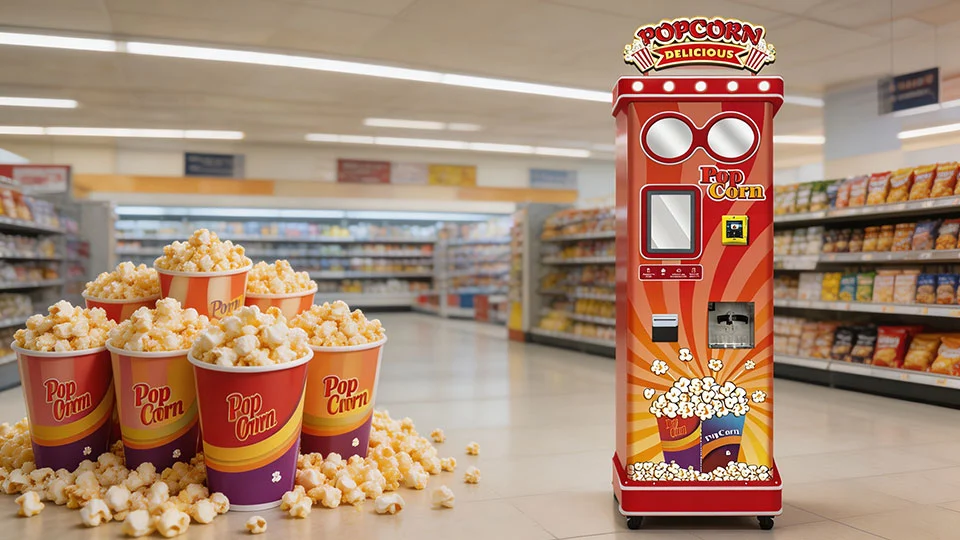
The WM680 Popcorn Vending Machine: What We Learned Selling It to Cinemas and Malls Worldwide
Popcorn is the world's most profitable snack. For decades it needed a concession stand with a dedicated operator. The WM680 changes that. Here is what we learned building it.
Why We Built the WM680
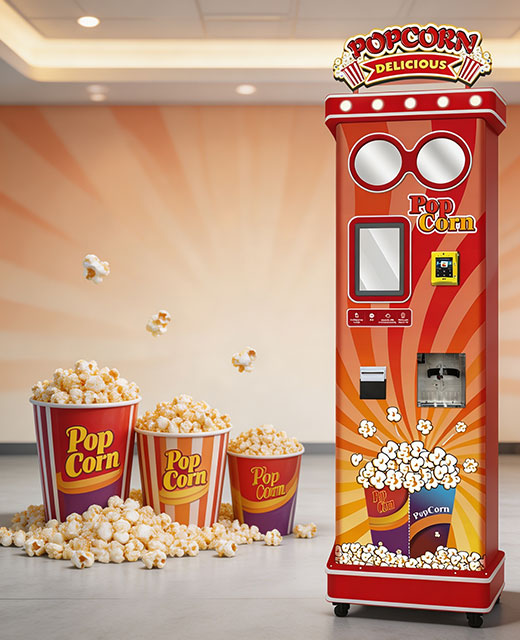
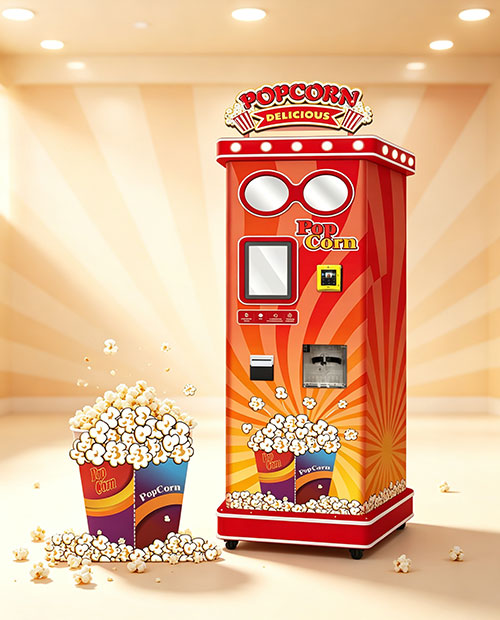
We have been in vending for years. The WM680 was born from a simple observation: malls, cinemas and supermarkets all sell popcorn, but they all depend on staff. The solution was a machine that cooks, flavors and dispenses on its own — 24/7, no operator needed.
The real challenge was the popping mechanism. Most commercial machines use oil. Oil means cleaning, smoke, odor complaints, and fire risk. We spent months on the airburst heating system. Hot air circulation that pops every kernel evenly — no oil, no mess, no maintenance.
That single decision — going oil-free — is what makes the WM680 viable for unattended locations. A machine that sits in a hotel lobby at 3 AM cannot fill the hallway with smoke.
Hot Air vs Oil — Why It Matters
Traditional popcorn machines use hot oil. It works, but it creates three problems: smoke and smell that require ventilation, burnt residue that needs daily cleaning, and fire risk that insurance companies hate.
The WM680 uses airburst circulation heating. Hot air at precisely controlled temperature pops the kernels. The result is lighter, fluffier popcorn with no oily residue. More importantly, the machine stays clean for hundreds of cycles.
A cinema chain in Europe told us their biggest concern was maintenance. With the oil-free system, the WM680 needs a quick wipe-down once a week, not a deep clean every night. That alone saves operators hours of labor.
What a Cup of Popcorn Actually Costs
The WM680 popcorn vending machine price starts at $1,800 factory-direct. But the real story is the margin. A 40g cup of popcorn costs about $0.08 to $0.12 in raw kernels. Add flavoring and a cup, and your cost per serving is around $0.15 to $0.20. Retail price: $3 to $5.
That is a gross margin above 90%. Even at a conservative $3 per cup and 50 cups a day, the machine generates about $4,200 per month. Most operators recover their investment in 2 to 4 weeks.
One of our customers in Tokyo placed a WM680 in a busy train station. At $4 per cup, the machine paid for itself in 11 days. After that, it was pure profit.
Where the WM680 Earns the Most
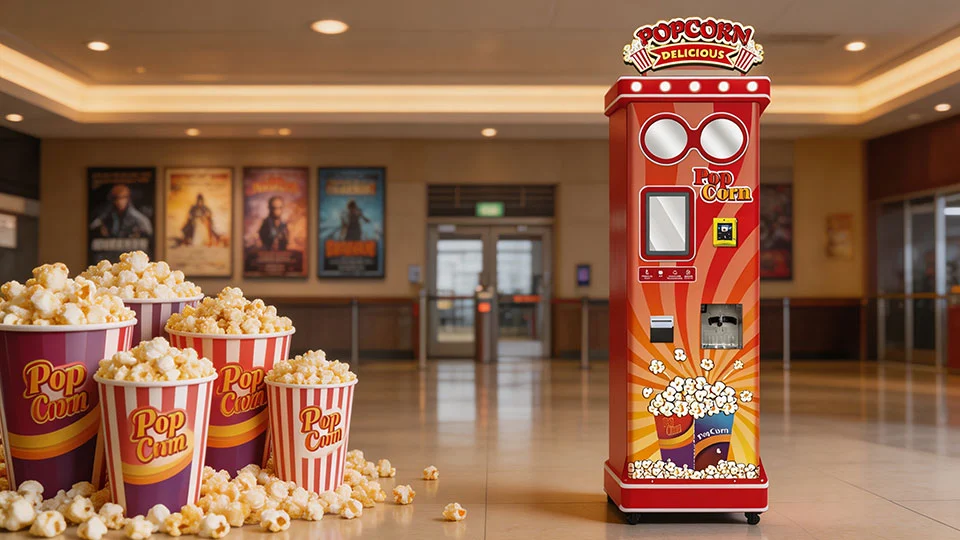
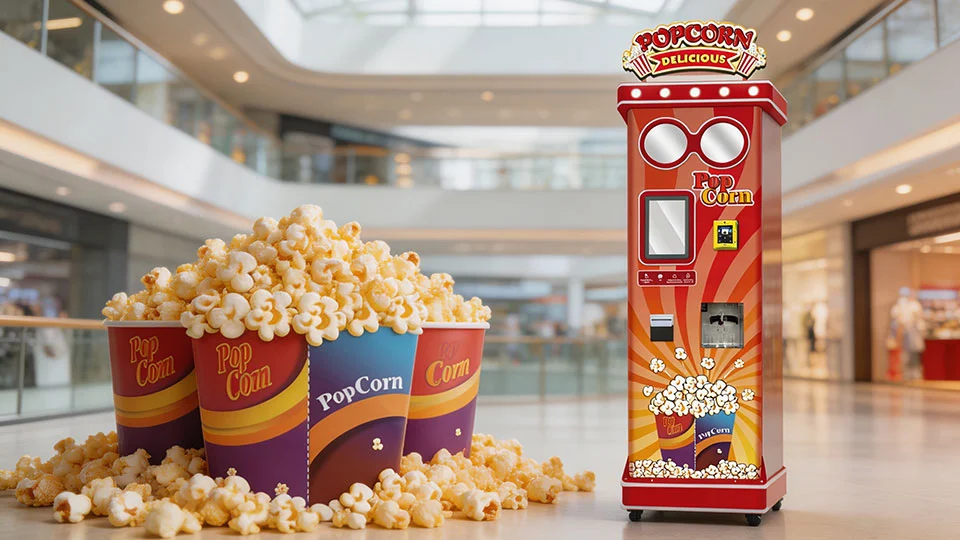
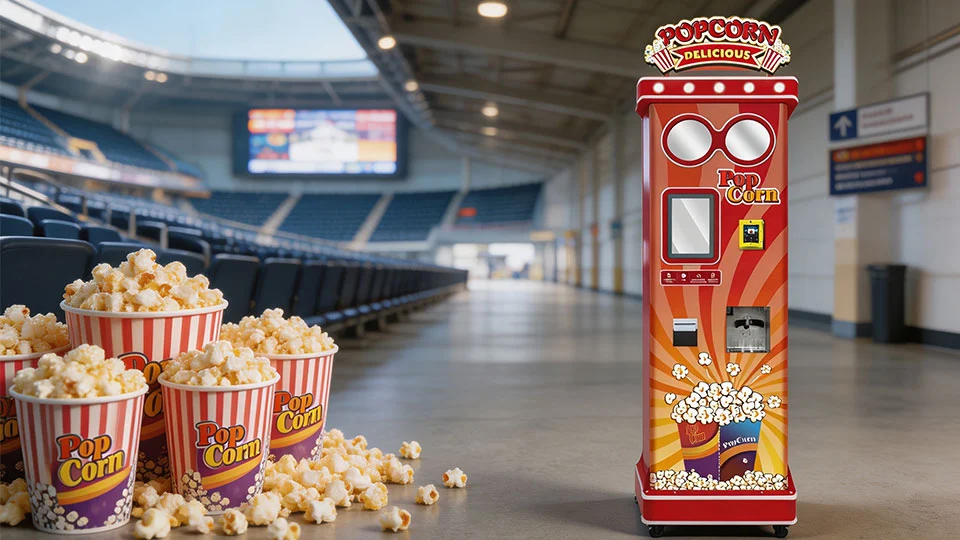
The best locations fall into three categories. Cinemas are the obvious first choice — popcorn is already part of the experience. The WM680 lets cinemas serve popcorn 24/7 in the lobby, even when the concession stand is closed.
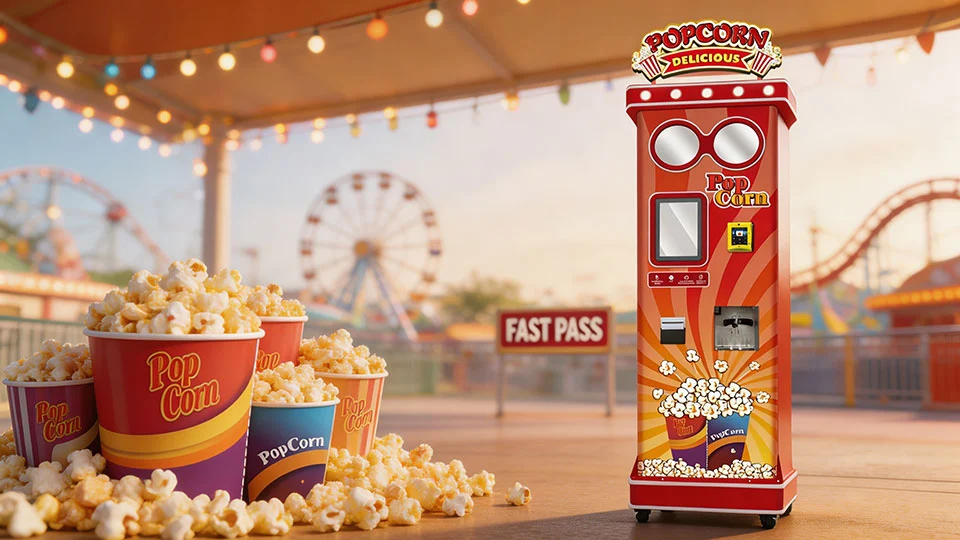
Shopping malls and retail centers are the second. High foot traffic, impulse buyers, and the smell of fresh popcorn draws people in. The third is hotels, airports and train stations — places where people are waiting and willing to pay for a fresh snack.
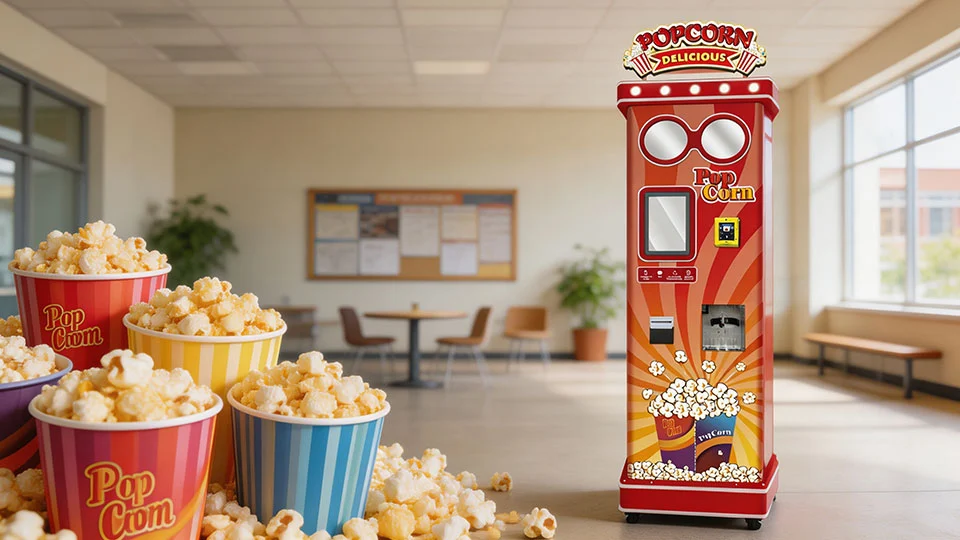
The common thread is that none of these locations need a popcorn expert on staff. They need a machine that works, consistently. That is the WM680.
What to Ask Before You Buy a Popcorn Vending Machine
If you are comparing popcorn vending machines for sale, ask these questions.
Does it use oil? If yes, you will be cleaning it every day. The WM680 is oil-free. How fast is the cycle? If it takes more than 120 seconds, customers walk away. What is the cup capacity? 140 cups means less frequent restocking.
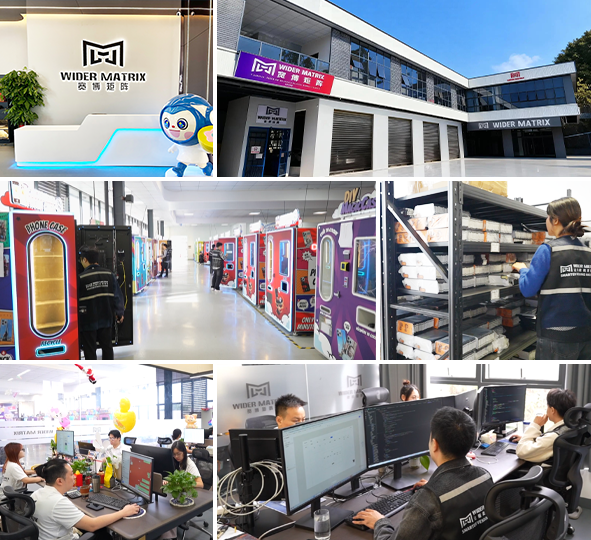
What certifications does it have? The WM680 carries CE and CCC. What happens when a part wears out? We ship spares worldwide and provide remote support. These are the questions that separate a real manufacturer from a drop-shipper.