


A buyer’s guide to vending machine pricing in 2026 with real factory prices for nine machine types, the components that drive cost, the expenses that never appear on the price tag, per-unit consumable economics, factory versus reseller buying, and the questions to ask any supplier before ordering.
Most buyers start their research with a number. They want to know how much to purchase a vending machine for, and they want the number before they talk to anyone. The instinct makes sense, and it is also where most of the expensive mistakes in this business begin, because the machine price is the only figure a supplier can put in the first email. Everything else gets decided later, usually at the least convenient moment.
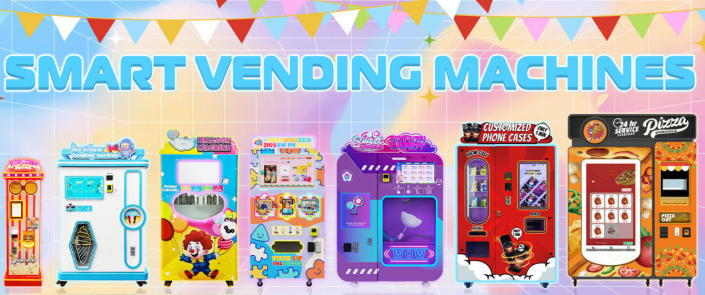
We build vending machines in Guangzhou, and we have shipped more than 3,000 units to buyers in over 130 countries. The catalog covers nine machine types, and single-unit prices run from US$1,800 for a popcorn machine to US$9,400 at list for a smoothie machine. Both get described as “a vending machine.” Only one of them stores fruit at -18°C and blends 63 flavors in 90 seconds. The cheapest machine in the range heats air and pops corn. The most expensive freezes, blends and steam-cleans. Those are different businesses that happen to share a name.
What the money buys is the part worth understanding: the price of each machine type, the components that push a quote up or down, the consumables you will reorder for as long as you own the machine, the expenses that never appear on the price tag, and the questions worth asking a supplier before you send a deposit. If you already have a quote in hand, the tables below will tell you quickly whether it sits in a normal range.
Buyers reading this tend to fall into three groups. Some already run a venue, like a gym or a mall kiosk, and want a machine that earns rent on floor space they already pay for. Some want a first machine and a first location at the same time, which is a harder project than it looks. Some are adding a second or third unit to a route that already works, where the only real question is whether the volume discount beats last year’s price. The numbers below matter to all three, but the order in which the decisions get made changes.
One note on where these figures come from. Every price, specification and consumable cost below is taken from our current product documentation, and that documentation gets updated when a price changes. If a number here disagrees with a quote you received, the quote is newer, and it is worth asking what changed.
Prices for every machine type we build
How much to purchase a vending machine comes down to what the machine has to make. A cabinet that heats air and pops corn is a simpler piece of equipment than one that runs a 6-color UV printer or holds ingredients below freezing. The table below lists Wider Matrix factory prices for single units and the lowest volume tier, taken from current product documentation.
| Machine | Model | Price at the lowest tier | What it does |
|---|---|---|---|
| Popcorn vending machine | WM680 | US$1,800 (1 to 5 units) | Air-pops dry corn in about 120 seconds, holds 5.6 kg of kernels and 140 cups |
| Balloon vending machine | WM688 | US$3,200 (1 unit) | Inflates and dispenses balloons, 6 slots holding 360 balloons, 21.5-inch touch screen |
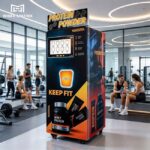
| Protein shake machine | WM186 | US$4,150 | Mixes powder drinks directly in the cup, 7 hoppers, 60 seconds per shake |
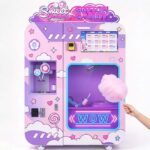
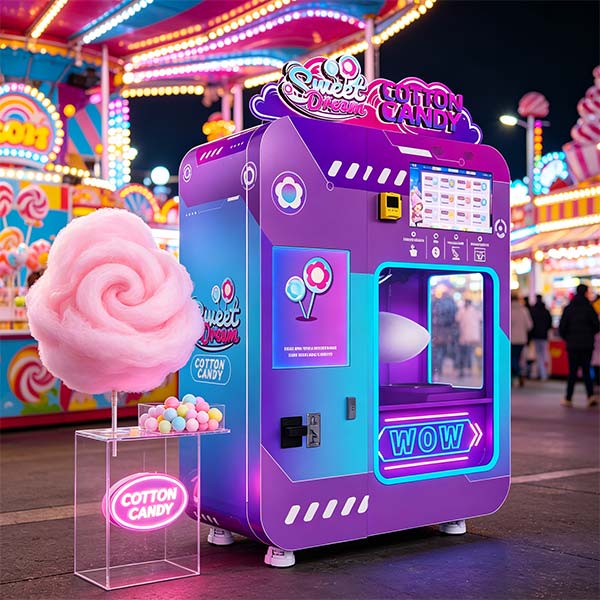
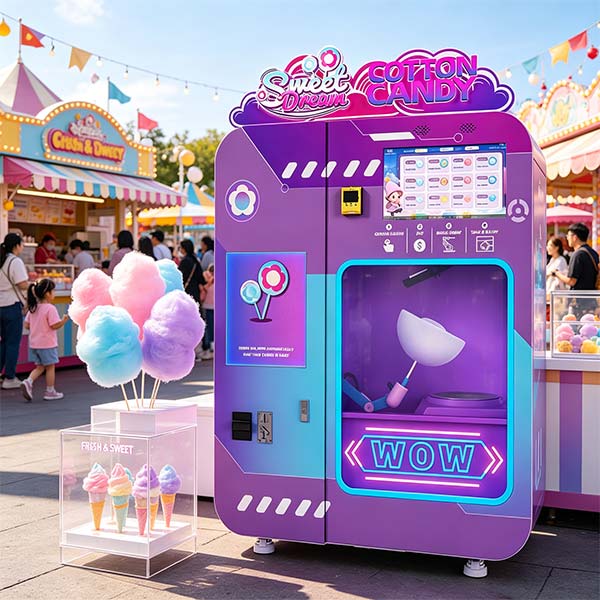
| Cotton candy vending machine | WM980 | US$4,800 | Spins sugar into 36 designs using a robotic arm with four degrees of freedom, 4 sugar tanks |
| Ice cream vending machine, small model | WM550 (small) | US$4,400 (1 to 4 units) | Dispenses 100 g cups in 15 seconds, up to 90 cups, 6 flavor combinations |
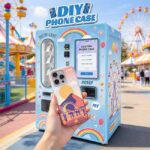
| Phone case vending machine | WM880 | US$4,999 (F1080) or US$5,999 (i1600), 1 to 3 units | Prints a custom photo case on demand, stores 1,020 to 1,025 cases |
| Cotton candy vending machine, upgraded | WM980+ | US$4,999 | Adds an ambient ring light, an improved metal cabinet and 4 larger sugar tanks |
| Cotton candy vending machine, outdoor | WM668 | US$5,299 | Outdoor build with a rainproof elevated roof, high-brightness screen, 6 sugar tanks |
| Ice cream vending machine | WM550 | US$5,799 | 28 L output, up to 300 cups per batch, single flavor, 9 combinations |
| Jigsaw puzzle vending machine | WM520 and WM520+ | US$5,550 and US$5,500 (1 to 5 units) | Prints a paper puzzle from an uploaded photo in 3 minutes, 27-inch touch screen |
| Nail printer vending machine | WM860 | US$5,800 (1 to 4 units) | Prints press-on nails in about 5 minutes, 48 built-in designs, 720 pairs in stock |
| Ice cream vending machine, three flavors | WM550+ | US$6,799 | Two flavors plus a mix flavor, 27 combinations, up to 300 cups per batch |
| Smoothie vending machine | WM666 | US$9,400 at list | Blends fruit smoothies in 90 seconds, 63 flavors, 315 cups, -18°C ingredient storage |
Two patterns are worth noticing. The spread between the cheapest and most expensive machine is more than five times, and none of it is brand premium. It reflects refrigeration, printers, robotics and payment hardware. Volume also changes the arithmetic, so ask for tier pricing before you compare offers, because the answer to how much to purchase a vending machine changes with quantity.
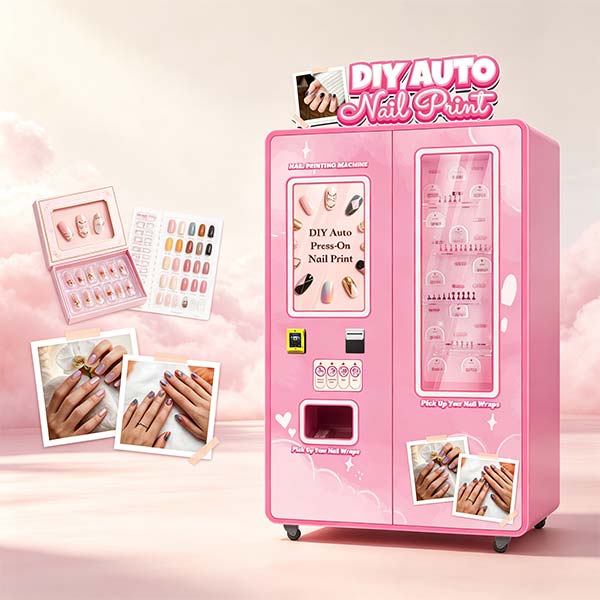
The nail printer drops from US$5,800 to US$5,200 per unit at ten or more units, and the newer puzzle generation costs less than the model it replaces. Options move the price too: the WM980 can be upgraded from 2 kg to 3 kg sugar tanks for an extra US$200, and the phone case machine can move from the F1080 print head to the i1600 and later the i3200, with the i3200 upgrade costing an additional US$680.
For a closer look at any category, we publish separate guides: the popcorn vending machine price breakdown, the ice cream vending machine price guide, the phone case printing machine price guide, the jigsaw puzzle making machine price analysis, the balloon vending machine price rundown and the cotton candy machine price guide. A general overview of how much vending machines cost across the whole market is useful background if you are comparing categories rather than models.
Treat the list prices above as reference points rather than the final number. Promotions run, campaigns end, and the price quoted today may be better than the list price, which is how factory pricing works when capacity and campaigns change. Send your market and order quantity and you will get the current figure.
What actually drives the price of a vending machine
When buyers see a US$1,800 machine next to a US$9,400 machine, they usually assume one factory is greedy and the other is generous. The reason how much to purchase a vending machine varies so widely has little to do with generosity and a lot to do with what sits inside the cabinet. Here is where the money goes.
What the machine has to make
Heating air is cheap. Freezing fruit, blending it at 2,200 rpm and steam-cleaning the chamber at 120°C afterwards is not. The smoothie machine carries a compressor, a brushless motor, a hardened steel blade, an automatic water and milk dispensing system and a freezing compartment, and it draws between 1,500W and 6,000W depending on the cycle. The balloon machine peaks at 250W and does most of its work with a clamping manipulator and an air pump. That difference in engineering shows up directly in the price, and no amount of negotiation removes it.
The payment stack
Every payment method is a separate module with its own certification work. A coin acceptor, a banknote validator, a card reader with contactless support and a QR code scanner are four devices, not one feature. The balloon machine accepts coins, cash, cards and QR codes. The protein shake machine adds Nayax and MDB protocol support alongside Apple Pay and Google Pay, which means the payment terminal alone is a meaningful share of the build cost. If your market is card-heavy, budget for the card reader and do not assume the cheapest quote includes it.
Compliance and certification
Getting a machine certified is not paperwork; it is testing. CE, CCC, RoHS, RCM, CB, ISO 9001 and PSE marks each involve lab work, documentation and periodic renewal, and that cost is built into the machine price. A quote that looks suspiciously cheap may be for an uncertified machine, which customs can hold at the border and insurers may refuse to cover. When two machines sit at a similar price, the one with current certificates for your market is the cheaper one.
Screens and software
Screens range from a 21.5-inch touch display on the ice cream, balloon, protein and smoothie machines to a 27-inch capacitive screen on the nail printer and puzzle machine. Behind the glass sits the software: multi-language interfaces, multi-currency settings, promotion rules with time and quantity limits, sales dashboards and remote alerts. The popcorn machine runs a cloud backend with revenue statements, order tracking and live machine status, and the phone case machine adds print records and per-slot inventory data. This software is why a modern machine can be monitored from a phone, and maintaining it is a recurring cost for the factory, which is part of what you pay for.
Temperature control
Refrigeration and heating are among the most expensive components in any vending machine. The smoothie machine keeps ingredients at -18°C for up to six months of storage and reports vitamin loss under 5%. The ice cream machine holds a 28 L batch and dispenses a cup every 15 seconds, and it needs a 3,000W supply. Compare that with the puzzle machine, which prints at 245W and needs nothing more exotic than a standard outlet. Check your venue’s electrical capacity before you commit to a machine that needs a dedicated circuit.
Printers and ink systems
The phone case, nail printer and puzzle machines are printers that happen to vend. They carry industrial print heads such as the Epson F1080, i1600 and i3200, 600 dpi UV resolution on the nail printer, and 6-color ink systems. Ink sets run from US$85 for the nail printer to US$160 for the 6-color systems on the phone case and puzzle machines, and each bottle on the nail printer prints roughly 5,000 pairs. When you compare quotes for these machines, ask which print head version is quoted, because the upgrade path is real: the phone case machine supports lossless upgrades from the F1080 to the i1600 to the i3200, with the i1600 version printing about three times faster and lasting about four times longer than the base head.
Robotics and moving parts
The cotton candy machine shapes 36 candy designs with a non-stick knife and a robotic arm with four degrees of freedom, and it locks its window magnetically while production is running. The balloon machine uses an automatic clamping manipulator so balloons leave the cabinet undamaged, and its transparent production window lets customers watch the process. These mechanisms need servos, sensors and control boards, and they are the parts most likely to need service, which is why warranty terms matter more on these machines than on a simple heated cabinet.
Cabinet and build
Weight tells you a lot about build quality. The popcorn machine weighs 70 kg, the balloon machine 110 kg, the phone case machine 380 kg, the puzzle machine 370 kg and the full-size ice cream machine 640 kg. The outdoor cotton candy version adds an elevated roof with a rainproof design and a high-brightness screen for daylight. Heavier steel costs more to buy and more to ship, and it also survives longer in a public location.
Footprint matters as much as weight when you are placing a machine. The balloon machine occupies roughly one square meter at 100 × 82 × 210 cm. The puzzle machine stands 970 × 1100 × 2200 mm and needs a wall it can back against. The full-size ice cream machine stretches 227 × 93 × 95 cm and needs service access on the filling side. The cotton candy machine spreads 132 × 195 × 67 cm, which is wide rather than tall. Measure the spot before you order, including doorways and lifts, because a 640 kg machine that cannot reach the room is an expensive problem.
The costs that never appear on the price tag
How much to purchase a vending machine is the first line of the budget, not the whole budget. Freight, duties, location fees and electrical work all sit between the quote and the first sale, and buyers who plan only for the machine usually run short in month two.
Start with freight. A 640 kg ice cream machine and a 70 kg popcorn machine do not cost the same to move, and both need crating, insurance and customs clearance. One documented operator’s books for a puzzle machine listed US$400 in shipping and US$800 in taxes over the same period as the machine purchase. Duties vary by country and by machine classification, so ask suppliers whether they quote FOB, CIF or delivered, and get the import classification in writing before the container leaves.
Then look at the biggest line of all. In the same operator’s records, total input costs over ten months came to US$19,100. The machine accounted for US$5,500 of that. Rent accounted for US$6,400, the largest single share, with consumables at US$3,000 on top. Whether those numbers repeat for you depends entirely on your location and foot traffic, but the shape of the budget is typical: the location often costs more than the machine.
That makes placement a financial decision, not an afterthought. Some venues charge a flat monthly fee, others take a commission on sales, and some place machines for free in exchange for a share of revenue. Before you sign, estimate daily sales conservatively and check whether the location fee still leaves a workable margin. Our guide on where to put vending machines covers how to evaluate a site, and this piece on whether vending machine locations are free breaks down the common fee structures.
Electrical work deserves its own line. The popcorn and ice cream machines draw 3,000W, the smoothie machine up to 6,000W, and the cotton candy machine 3,000W while processing. If your venue needs a new circuit or a three-phase supply, that is an electrician’s invoice, not a supplier’s. Machines that run on 110V or 220V are configured for the destination market, so confirm the voltage and plug type when you order rather than after delivery.
Payment processing is another quiet cost. Card and contactless sales carry a per-transaction fee set by your acquirer, not by the machine supplier, and on a US$3 drink that fee is a visible share of the margin. Cash sales avoid the fee but add counting, float and theft risk. Machines in our catalog report sales by payment method through the cloud dashboard, so you can see which mix your location actually produces rather than guessing.
Downtime is the other cost nobody lists. A machine that sits dark for a week does not just lose a week of sales; it loses the habit of the customers who walked up to a dead screen. That is why remote monitoring matters more than it sounds. Machines in our catalog report live status, alarms and connectivity to a cloud dashboard, and several push fault alerts to the operator’s phone before a customer notices anything. Ask any supplier what happens at 2 a.m. on a Saturday when the machine stops, and whether anyone is awake to answer.
Finally, budget for the second consumable order. The most common first-year mistake we see is spending the entire budget on the machine and arriving at week three with an empty sugar tank, an empty case magazine or an empty cup dispenser and no cash left to refill it.
Consumables: the cost that repeats forever
The machine is a one-time purchase. The consumables are not, and how much to purchase a vending machine matters less over two years than what each sale costs to fulfill. The table below lists per-unit consumable costs from our current documentation.
| Machine | Consumables | Cost per unit |
|---|---|---|
| Popcorn vending machine (WM680) | 32 oz cups | US$0.10 to US$0.12 each, at 1,000 to 10,000 pieces |
| Balloon vending machine (WM688) | Balloons with sticks | US$0.10 to US$0.30 each, at 1,000 to 10,000 pieces |
| Protein shake machine (WM186) | Powder and cup per serving | US$0.80 to US$1.50, averaging about US$1.20 |
| Cotton candy vending machine (WM980) | Sugar and paper sticks | 28 to 30 g of sugar per candy, sticks at US$0.038 to US$0.050, sugar at US$2.75 to US$3.25 per bag |
| Ice cream vending machine (WM550) | Cups and spoons | US$0.08 to US$0.12 per cup, US$0.03 per spoon |
| Phone case vending machine (WM880) | Cases and UV ink | US$1.10 to US$1.30 per standard case, US$100 to US$160 per ink set |
| Nail printer vending machine (WM860) | Press-on nails and ink | US$0.80 to US$1.50 per pair, US$85 per ink set |
| Jigsaw puzzle vending machine (WM520+) | Puzzles, frames and ink | US$0.80 to US$1.20 per puzzle, US$1.20 to US$1.80 per frame, US$100 to US$160 per ink set |
| Smoothie vending machine (WM666) | Cups and straws | US$0.185 to US$0.22 per cup, US$0.05 to US$0.06 per straw |
To read the table, subtract the consumable cost from the price you charge. That difference is your gross margin before rent, power and card processing fees. The protein shake machine is the clearest case in our catalog: consumables average about US$1.20 per cup against a typical retail range of US$3.00 to US$8.00, which is where our published 60% to 75% gross margin comes from. One mid-size gym in Miami reported selling about 45 cups a day at US$5.50 with material costs of US$1.20, and recorded roughly US$193 a day in profit. Treat that as one operator’s reported result rather than a forecast, because daily volume depends on the venue as much as the machine. Our guide on how much a vending machine can make works through the numbers for each machine type.
Cotton candy sits at the other end of the scale. Each candy uses 28 to 30 g of sugar, so a single 2 kg tank covers roughly 65 to 70 candies, and sticks cost US$0.038 each at volume. A low consumable cost per sale is what makes treat machines attractive in high-traffic locations, and the trade-off is that a treat machine sells more units at a lower price than a printer-based machine. Over a year, the two models can produce similar gross profit from very different sales volumes, which is why the right comparison is margin per day rather than price per item.
Print-based machines turn consumables into a real line item. The nail printer’s UV ink set costs US$85 and each bottle prints about 5,000 pairs, while the phone case machine’s standard 4-color ink set costs US$100 and the 6-color version US$160. Ask for ink yield and cost per print before you compare these machines against a treat machine, because the ink bill arrives as regularly as the cup order.
Storage and shelf life belong in the calculation too. The smoothie machine keeps ingredients at -18°C for up to six months, which suits a location that sells steadily but not one that sells in bursts. Sugar for the cotton candy machine stores indefinitely in a dry place. Cups, sticks and frames take shelf space but nothing more exotic. Order consumables in the quantity your location can actually turn over, because the cheapest unit price at 10,000 pieces is only cheap if you sell 10,000 pieces.
Reorder cadence is worth planning before the first cup sells. The nail printer holds 720 pairs and sends an automatic inventory reminder through its IoT dashboard when stock runs low. The smoothie machine monitors ingredient levels and prompts a refill. The cotton candy machine tracks sugar tank status remotely. None of this removes the work of restocking, but it turns restocking into a scheduled trip instead of an emergency, and on a multi-unit route it tells you which machine needs attention first.
Buying from a factory versus buying through a reseller
The same WM880 is listed by dozens of resellers, and the quoted prices differ by thousands of dollars. Some of that is margin. Some of it is what happens when the machine needs help six months later. How much to purchase a vending machine is rarely the whole question; who you purchase it from decides what the price actually includes.
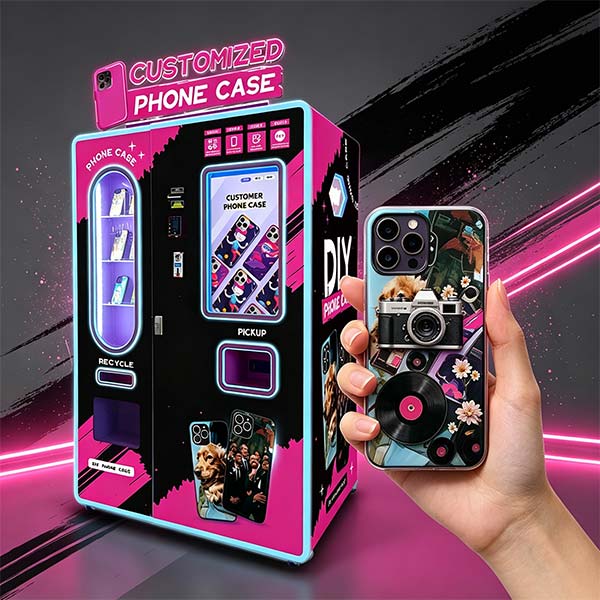
A factory can do things a reseller cannot. Wider Matrix builds these machines in its own Guangzhou factory, we employ more than 50 engineers, and we hold the production records and spare parts for every model we build. We assemble and test every machine before it ships. When a fault appears, our engineers can read the machine’s cloud diagnostics remotely and push a software update over the air, which is why our machines carry OTA upgrade systems and remote monitoring dashboards. We also support lossless hardware upgrades, so a phone case machine that starts with the F1080 print head can move to the i1600 and later the i3200 without replacing the cabinet.
Support terms matter as much as price. Our machines ship with a one-year warranty and lifetime technical support, and we target a 24-hour response on technical questions. Machines are certified for their destination markets, with marks including CE, CCC, RoHS, ISO 9001, RCM, CB and PSE depending on the model. Ask what training and documentation come with the machine: installation training, video guides for routine maintenance and simple after-sales repairs are standard with our machines, along with marketing and operation guidance for first-time operators. Before you order from anyone, ask which certificates the specific model holds, request copies, and ask how spare parts reach your country if something breaks. This guide on choosing the right vending machine supplier and this one on choosing the right vending machine manufacturer cover the vetting process in more detail.
Consumables are the long tail of this decision. A factory that sells the machine usually sells the matching sugar, cups, cases, nails, puzzles and ink for as long as the model is in production, and it controls the quality of both halves. A reseller may source consumables from a third party, and a slightly different cup dimension or ink formulation can cause jams that nobody wants to diagnose. Ask who manufactures the consumables, not just who ships them.
Resellers are not automatically a bad choice. A good one adds local service, local language support and stock in your time zone, and that can be worth a markup. The test is simple: ask a technical question about the machine you are buying. If the answer comes back within a day with specifics, the markup is buying you something real. If it comes back as a forwarded email chain, you are paying a premium for a mailbox.
Renting, buying used, or buying new
Renting converts a large purchase into a monthly payment, and it suits short trials, seasonal placements and anyone still testing whether a location produces sales. Anyone weighing how much to purchase a vending machine outright against a monthly rental should run both totals over the same period. Over twelve to twenty-four months, rent on a machine usually adds up to more than the purchase price of an entry-level model, which starts at US$1,800, and the rented unit never becomes yours. Our breakdown of renting versus buying a cotton candy machine runs the comparison with real numbers if you want to see where the crossover lands.
There is a middle path worth mentioning. Some operators rent a machine for one location, run it for a season, and use the sales data to decide whether to buy the same model for a second site. Renting as a test is a reasonable use of the model, as long as you treat the rent as the price of information rather than as a long-term plan.
Used machines are the other common starting point, and they carry specific risks. Payment certifications age: a second-hand machine may lack the contactless and card standards your market expects today. Software support often ends when the original owner stops paying, and nobody warrants the remaining life of a compressor or a print head. A used machine can still make sense if you can inspect it, test every payment path and buy spare parts cheaply, but treat it as a calculated risk rather than a bargain.
Buying new from a factory costs more upfront and removes most of those unknowns: current certifications, a one-year warranty, remote software support and consumables that are guaranteed to fit. For a first machine, that certainty is usually worth the difference.
Matching the machine to the location
Search for how much a vending machine costs and you will find everything from second-hand snack cabinets to fully automated smoothie machines, and the two share nothing but the name. The same is true of locations. A machine that earns its keep in a gym can starve in an office lobby, and the placement decision starts before the purchase decision, because the venue tells you which machine to buy.
Gyms and fitness centers suit the protein shake machine. Our documentation records commercial gyms with 500 or more members selling 40 or more cups a day, university sports centers peaking above 80 cups on event days, hotel fitness centers trading around the clock and CrossFit and boxing clubs ordering co-branded versions. If you already run or use a gym, the machine fits a venue where the customer is standing in front of you.
Malls, cinemas, airports and amusement parks suit the treat machines: cotton candy, popcorn, ice cream and balloons. The nail printer also performs in this footfall, particularly in nail salons, beauty supply stores, cinemas and campuses. Transportation hubs favor the balloon and smoothie machines, since travelers buy on impulse and the balloon machine’s compact frame fits a concourse. Schools, gardens and street locations round out the balloon machine’s list of suitable venues.
Service time shapes throughput, and throughput decides which machine suits a rush. The ice cream machine dispenses a cup in 15 seconds, so a queue clears quickly. The protein shake machine needs 60 seconds per cup and peaks above 60 cups an hour. The nail printer takes about 5 minutes per customer, which is far quicker than the 60 to 120 minutes a salon appointment takes, but it means a busy Saturday produces a line, so a waiting area matters. The puzzle machine prints a sheet in 3 minutes, and the popcorn machine fills a cup in about 120 seconds. Match those numbers to the rhythm of your venue rather than to the machine’s brochure.
Run a short checklist before you order. Measure the space and the route in, including doorways and lifts. Check the available power against the machine’s draw. Check what payment methods local customers actually use. Decide who restocks and how often, because a machine 40 minutes from your base gets restocked less than one that is close. Confirm the venue’s own rules, since some landlords require insurance certificates or specific product certifications before they sign.
A working budget for your first machine
How much to purchase a vending machine and keep it running for a full year is a different number from the price on the quote. Budgeting works better from the bottom up than from the machine price down.
Take the popcorn machine as the cheapest serious starting point. The machine is US$1,800 for one to five units. Add 10,000 cups at US$0.10 each, which is US$1,000, plus your first kernel order from a local supplier, since dry corn kernels are bought locally rather than shipped with the machine. Add shipping and duties, which vary by destination. Add whatever the location charges, whether that is a flat fee or a commission. Add a reserve for the second and third consumable orders, because a machine that cannot be refilled earns nothing.
Now run the same exercise for a mid-range machine. A protein shake machine is US$4,150 with consumables at US$0.80 to US$1.50 per cup and a published payback period of one to three months in our documentation, based on a 60% to 75% gross margin. Our case study of a mid-size Miami gym recorded a three-month payback on a machine at this price. Those are documented figures from real operations, not promises, and your own payback depends on your rent and traffic.
A third data point: the small ice cream machine starts at US$4,400 for one to four units, with cups at US$0.08 to US$0.12 and spoons at US$0.03, and it holds up to 90 cups at a time. That suits a smaller venue where a 640 kg machine would be oversized and the 300-cup batch capacity would sit unused.
If the first machine works, the second one costs less per unit. Most of our models drop in price at three units and again at six or ten, and the cloud dashboard is built for fleets: the phone case machine’s management system tracks inventory per slot, and the nail printer’s dashboard can manage more than 100 machines from one screen. The marginal cost of a second machine is the machine plus shipping plus consumables, because the location research, the payment setup and the daily routine are already done.
Whatever machine you choose, keep one rule: never spend the whole budget on the cabinet. When you compare vending machines for sale, the machine is the visible cost, but the location agreement and the consumable pipeline decide whether the machine ever pays for itself. Our guide to starting a vending machine business covers the setup costs end to end, and this analysis of startup costs in the UK shows how the numbers shift in a higher-rent market.
How to read a supplier’s quote
A good quote answers questions before you ask them. When offers arrive, compare them line by line rather than on the headline price. These are the points we would check on any quote, including our own.
- What is included: machine, payment modules, spare parts kit, installation training and consumable starter stock.
- Warranty length and what it covers, including parts, labor and print heads.
- Technical support hours and response time, in writing.
- Whether the price changes with quantity, and what the tier thresholds are.
- Shipping terms, whether FOB, CIF or delivered, and who handles customs clearance.
- Certifications for the specific model, with copies attached.
- Voltage, frequency and plug standard for your market.
- Payment methods included: coin, banknote, card, contactless, QR, Nayax, Apple Pay, Google Pay.
- Software features: cloud dashboard, remote monitoring, over-the-air updates, multi-currency and multi-language settings.
- Consumable prices at your expected order volume, not just the list price.
- Lead time from deposit to delivery, and what happens if the machine fails inspection on arrival.
Watch for a few warning signs while you collect quotes. A quote with no model number, no certification list and no payment module breakdown is an invitation to argue later. A demand for full payment before production starts removes your only leverage. A supplier who cannot send a video of the specific machine, or photographs of the unit they intend to ship, is guessing at their own inventory. None of these proves bad faith on its own, but together they describe a transaction where you carry all of the risk.
Two of these points catch buyers out most often. Payment modules are the first: a quote that says “card payment accepted” may still require a local terminal or a specific acquirer in your country. Warranty scope is the second: a one-year warranty on parts but not labor, or one that excludes print heads, costs far more than it appears. Wider Matrix quotes list the included hardware, the warranty terms and the consumable prices at your volume, so offers from different suppliers can be compared on the same basis. A low headline number tells you how much to purchase a vending machine seems to cost, not what it costs to own.
Frequently asked questions
How much does it cost to purchase a vending machine?
Single-unit factory prices range from US$1,800 for a popcorn machine to US$9,400 at list for a smoothie machine, with most specialty machines falling between US$4,000 and US$6,000. Most models offer volume discounts from three units upward, such as the nail printer at US$5,200 per unit for ten or more. In short, how much to purchase a vending machine depends on what the machine makes and how many you order, with shipping, duties and consumables budgeted separately.
How much does it cost to ship a vending machine to another country?
Freight depends on the machine’s size and weight, which range from 70 kg for the popcorn machine to 640 kg for the full-size ice cream machine. One documented operator’s records listed US$400 for shipping and US$800 for taxes over the same period as the machine purchase. Final costs vary by destination, shipping terms and local import duties, so ask for a delivered quote rather than a factory-gate price.
Can a vending machine run unattended?
Yes. Every machine in our catalog is built for unattended operation, and all of them accept card, contactless or mobile payment so no one needs to handle cash. The cotton candy machine runs 24 hours a day on its own, and the ice cream machine dispenses a cup in 15 seconds without operator input. Several machines also clean themselves between servings, with the smoothie machine running a 120°C steam cycle and the protein shake machine running an automatic high-temperature cleaning cycle. Someone still needs to restock consumables and collect cash on a regular schedule.
What consumables will I need to reorder?
It depends on the machine: cups for popcorn, ice cream and smoothies, sugar and paper sticks for cotton candy, phone cases and UV ink for the case printer, press-on nails and ink for the nail printer, puzzle stock and frames for the puzzle machine, and powder for the protein shake machine. Per-unit costs range from about US$0.10 for a popcorn cup to US$1.50 for a pair of press-on nails. Buying consumables from the same supplier as the machine keeps fit and quality consistent. Most machines also alert you when stock runs low through the cloud dashboard, so reordering can be scheduled rather than reactive.
Do I have to pay a location to place my vending machine?
Often, yes. Malls, airports, gyms and other high-traffic venues commonly charge flat monthly rent or take a commission on sales, and in one documented case rent was the largest operating cost at US$6,400 over ten months. Some venues host machines for free in exchange for a revenue share. Estimate daily sales conservatively and check that the fee still leaves a workable margin before you sign.
What warranty and after-sales support should I expect?
Our machines carry a one-year warranty plus lifetime technical support, with a 24-hour response target for technical questions. Remote monitoring through the cloud dashboard lets engineers diagnose many faults without a site visit, and software updates are delivered over the air. Ask any supplier to confirm the warranty length, response time and spare parts policy in writing before ordering.
Is it cheaper to rent or buy a vending machine?
Renting lowers the upfront cost and works well for short trials or seasonal placements. Over a longer period, rent typically adds up to more than the purchase price of an entry-level machine, which starts at US$1,800, and a rented machine never becomes an asset. Ownership also brings a warranty and current payment certifications, which used machines often lack.
What certifications should I look for before buying?
Check for the marks your market requires. Machines in our catalog hold certifications including CE, CCC, RoHS, ISO 9001, RCM, CB and PSE depending on the model, and payment terminals are configured for local card and mobile payment standards. Ask which certificates the specific model holds and request copies, and confirm the voltage and plug type, since machines are built for 110V or 220V depending on the destination.
Get a quote you can compare line by line
Send us your market, the location you have in mind and the quantity you are considering, and we will reply with our best offer along with the shipping terms, the certifications that apply and the consumable prices at your volume. Wider Matrix has shipped more than 3,000 machines to buyers in over 130 countries, we assemble and test every unit before it leaves the factory, and the one-year warranty comes with lifetime technical support. Knowing how much to purchase a vending machine is only useful when the quote also lists shipping, warranty and consumables, and a quote that does that is easier to compare against every other offer on your desk.
If you are still weighing machine types, start with the product pages for the popcorn vending machine WM680, the automatic ice cream vending machine, the automatic cotton candy vending machine and the phone case printing vending machine WM880. When you are ready, contact us with your requirements and we will put a full quote together.