


Most people who ask me about how to run a vending machine business already know the headline: low barrier to entry, decent margins, work your own hours. What they really want to know is whether the numbers add up in practice, not in theory. I have been around this industry long enough to see operators make money and lose money, sometimes with the exact same machine. The difference almost always comes down to location fit and whether they did the math on consumables before they bought anything.
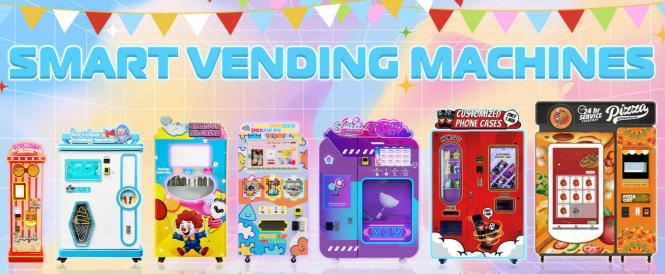
I work with Wider Matrix, a manufacturer that ships vending machines to operators in more than 130 countries. Over the years I have talked to hundreds of operators running everything from popcorn machines in rural cinemas to phone case printers in Dubai malls. Some of them are printing money. Others are trying to offload their machine on Facebook Marketplace after six months. This article is what I have learned about what separates the two groups.
Fair warning: running a vending machine business is not the passive income fantasy you see on YouTube. You can get it down to a few hours a week, but that takes time. Early on, you are driving to locations, negotiating with venue managers, troubleshooting payment glitches, and figuring out why your cotton candy sugar is clumping. The business works, but it works for people who treat it like a business.
Pick a machine that really fits where you are putting it
This is where most first-time operators stumble. They see a cool machine at a trade show and buy it before they have a location locked down. Then they try to retrofit the location to the machine instead of the other way around. It almost never works.
Here is the reality: a protein shake vending machine in a gym lobby and a popcorn machine in a cinema are completely different businesses. Different customers, different price points, different restocking schedules. The machine dictates everything that follows. Your cost structure, your daily time commitment, your breakeven point. Before you start a vending operation, you need to know exactly what you are getting into.
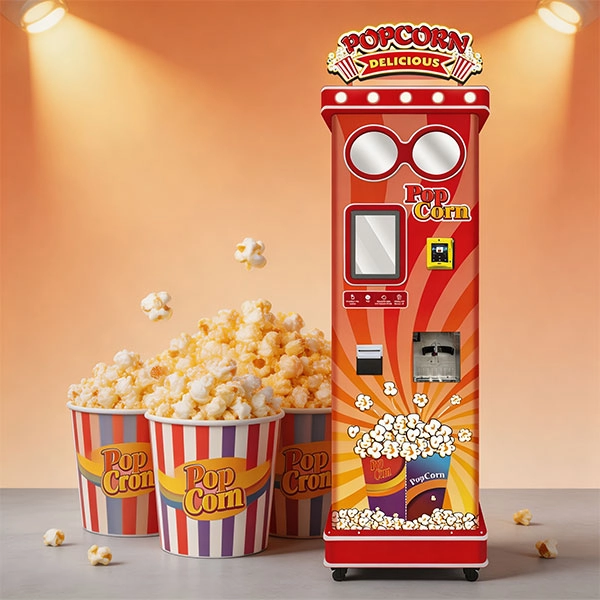
At Wider Matrix, we make nine distinct machine types, and each one has a personality. A popcorn machine (WM680, starting at $1,800) is dead simple. Load kernels and cups, collect cash. Maintenance is almost zero. A pizza machine (WM660, $8,250) has refrigeration, ingredient rotation, and enough power draw to need its own circuit. You cannot approach them the same way. Your vending machine cost structure depends entirely on which type you pick.
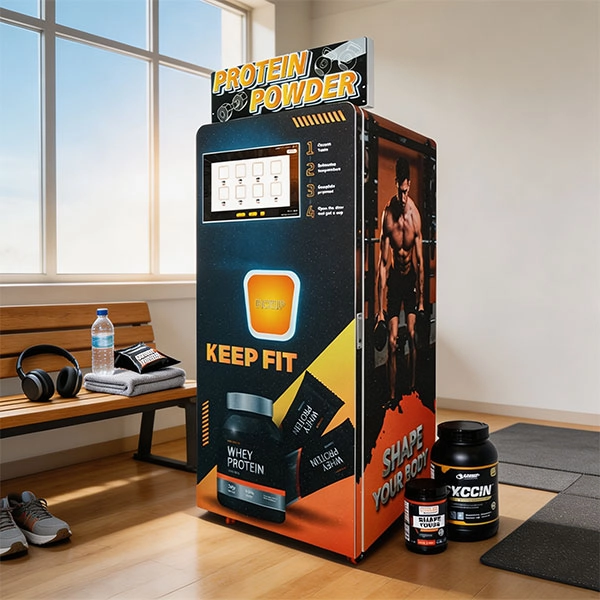
The protein shake machine ($4,150) is interesting because it sits in a sweet spot: moderate upfront cost, simple consumables, and customers who buy on repeat. Gym regulars buy protein shakes the same way office workers buy coffee. The balloon machine ($3,200) is more event-driven. It crushes it on weekends at family entertainment centers but might do nothing on a Tuesday morning.
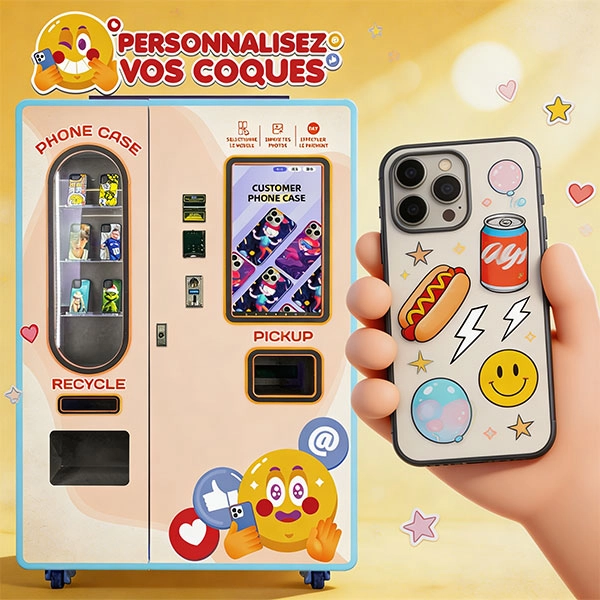
Then there are the printing machines. Phone case printing ($4,999) and nail printing ($5,800) have higher per-sale revenue because customers pay for personalization. A $25 custom phone case has way more margin than a $3 bag of popcorn. But you are also dealing with ink levels, print head maintenance, and customer expectations about image quality. There is no free lunch.
Before you spend a dime, stand in your target location and watch people for an hour. Are they waiting around, or walking through? Are they carrying shopping bags, or gym bags? Do they look like they have time to browse, or are they rushing to catch a train? Match the machine to what you see. Not what you hope.
The real startup costs nobody talks about
People always ask me for a number. The honest answer is: it depends, and here is why.
The machine itself is just the first line item. A popcorn unit from Wider Matrix starts at $1,800. A frozen pizza machine runs up to $9,600. Most operators I know end up somewhere in the $4,000 to $6,000 range for their first unit. Volume discounts matter: our nail printing machine drops from $5,800 for one unit to $5,200 once you hit ten units. If you have plans to scale, it is worth thinking about that upfront.
But here is the part people forget: consumables. Cotton candy sugar is $2.75 to $3.25 per bag. Popcorn cups are ten to twelve cents each. Balloons with sticks are a dime in bulk. For a typical first order, budget another $300 to $800 on top of the machine. I have seen operators get caught off guard by this. They budgeted for the machine, got it placed, sold out in three days, and then realized they had no money left for restocking. Do not be that person.
Location costs are the third piece. Malls and gyms will either charge fixed rent or take a revenue share, usually 10% to 25% of gross sales. I always tell new operators to push for revenue share if they can. It lowers your risk. If the machine underperforms, your rent goes down with it. A fixed rent of $500 a month sounds fine until the machine only does $800 in sales because the mall had a slow month.
We put together a full breakdown of how to make money from vending machines with revenue projections and payback timelines across all nine types. Worth a read before you commit anything.
Finding a location is harder than finding a machine
I cannot stress this enough. A mediocre machine in a great location outperforms a great machine in a mediocre location every single time. I have seen $1,800 popcorn machines in high-traffic amusement parks do more revenue than $8,000 pizza machines in dead office buildings.
What makes a location good? Three things, in order of importance:
First, dwell time. People need to be standing around. Cinema lobbies, mall food courts, gym reception areas. Places where people wait. A hallway people walk through at full speed is useless no matter how many of them there are.
Second, audience match. A phone case machine in a mall works because shoppers are already spending money. A cotton candy machine at an amusement park works because families with kids are a captive audience. But put that same cotton candy machine in a corporate office building and it will collect dust. The product has to match the crowd. Your vending machine location dictates your ceiling, and no amount of restocking discipline can compensate for a site with the wrong foot traffic.
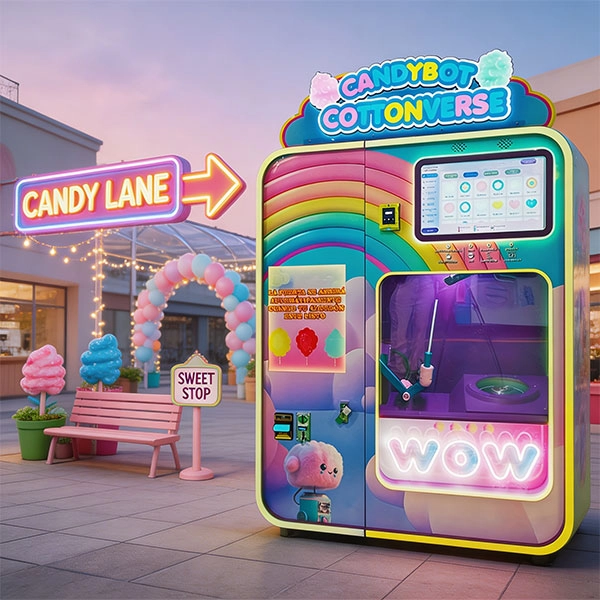
Third, visibility and power. The machine needs to be where people can see it, and it needs a standard outlet. Our units run on 110V to 220V globally, but higher-wattage machines like ice cream (3000W) and pizza (up to 8500W) need dedicated circuits. I have heard horror stories about operators who placed a pizza machine only to find the venue only had shared circuits that tripped every time someone used a microwave nearby.
When you approach a venue, do not show up empty-handed. Bring a one-page proposal with a photo of the machine, your revenue share offer, and a brief maintenance plan. Venue managers are busy. They respond to people who have thought it through. If you want a partner who can support you through this, our guide on finding the right vending machine supplier covers what to look for.
What the numbers look like in real life
Let me walk through an actual scenario. Not a best-case projection. A real one.
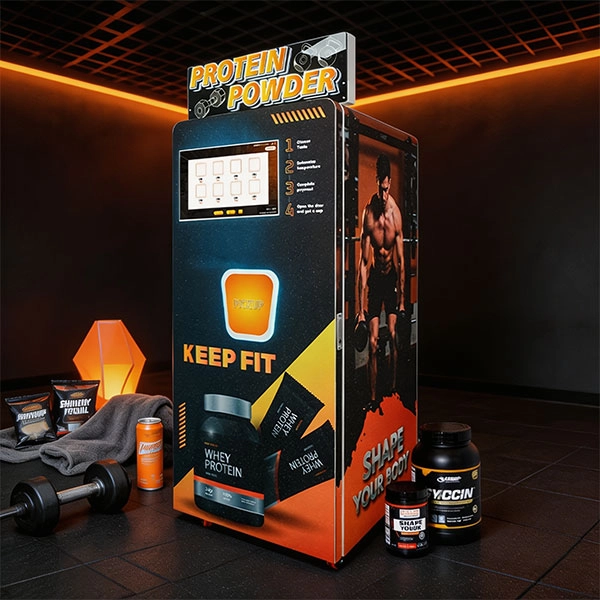
One of our operators runs a WM186 protein shake machine in a mid-sized gym in Texas. The machine cost $4,150. He sells shakes at $4.00 each. His consumable cost (powder, cup, lid, straw) is about $1.20 per cup. The gym takes 15% revenue share, so $0.60 per cup. His net profit per cup: $4.00 minus $1.20 minus $0.60, which is $2.20.
On an average day, he sells 15 cups. That is $33 in daily profit. Over a month, about $990 gross. At that rate, the machine pays for itself in just over four months. If he pushed volume to 25 cups a day (which some of our gym operators do), payback drops to under three months.
That is a conservative estimate. No magic. No best-case scenario. Just real numbers from a real operator.
Cotton candy is even more interesting. Sugar and sticks cost about $0.15 per candy. Sells for $2 to $5. The margin is ridiculous if you have the foot traffic. Popcorn is similar: kernels and cups are pennies, markup is huge. Pizza has higher revenue per sale ($7 to $12) but also higher complexity and more expensive machine. Custom printing (phone cases, nails, puzzles) lands at $15 to $35 per sale with healthy margins, but you are managing ink and print heads.
If you want the full picture, we broke down how much money you can make across every machine type we make.
The daily grind: restocking and keeping things running
This is the part nobody posts about on Instagram. Running a vending machine business means restocking, cleaning, and occasionally fixing things. It is not glamorous, but it is what keeps the money coming in.
For most Wider Matrix machines, a restocking visit takes 15 to 30 minutes. Refill consumables, empty the cash box, wipe down the exterior, check the screen. How often depends entirely on sales volume. A busy cotton candy machine in a mall might need attention twice a week. A protein shake machine in a smaller gym might go a week between visits.
All our machines come with an IoT dashboard. You log in and see exact inventory levels, sales by hour, and any error codes. It sounds like a small thing, but when you are managing three or four units across different neighborhoods, knowing that the sugar tank is at 20% without driving there changes everything. The protein shake machine and cotton candy units both have this, and frankly, I cannot imagine running multiple locations without it.
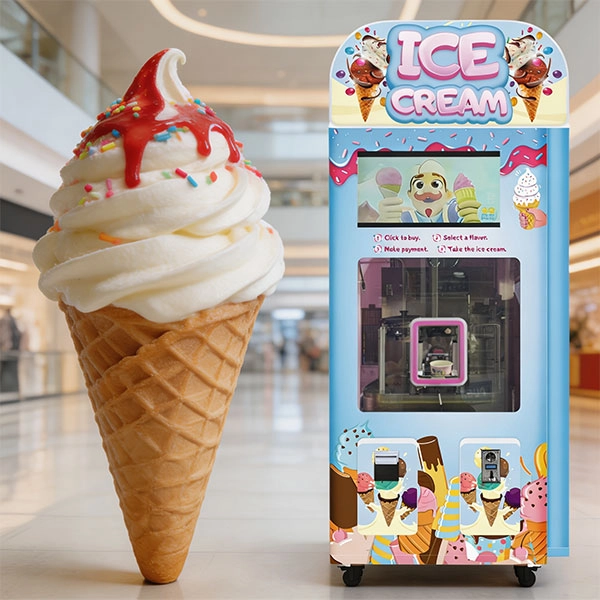
Maintenance is usually minor. The most common issues are payment connectivity hiccups and print head cleaning on the printing machines. We ship replacement parts globally and have video guides for most repairs. For ice cream machines, the big thing is keeping the refrigeration system clean and monitoring temperature through the dashboard. Nothing you can not handle with a bit of attention.
My advice? Start with one or two machines. Learn the rhythm. Figure out which consumables you burn through fastest, which locations have the best foot traffic on which days, and how long a restocking visit takes you. Once that is smooth, scaling is mostly just doing the same thing in more places. But do not expect to become a full-time vending machine operator overnight. It takes time to build the muscle.
Payment and pricing: the details that matter
Every Wider Matrix machine ships with credit card, NFC (Apple Pay, Google Pay), and QR code payment built in. In some markets, cash and coin too. The payment system connects through standard MDB protocols, which means it works with major processors like Nayax and Pax.
Pricing is where a lot of operators leave money on the table. The instinct is to price low to drive volume. But here is the thing: in vending, volume is capped by foot traffic. You cannot make more people walk past your machine. So the smart move is to price at what the market will bear and let the margin absorb your location costs and the occasional slow week.
Here is what we see in the field:
Popcorn goes for $2 to $4 per cup. Cotton candy, $2 to $5. Balloons, $2 to $5. Protein shakes, $4 to $8. Phone cases, $15 to $35. Nail printing, $10 to $25. Ice cream, $3 to $6. Pizza, $7 to $12. Custom puzzles, $15 to $30.
The custom-printed stuff carries the highest margins because people pay for personalization. Your profit on a printed phone case can be $10 to $25 after consumables. That is why phone case printing and similar print-on-demand models can have strong ROI even at lower daily volume. Your vending machine profit per unit on custom printing is what makes those models attractive despite the higher complexity.
Scaling from one machine to something real
Once you have one machine humming, the path to more is simple in concept. Reinvest profits into a second machine, find a new location, repeat. The hard part is maintaining quality across multiple sites.
Operators who scale well do a few things consistently. They cluster machines geographically so one trip covers several units. They use the IoT dashboard to prioritize which machine needs attention today. They standardize consumable ordering so they are not juggling ten different supply chains. And they build actual relationships with venue managers, so when a new spot opens up, they hear about it first.
Some operators specialize: one machine type, many locations. Others mix it up. Both work. The only thing that does not work is putting the wrong machine in the wrong spot and hoping for the best.
If you are just starting out, our guide on how to start your own vending machine business covers the early stuff in more detail. Business registration, taxes, approaching your first venue. The boring but necessary parts.
Mistakes I see over and over
I have watched enough operators come and go to spot the patterns. Here is what goes wrong most often:
Buying the cheapest machine without checking location fit. A $1,800 popcorn machine in a low-traffic office building will lose money every single day. Match the machine to expected revenue, not to your budget.
Not pushing for revenue share on location agreements. Fixed rent is risky when you do not know your sales yet. Revenue share protects you in slow months.
Forgetting about consumable logistics. You need a reliable supply chain for sugar, cups, sticks, or whatever your machine uses. Order in bulk to keep per-unit costs low. Track inventory through the dashboard so you never run out mid-week.
Pricing too low. Vending is impulse. People do not comparison shop for a custom phone case at a mall kiosk. Price for the value you deliver.
Visiting too infrequently in the first month. Go more often than you think you need to. Learn the sales pattern, catch small issues early, and build a relationship with venue staff. That relationship is worth more than you think.
Why the machine choice ripples through everything
The machine you pick shapes your entire operation. A popcorn machine is about as simple as it gets: load kernels and cups, the machine air-pops and dispenses, minimal maintenance. A pizza machine has refrigeration, ingredient rotation, higher power draw. Both can be profitable. They just demand different levels of your attention.
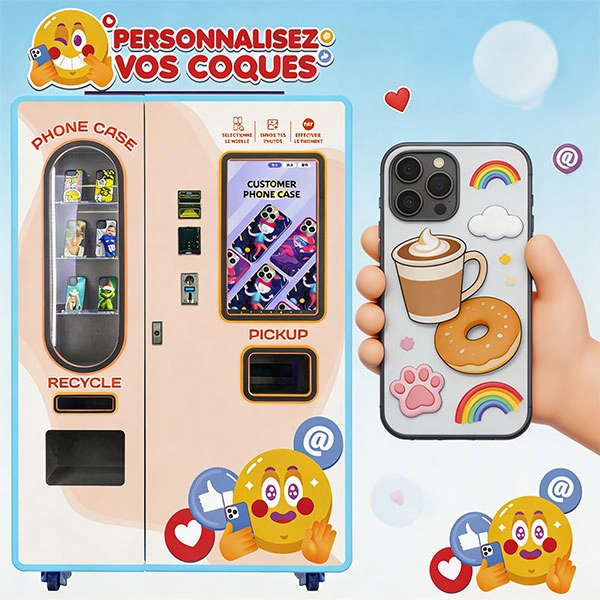
Custom printing sits in its own world. The phone case printing business and similar models have higher per-sale revenue because customers pay for personalization, not raw materials. But you are managing print heads and ink. If you are comfortable with technology and want higher margins per transaction, printing machines are worth a serious look. The protein shake business offers a middle ground: moderate cost, simple consumables, and solid recurring demand in the right venue.
If you are ready to move forward
The process is straightforward. Tell us what kind of location you have and what the foot traffic looks like. We will recommend a machine, send you a quote with current pricing and volume discounts, and help you plan consumables and logistics.
Contact us through any product page. We usually respond within 24 hours with a preliminary quote and a conversation about your location, budget, and goals. Every machine comes with a warranty, remote monitoring software, and ongoing support. We ship globally and have operators running our machines everywhere from the US to Japan to the Netherlands.
Running a vending machine business is not a get-rich-quick scheme. But for people who pick the right machine, place it well, and keep it stocked, it is a real business that generates real income with real margins. If that sounds like you, the next step is just getting in touch.
Frequently Asked Questions
How much does it cost to start?
Single Wider Matrix machines run from $1,800 to $9,600 depending on the model, plus $300 to $800 in initial consumables, plus location costs. A realistic range to start is $2,500 to $10,000 total. Most operators start with one machine in the $4,000 to $6,000 range.
How much money can I realistically make?
It varies a lot by machine and location. A protein shake machine doing 15 cups a day at $4 each generates roughly $990 in monthly gross profit after consumables and a 15% venue share. Busy locations can double that. Custom printing machines have higher per-sale revenue ($15 to $35) but lower volume.
Do I need special licenses?
Depends where you are. Most places need basic business registration, and food machines might need a food handling permit. Our machines are CE certified, which simplifies approvals in most jurisdictions. Check with your local authority.
How often do I need to restock?
Sales-dependent. Busy machines need restocking twice a week. Slower ones, once every 10 days. The IoT dashboard shows exact inventory levels, so you only visit when needed.
What happens when something breaks?
Contact our support. We diagnose remotely through the dashboard. Most issues are resolved with shipped replacement parts. Video repair guides cover the mechanical stuff. Typical downtime for common problems is under 48 hours.
Can I do this part-time?
Yes. Many operators keep another job. Once a machine is placed and stocked, daily involvement is minimal: check the dashboard, plan your restocking, handle the occasional issue. One or two machines is very manageable alongside other work.
Which machine type is best for beginners?
Popcorn or cotton candy. Simple consumables, low operating cost, clear audience fit. Protein shake machines work well if you have a gym connection. The best choice depends on your location more than your budget.
How do I find a location?
Approach venues that match your machine. Bring a short proposal with a photo, your revenue share offer, and a maintenance plan. Start with venues where you already have a contact if possible. Personal connections open more doors than cold emails.