


An ice cream vending machine business is one of the simpler automated retail models to understand. The machine mixes a fresh 100g cup of soft serve on the spot, takes payment on a touchscreen, and runs without a cashier. The operator’s job is to find the right location, keep the machine stocked, and manage the numbers. That sounds easy, and in some ways it is. The details, however, decide whether the business makes money or quietly burns it.
This guide is written from the operator’s point of view. It covers the actual economics, the location decisions, the daily work, and the risks, using the WM550 automatic ice cream vending machine from Wider Matrix as the example. The product information and operator examples come from the manufacturer’s published material, and the article notes where you should verify numbers yourself.
What the ice cream vending machine business actually involves
Before buying anything, it helps to be clear about the model. An ice cream vending machine business is not a shop and not a food truck. It is a machine placed in a venue with foot traffic, selling a product with a high margin and a low unit cost. The operator supplies the machine, the ingredients, and the cups, and the venue supplies the customers.
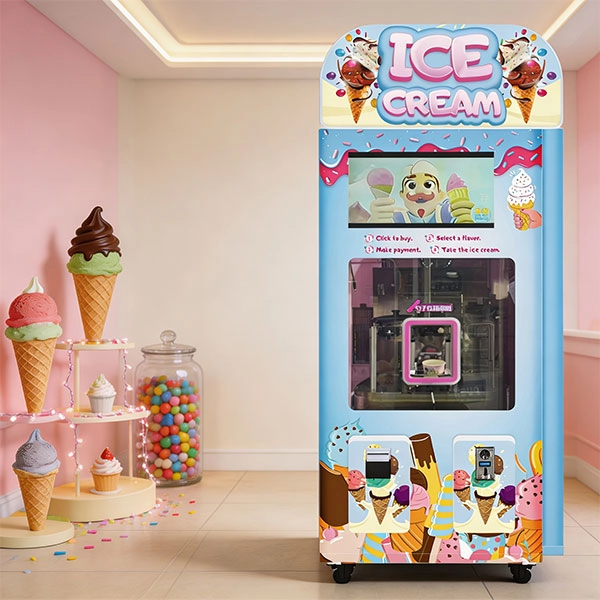
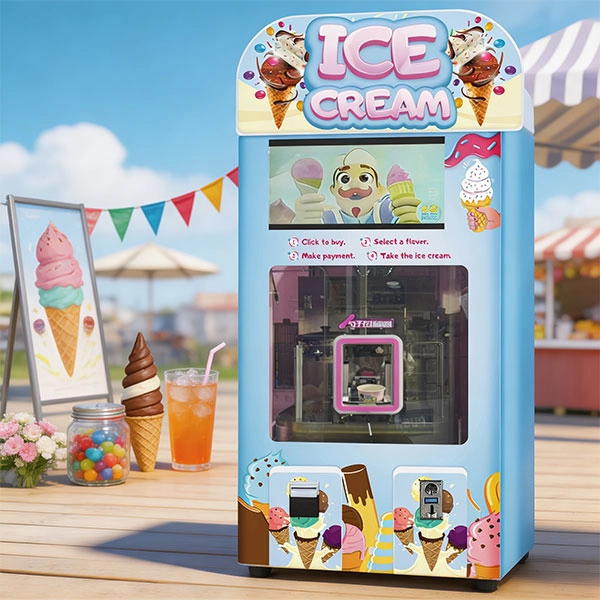
The WM550 is a fully automatic ice cream vending machine. It combines ingredient dispensing, mixing, portion control, payment, and cloud management in one unit. Customers choose one of six flavor combinations on a 21.5-inch touchscreen, pay with cash, coins, a card, NFC, or a QR code, and receive a 100g cup within seconds. There is no counter, no cashier, and no queue of orders waiting for a staff member.
That is the core of the business case. The machine replaces the labor cost of a soft serve stand, and the product is made fresh at the moment of purchase.
Startup costs for an ice cream vending machine business
The WM550 is listed at US$4,400 for one to four machines at factory-direct pricing. The final price depends on the configuration, the payment system, the shipping destination, and any branding requirements. Wider Matrix notes that current promotions, seasonal discounts, and bulk pricing may apply.
The machine price is not the full startup cost. A realistic budget includes:
- The machine and its delivered cost, including freight and customs
- Payment hardware and any setup fees for your country
- Initial stock of milk base, sauces, toppings, and cups
- Venue deposit or first rent payment
- Installation, power connection, and any local permits
- A small reserve for the first weeks of operation
Ask for a written quotation that separates these items. A machine price of $4,400 can become $6,000 or more once freight, customs, and setup are added, depending on the destination.
Unit economics: what each cup costs and earns
The per-cup numbers are where the business is won or lost. The WM550 serves a standard 100g cup. The direct costs per cup are the cup itself, the milk base, the sauce, and the topping.
The cup used with the machine has a spoon built into the bottom, which removes the need for a separate spoon dispenser. It measures 8.5cm across the top opening, 7cm across the bottom, and 5.2cm high. At the manufacturer’s volume pricing, the cup costs about $0.10 each for orders of 1,000 to 4,999 cups, and about $0.08 each for orders of 5,000 or more.
The cup is only part of the ingredient cost. Add the milk base, sauce, and topping, and a reasonable planning figure for total ingredients is around $1.00 per cup. If the machine sells a cup at $3.50, the gross margin is roughly 70% before rent, electricity, payment fees, and service visits.
| Item | Planning figure |
|---|---|
| Cup with built-in spoon (1,000 to 4,999) | $0.10 each |
| Cup with built-in spoon (5,000+) | $0.08 each |
| Milk base, sauce, and topping | Varies by supplier |
| Typical retail price | $2.20 to $3.50 |
These are planning figures, not a price list. Confirm the current ingredient and cup pricing with the manufacturer and your local suppliers before you build the forecast.
Location is the decision that matters most
An ice cream vending machine business lives or dies on placement. The machine can only sell to people who walk past it, so the location agreement is more important than the machine model.
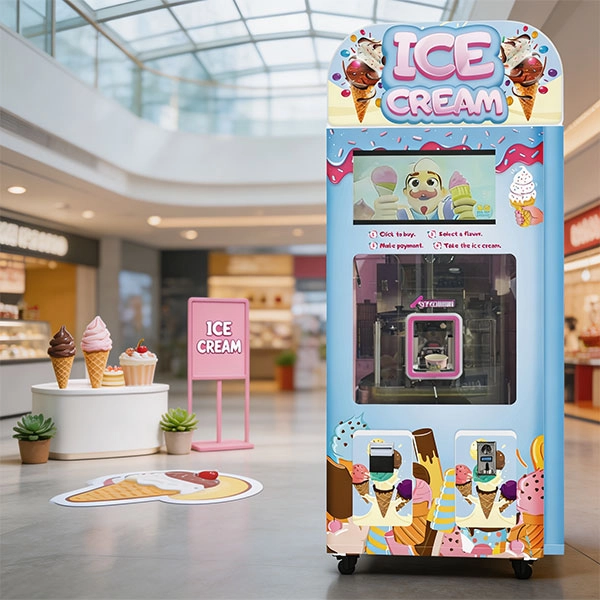
Wider Matrix lists shopping malls, convenience stores, gas stations, small shops, office lobbies, food courts, schools and campuses, amusement parks, and cinemas as suitable locations. The WM550 is the smallest model in its series, measuring 81 by 126 by 180 cm and weighing about 240 kg, which makes it a fit for spaces where a larger machine would not go.
Three location questions matter more than the rest:
- How many people pass the spot each day, and when?
- Does the audience buy impulse food? Families, students, and cinema crowds do. An office lobby may not.
- What does the venue charge, and is it a fixed rent or a revenue share?
A food court with families at lunch, a cinema lobby when a movie ends, or a school cafeteria at break are the patterns that work. A machine in a quiet corner will not sell enough cups to cover its rent, no matter how good the product is.
How many cups does a machine realistically sell?
Wider Matrix’s product page includes revenue examples from operators in three markets. A food court in Texas sold about 120 cups a day at an average price of $3.50. An amusement park in Mexico City sold about 180 cups a day across two machines at $2.80. A cinema lobby in Mumbai sold about 90 cups a day at $2.20. The manufacturer cites typical payback periods of three to six months.
Those examples are from the manufacturer’s sales material. They are useful as a sanity check, not as a promise. The realistic range for a single machine in a good location is usually 80 to 150 cups a day, and it takes time to reach that level. Plan the first month around a lower number and treat the upside as a bonus.
The daily work behind the machine
The machine runs unattended, but the business does not run itself. The operator’s routine includes:
- Refilling the milk base, sauces, and toppings
- Cleaning the dispensing nozzle daily
- Restocking cups
- Checking sales and stock through the cloud dashboard
- Handling payment issues and machine faults
The WM550 includes SRRS remote monitoring, a cloud dashboard, and app-based remote control. This lets an operator check sales, stock, and machine status without visiting every unit. For a business with several machines, that remote view is what makes the model practical. For a single machine, it still saves a daily trip.
Wider Matrix provides a 1-year warranty and remote support, plus installation guidance, after-sales support, and spare parts. Confirm the response time and the spare-parts policy in writing before you rely on the machine for revenue.
Growing from one machine to several
Most operators start with one machine to test the model, then expand. The expansion logic is simple: once one location works, the same machine, menu, and refill routine can be repeated in another venue.
The WM550 supports 110V and 220V configurations, and Wider Matrix ships globally with local voltage and plug adaptation. That makes it possible to run the same machine standard across different buildings and countries, which simplifies the expansion.
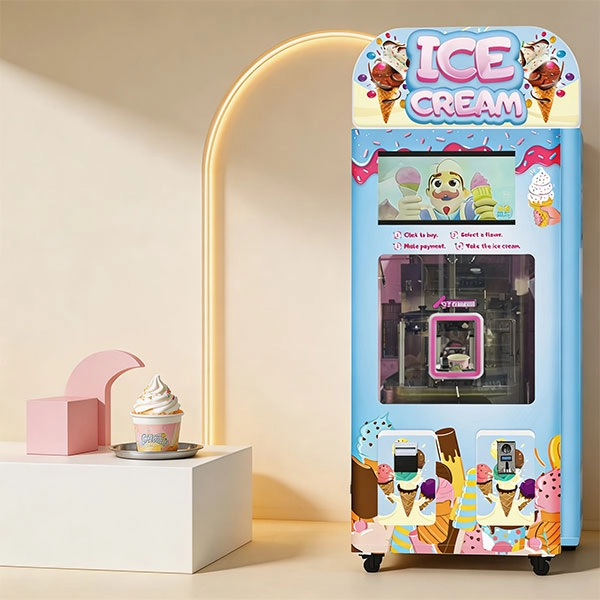
The cloud dashboard becomes more valuable at this stage. When an operator runs several machines, the difference between a profitable route and a chaotic one is often the ability to see every machine’s stock and sales from one screen.
Risks to plan for
An honest business plan includes the ways the model can fail. The main risks are:
- A location that looks busy but does not convert to sales
- Rent or revenue share that eats the margin
- Ingredient or cup costs rising faster than the retail price
- Machine downtime during a peak period
- Payment integration problems in a new market
- Seasonal demand that drops sharply in winter
None of these are reasons to avoid the business. They are reasons to test the location before signing a long agreement, to keep the retail price above the cost structure, and to have a service plan for the machine.
How this guide was put together
This article is based on the manufacturer’s published product information for the WM550, including its specifications, pricing, and operator examples, combined with standard operating practice for automated retail. The cup dimensions and volume pricing were provided by the manufacturer. Where a figure comes from the manufacturer’s sales material rather than an independent source, the article says so. Before making an investment decision, verify the current quotation, the delivered cost, the payment setup for your country, and the venue agreement with the parties involved.
For more detail on the numbers, Wider Matrix has published analyses on how profitable an ice cream machine is and whether ice cream vending machines make money. There is also a buyer’s guide for ice cream vending machines and a 2025 price guide for comparing models and pricing.
Frequently asked questions
How much money can an ice cream vending machine business make?
At a planning figure of about $1.00 in ingredients per cup and a retail price of $2.20 to $3.50, the gross margin is roughly 65% to 70% before rent, electricity, payment fees, and service costs. Operator examples from the manufacturer range from 90 to 180 cups a day depending on location.
How much does it cost to start an ice cream vending machine business?
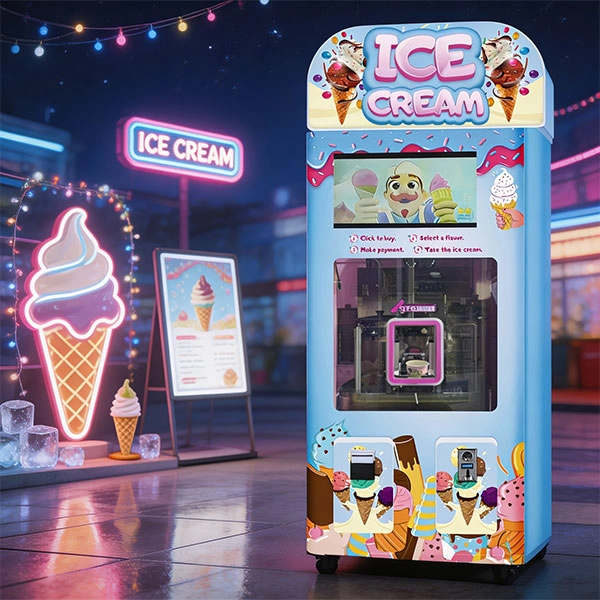
The WM550 is listed at US$4,400 for one to four machines. The full startup cost includes freight, customs, payment hardware, initial stock, venue deposit, and installation, so the delivered cost is higher than the machine price alone.
How long does it take to make a cup?
The WM550 dispenses a fresh 100g cup within seconds after the customer places the order. The exact time depends on the flavor combination and the machine’s condition.
Do I need staff to run the business?
No cashier is needed for each sale. The operator still needs to refill ingredients, clean the dispensing nozzle daily, and monitor the machine, usually through the remote dashboard.
How many cups can the machine hold?
The WM550 holds about 90 cups per refill. The cup has a spoon built into the bottom and measures 8.5cm at the top, 7cm at the bottom, and 5.2cm high.
What payment methods does the machine accept?
The WM550 accepts cash, coins, bank cards, NFC, and QR payments. Regional payment methods can be added through the universal payment protocol, so confirm the setup for your market.
Where to go from here
If the business model makes sense for your market, the next step is a written quotation and a location agreement. Ask Wider Matrix to confirm the delivered price, the payment system for your country, the power configuration, and the warranty terms. Then visit the proposed site at different times of day and count the traffic yourself.
The official WM550 automatic ice cream vending machine product page has the current specifications and the inquiry form. You can also browse the product catalog or the online shop, or contact the company through the sales and support page.
Investment note: Sales, payback, and profit depend on location, traffic, pricing, ingredient and cup costs, venue terms, payment fees, and day-to-day operation. The specifications and commercial examples in this article come from the manufacturer’s product information. Verify the current quotation and all local costs before buying.