



A self-service protein shake vending machine gives gym members a way to buy a freshly mixed drink without waiting for a staffed smoothie bar. For a fitness club, university sports center, hotel gym, or sports complex, the value is not only convenience. It is an additional food-service offer that can operate before the front desk opens, after staffed hours, and during busy periods when employees are already occupied.
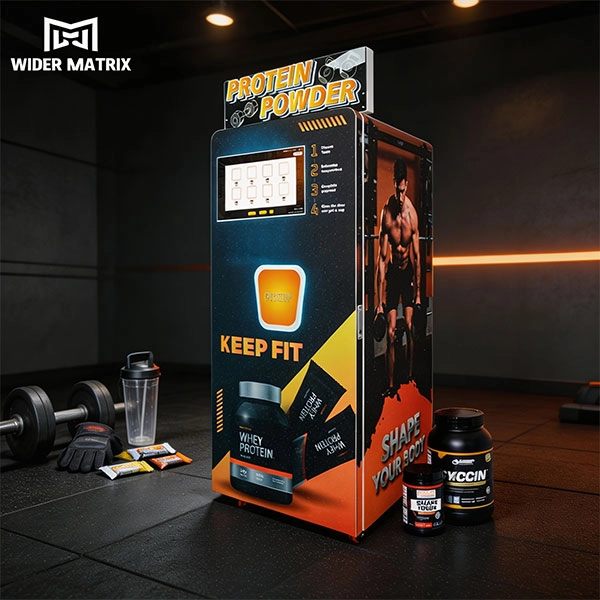
This guide is written for operators comparing an automatic protein shake vending machine, a protein smoothie kiosk, or a traditional staffed counter. It explains the customer workflow, ingredient options, cleaning method, payment systems, capacity, pricing, and the practical questions to ask Wider Matrix before requesting a quotation for the WM186.
What self-service means in a fitness setting
Self-service means the customer completes the main order independently. A typical purchase takes under 30 seconds for browsing, customization, and payment. The machine then dispenses the selected drink in about 60 seconds.
- Choose a recipe or protein type on the 21.5-inch touch screen.
- Select the size or available options configured by the operator.
- Pay with a card, mobile wallet, NFC, or another supported method.
- Collect the mixed shake when the machine finishes.
The customer does not need to wait for a staff member to measure powder or prepare a blender. The operator still needs to refill hoppers, monitor ingredients, clean the area, review alerts, and respond to customer questions. Self-service reduces counter labor. It does not make food handling and service planning unnecessary.
Why gyms are a natural location
Protein drinks fit a clear customer need. Members often want something after training, before a class, or between work and a workout. A machine placed near the exit, recovery area, locker rooms, or reception can capture that moment without requiring a separate café.
The strongest locations usually have one or more of these characteristics:
- Long opening hours or 24-hour member access
- A regular flow of members after strength or cardio sessions
- Limited space for a staffed food counter
- Existing demand for whey, plant protein, BCAA, creatine, or mass gainer products
- A club owner who wants an additional revenue stream without adding a full-time employee
University sports centers, corporate fitness facilities, hotels, CrossFit boxes, boxing clubs, and sports complexes can use the same model. At event venues, the operator can promote higher-priced drinks or custom recipes during tournaments and competitions.
Wider Matrix WM186 specifications
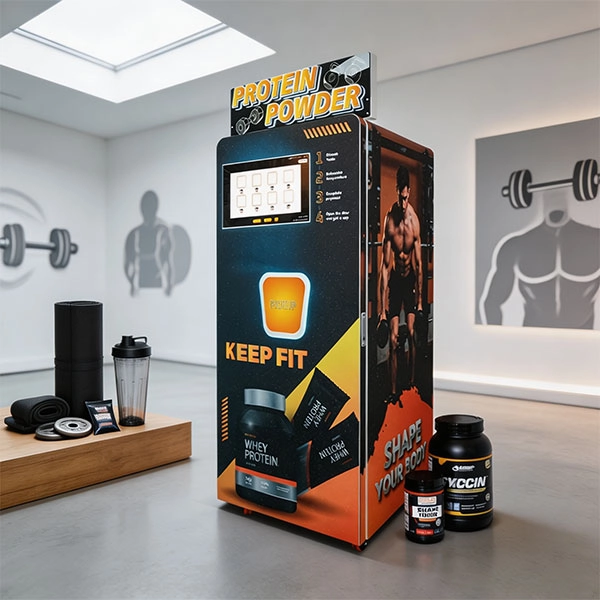
Wider Matrix’s WM186 is specified as a protein shake machine for gym environments. Its key reference data is summarized below.
| Item | WM186 reference |
|---|---|
| Drink dispensing time | Approximately 60 seconds per shake |
| Peak service capacity | 60 or more cups per hour |
| Powder storage | 7 hoppers, 4L each |
| Temperature zones | Cold, room temperature, and hot |
| Customer operation time | Under 30 seconds to browse, customize, and pay |
| Screen | 21.5-inch touch screen |
| Certification listed | CE |
Sixty cups per hour is a peak service reference, not a guaranteed daily sales figure. Actual throughput depends on drink recipes, cleaning cycles, payment speed, cup handling, refill timing, and the number of members ordering at once. Ask Wider Matrix how the published capacity was measured and which cup size and recipe conditions apply.
Seven hoppers allow more than one protein offer
A basic protein vending machine may offer one powder and one flavor. The WM186 uses seven 4L hoppers. The supplied configuration lists:
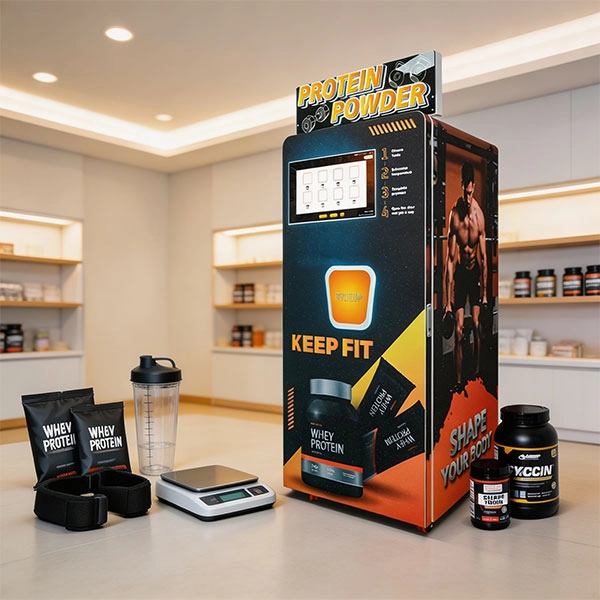
- Whey protein
- Plant-based protein
- Mass gainer
- BCAA
- Creatine
- Pre-workout
- One custom brand or powder option
This gives a gym the ability to serve different member goals without installing several machines. A club can emphasize whey after resistance training, plant protein for dairy-free customers, or a branded recipe developed with its nutrition partner.
More choice can also create more operating work. Operators should keep clear ingredient labels, confirm allergen information with their suppliers, and avoid making medical or guaranteed performance claims. The menu should state what each recipe contains and identify any ingredients that require special attention.
Cold, room-temperature, and hot drink options
The WM186 includes three temperature zones: cold, room temperature, and hot. This expands the product beyond one chilled post-workout shake. The cold zone suits a standard protein drink. A room-temperature recipe may be preferred by some customers, while a hot setting can support suitable coffee or warm nutrition recipes if the ingredients and venue rules allow it.
Temperature choice should be controlled by recipe design rather than treated as a novelty. Test powder solubility, taste, texture, cup safety, and serving temperature before publishing a menu. The operator should also confirm the permitted ingredients and cleaning procedure for every temperature zone.
How the in-cup mixing system changes maintenance
One of the WM186’s listed features is patented in-cup mixing. Powder is injected directly into the disposable cup instead of traveling through a long internal beverage path. The stated purpose is to reduce pipe contamination and clumping.
That design can simplify some maintenance concerns, but it does not eliminate cleaning. The nozzle area, powder outlets, cup dispenser, waste area, touch screen, and surrounding surfaces still need scheduled attention. High-traffic gyms should define who cleans the machine, when it happens, and how the task is recorded.
The machine also specifies automatic high-temperature self-cleaning after each cup. Ask Wider Matrix for the exact cycle, water or cleaning-fluid requirements, waste handling process, and operator actions if a cleaning cycle fails. A self-cleaning function is valuable only when the venue follows the manufacturer’s instructions.
Protein shake vending machine price and operating budget
Searchers often compare protein shake vending machine price, automatic smoothie vending machine cost, and the potential return from a gym protein shake vending machine. The WM186 reference sheet lists a factory-direct machine price of US$4,150.
That figure should not be treated as the complete installed cost. A gym operator should also budget for:
- Freight, insurance, customs, and local delivery
- Initial powder, cups, lids, and other consumables
- Electrical and network preparation
- Payment terminal setup and transaction fees
- Cleaning materials and staff time
- Venue rent or revenue-sharing payments
- Maintenance, replacement parts, and service visits
- Menu testing, signage, and launch promotions
The supplied reference estimates retail pricing of US$3 to US$8 per cup and consumable cost of approximately US$0.80 to US$1.50 per cup, with an average around US$1.20. These figures can help build a first model, but the operator should replace them with local powder costs, cup sizes, taxes, payment fees, and the actual price approved by the venue.
For a more general planning framework, this vending machine business profitability guide can help separate equipment cost from location and operating expenses.
How to evaluate possible revenue
A useful forecast starts with realistic member behavior rather than the machine’s maximum capacity. Build three cases:
| Case | What to measure |
|---|---|
| Conservative | Sales on ordinary weekdays outside peak training periods |
| Expected | Average sales after the first promotion period has ended |
| Peak | Demand after evening classes, on weekends, and during events |
For example, the product reference uses sample scenarios of 15 cups at $4, 30 cups at $5, 50 cups at $5, and 80 cups at $6. Those are planning examples, not promises. A gym should confirm member count, training hours, existing café competition, price sensitivity, and the venue’s commission before deciding whether the location is attractive.
Wider Matrix’s reference data also describes a mid-size Miami gym example with about 45 cups per day at $5.50 per cup and an estimated $1.20 material cost. Treat that as a case-study input to question and validate, not as a guaranteed result for another gym.
Payment systems members already recognize
Payment friction can lose a sale after the customer has finished a workout. The WM186 supports Nayax, Pax, credit and debit cards, Apple Pay, Google Pay, WeChat Pay, Alipay, NFC, and the universal MDB protocol.
Not every option needs to be activated in every country. Ask Wider Matrix which terminal is recommended for your market, whether the gym’s network is compatible, who manages the merchant account, and how refunds are processed. Test contactless payment during installation and again after any network or software update.
Remote management for one gym or many locations
Wider Matrix’s IoT cloud management system is designed to show sales, inventory, machine health, and alerts remotely. The reference material states that operators can manage more than 50 machines centrally and that the system can support larger fleets.
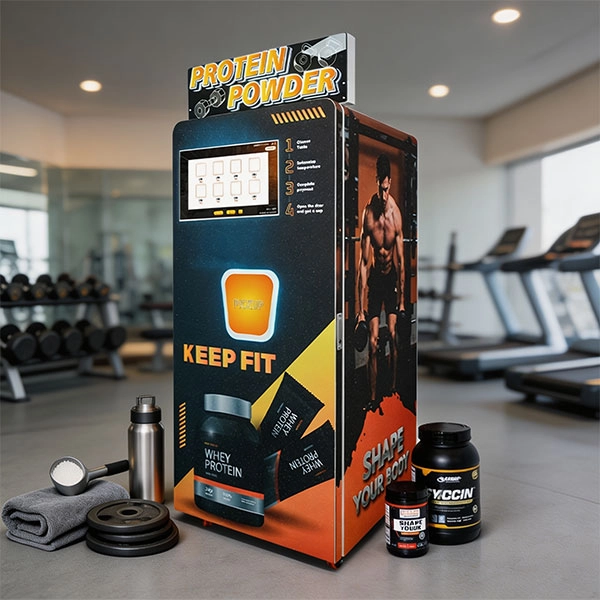
For a single gym, remote access can reduce unnecessary checks. For a franchise or university network, it can help compare recipes, sales periods, stock levels, and machine errors across locations. OTA updates can push new recipes and promotions without requiring a technician to visit each site.
Before signing an order, confirm data access, user permissions, reporting periods, cloud fees if any, connectivity requirements, and what happens if the machine temporarily loses its network connection.
What the gym operator still has to manage
A self-service protein shake vending machine reduces counter labor, but a reliable program still needs an owner. Assign responsibility for:
- Refilling the seven powder hoppers
- Checking powder condition and expiry information
- Loading cups and clearing waste
- Reviewing cleaning records and self-cleaning alerts
- Testing card, mobile wallet, and NFC payments
- Responding to failed orders and refund requests
- Updating recipes, prices, promotions, and nutrition information
- Contacting technical support when the machine reports an error
The cleanest customer experience usually comes from a visible daily checklist. The machine can be unattended for sales, but the surrounding area should still look like part of a professional fitness facility.
Questions to ask Wider Matrix before ordering
- Which WM186 configuration is recommended for our daily cup target?
- What cup size and recipe conditions support the 60-second dispensing specification?
- How does the in-cup mixing and high-temperature cleaning cycle work?
- What ingredients, powders, cups, and cleaning supplies are approved?
- Can the machine use our preferred card, Apple Pay, Google Pay, NFC, or MDB setup?
- What network connection is required for cloud management?
- What happens during a power or network interruption?
- What are the packed dimensions, shipping terms, and installation requirements?
- What does the one-year warranty cover, and what is included in lifetime technical support?
- Can Wider Matrix provide training, replacement parts, recipe setup, and OEM branding?
Final decision: is the WM186 right for your venue?
The best self-service protein shake vending machine is not automatically the one with the largest hopper count or the highest advertised capacity. It should match the venue’s member flow, recipe range, cleaning resources, payment habits, and available space.
Wider Matrix’s WM186 gives operators a clear starting configuration: seven 4L powder hoppers, three temperature zones, in-cup mixing, automatic high-temperature cleaning, service of up to 60 cups per hour, broad payment support, and IoT remote management. The factory-direct reference price is US$4,150, while actual profitability depends on local costs and verified sales.
If you operate a gym, university sports center, hotel fitness room, corporate wellness facility, or sports complex, send Wider Matrix your location type, expected daily cups, preferred powders, payment methods, and branding requirements. That information allows the manufacturer to prepare a more useful WM186 quotation instead of a generic machine price.
To continue the evaluation, visit the Wider Matrix protein shake vending machine product page or contact the supplier for a configuration and delivery proposal.
How this guide was prepared
The technical specifications, operating figures, pricing references, and manufacturer information in this article are based on the WM186 product parameter sheet supplied by Wider Matrix. Actual costs, compliance requirements, ingredient availability, venue fees, sales volume, and payback vary by market. Confirm the final machine configuration, delivered quotation, warranty, cleaning procedure, and support scope in writing before ordering.