




How Profitable Is a Cotton Candy Vending Machine in the USA?
Every project is unique — tell us your needs and we'll provide a tailored solution.
- 🍭 54+ cotton candy designs, constantly updated
- 🌍 Shipped to 130+ countries worldwide
- 🤝 Dedicated account manager for your project
- 💰 Contact us for the latest promotional pricing
Our partners typically recover their investment within 2–4 months. Start earning from day one with a proven, low-maintenance cotton candy vending solution.
A cotton candy vending machine looks like one of the cleanest profit stories in automated retail. The ingredients are cheap, the product sells itself to kids and parents, and the machine runs without a staff member standing behind it. The per-cup numbers are genuinely strong. What decides whether the whole thing works comes down to location and volume, not the machine.
Here is the answer in plain terms. Machines like the Wider Matrix WM980 run about $4,800 and use 28 to 30 grams of sugar per serving. Sugar plus a paper stick costs roughly 10 cents, and a cup sells for $4 to $6 in a US mall or family entertainment center. A machine in a good spot moves 20 to 40 cups a day, which is several hundred dollars of gross profit a week. Most operators who track their numbers recover the machine cost in 6 to 14 months. A slow corner is a different story, and it can take years. That spread between a good spot and a bad spot is the whole business explained in one sentence.
The short answer on profitability
Cotton candy carries one of the highest gross margins in vending because the product is mostly air wrapped around a small amount of sugar. A cup that sells for $5 costs about 10 cents to make, which is why you see people quote margins of 90% or more. That number is real, but it only describes the ingredients. It does not cover the machine, the rent or commission on your location, card processing, maintenance, and the electricity for a machine that pulls 500 watts on standby and 3,000 watts while spinning. If you want the full breakdown of how the margin is built, we have a separate profit margin on cotton candy write-up.
The useful way to think about it is in two layers. The per-cup layer is excellent and nearly foolproof. The monthly layer depends on how many cups you actually sell, and that is a location problem, not a product problem. For a tighter look at the revenue side specifically, read how much a cotton candy vending machine makes.
What a cotton candy vending machine costs in the US
The machine itself
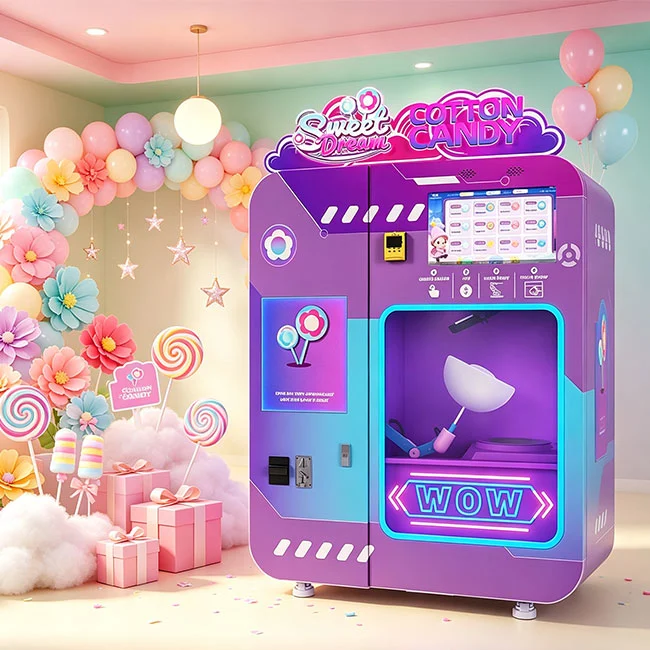
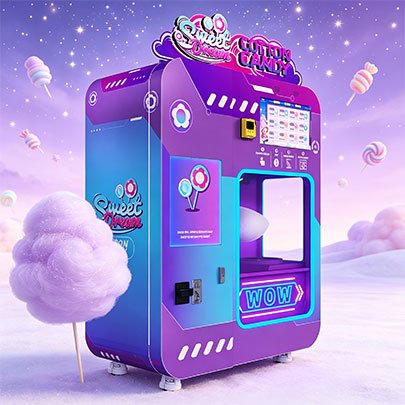
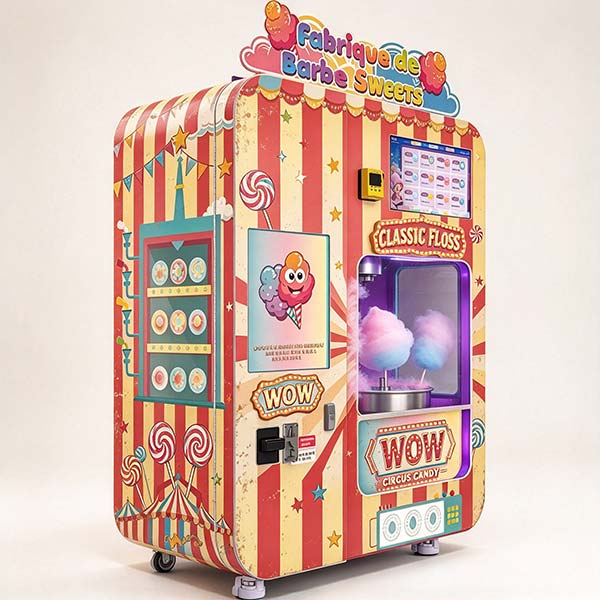
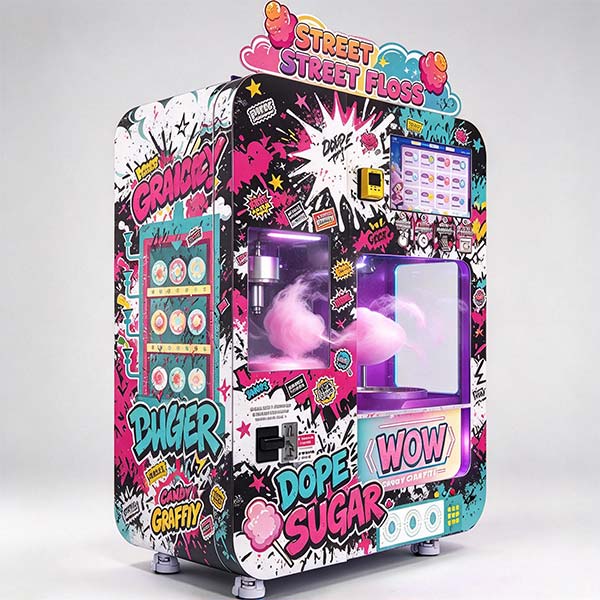
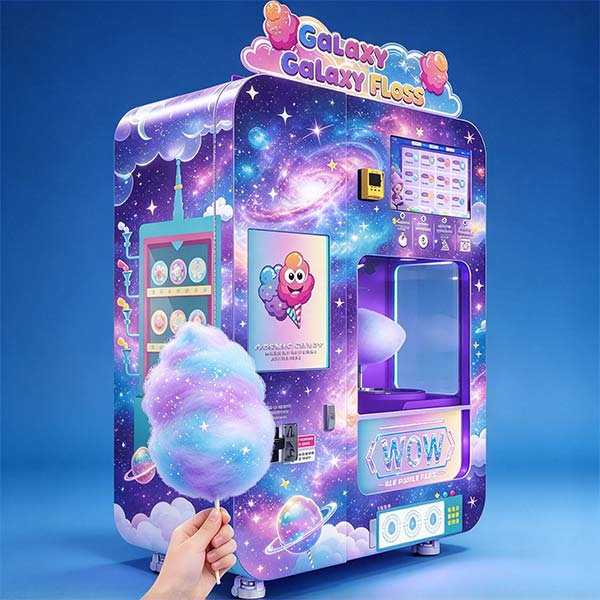
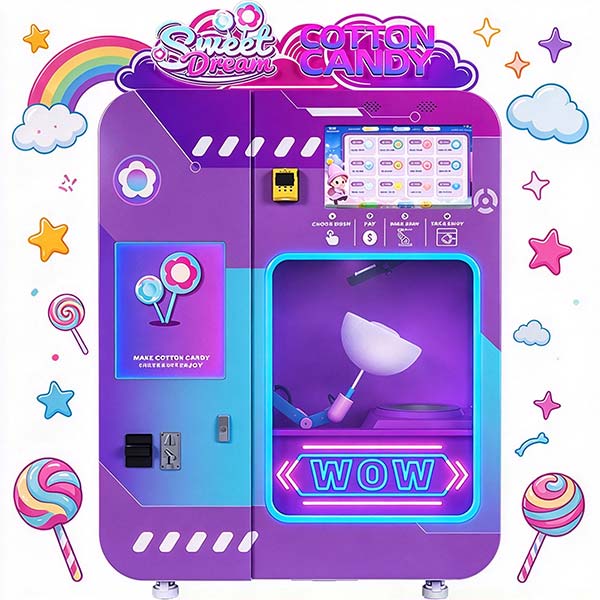
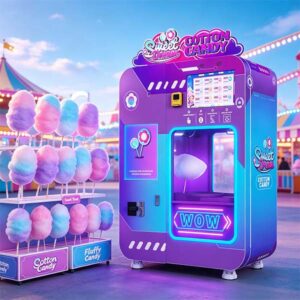
Automatic cotton candy vending machines are not the $40 carnival spinner from a big box store. They are commercial equipment built to run unattended. Wider Matrix makes three main models. The WM980, the everyday workhorse, lists at $4,800 for a single unit. The WM980 Plus adds an ambient light strip and an upgraded cabinet for $4,999. The WM668 is the outdoor model with a high brightness display and a rainproof roof, at $5,299.
That price reflects what is inside: a four-axis robotic arm that shapes the candy, a self cleaning burner, and a magnetic door lock that stops customers from opening the cabinet mid cycle. A cheap tabletop unit has none of that and will not survive a mall food court weekend. If you want to see why the serious machines cost what they do, the cost breakdown on cotton candy machines and the automatic cotton candy machine price guide explain it well.
The supplies
Running costs are the part most people under plan for, which is funny because they are the friendly part of the business. Sugar runs about $3 to $3.25 per bag depending on volume, in six colors and flavors such as milk, banana, strawberry, blueberry, apple, and grape. A two kilogram bag makes roughly 65 to 70 servings. Paper sticks run about 4 to 5 cents each. All in, a single serving costs around 10 cents in consumables. That is the whole supply side of the math.
The profit on a single cup
Build the cup and the numbers are simple. Ten cents of materials, sold for $5, leaves $4.90 of gross profit before location and overhead. Sell it for $6 at a resort or event and it is better still. Even pricing soft at $4, you keep more than 95% of the ticket. There is almost no way to lose money on the product itself. When someone loses money in this business, it is never the cotton candy. For a sense of what a good machine can pull in across a full year, see how much you can make with a cotton candy machine.
Daily sales matter more than the margin
Margin gets all the attention and volume does all the work. A machine that sells 5 cups a day at a great margin still makes about $25 in gross profit a day, $750 month before the location takes its cut. That will not cover much. The same machine at 20 cups a day makes about $98 a day, nearly $3,000 a month in gross profit. Identical machine, identical product. The only difference is how many people walked past it.
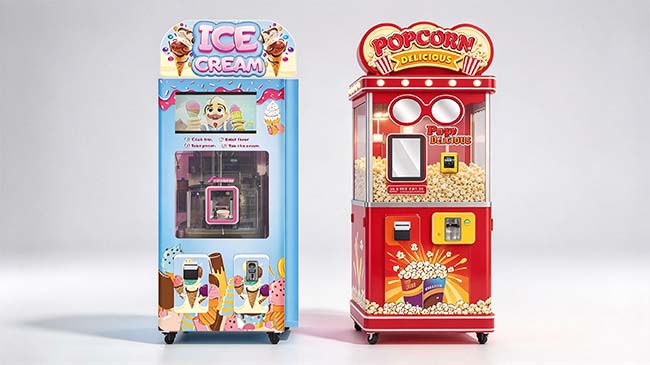
This is why operators who run routes instead of one machine talk about locations before anything else. A cotton candy machine is a traffic machine with a candy oven inside it. Put it in front of people and it works. Park it in a quiet corner and it sits there collecting dust instead of cash. Wider Matrix also builds the same class of machine for popcorn and ice cream, and the buying logic carries over if you are still deciding which product to run.
A sample month, worked out
Here is a worked example using a mid range location that sells 20 cups a day at $5. Treat these as sample estimates, not a promise. Real results swing with the season, the weather, and the venue.
| Average cups per day | 20 |
| Price per cup | $5.00 |
| Monthly revenue | $3,000 |
| Sugar and sticks (about 10 cents x 600) | $60 |
| Location fee or revenue share | $300 to $600 |
| Card processing (about 3%) | $90 |
| Electricity and cleaning | $60 |
| Rough net before the machine cost | about $2,100 to $2,400 |
On a $4,800 machine, that kind of location recovers its cost quickly on paper. In practice most operators report breakeven somewhere between 6 and 18 months, and the gap between the two is location, seasonality, and downtime, not the machine. A busy weekend venue can beat this in two days. A quiet week in a secondary spot can do a third of it. Sales in this business are lumpy, and anyone who tells you otherwise is selling you a machine. For insight into what traditional cotton candy sellers earn outside of vending, see how much cotton candy vendors make.
Where these machines earn the most in the US
The highest earning locations share one trait: a captive, foot traffic heavy audience with families in a spending mood. Family entertainment centers, trampoline parks, bowling alleys, movie theater lobbies, arcades, zoos, aquariums, and busy malls near the food court all work. Seasonal venues like fairs, festivals, and boardwalks can be excellent but they are not steady. A machine placed well will often surprise people with how consistently it sells. We have a full rundown of the best locations for cotton candy vending machines in the USA and a separate guide on where to place a cotton candy vending machine for maximum profit.
If you are choosing between two spots, pick foot traffic over cheap rent ten times out of ten. A slightly higher commission on a busy floor beats a free corner with no passersby. The machine only makes money from people standing in front of it.
Costs people forget about until month three
New operators budget for the machine and the sugar and stop there. Then the real list shows up. Location commission or rent, which ranges from a small flat fee up to 20 or 30 percent of sales. Card processing, usually 2.5% to 3%. A technician call when something breaks. Replacement parts eventually. Insurance, plus any business or food license your county requires. None of these are scary by themselves, but together they quietly erode a thin month. Plan for them before you buy.
Buying or renting
Renting sounds safer because the upfront number is smaller, but over a year it rarely wins for a machine you plan to run long term. The math favors buying once you are past the first stretch. If you are only testing a single event or one season, renting can make sense. If you intend to run the machine for two or three years, own it. The machine holds resale value and a rental agreement stacks up fast. We worked through the two paths in whether renting a cotton candy machine is cheaper than buying.
Why some operators lose money
The failure stories almost all share the same shape, and none of them are about the cotton candy. Someone buys the cheapest machine they can find to save a few hundred dollars, puts it in a low traffic spot because the rent is free, never checks it, and is surprised when nothing sells and the machine breaks. The product was never the problem in those stories. The decisions were.
Three things separate the operators who make it from the ones who quit. They buy a machine that can run unattended without a technician on call. They put it where people actually walk. And they run it like a business by checking sales, restocking, and cleaning on a schedule. Miss any one of the three and the numbers fall apart fast.
What to look for in a machine you plan to run for years
When the machine will sit in a mall and collect money with no one watching it, a few features matter far more than a flashy cabinet.
Reliability and remote visibility come first. Wider Matrix machines run on a cloud control system, so you can watch sales and restocking needs from your phone instead of driving to the machine. The robotic arm and self cleaning burner are built for unattended operation, and the magnetic door lock keeps customers out of the cabinet mid cycle. It takes coin, cash, credit card, and NFC, which matters because card and phone payments now dominate how American customers actually pay. The advertising screen is a quiet bonus: you can sell ad space on a machine that already sits in front of foot traffic, or run your own promotions.
The point is not the feature list. It is downtime. Every hour the machine is broken or out of sugar is an hour it makes nothing, and a machine that needs constant attention will not survive its first busy season. That is the real difference between a cheap machine and a commercial one. If you want a reliability checklist before buying anywhere, read what to look for when buying a cotton candy machine.
Licensing and getting started
Licensing is state and county specific, so there is no single national answer, and anyone giving you a universal rule is guessing. Most operators need a business license, and many municipalities want a permit for a vending machine. Food handling rules vary, but cotton candy is a low moisture sugar product, which usually keeps the compliance load lighter than something like ice cream or pizza. Check with your county health department and your venue. The venue often has its own rules on top of the local ones. We covered the details in whether you need a license to sell cotton candy.
Compared to other vending, the setup is modest. There is no refrigeration, no food prep, and no spoiled inventory to manage. Sugar stays shelf stable, and the machine just needs power and a spot.
Get a revenue estimate for your location
If you have read this far, the takeaway is that cotton candy vending can be genuinely profitable, and the number that decides your result is where you put the machine. The margin is real and the machine is built to run unattended. What you need now is an honest read on your specific location, not a generic industry average. That is also the short version of the answer to whether a cotton candy vending machine is profitable.
Tell Wider Matrix where you are thinking of placing a machine, what kind of venue it is, and roughly how much foot traffic it gets, and the team will put together a revenue projection for your spot. If you already have a location locked down, or an idea for one, that is the single most useful thing to share. You can ask for the full machine spec sheet and a shipping quote at the same time.
Contact Wider Matrix for pricing and a location specific estimate.
Note: Product specifications, pricing, and configurations are subject to change as we continuously improve our technology. Contact our sales team for the latest pricing, promotions, and a custom quote.
Specifications
| Model | WM980 |
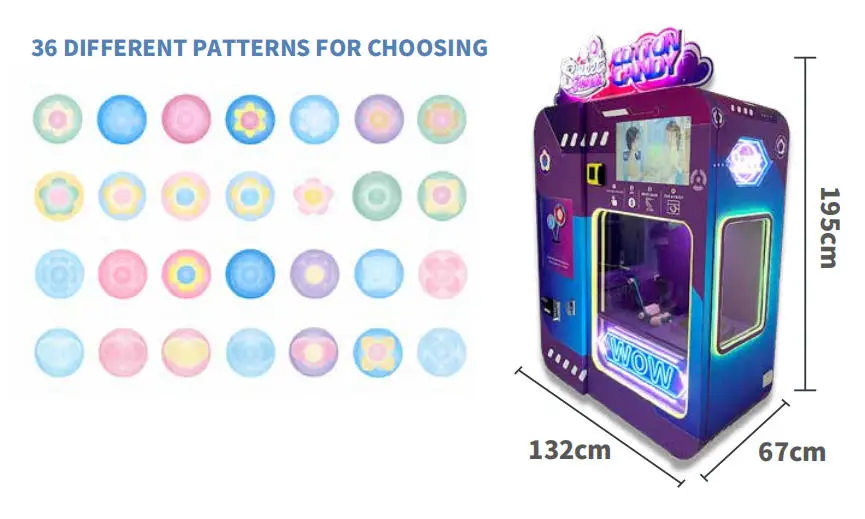
| Dimensions | 132cm × 195cm × 67cm |
| Power | 500W (Standby) / 3000W (Processing) |
| Net Weight | 300 KG |
| Voltage | 220V / 110V (Optional) |
| Payment Methods | Coin / Cash / Credit Card / NFC |
| Sugar Consumption | 28–30g per cotton candy |
| Cotton Candy Designs | 36 designs and keeping updated |
| Remote Management | Supports cloud monitoring and management |
Product Certificates
CE
JAT2209011545EC-1
2022.09 – 2027.09
CE
JAT2209011545SC-1
2022.09 – 2027.09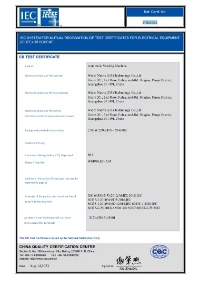
CB
CN61098
2023.08 – 2028.08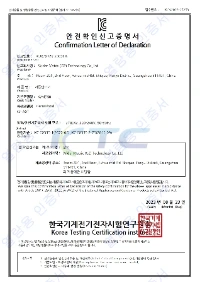
KC
XU070729-23001A
2023.08 – 2028.08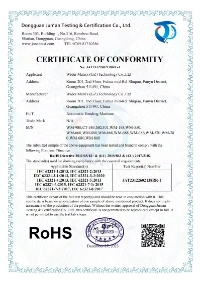
RoHS
JAT23122602138RC-1
2023.12 – 2028.12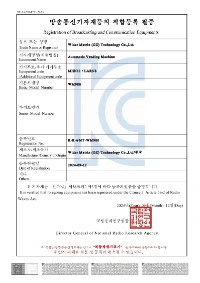
KC
R-R-wMT-WM980
2024.09 – 2029.09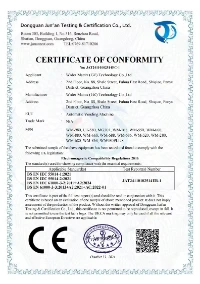
UKCA
JAT24110102514EC-1
2024.10 – 2029.10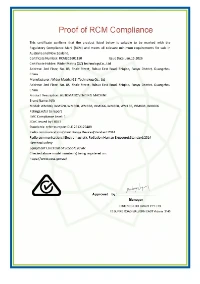
RCM
RCM202601150
2026.01 – 2031.01Company Introduction
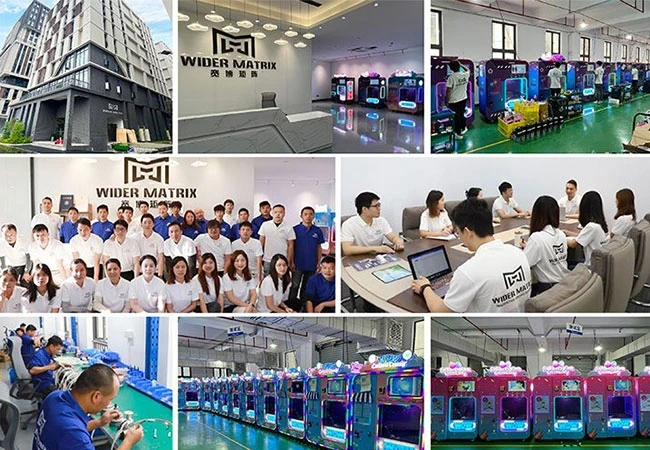
Wider Matrix (Guangzhou) Technology Co., Ltd. is a scientific and technological enterprise that attaches importance to R&D and user experience. We started to research and develop automated vending solutions in 2016, and achieved a leading position in the field of interactive vending machines.
In 2019, we manufactured the first automatic cotton candy vending machine. After years of refinement and rigorous testing, our machines now operate successfully in more than 130 countries including the United States, Canada, Europe, Southeast Asia, Australia, and Israel.
All machines support remote cloud management, which has the advantages of easy operation, convenient maintenance and high operating efficiency.
Exclusive Services
Overseas Support Service
Local transfer warehouse support, ensuring your operational stability.
Custom Design
We offer machine appearance customization, branding, and large-scale custom packaging services.
Initial Tools & Spare Parts Kit
Machine comes with complementary tools and spare parts kit, including initial consumables package for early operations.
Functional Customization & Software Optimization
Custom functionality based on client needs, including hardware and software optimization updates.
Lifetime Technical Support & Updates
We provide lifetime technical support and software update services for all customers.
Frequently Asked Questions
How profitable is a cotton candy vending machine in the USA?
How much does a cotton candy vending machine cost in the United States?
How much does a cotton candy machine make per day?
What is the profit margin on cotton candy?
Do I need a license to sell cotton candy in the US?
Is a cotton candy vending machine a good investment for a beginner?
How much sugar does each serving use?
User Reviews
ok so honestly i was super nervous dropping this much money on a cotton candy vending machine but man it has been SO worth it. got it placed in a bowling alley here in Austin and the thing just prints money on weekends lol. setup was easier than i expected, took me and my brother maybe 2 hours to get it running. the cotton candy actually looks really cool when it spins, kids go crazy for it. only complaint is the sugar hopper is kinda small, gotta refill it like every 3 days during busy weeks. but yeah 10/10 would buy again
I buy this machine for my wife business in Houston. She want extra income and we find WiderMatrix online. Shipping take 3 week but packaging was very good, no damage. Machine is beautiful, very bright LED light, people always look when walking by. We put in shopping mall near food court. First week we make $340! Very happy with purchase. Customer service answer my question fast on WhatsApp. Recommend to anyone wanting side business.
Gotta say the machine itself is solid and makes great cotton candy but the app could use some work. sometimes it disconnects from wifi and i dont get sales notifications which is annoying when ur not onsite. build quality is legit though, heavy duty stuff. i've had it about 3 months now in my arcade in columbus and its holding up well to teenagers being rough with it lol. widermatrix support did send me a wifi adapter fix so hopefully that solves it. overall glad i pulled the trigger on this
wow wow WOW. this thing exceeded every expectation. i did months of research before buying and WiderMatrix was the best decision. put it in my family's laundromat in phoenix and people literally buy cotton candy while waiting for their clothes haha. the machine arrived earlier than estimated which was a nice surprise. unboxing was clean, everything labeled well, instructions were straightforward. my mom who can barely use her phone was able to operate it after 5 min of showing her. profit margins are insane when ur buying sugar in bulk
been running my WiderMatrix cotton candy machine for about 5 months now in a movie theater lobby in denver. its been fantastic, honestly better than i thought it would be. the thing that sold me was seeing how fast it makes the cotton candy, like under a minute. customers love watching it through the window. i had one issue where the spinning head got jammed but support walked me thru it on a video call in 10 min. these people actually care after you buy which is rare. already planning to buy a second unit for another location
Why Choose Us
Why Operators Choose WiderMatrix
See how we compare to the industry average
| Feature | WiderMatrix | Industry Average |
|---|---|---|
| Machine Lifespan | ✓ 2× longer than standard machines | Standard lifespan |
| Maintenance | ✓ Ultra-low cost + remote diagnostics & alerts | High maintenance cost |
| Build Quality | ✓ Premium materials + patented technology | Standard manufacturing |
| Certifications | ✓ CE, ASTM, FSC, UKCA, RoHS (7+) | 1–2 certifications |
| Technical Support | ✓ 24/7 dedicated team + video guidance | Email only |
| AI Management Platform | ✓ Real-time monitoring, analytics & remote control | Basic / no dashboard |
| Software Updates | ✓ OTA lifetime free updates | Paid upgrades |
| Warranty | ✓ 1 year (no part return required) | 3–6 months |
Latest Articles
 NEW
NEW
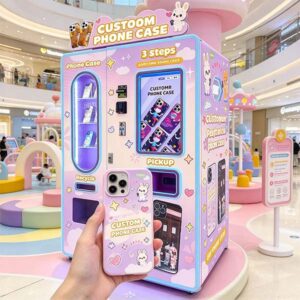
Mall phone case vending machine: what to know before you buy
A phone case vending machine in a mall prints a shopper’s own photo onto a case in the...
Oct 06, 2026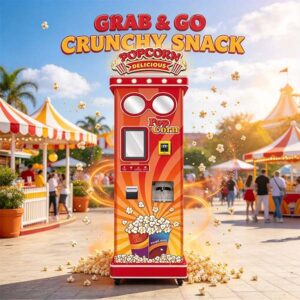 NEW
NEW
Popcorn Vending Machine Factory China: A Straightforward Sourcing Guide
Buying a popcorn vending machine factory direct from China cuts out the trading-company markup, but only if the...
Oct 06, 2026 NEW
NEW
Protein Vending Machines for Sports Stadiums: What a Venue Operator Actually Needs to Know
The WM186 is a self-service protein shake kiosk made for high traffic venues. It mixes a fresh shake...
Oct 06, 2026Popular Picks
 HOT
HOT
Why Are Cotton Candy Machines So Expensive? A Comprehensive Cost Breakdown
If you’ve ever shopped for a cotton candy machine, the price tags might have made your head spin...
Jul 23, 2025 HOT
HOT
What is the Profit Margin on Cotton Candy? Discover Sweet Profits with Wider Matrix
Table of Contents Introduction Understanding Profit Margins Why Choose Vending Machines? About Wider Matrix Case Study: Amusement Park...
Jun 23, 2025 HOT
HOT
How Much Do Cotton Candy Vendors Make? A Complete Profit Breakdown
If you’re considering starting a cotton candy business, one of your first questions is likely: “How much do...
Jun 26, 2025