


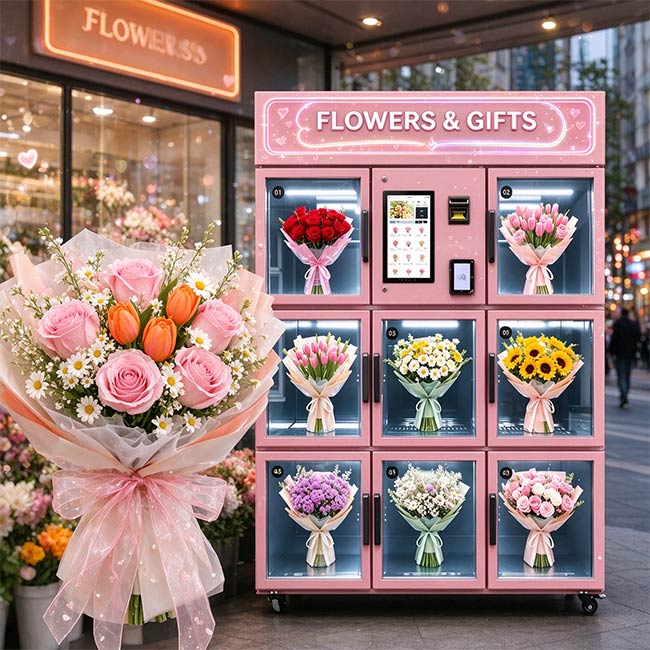
A flower vending machine for supermarket use is a refrigerated self-service cabinet that sells fresh bouquets around the clock. It takes up roughly 1–2 m², holds 5 to 24 bouquets at a steady 2–25°C, and lets shoppers pay by cash, card, or mobile in seconds. For supermarket owners, it turns a dead corner into an impulse-gift channel without hiring a florist or building a full flower shop.
Why a Supermarket Is a Smart Home for a Flower Vending Machine
Supermarkets already have what flower vending machines need most: steady foot traffic and shoppers in a buying mood. A grocery run is often tied to a birthday, a dinner invitation, a thank-you, or a last-minute apology. Placing a refrigerated bouquet machine near the checkout or entrance catches that impulse without adding a staffed florist counter.
The math is straightforward. A traditional flower shop may need 40–100 m², while a vending machine takes roughly 1–2 m² of floor space plus a power outlet. You also get 24/7 selling hours instead of 8–12. For a supermarket, that means new revenue from a corner that might otherwise hold a display rack.
If you are still comparing locations, this guide to the best locations for flower vending machines is a useful next read.
How the Machine Works During a Grocery Run
The customer experience is deliberately simple. Shoppers see real bouquets through anti-fog glass, choose one on a touchscreen, pay, and watch their compartment unlock. No app download and no staff assistance are required.
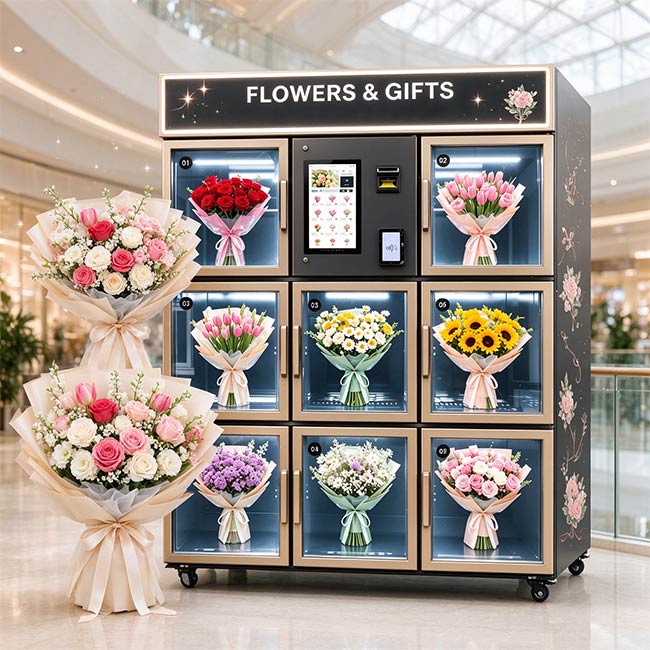
- Stock and chill: Staff load wrapped, pre-hydrated bouquets into sealed, illuminated slots. The cabinet holds 2–25°C.
- Customer picks: The buyer browses the actual flowers, not a photo, then selects a bouquet on a 10.1-inch, 15.6-inch, or 21.5-inch touchscreen.
- Pay and dispense: Cash, bank card, or mobile QR payment is accepted. Only the purchased compartment opens.
- Restock weekly: A 30–60 minute visit keeps slots full. Per-slot sales and temperature are visible from a phone.
Because each slot has its own lock, a supermarket does not need to worry about one customer opening every door. The machine dispenses the chosen bouquet and leaves the rest sealed and cool.
Which Model Fits Your Supermarket?
Wider Matrix builds nine models with 5 to 24 slots. The right choice depends on your aisle width, expected daily sales, and whether you plan to sell single stems or full bouquets. All models use 2–25°C refrigeration and 950 W power, except the Wide Series 24 at 1900 W.
| Model | Slots | Best Supermarket Use | Size H×W×D (mm) | Power |
|---|---|---|---|---|
| Compact Series 5 | 5 | Small convenience store or narrow checkout corner | 2122 × 1640 × 750 | 950 W |
| Grid Series 8 | 8 | Standard supermarket entrance or single-stem rose sales | 2122 × 1500 × 797 | 950 W |
| Showcase Series 10 | 10 | Gift bouquet display near the floral or bakery section | 2122 × 1500 × 797 | 950 W |
| Grand Series 13 | 13 | High-traffic supermarket with weekend gifting peaks | 2122 × 1500 × 797 | 950 W |
| Wide Series 24 | 24 | Large supermarket, mall anchor, or holiday pop-up | 2122 × 3000 × 750 | 1900 W |
If you sell large bouquets or gift boxes, look at the Tall Series 8. For a statement piece in a supermarket atrium, the Arc Series 11 has a wider footprint and a curved showcase. All nine models carry CE, FCC, RoHS, SGS, and ISO 9001 certification, which helps with supermarket compliance reviews. Before you order, run through the flower vending machine supplier checklist so voltage, payment modules, and spare parts are confirmed in writing.
Freshness and Display: What Keeps Bouquets Sale-Ready
Cut flowers are perishable, but they are not fragile if the cabinet is set up correctly. The machine uses a 2–25°C freshness zone, one-piece molded foam insulation, and air-cooling circulation across every slot. An electric dehumidification system keeps the glass clear so shoppers can see the bouquets properly.
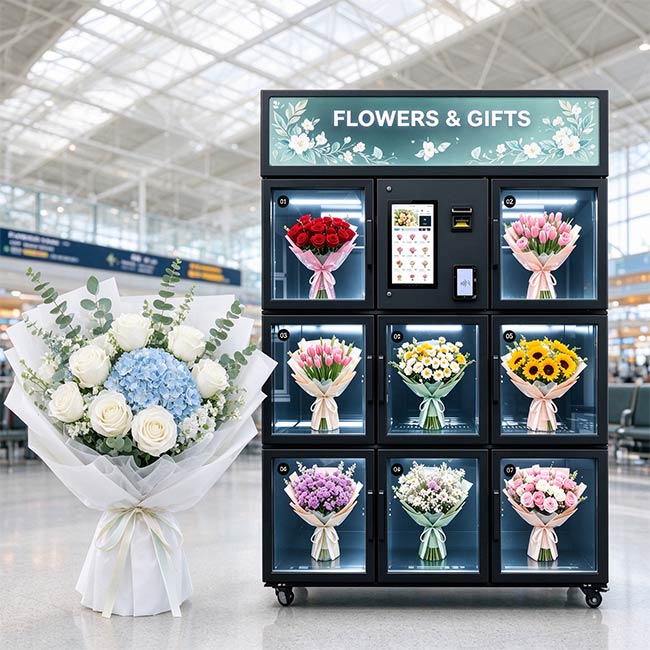
In practice, pre-hydrated bouquets stay display-ready for 5–7 days between restocks. Load them with water tubes or florist wrapping, just as you would deliver them. Keep the machine out of direct sunlight and away from oven exhaust, bakery heat, or strong drafts; those local hot spots make the compressor work harder and shorten vase life. The light-box design, anti-fog glass, and flower-shaped interior dividers make the cabinet look like a small boutique display rather than a snack machine.
Tip: rotate older bouquets to the front slots and use per-slot sales data to avoid overstocking slow-moving colors or oversized arrangements.
Placement Inside the Supermarket
The best spot is not always the floral aisle. Supermarket shoppers buy flowers as an add-on, so visibility and convenience matter more than tradition. Test one location for two to four weeks, then use sales data to decide whether to move it.
- Front entrance: catches shoppers on the way in and out; good for weekend and holiday impulse buys.
- Checkout queue: works for single stems and small $10–15 bouquets, but check aisle clearance.
- Near bakery or coffee: pairs well with treat-and-gift missions, as long as heat and steam are controlled.
- Wine or gift-card aisle: captures dinner-party and celebration shoppers.
- Customer service desk: gives staff a clear line of sight and a natural place to answer questions.
Avoid dark back corners, direct sun, and spots where the machine blocks fire exits or emergency equipment. For a broader look at traffic patterns, see this 2026 guide to profitable vending machine locations.
Space, Power, and Installation Checklist
Most supermarket installations are simple, but a few details are worth confirming before delivery. The machine needs a level floor, a dedicated power circuit, and enough clearance for customers to browse and staff to restock.
- Footprint: plan 1–2 m² plus about 1 m of clearance in front of the door.
- Power: 950 W for most models, 1900 W for the Wide Series 24; default 220–240V AC, 50Hz, customizable for your market.
- Floor: level, hard surface; anchor the unit if local rules or store policy require it.
- Access: keep an 80 cm+ aisle for restocking and customer browsing.
- Network: Wi-Fi or cellular helps remote monitoring, though sales can run without it.
- Approvals: check the store’s insurance, electrical safety rules, and any mall or landlord requirements.
Payments and Remote Management
Payment preference varies by neighborhood. The machine can be configured for cash, bank cards, and mobile QR or wallet payments before it ships. That matters in supermarkets where some shoppers carry only a phone and others still prefer cash.
Remote management keeps the operation light. You can check per-slot inventory, sales, and cabinet temperature from a phone, and one person can oversee several machines. Supermarket staff do not need to count cash daily or guess what sold; the dashboard shows which slots need topping up.
Costs, Margins, and Payback
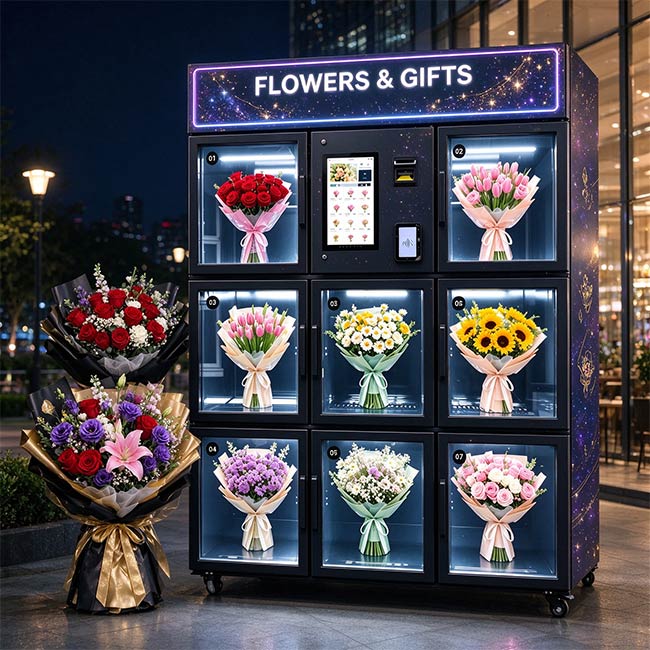
Factory-direct pricing for these machines is typically US$3,000–$6,500 per unit, depending on model, slot count, payment options, and shipping destination. For a current model-by-model breakdown, see the flower vending machine cost and model guide.
| Item | Sample Range | Notes |
|---|---|---|
| Machine price | $3,000–$6,500 | Factory-direct; quoted by model and market |
| Bouquet retail price | $15–$25 | Adjust for local spending power |
| Cost per bouquet | $4–$8 | Flowers plus wrapping |
| Gross profit per bouquet | $10–$17 | Before rent, power, payment fees, labor |
| Daily sales at a mid-traffic site | 10–30 bouquets | Weekends and holidays often higher |
A simple payback estimate uses gross profit, not revenue. If the machine earns $100–$150 per day in gross profit and costs $4,000, the raw payback is roughly 27–40 days before rent, electricity, payment fees, and restocking labor. Real sites vary, so run your own numbers with the flower vending machine payback period math.
Sample figures are for illustration only; actual results depend on location, foot traffic, season, and pricing.
Restocking Workflow for Supermarket Staff
A flower vending machine is not a fill it and forget it business. It is a small floral department that happens to be self-service. The weekly routine below keeps waste low and displays full.
- Schedule: once per week, 30–60 minutes. Increase to 2–3 visits per week during Valentine’s Day, Mother’s Day, and winter holidays.
- Prep: bring pre-hydrated bouquets, water tubes, wrapping, and a cleaning cloth. Label slots by price or bouquet type.
- Load: check the cabinet temperature first, then rotate older stock forward and fill empty slots with the best sellers.
- Review: use per-slot sales data to adjust the mix; if red roses sell out and mixed bouquets sit, change the order next week.
- Clean: wipe the glass, check the anti-fog system, and remove any damaged stems immediately.
Common Mistakes to Avoid
- Hiding the machine. A back corner kills impulse sales; put it where shoppers already walk.
- Overstocking slow sellers. Use per-slot data instead of filling every slot with the same bouquet.
- Ignoring local payment habits. Confirm card and mobile QR modules before the machine ships.
- Forgetting voltage and spare parts. Ask for the exact voltage configuration and a spare-parts list in your quote.
- Skipping a restock plan. Empty slots look neglected and train shoppers to stop checking.
FAQ
How many bouquets does a supermarket flower vending machine hold?
It depends on the model. Wider Matrix machines range from 5 slots in the Compact Series 5 to 24 slots in the Wide Series 24. A typical supermarket might start with 8–13 slots and scale up if sell-through is strong.
Do we need a dedicated employee to run it?
No. Customers serve themselves, and staff only need to restock, clean the glass, and check temperature. Most sites need one 30–60 minute visit per week, with extra visits during peak gifting seasons.
What temperature keeps the flowers fresh?
The cabinet holds 2–25°C, which is the same band florists use for storage. With pre-hydrated bouquets and a weekly restock, cut flowers typically stay display-ready for 5–7 days.
Can it accept cash, cards, and mobile payments?
Yes. Cash, bank card, and mobile QR or wallet payments are available, and payment modules are configured for your market before shipping. Confirm the exact mix your supermarket shoppers use.
How much does a flower vending machine for supermarket use cost?
Reference pricing is US$3,000–$6,500 per unit, factory-direct. The final quote depends on model, slot count, payment options, and shipping destination; ask for a full breakdown including spare parts and warranty details.