


Self-Service Cotton Candy Vending Machines in the USA
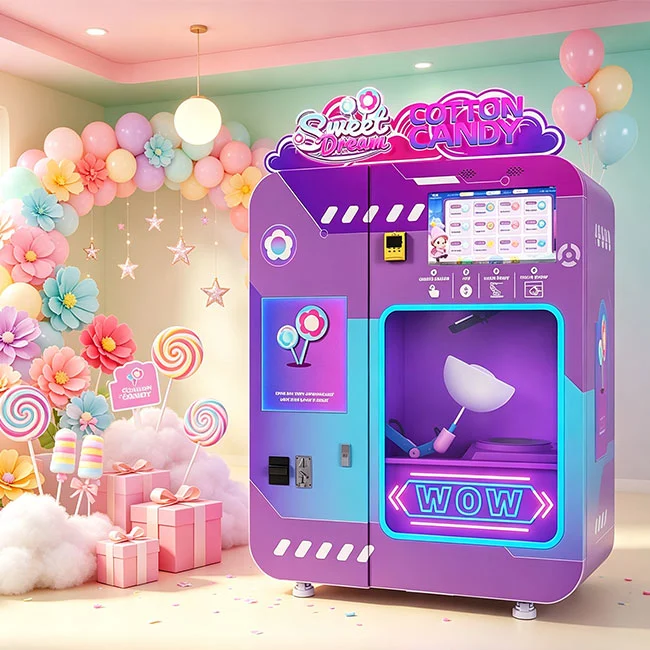
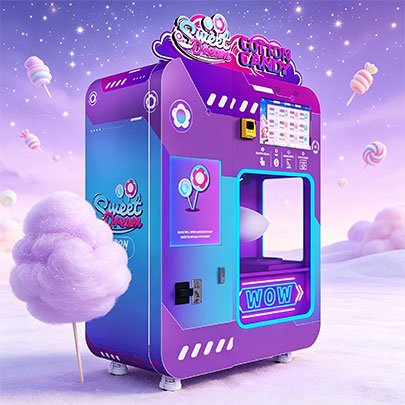
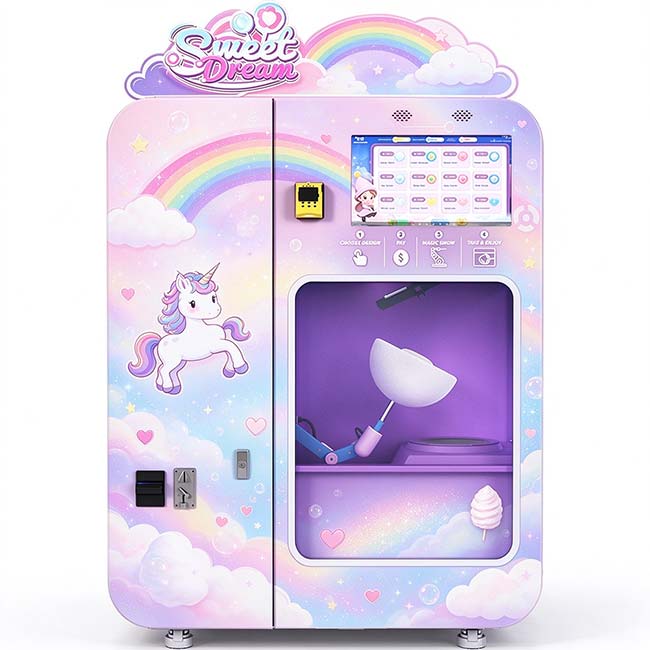
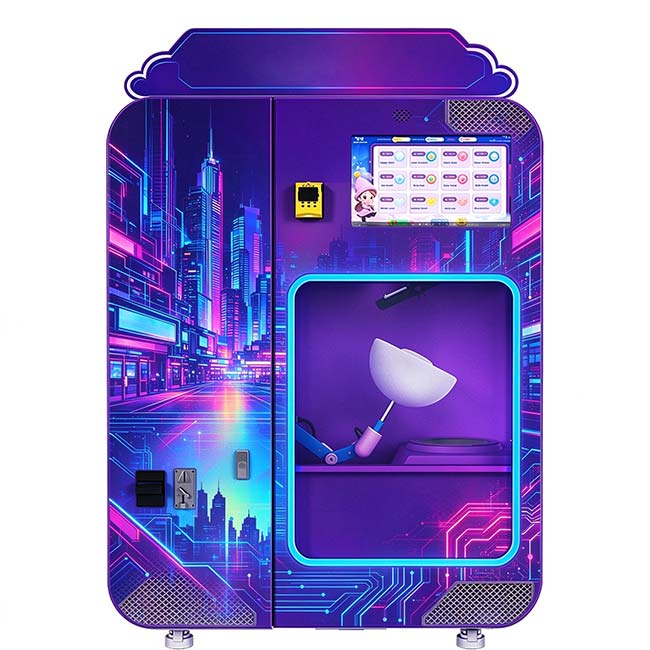
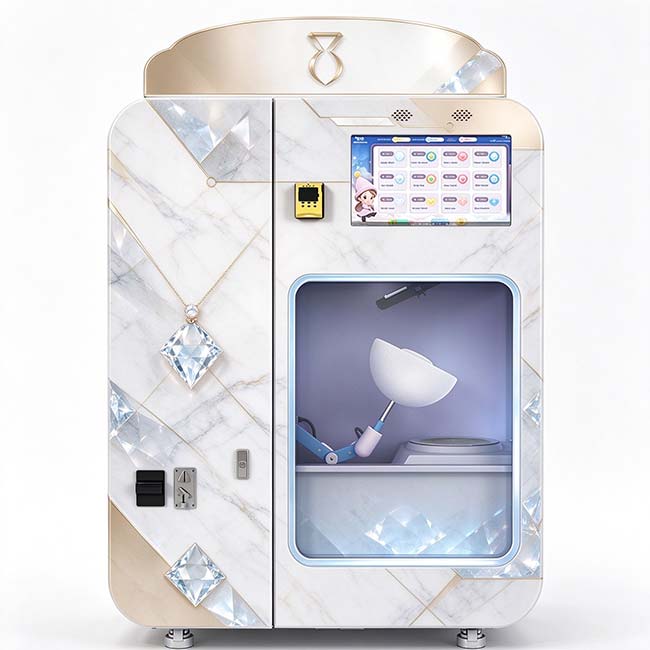
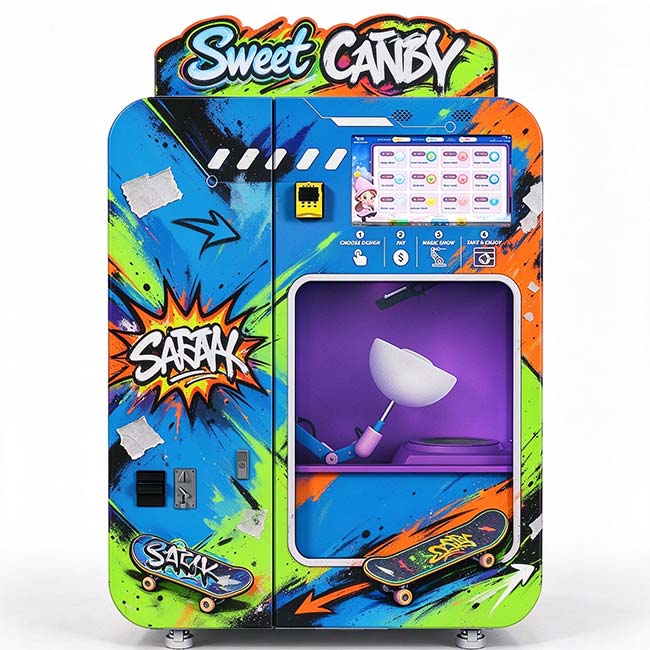
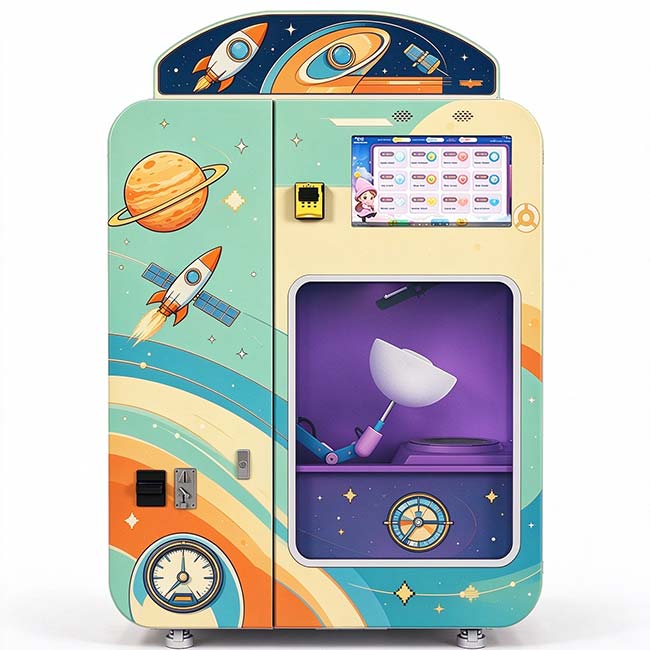
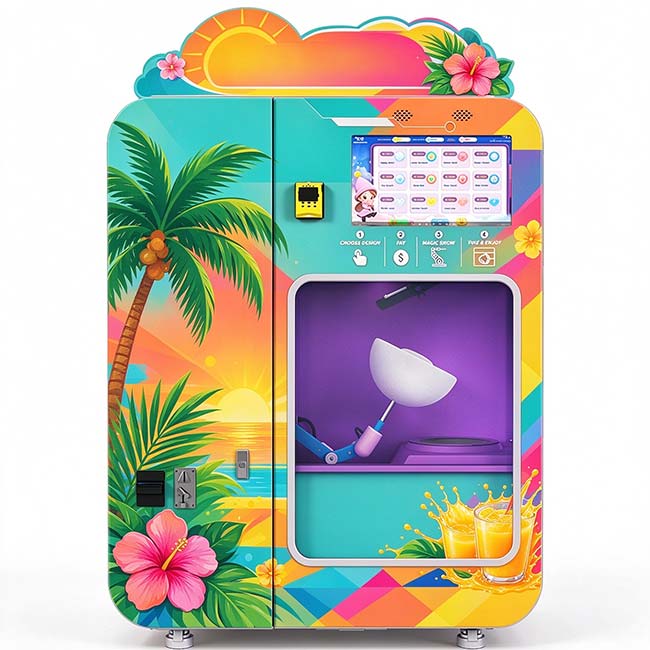
Every project is unique — tell us your needs and we'll provide a tailored solution.
- 🍭 54+ cotton candy designs, constantly updated
- 🌍 Shipped to 130+ countries worldwide
- 🤝 Dedicated account manager for your project
- 💰 Contact us for the latest promotional pricing
Our partners typically recover their investment within 2–4 months. Start earning from day one with a proven, low-maintenance cotton candy vending solution.
Cotton candy has spent a century as the one carnival food that always needs a person. Someone dips the stick, spins the sugar, hides the wand behind their back while it grows, and hands it over. That is the whole ritual, and it is also the reason a lot of store owners never touch it: the machine is cheap, but the operator who stands there all day is not.
A self-service cotton candy vending machine removes that one requirement. The customer walks up, picks a design on a touch screen, pays by card or NFC the same way they pay for anything else, and watches a robotic arm spin the candy in front of them. When the arm finishes, the finished cloud or flower or heart drops for them to collect. No wand, no employee, no kiosk that shuts at five. For operators in the USA who already pay rent on a spot that gets foot traffic, that change is what turns a novelty into a business.
This guide walks through what a self-service cotton candy vending machine actually is, what the main model costs, what the sugar and sticks cost to restock, where it earns in the American market, and what the paperwork looks like before you switch it on. The machine at the center of it is the Wider Matrix WM980, because it is the model most operators end up comparing when they look at robotic cotton candy, and because the numbers below come straight from its spec sheet rather than from a sales pitch.
What makes a cotton candy machine self-service
The word self-service does a lot of work here, so it is worth pinning down exactly what it means and what it does not. A self-service cotton candy vending machine makes the candy on its own, end to end, with the customer as the only person involved. The customer chooses the style, pays, and the machine spins, shapes and hands over the candy without any staff step in between. That is the difference from a countertop cotton candy machine, which still needs a person to spin the sugar and hold the stick.
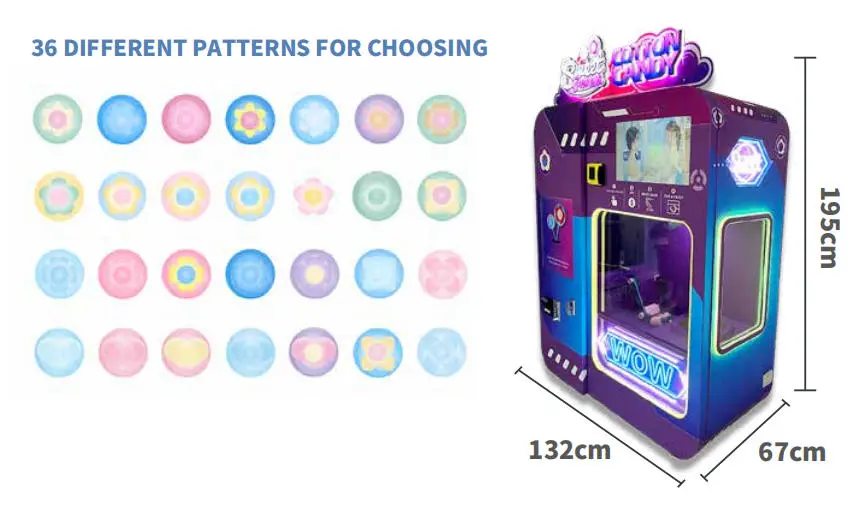
The machinery that makes this possible is a robotic arm with four degrees of freedom, working together with a non-stick shaping knife and a burner that cleans itself between runs. The arm moves the stick through the sugar stream and builds the shape, which is how the machine can offer 36 different candy designs instead of the one big round puff a manual machine makes. A flower, a mushroom, a heart or a cloud each come out looking like the picture on the screen, which matters a lot for a product people are going to film on their phone.
What the arm does in practice is a fixed sequence repeated thousands of times: it picks up a stick, holds it in the sugar stream until the web forms, rotates while the non-stick knife presses the shape, then presents the finished candy at the window. Because the motion is programmed rather than improvised, two candies ordered a week apart come out the same size and roughly the same shape. A human operator on a busy Saturday cannot promise that, which is the quiet advantage of the robotic format. Customers notice it without being able to name it, and it is one reason a self-service machine can hold a standard a manual cart drifts away from by mid-afternoon.
Then there is the unattended part. The machine runs 24 hours a day and needs no one on site to babysit it. A cloud control system lets the owner watch sales, stock and machine status from a phone or computer, and software updates arrive over the air instead of through a technician visit. For an American operator who holds another job, that remote view is what stops a self-service machine from quietly becoming an unserviced machine. Money goes in, alerts come to your phone, and you restock when the machine tells you it is running low rather than when you happen to drive by.
One honest caveat belongs here before the numbers. Self-service removes the employee, not the owner. Sugar and sticks still run out and need refilling, the front still needs wiping, and the machine still needs a solid floor and a 220V supply. It sells itself, but it does not maintain itself, and anyone who forgets that line ends up with an empty machine and a bad review. The rest of this guide covers the running side as honestly as the buying side.
The three machines in the cotton candy line
Wider Matrix makes three models in this range, and the differences between them come down to where the machine will live and how fancy you want it to look. The core model is the WM980, the upgraded WM980+ adds a ring light and a heavier cabinet, and the WM668 is the outdoor version with a rainproof roof and a brighter screen for sunlight. Pricing steps up across the three, and the choice is usually answered by your location rather than by preference.
| Model | Purpose | Default sugar tanks | List price |
|---|---|---|---|
| WM980 | Indoor hot model | 4 tanks x 2 kg | US$4,800 |
| WM980+ | Upgraded, ambient light | 4 tanks x 3 kg | US$4,999 |
| WM668 | Outdoor, rainproof | 6 tanks x 2 kg | US$5,299 |
The fully automatic cotton candy vending machine WM980 is the one most first-time operators start with. It ships with four 2-kilogram sugar tanks, and there is a 200 dollar upgrade to four 3-kilogram tanks if you expect long restock gaps between visits. The WM980 Plus adds an ambient ring light strip and an improved metal cabinet on top of the 3-kilogram tanks by default, which matters in a dim arcade or mall where the glow is half the draw. The outdoor WM668 is the one to pick for a boardwalk, a seasonal fairground or a drive-up lot, with a high-brightness display and an elevated rainproof roof holding six 2-kilogram tanks.
A couple of shared specs explain what you are actually buying at any of these price points. The machine weighs 300 kilograms and draws 500W on standby against 3,000W while it processes, so the power bill stays low when the machine is just glowing and waiting. Each candy uses 28 to 30 grams of sugar, and the cabinet measures 132 by 195 by 67 centimeters. Payments run across coin, cash, credit card and NFC, which is the exact set an American customer expects whether they are at a family entertainment center in Ohio or a mall food court in Texas.
Choosing between the three models
Because all three machines share the same core hardware, the choice between them is mostly about the room and the route to restock it. Start with where the machine will live, because that single answer eliminates one or two of the options before price even enters the conversation.
For an indoor site, the WM980 is the sensible default. It is the lowest price in the line at US$4,800, and a mall corridor or family entertainment center rarely needs the outdoor screen or the rainproof roof. If the room is dim, a game floor, an arcade, or a theater lobby, the WM980+ earns its extra US$199 through the ambient ring light strip and the heavier cabinet. The glow is not a cosmetic detail in a low light space; a cotton candy machine sitting in shadow looks broken to a customer, while one that lights the candy up pulls people toward it from across the room.
For an outdoor site, the answer is the WM668. A boardwalk, a seasonal fairground, a drive-up lot or any spot where the machine faces the weather needs the high-brightness display and the elevated rainproof roof, and the six 2-kilogram tanks that come standard are there because an outdoor spot is harder to restock mid-event. Paying for the outdoor model indoors is the one direction that rarely pays back, since you are carrying a heavier cabinet and a brighter screen into a room that needs neither.
The tank decision sits on its own track and can be made after the model. Four 2-kilogram tanks are fine for a site you visit every morning, while four 3-kilogram tanks make more sense when the machine only gets a visit twice a week or faces a weekend it must survive alone. The 200 dollar upgrade is cheap relative to a machine selling nothing through a Saturday afternoon because it ran dry on Friday night.
How the customer gets their candy
The four-step flow reads almost too simple to be real, and that is kind of the point. Step one, the customer chooses a style on the touch screen, picking from the flower, mushroom, heart and cloud shapes plus whatever else the system has added. Step two, they pay by coin, cash, credit card or NFC. Step three, the machine does the work: the robotic arm spins the sugar onto the stick and the shaping knife carves the design. Step four, the finished candy is ready to collect, and the customer walks away with a piece they just watched a robot make.
That watch it happen moment is doing more than anyone gives it credit for. Cotton candy is the least secret food on earth. Everyone already knows it is just spun sugar, and the magic was always in watching the wand make a cloud out of nothing. A machine that puts the spinning front and center keeps that magic while removing the employee, and a customer who films it is free advertising for the location. For a self-service format, the glass window is not a barrier; it is the show.
The window is also where trust gets built, and trust is the whole currency of an unattended food machine. A parent who cannot see the machine work assumes the worst, so a clear view of the sugar going in and the candy coming out does more for sales than any sign on the wall. The magnetic door lock reinforces it, because it stops another customer from reaching into the chamber and lets the next person in line believe the machine is clean. Everything about the customer-facing design, from the screen to the glass to the lock, is aimed at one outcome: someone watches once, trusts it, and then buys without a second thought.
The burner under all this is built to live in an unattended machine. It runs an auto-cleaning and humidifying process that prolongs the burner’s lifespan, which is what keeps a machine that spins sugar all day from needing a technician every month. The stick, meanwhile, is a 10 millimeter by 300 millimeter paper stick, and the whole assembly is guarded by a magnetic door lock that stops anyone from reaching in while the arm is moving. That lock is the machine’s quiet safety feature, and it is the kind of detail that matters when the machine sits in a venue full of children.
The language side matters for the USA operator more than the specs suggest. The machine supports multiple languages, which lets an American site run it in English without tearing anything apart, and the advertising screen lets you run your own promotions, a local cross-promotion, or a sponsor’s video by USB when the machine is idle. A self-service kiosk earns a second income just sitting there, and in the American market a machine that replaces the old printed sign with a moving picture is simply the standard now.
Sugar, sticks and what restocking costs
Cotton candy runs on inexpensive consumables, and the numbers are small enough that they deserve to be written down. The machine runs on a dedicated spun-sugar blend, not the granulated sugar from the grocery shelf, and that blend comes in six colors with no powder residue, in six flavors: milk, banana, strawberry, blueberry, apple and grape. The granule size runs 1.2 to 1.7 millimeters, sized to spin cleanly through the machine without clogging.
Sugar is priced by the bag and drops as the order grows. A case of 96 bags costs US$3.25 a bag, 480 bags drops it to US$3.00, 1,008 bags takes it to US$2.85, and 2,004 bags brings it down to US$2.75. Each candy uses 28 to 30 grams of sugar, and the per-bag price falls as the order grows. Operators who run several machines tend to buy the bigger tier once and share the stock, because the price break is meaningful across a whole summer of traffic.
The six flavors are a merchandising tool as much as a supply line. Milk, banana, strawberry, blueberry, apple and grape each carry their own color, and the sugar comes in six colors with no powder residue, which keeps the inside of the machine cleaner than the old dyed blends that left dust on every surface. Rotate the flavors you stock rather than loading all six into the same day, because a customer choosing between two colors decides faster than one staring at six. Keep the two best sellers permanent and swap the rest by season, and the menu stays fresh without the machine ever looking empty.
Sticks are the other recurring line, and they are smaller still. A pack of 2,000 paper sticks runs US$0.050 each, 10,000 drops to US$0.045, 20,000 to US$0.040, and 100,000 or more to US$0.038. They come default colored at 10 millimeters in diameter and 300 millimeters long, and a custom printed stick is available with a minimum order of 10,000 pieces if you want your own branding on every candy. Between the sugar and the stick, the cost of goods for a single candy stays low enough that the rest is rent, power and the machine itself.
Cotton candy makes its money on volume and theater, not on a high ticket price. The machine takes the labor out, and the consumables were already cheap before the machine existed. What decides the business is whether enough people walk past, which moves the question to location, and that is exactly where the American market gets specific.
The checks to run before you order
Between reading a spec sheet and signing an invoice sits a short list of checks that save more money than any price negotiation. Run them in order and most of the surprises a new machine can throw at you disappear before the crate even ships.
The first is power, and it is the one that strands machines. The unit draws 3,000W while it processes and needs a 220V supply, so the question is not “will it plug in” but “can this building’s circuit carry it.” Have an electrician look at the site and write down an answer before you pay. A machine sitting dark in a loading bay because the site only had a 110V wall outlet is a real outcome that a one-hour electrician visit prevents.
Second is the floor and the door. The machine weighs 300 kilograms, which means a level, solid floor and a delivery route that can handle a pallet jack or a lift gate. Measure the doorway and any turns before ordering, because a cabinet that fits the room but not the door is a problem that cannot be solved on delivery day. The machine ships on casters with an easy-lock mechanism, so the last few feet of positioning are simple, but the route to that final spot is still yours to plan.
Third is choosing the right tank size for your restock rhythm. The WM980 holds four 2-kilogram tanks by default, with a 200 dollar step up to four 3-kilogram tanks, and the WM980+ comes with the larger tanks already. If you can only visit the site twice a week, the bigger tanks earn their cost quickly by selling through a full weekend without running dry. If you are on site every morning anyway, the smaller tanks are fine and the upgrade money stays in your pocket.
Fourth is the site’s contactless habit. The machine takes coin, cash, credit card and NFC, which maps directly to how American customers pay: tap a card or phone, done. A self-service machine lives or dies on that tap, so confirm the card and NFC readers are part of the order and not a bolt-on you discover later. Fifth is the paper side, which the next section covers, because in the United States the license and the health check come before the first sale, not after it.
Will it earn in the American market
The USA is not one vending market; it is several, and cotton candy does not slot into all of them equally. The machine performs best where there is a child tugging a parent’s sleeve or a couple looking for a shareable novelty, which is a long way of saying family and foot traffic. Family entertainment centers, malls, movie lobbies, arcades, amusement parks, zoos, and seasonal fairs are where the product already sells, so a machine in those spots is competing on convenience rather than on convincing someone they want sugar at all.
Location matters more than the machine, and the difference between a good and a bad corner is the whole business in this category. A machine buried in a dead hallway sells almost nothing, while the same machine beside the exit of a theater that lets out at nine sells steadily all evening. If you are placing your first unit, the patterns worth studying are gathered in the best locations for cotton candy vending machines in the USA, which is written for exactly the American operator and covers the spots that actually work rather than the ones that sound good in a pitch.
A useful way to judge a spot before you sign is to stand in it for a slow hour and count the people who pass within arm’s reach of where the machine would sit. Then count how many of them are with a child, because that is the customer cotton candy actually sells to. A wide empty concourse with a thousand people spread across it does worse than a narrow bottleneck where two hundred people squeeze past the machine on the way to the parking lot. Dwell time matters as much as raw numbers: people waiting for a table, a movie or a ride have a minute to spend, and a minute is exactly what a self-service candy machine needs.
Then there is the money question, and it deserves an honest answer rather than a fishing number. Cotton candy keeps its per-unit costs low because the sugar and stick cost so little, but no serious source should hand you a revenue figure without knowing your location, your price and your foot traffic. What the machine can promise is speed and consistency: it makes candy unattended all day, and it never closes. For the actual returns people report, the dedicated breakdown in how much a cotton candy vending machine makes and the sharper question in whether a cotton candy vending machine is profitable walk through the arithmetic without the hype. Both are worth reading before you commit a dollar.
Seasonality deserves a line of its own, because it decides when you make the money even more than where. Cotton candy follows warm weather, school vacations and the fair calendar, so a machine in a northern state will see its strongest months between late spring and the end of summer, while a machine inside a year-round family entertainment center barely feels the season at all. The practical move is to read the machine’s own sales data month by month and plan restocking and marketing around the peaks, not to expect a flat line from January to December. An outdoor WM668 on a seasonal fairground lives and dies by the event schedule, so treat the off-season as a maintenance window rather than a failure of the machine.
Paperwork, prints and the importing side
Running a food machine in the United States means a couple of permissions that a candy bar machine never needs. Cotton candy is a food product, even if it is just spun sugar, so most states and counties treat the machine as food service. That usually means a food establishment or vending license, and possibly a local health inspection, and the rules differ enough by state that the only reliable answer to “do I need a license” is to check with your own county rather than copy a setup from another state. The practical checklist lives in do I need a license to sell cotton candy.
Power is the mechanical side of the same question. The machine draws 3,000W while it processes on a 220V supply, so an operator should have an electrician confirm the circuit before the machine ships. That step is cheap and boring, and it is the one most new operators skip until the machine arrives and finds no socket that will carry it. The machine also weighs in at 300 kilograms, so plan the delivery path, the lift gate and a level floor before the crate leaves the dock, not after it blocks your doorway.
Importing from a Chinese factory adds one more layer that the American buyer should expect, not fear. The machine is certified to CE and ISO 9001 standards, with RoHS compliance, which is the paperwork that lets a unit clear customs and pass a local inspection without drama. Any serious supplier should be able to show those certificates before you wire money, and a supplier that cannot is a sign to slow down. A clean framework for the whole vetting process is in what the price of a cotton candy automatic machine includes and the broader guide to choosing the right vending machine manufacturer.
How the cotton candy line sits next to the rest of the range
Wider Matrix builds more than cotton candy, and if you are choosing one machine for one location it pays to see the neighbors before you spend. Cotton candy is the entertainment product in the lineup, priced at US$4,800 to US$5,299 and aimed at family and impulse buys. The same company also makes popcorn, ice cream, pizza and a hot food fryer, and each one fits a different kind of customer and a different margin structure.
| Machine | Type | List price | Best fit |
|---|---|---|---|
| Cotton candy WM980 | Sugar spun, robotic arm | US$4,800 | Family, entertainment, impulse |
| Popcorn WM680 | Air-popped snack | US$1,800 | Cinemas, lobbies, budget entry |
| Ice cream WM550 | Frozen dessert | US$5,799 | Warm weather, malls, cafeterias |
| Pizza WM660 | Hot food, 12-inch pizza | US$8,250 | Meal replace, transit, offices |
The popcorn vending machine WM680 is the cheapest door into the business at US$1,800, air-popping a serving in about 120 seconds and weighing only around 70 kilograms. It is a good entry point for a cinema or lobby where a warm salty snack fits the mood. The automatic ice cream vending machine sits at the higher end with a US$5,799 WM550 and does its best work in summer traffic, and the pizza line starts at US$8,250 for a 12-inch pie when the customer wants lunch rather than a treat.
The choice almost always comes down to the customer, not the spec sheet. Cotton candy wins where someone is buying an experience and a bit of candy theater; popcorn wins where the snack is a side order to a movie; pizza and fries win where the customer actually wants a meal. Run more than one site and the argument flips again, because a single cloud backend and support team across popcorn, cotton candy and ice cream makes a second and third machine cheap to watch from one phone. The rental question, for the operator who is not sure they want to own, is handled plainly in whether renting a cotton candy machine is cheaper than buying.
The company, the support and the day to day
The machine comes from Wider Matrix (GZ) Technology Co., Ltd., based in Guangzhou in Guangdong Province, China. The company has focused on vending machines and smart robots for about five years, lists more than 3,000 machines deployed, and runs a team of over 50 people, with cotton candy sitting in a catalog that also spans phone case printers, balloon machines, ice cream, pizza and popcorn units. For an American buyer, that footprint matters less than the support structure, and the support is where the day to day actually gets decided.
What you live with after the machine lands is a short list of routine tasks, not a repair schedule. The sugar tanks and the stick magazine get refilled as the machine signals, the front glass gets a wipe, and the burner’s built-in auto-cleaning process runs between cycles to prolong its own lifespan. The one maintenance habit people genuinely ask about is cleaning, and the correct answer for this machine is more forgiving than old manual ones; if you want the full picture, the guidance in should I use water to clean my cotton candy machine covers what to do and what to leave alone.
The remote side carries most of the management load. The cloud system reports real time sales and stock, flags a fault the moment it appears, and pushes software updates over the air, so the machine keeps improving without a service call. The manufacturer provides installation and maintenance guidance, 24-hour online support and a one-year warranty, with the machine assembled and tested before it ships. That combination, a machine that runs itself and a phone that tells you when it needs you, is what actually makes a self-service vending machine viable for a USA operator who is not planning on standing next to it.
The first month on site
The first week is about getting the machine level, powered and loaded, then watching it work a few times yourself before you trust it to the public. If you are the type who wants to know every button before the customer does, the startup run-through and timeline are covered in how long it takes for a cotton candy machine to start making cotton candy, which steps through the first power-on and first run instead of leaving you to guess.
After that, put the machine in front of feet and let the data do the talking. The cloud dashboard shows sales by hour and by day, so inside a week you will know your busiest hour and your best-selling design. That is the information almost every new owner ignores: they stock the six flavors evenly and run whatever pattern looks prettiest, even though the screen has already told them which flavor outsells the rest. Match the stock to the data, and the machine stops missing sales it could have caught.
The one decision to delay is changing the design list. The 36 patterns update over the air as the system adds them, so there is no rush to curate on day one. Let the default set run through a full traffic cycle, note which designs people film and which they skip, then trim to the winners. Cotton candy is a product people already know and like, so the first month is less about convincing anyone and more about learning what your own foot traffic reaches for, and then keeping that item from ever running out.
Common mistakes that cost operators money
Most of the costly errors in this category are known before anyone signs, and they repeat across operators who never compare notes. The first is buying the outdoor model for an indoor site. The WM668 is built for weather and sunlight, so putting one in a mall corridor pays a premium for a roof and a screen the room will never need. Match the model to the room, and the budget goes into sugar and stock instead of a feature that sits unused.
The second is underestimating the tank. Four 2-kilogram tanks are plenty for a site visited every morning and thin for a location that only gets a weekend visit. The symptom is subtle: the machine is not broken, it is simply empty from Friday night to Monday, and the operator blames foot traffic for a sales gap that is really a restock gap. The 3-kilogram upgrade exists for exactly this pattern, and it costs far less than a lost weekend.
The third is treating a self-service machine as a fully passive asset. It spins and sells on its own, but the glass still smudges, the stick magazine still empties, and a machine with a dirty window reads as broken to the next customer. The operators who do well build a ten-minute daily stop into their routine and a deeper clean into the week, and the machine rewards that with the most valuable thing in vending: repeat customers who trust it.
The fourth is skipping the permit and inspection step until after delivery. Hot food rules and health checks vary by county, and a machine that gets shut down during its first week loses the season it needed to pay for itself. Sort the license and the electrical confirmation before the crate ships, and the first month is about selling rather than fixing paperwork. The fifth is chasing every flavor on day one instead of stocking the two that the screen proves people want. Restraint is cheaper than variety in a machine this size.
Getting a firm price on your machine
If the WM980 line fits your site, the useful next step is a real quote rather than a plan built on the list figures. Promotions move, and the final number depends on your market, order quantity, destination and any customization such as a branded stick or a machine skin, so the published price is a reference point and not the invoice. Bulk orders of three to five units, six to nine, or ten and up are quoted directly and typically land below the single-unit figure.
Before you reach out, write down three things so the quote comes back right the first time: the city and venue type where the machine will live, the number of units you are weighing, and your delivery address so they can fold in shipping and import properly. Have your electrician’s confirmation on the 220V supply ready too, because it is the one site question that decides whether a machine can even run there. Send those details to Wider Matrix with your quantity, and the number that comes back is the one that belongs in your plan.
Note: Product specifications, pricing, and configurations are subject to change as we continuously improve our technology. Contact our sales team for the latest pricing, promotions, and a custom quote.
Specifications
| Model | WM980 |
| Dimensions | 132cm × 195cm × 67cm |
| Power | 500W (Standby) / 3000W (Processing) |
| Net Weight | 300 KG |
| Voltage | 220V / 110V (Optional) |
| Payment Methods | Coin / Cash / Credit Card / NFC |
| Sugar Consumption | 28–30g per cotton candy |
| Cotton Candy Designs | 36 designs and keeping updated |
| Remote Management | Supports cloud monitoring and management |
Product Certificates
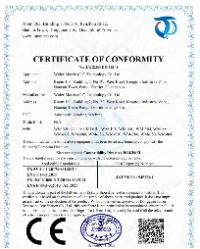
CE
JAT2209011545EC-1
2022.09 – 2027.09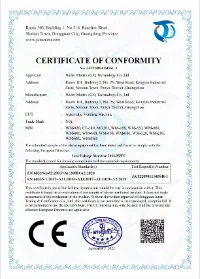
CE
JAT2209011545SC-1
2022.09 – 2027.09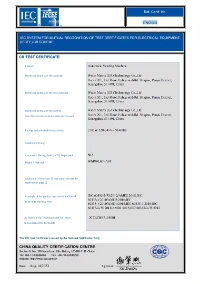
CB
CN61098
2023.08 – 2028.08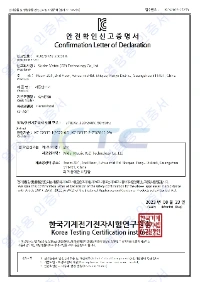
KC
XU070729-23001A
2023.08 – 2028.08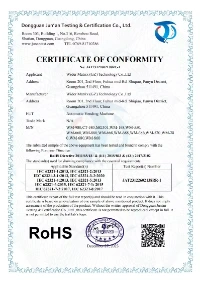
RoHS
JAT23122602138RC-1
2023.12 – 2028.12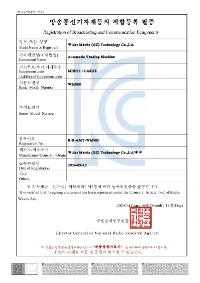
KC
R-R-wMT-WM980
2024.09 – 2029.09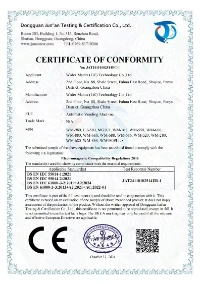
UKCA
JAT24110102514EC-1
2024.10 – 2029.10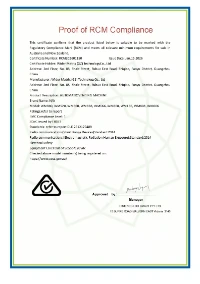
RCM
RCM202601150
2026.01 – 2031.01Company Introduction
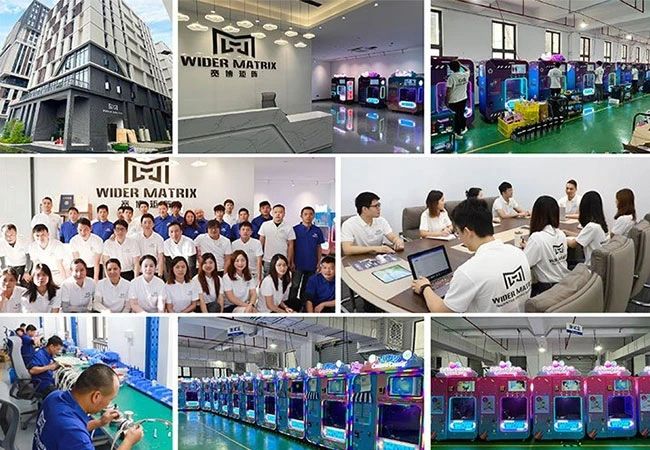
Wider Matrix (Guangzhou) Technology Co., Ltd. is a scientific and technological enterprise that attaches importance to R&D and user experience. We started to research and develop automated vending solutions in 2016, and achieved a leading position in the field of interactive vending machines.
In 2019, we manufactured the first automatic cotton candy vending machine. After years of refinement and rigorous testing, our machines now operate successfully in more than 130 countries including the United States, Canada, Europe, Southeast Asia, Australia, and Israel.
All machines support remote cloud management, which has the advantages of easy operation, convenient maintenance and high operating efficiency.
Exclusive Services
Overseas Support Service
Local transfer warehouse support, ensuring your operational stability.
Custom Design
We offer machine appearance customization, branding, and large-scale custom packaging services.
Initial Tools & Spare Parts Kit
Machine comes with complementary tools and spare parts kit, including initial consumables package for early operations.
Functional Customization & Software Optimization
Custom functionality based on client needs, including hardware and software optimization updates.
Lifetime Technical Support & Updates
We provide lifetime technical support and software update services for all customers.
Frequently Asked Questions
How much does a self-service cotton candy vending machine cost?
Can the machine make cotton candy without any staff?
How much sugar does each cotton candy use?
What flavors and shapes does the machine make?
Do I need a license to sell cotton candy in the USA?
How much power does the machine need?
How does it compare to a popcorn or ice cream machine?
Is there an outdoor version for a boardwalk or fairground?
User Reviews
The cotton candy vending machine from Widermatrix has been an incredible addition to our theme park. Visitors are amazed by the automated process and variety of designs. The machine operates flawlessly even during peak hours, and the cloud management system makes monitoring and maintenance incredibly simple.
I installed three cotton candy machines in my shopping malls, and they've been running perfectly for over four months. The 54 different candy designs are a huge hit with customers of all ages. Sugar consumption is exactly as advertised, and the remote monitoring system allows me to check inventory levels without visiting each location.
As a first-time business owner, the cotton candy vending machine has exceeded my expectations. The colorful designs attract crowds at my family entertainment center, and children are mesmerized watching the automated process. The payment system accepts all methods as advertised, and technical support has been outstanding.
The cotton candy vending machine has revolutionized our carnival business. Setup was straightforward, and the machine began generating profits from day one. The variety of candy designs keeps customers coming back to try new patterns. Perfect investment for event businesses.
Our cotton candy vending machine achieved ROI within just five months! The 300kg machine is surprisingly easy to maintain despite heavy daily use. We love how the machine creates perfect cotton candy designs consistently, and our customers are always delighted by the experience.
I operate several food courts and decided to add cotton candy machines to diversify offerings. The WM980 model has been phenomenal — customers are fascinated by the automated process and unique designs. The machines have become such attractions that we've ordered five more for our newest locations.
Excellent cotton candy machine, though installation took longer than expected due to its size. Once operational, performance has been outstanding. The 54 different candy designs are a huge hit with our customers. Sugar consumption is efficient at 28-30g per candy. Technical support was very responsive.
Our university cafeteria installed this cotton candy machine six months ago, and it's been a massive success. Students are fascinated by the automated process and artistic designs. Even during rush periods, the machine handles high demand without issues. The power efficiency is impressive — only 500W on standby as advertised.
As the owner of a candy store chain, adding this cotton candy machine was the best decision I've made. It's become the centerpiece attraction in our flagship store. The machine creates beautiful cotton candy art that customers photograph and share on social media, bringing in new customers daily.
We've been running this cotton candy vending machine at an amusement park for 8 months now. Zero breakdowns, consistent quality, and the cloud management system is a game-changer for multi-location operators. The 54 design options keep kids (and adults!) coming back. Highly recommend Widermatrix.
Why Choose Us
Why Operators Choose WiderMatrix
See how we compare to the industry average
| Feature | WiderMatrix | Industry Average |
|---|---|---|
| Machine Lifespan | ✓ 2× longer than standard machines | Standard lifespan |
| Maintenance | ✓ Ultra-low cost + remote diagnostics & alerts | High maintenance cost |
| Build Quality | ✓ Premium materials + patented technology | Standard manufacturing |
| Certifications | ✓ CE, ASTM, FSC, UKCA, RoHS (7+) | 1–2 certifications |
| Technical Support | ✓ 24/7 dedicated team + video guidance | Email only |
| AI Management Platform | ✓ Real-time monitoring, analytics & remote control | Basic / no dashboard |
| Software Updates | ✓ OTA lifetime free updates | Paid upgrades |
| Warranty | ✓ 1 year (no part return required) | 3–6 months |


Latest Articles
 NEW
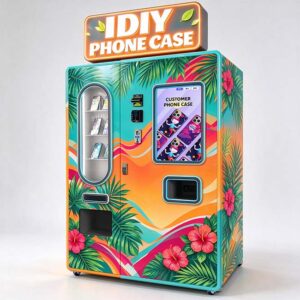
Phone Case Vending Machine Buying Guide: Costs, ROI and Site Picks for 2026
A phone case vending machine can look like a simple machine business until you compare a $5,000 printer,...
Nov 02, 2026 NEW
Flower Vending Machine for Airport USA: 2026 Guide to Profits
Wondering whether a flower vending machine can actually work in a US airport? It can, but the machine...
Nov 02, 2026 NEW
How to customize a phone case with your own photo without a blurry print
Your phone goes everywhere, and a photo case turns a mass-produced accessory into something you actually chose. To...
Nov 02, 2026Popular Picks
 HOT
Fully automatic cotton candy vending machine WM980
Key attributes type Vending Machines function SDK Power 3000W warranty 1 Year dimension 132*67*195 CM Cooling system Not...
Jul 14, 2025
HOT
Phone Case Vending Machine Buying Guide: Costs, ROI and Site Picks for 2026
A phone case vending machine can look like a simple machine business until you compare a $5,000 printer,...
Nov 02, 2026 HOT
Ready to Pack for the Czech Republic
Today is a good day that we are going to send out our package for the Czech Republic....
May 20, 2022