



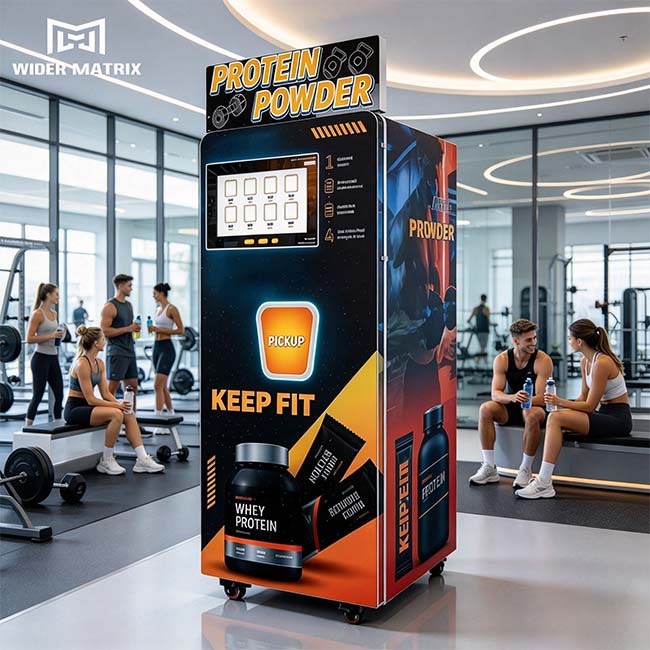
Automatic Protein Shake Vending Machine WM186 | $4,150
$150–$400/day
Earn up to 93%+ gross margin per serving
1–3 Months Payback
Most operators recoup their investment fast
3,000+ Vending Machines Sold (as of 2024)
Trusted by operators in 130+ countries since 2016
The WM186 is the Wider Matrix automatic protein shake vending machine for gyms, university sports centres, and hotel fitness rooms. Seven 4L powder hoppers, three water temperatures, in-cup mixing with a high temperature cleaning cycle after every cup, a 21.5 inch screen that takes card, phone, or QR payment, and cloud monitoring for a whole fleet. It runs unattended around the clock, costs US$4,150 factory direct, and each cup costs you roughly US$1.20 in powder and packaging against a US$3.00 to US$8.00 sale price. Below are the full spec table, the running costs, and the volume arithmetic that tells you how fast the machine pays for itself in your venue, and if it already looks like the machine you came for, send us your venue type, country, and quantity and you will have a quotation within 24 hours.
📋 Fill out the form — get a custom ROI estimate for your location within 1 hours.
ISO 9001 Certified — 1-Year Warranty Included
24/7 Live Support — Avg. Reply < 3 Min
Fast Global Shipping — Door-to-Door Tracking
Product Details
What the WM186 is and who buys it
The WM186 is an automatic protein shake vending machine for the places where people finish training and want a shake immediately: commercial gyms, university sports centres, hotel fitness rooms, sports complexes, CrossFit and boxing clubs. Seven powder hoppers sit behind a 21.5 inch touch screen. A member picks a base powder, adds whatever else they want, chooses a water temperature, pays, and the machine mixes the drink inside the disposable cup and hands it over in about 60 seconds. Nobody stands behind a counter.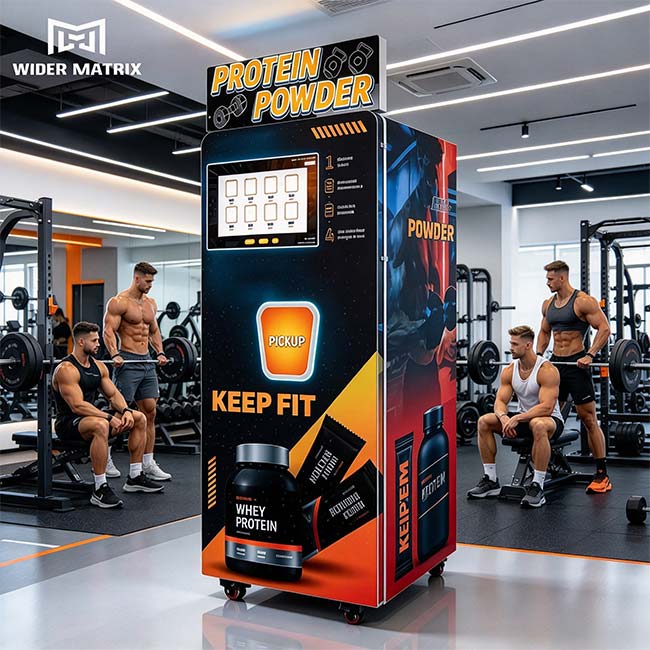 Wider Matrix builds it in our own factory in Guangzhou and sells it factory direct at US$4,150 per unit. That matters if you have been talking to a trading company that puts its own margin on top of a machine it does not manufacture. When you want the recipe set changed, the hopper layout rearranged, or your logo on the cabinet, you are talking to the people who assemble the machine rather than to a middleman relaying the request.
Two kinds of buyer end up here. Gym owners who want one machine in one location, and operators building a route of ten or fifty machines who need to see sales, stock levels, and faults across all of them from one screen. The WM186 is built for both, which is why the cloud dashboard handles 50+ machines and not just the unit you buy today.
The short version: unattended service 24 hours a day, about US$1.20 of powder and cup per serving against a US$3.00 to US$8.00 shelf price, and 60+ cups an hour at peak. If you already know this is the machine you came for, send us your venue type, your country, and how many units you want, and we will come back with a quotation, a spec sheet, and a freight estimate within 24 hours.
Wider Matrix builds it in our own factory in Guangzhou and sells it factory direct at US$4,150 per unit. That matters if you have been talking to a trading company that puts its own margin on top of a machine it does not manufacture. When you want the recipe set changed, the hopper layout rearranged, or your logo on the cabinet, you are talking to the people who assemble the machine rather than to a middleman relaying the request.
Two kinds of buyer end up here. Gym owners who want one machine in one location, and operators building a route of ten or fifty machines who need to see sales, stock levels, and faults across all of them from one screen. The WM186 is built for both, which is why the cloud dashboard handles 50+ machines and not just the unit you buy today.
The short version: unattended service 24 hours a day, about US$1.20 of powder and cup per serving against a US$3.00 to US$8.00 shelf price, and 60+ cups an hour at peak. If you already know this is the machine you came for, send us your venue type, your country, and how many units you want, and we will come back with a quotation, a spec sheet, and a freight estimate within 24 hours.
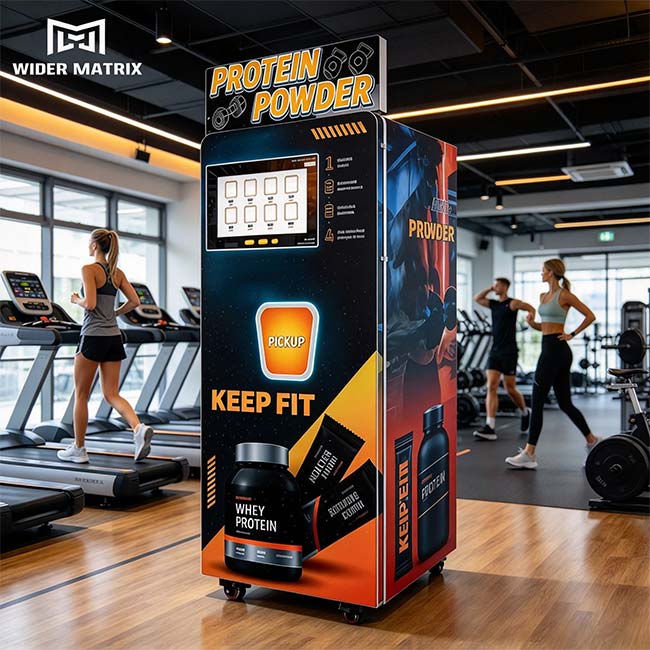
WM186 technical specifications
| Item | Specification |
|---|---|
| Model | WM186 |
| Certification | CE |
| Serving time | 60 seconds per shake |
| Peak capacity | 60+ cups per hour |
| Powder hoppers | 7 hoppers, 4L each |
| Water temperature | 3 zones (cold / room temperature / hot) |
| Touch screen | 21.5 inch |
| Ordering time | Under 30 seconds (browse, customize, pay) |
| Payment | Card, Apple Pay, Google Pay, WeChat Pay, Alipay, NFC, MDB |
| Operation | Unattended, 24/7 |
| Machine price | US$4,150 factory direct |
How a customer buys a shake
- Pick a base powder from the seven shown on screen: whey, plant based protein, or mass gainer.
- Add what else goes in, such as BCAA, creatine, or a pre-workout scoop, and set the portion size.
- Choose cold, room temperature, or hot water.
- Pay by card, phone, watch, or QR code. Browsing, customizing, and paying take under 30 seconds.
- The machine drops a cup, doses the powder straight into it, adds water, and mixes inside the cup.
- The finished cup comes out about 60 seconds after the order is placed, then the machine runs its own cleaning cycle.
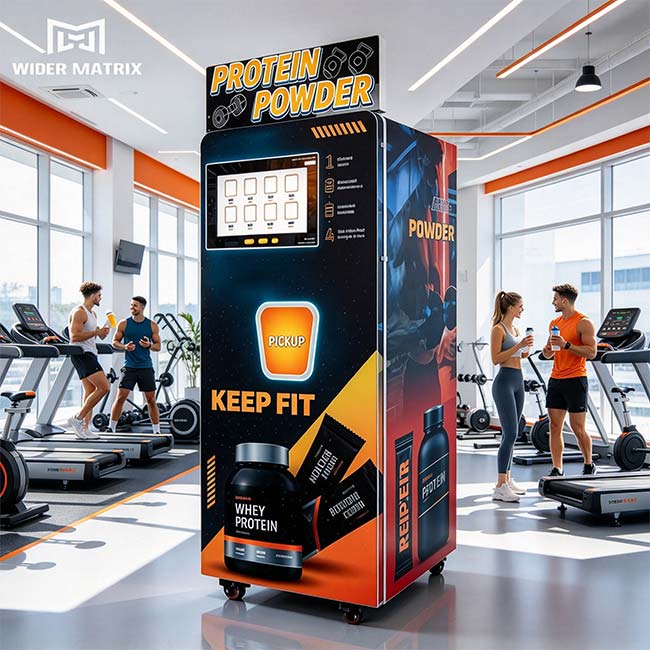 The argument for unattended service is the hours nobody wants to staff: early morning before work, and late evening once the front desk thins out. A machine does not care which shift it is. We wrote a longer walkthrough of this customer flow in our guide to the self-service protein shake vending machine, including the parts that matter when you are choosing where to put it.
Payment systems it accepts
| Method | Supported |
|---|---|
| Nayax | Yes |
| Pax | Yes |
| Credit / debit card | Yes |
| Apple Pay | Yes |
| Google Pay | Yes |
| WeChat Pay | Yes |
| Alipay | Yes |
| NFC | Yes |
| MDB protocol | Yes (universal) |
What goes in the seven hoppers
| Slot | Powder |
|---|---|
| 1 | Whey protein |
| 2 | Plant based protein |
| 3 | Mass gainer |
| 4 | BCAA |
| 5 | Creatine |
| 6 | Pre-workout |
| 7 | Any brand of your choice |
Why the powder is mixed in the cup
Most protein vending machines stir the drink in an internal chamber and pump it out through a pipe. The WM186 doses the powder directly into the disposable cup and mixes there, which is a patented design, and then runs a high temperature cleaning cycle after every single cup. For a buyer, the difference shows up in ordinary operation. Flavour carryover: an internal chamber that made a chocolate shake will taste faintly of chocolate in the vanilla that follows, and members notice. Downtime: a chamber and pipe that carry protein residue have to be stripped and scrubbed by someone, and while that is happening the machine is not selling. Hygiene inspection: a health inspector looking at a machine that rinses itself at high temperature after each serving is a shorter conversation than one looking at a pipe full of dried whey. Clumping is the other half of it. Powder that sits in a humid hopper and then hits water in a shared pipe forms lumps, and lumps are the most common complaint on machines that use internal stirring. Mixing in the cup removes the surface the lumps would build up on.What the WM186 costs
The machine is US$4,150 factory direct. That is the price of the machine, not the landed cost, so freight, insurance, and import duty are quoted separately once we know where it is going. Bulk orders get volume pricing and there are seasonal discounts through the year, so if you are planning more than one unit, say how many and we will price the lot rather than the piece.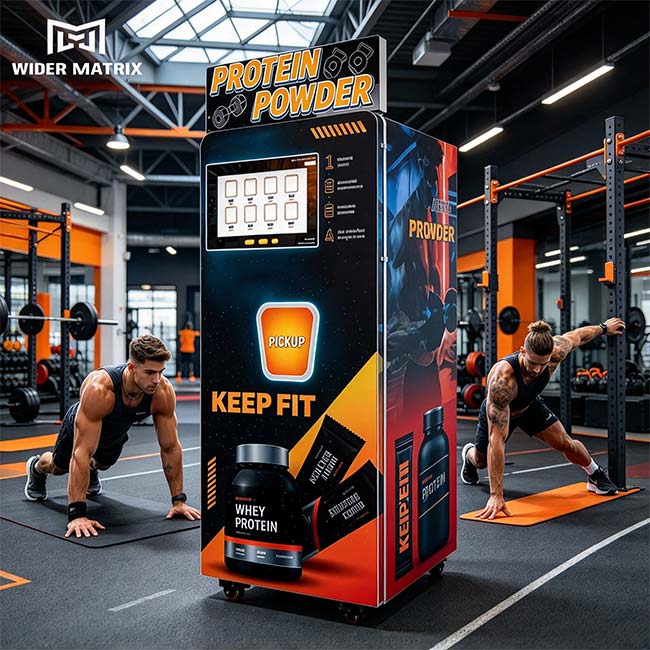 Two other things move the final number. Custom branding and a custom recipe set are quoted on the work involved, not as a flat fee. And if you want a payment terminal shipped inside the machine instead of buying it locally, that changes the invoice too. We put every one of those lines on the quotation so you can see what you are paying for. There is a fuller write-up of the money side in what the WM186 costs and how it works.
What each cup costs you
| Item | Cost |
|---|---|
| Consumables per cup (powder and cup) | US$0.80 to US$1.50, around US$1.20 on average |
| Typical retail price per cup | US$3.00 to US$8.00 |
| Gross margin | 60% to 75% |
What the numbers look like at 15, 30, 50, and 80 cups a day
| Daily sales | Price per cup | Daily revenue | Daily gross profit | Monthly revenue | Payback |
|---|---|---|---|---|---|
| 15 cups | US$4.00 | US$60 | US$45 | US$1,350 | Around 3 months |
| 30 cups | US$5.00 | US$150 | US$120 | US$3,600 | Around 1 month |
| 50 cups | US$5.00 | US$250 | US$200 | US$6,000 | Around 1 month |
| 80 cups | US$6.00 | US$480 | US$400 | US$12,000 | Under 1 month |
Running a fleet without driving to each machine
Every WM186 reports to the cloud: sales, hopper levels, and the health of the machine itself. One dashboard covers 50+ machines, so an operator with units across a city can see which site is selling and which one has been quiet since Tuesday. Fault diagnosis pushes early warnings to your phone and to our after-sales team at the same time. In practice that means a worn part or a sensor drifting out of range gets flagged before the machine stops selling, and in some cases before anyone at the venue notices anything is wrong. New recipes, price changes, and promotions are pushed over the air, so changing a price across a whole route is an edit on a screen rather than a visit to each machine.Where these machines get installed
| Venue | Typical daily volume |
|---|---|
| Commercial gym, 500+ members | 40+ cups a day |
| University sports centre | 80+ cups a day at peak |
| Corporate fitness centre | Premium pricing |
| Hotel fitness centre | 24/7 revenue |
| Sports complex | 60+ cups on event days at US$6.00 to US$8.00 a cup |
| CrossFit / boxing club | Brand co-labelling |
Certification, warranty, and after-sales support
The WM186 is CE certified. It carries a 1 year warranty plus lifetime technical support, against the 6 month warranty that is common on machines in this category. Wear parts and spares ship from our factory; tell us which parts you want held in stock and we will quote a spares kit with the machine. Support requests are answered within 24 hours. Because the machine reports faults to our after-sales team as well as to you, a lot of problems start being worked on before you have written the email.Branding, recipes, and OEM options
Custom cabinet colours, your logo, and a recipe set built around your own products are all available through our OEM and ODM service. Recipe changes are not a one-time thing either: once machines are on site, new recipes and promotions go out over the air, so a seasonal flavour or a price test does not need a technician. There can be a minimum quantity for custom branding work, and franchise pricing is available if you are rolling out under one brand across several operators. Send us what you have in mind and we will tell you what the minimum is for that specific job.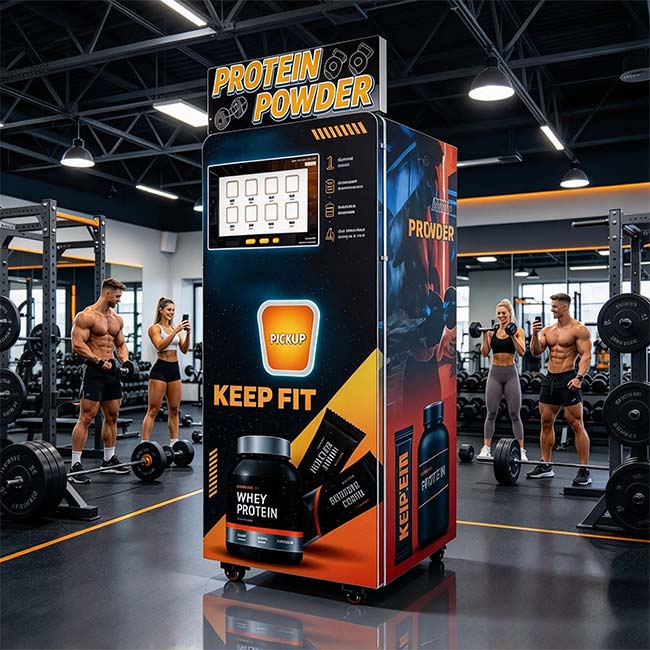
How the WM186 compares with cheaper machines
| Feature | Wider Matrix WM186 | Other brands |
|---|---|---|
| Mixing | In-cup mixing, no clumping, self cleaning after each cup | Internal stirring, prone to clumping, hard to clean |
| Capacity | 7 hoppers and 3 temperature zones | 2 to 3 hoppers, single temperature |
| Speed | Under 60 seconds | 2 to 4 minutes per cup |
| Remote management | IoT cloud, 100+ machines from one account | On-site only |
| OEM / ODM | Full support, plus OTA updates and franchise pricing | Not offered |
| Warranty | 1 year plus lifetime support | 6 months standard |
Who you are buying from
Wider Matrix has been building vending equipment in Guangzhou since 2016 and has shipped more than 3,000 units to over 130 countries. Around 50 engineers work on the product line, and the WM186 is assembled in our own factory rather than contracted out, which is why recipe and branding changes are possible at all.
We ship worldwide and handle export documentation as part of the order. Import duty and any local registration your market requires for food contact equipment change from country to country, so we check those against your destination rather than guessing. Tell us where the machine is going and we will tell you what we have handled there before. If you are comparing factories rather than machines, this piece on what to look for in a protein vending machine manufacturer in China is the honest version of that conversation.
Get a WM186 quotation
Five things let us quote you properly: the type of venue and roughly how many people pass through it in a day, the country and port, how many units you want, whether you want your own branding, and which payment system your market uses. Send those and you will get back a price, the full spec and utility sheet, and a freight estimate within 24 hours. If you are still at the comparing stage, send the venue details anyway and tell us what else you are looking at. We would rather tell you the WM186 is the wrong machine for a low traffic site than sell you one, because the operators who come back for a second and third unit are the ones who were matched to the right venue the first time.
Frequently Asked Questions
How much does the WM186 cost, and is there a discount for several units?
US$4,150 per machine, factory direct. Volume pricing applies to bulk orders and there are seasonal discounts during the year. Freight, insurance, and duty are quoted separately by destination. Send us the quantity you have in mind and we will quote the whole order.
Is the WM186 the best automatic protein shake vending machine for a gym?
Judge it on four things and decide for yourself. How many powders you want to offer: seven hoppers here against two or three on most machines. Whether you have anyone to scrub an internal mixer: the WM186 mixes in the cup and cleans itself at high temperature after each serving. Whether you are running more than one machine, because a fleet without remote monitoring means driving to each unit to read sales. And what the warranty is: 1 year plus lifetime support, against the 6 months that is standard in this category. If your volume is small and you have staff already behind a counter, a cheaper machine may suit you better, and we will say so if that is what your numbers look like.
Can I use my own protein powder?
Yes. You fill the hoppers with whatever you want to sell, and slot seven exists specifically for a brand of your choosing. There is no powder supply contract with us and no restriction on the brands you stock.
What is the lead time?
Lead time depends on the configuration you order and how many units you need, so we confirm it on the quotation rather than quoting a number that changes. Contact us for details and we will give you a build slot.
What are the power, water, and space requirements?
They depend on how the machine is configured and on the standard in your country. The full dimension sheet and utility requirements go out with your quotation. If you have a tight spot in mind, send us a photo and the measurements and we will tell you whether the machine fits before you order.
Do I need staff on site?
No. The machine is designed to run unattended around the clock. Your work is restocking powder and cups, reading the dashboard, and collecting the money. The cleaning cycle after each cup is automatic.
How is it shipped, and who installs it?
We ship worldwide and quote freight to your port or to your door, depending on what you prefer. Remote commissioning support and documentation come with the machine. For on-site installation in your country, contact us for details and we will tell you what is available where you are.
What happens when something breaks?
The self-diagnosis system sends the fault warning to your phone and to our after-sales team at the same time, so support usually starts before you report anything. Warranty is 1 year with lifetime technical support after that, responses come within 24 hours, and spare parts ship from the factory.
What is the minimum order?
We take single unit orders as well as container loads. Minimum quantities apply to some custom branding work, and we will confirm the figure for your specific job when you ask for pricing.
Which countries do you ship to?
We have shipped to over 130 countries and global shipping is supported. Import duty, local certification for food contact equipment, and voltage standard are the three things that change by market. Tell us the destination and we will tell you what we have done there before.
User Reviews
4.7 ★ (3 reviews)D
D***e
★★★★★
ok so honestly was kinda nervous dropping $4150 on a vending machine but my gym in Austin needed something for the protein shake crowd and this thing has been GREAT. setup was easier than I expected, took me like 2 hours by myself. the shakes sell out by wednesday every week lol. only complaint is the machine is HEAVY, get a friend to help unload it trust me
R
R***o
★★★★☆
well I buy this machine for my fitness studio in Manila. shipping take long time almost 6 weeks but WiderMatrix support answer my questions quickly everytime. machine work good, customers happy with cold shakes. one thing is temperature setting little confusing at first, I wish manual more clear in english. but overall good investment, already make back good money in 3 months
J
J***n
★★★★★
Gotta say this WM186 exceeded my expectations!! I put it in my crossfit box lobby and people literally line up after classes. The cooling system keeps everything at the right temp and it looks super clean/professional. My only minor gripe is the payment screen could be a bit more responsive but honestly not a big deal. WiderMatrix called me to check on delivery which was a nice touch. Would recommend to any gym owner thinking about it
Related Products