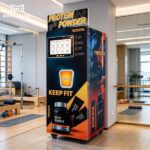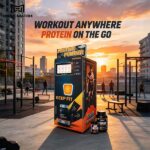




People finish a hard training session and want something to drink before they head home. When the gym desk is closed and there is no staff behind the counter, that moment is lost. An unattended post-workout nutrition vending kiosk fills the gap. It lets members grab a protein shake, a mass gainer or a BCAAs drink without waiting for anyone.
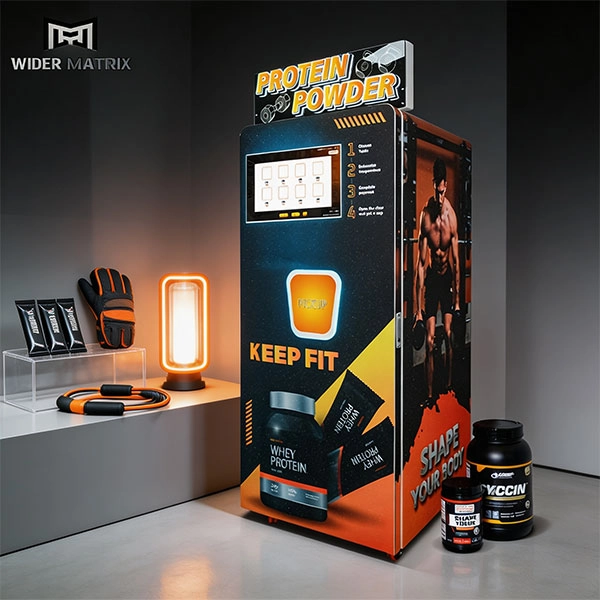
The Wider Matrix WM186 is built around that exact moment. It mixes custom nutrition drinks in under a minute, takes card and mobile payment and runs without staff. This guide explains what the machine does, who it is for, how the economics look and which questions an operator should ask before buying one.
If you are comparing options first, Wider Matrix’s vending machines overview lists their full product range. If you want to understand what separates a good supplier from a bad one, the guide to choosing the right vending machine supplier covers the checks you should make.
How an unattended post-workout nutrition kiosk works
The customer journey is short. A member walks up to the touch screen, picks a recipe or customises their own drink by choosing protein type, flavour and size, and pays with card, Apple Pay, Google Pay or NFC. The machine dispenses a cup, injects powder, mixes it and hands over the drink. The whole process takes under 60 seconds.
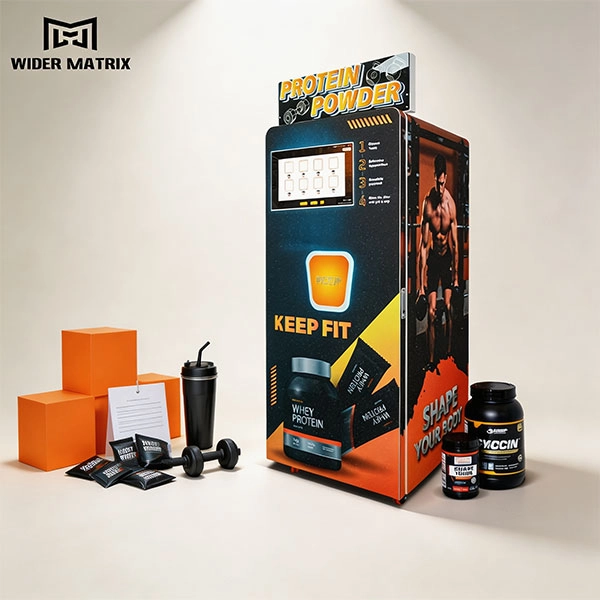
That speed matters in a gym. People do not want to queue after a sweaty workout. A kiosk that delivers in under a minute keeps the line moving and makes the impulse purchase feel easy rather than inconvenient.
For the operator, the important thing is less about the user interface and more about what happens behind the machine. Powder types need to stay fresh, cups and lids need constant replenishment, and the mixing path needs cleaning after every single cup so no residue builds up. Wider Matrix addresses this with patented in-cup mixing technology and an automatic high-temperature self-cleaning cycle. The powder is injected directly into the disposable cup rather than passing through internal pipes, which cuts down on contamination risk and makes cleaning simpler.
WM186 specifications
The WM186 is a floor-standing commercial unit. Its listed specifications are:
| Item | WM186 specification |
|---|---|
| Model | WM186 |
| Cup preparation time | 60 seconds |
| Peak service capacity | 60+ cups per hour |
| Powder hoppers | 7, each 4 L |
| Temperature zones | 3: cold, room temperature, hot |
| Touch screen | 21.5 inch |
| Customer operation time | Under 30 seconds to browse, customise and pay |
| Mixing technology | Patented in-cup mixing |
| Self-cleaning | Automatic high-temperature cycle after each cup |
| Certifications | CE |
| Payment support | Nayax, Pax, credit/debit card, Apple Pay, Google Pay, WeChat Pay, Alipay, NFC, MDB protocol |
| Remote management | IoT cloud platform with smartphone and PC access |
The seven hoppers give the operator real flexibility. Instead of offering one standard shake, the machine can carry whey protein, plant-based protein, mass gainer, BCAA, creatine, pre-workout and a seventh slot for a custom brand blend. That range matches the actual preferences of gym members rather than assuming everyone wants the same product.
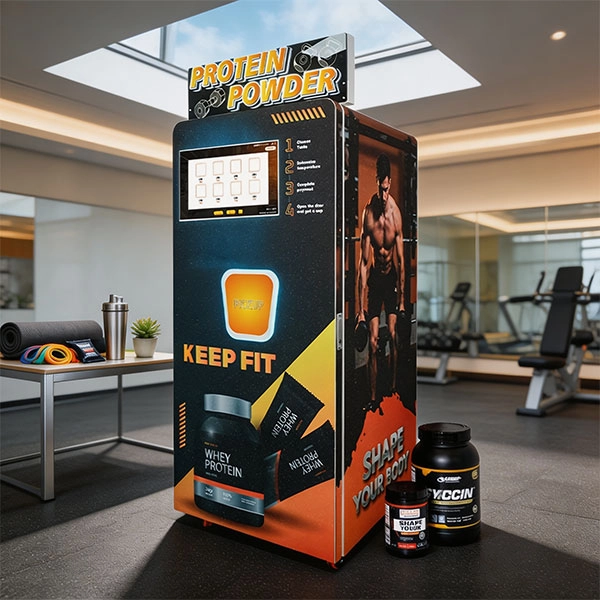
The three temperature zones are another differentiator. Most basic nutrition kiosks handle cold drinks only. The WM186 can serve hot coffee, hot chocolate or warm protein drinks as well as iced or chilled shakes. That increases the number of occasions when a member will buy a drink, including in colder months or after yoga and stretching sessions.
The seven hopper system explained
Each hopper holds four litres of powder. The table below shows the factory default slot layout, but Wider Matrix allows customisation of each slot:
| Slot | Default fill |
|---|---|
| 1 | Whey protein |
| 2 | Plant-based protein |
| 3 | Mass gainer |
| 4 | BCAA |
| 5 | Creatine |
| 6 | Pre-workout |
| 7 | Custom brand or flavour blend |
A gym that specialises in bodybuilding might load heavier mass gainers. A gym with a strong female demographic might stock more plant-based protein and fewer carb-heavy blends. The operator can also programme recipes on the screen so that common combinations appear first and obscure blends require extra taps.
Wider Matrix supports OEM and ODM branding, which means gyms, supplement brands and franchise operators can put their own logo on the machine and on the cups. This is relevant for corporate fitness programmes, sports clubs and supplement companies that want a branded presence in a gym setting.
Pricing and unit economics
The factory direct price for the WM186 is US$4,150. That is the equipment cost only. Freight, import duties, local compliance checks and installation are separate.
The retail price per cup is listed between US$3.00 and US$8.00, depending on location and target market. The consumable cost per cup is around US$0.80 to US$1.50, averaging roughly US$1.20. This produces a gross margin of 60% to 75%, according to the product specifications.
The published revenue projection table gives a clear but conditional picture:
| Daily sales | Price per cup | Daily revenue | Daily profit | Monthly revenue | Payback period |
|---|---|---|---|---|---|
| 15 cups | $4.00 | $60 | $45 | $1,350 | ~3 months |
| 30 cups | $5.00 | $150 | $120 | $3,600 | ~1 month |
| 50 cups | $5.00 | $250 | $200 | $6,000 | ~1 month |
| 80 cups | $6.00 | $480 | $400 | $12,000 | less than 1 month |
These figures assume the listed consumable cost and no rent, power, maintenance or restocking labour costs. The actual return depends on the venue’s footfall, the member base, the price set and the operator’s own overheads.
Wider Matrix also shares a specific case study from a mid-size gym in Miami. The machine moved about 45 cups per day at $5.50 per cup, with a material cost of $1.20 per cup. The resulting daily profit was $193, the monthly profit exceeded $5,800, the gross margin reached 78% and the payback period was approximately three months. This is one data point from one location. It shows what a busy gym can achieve, but it should not be treated as a guaranteed outcome for every venue.
What types of venues suit an unattended post-workout nutrition kiosk
The WM186 is designed for locations where people train, sweat and finish a session in a time window. The best sites share two features: high foot traffic during predictable hours and a customer base that already thinks about nutrition.
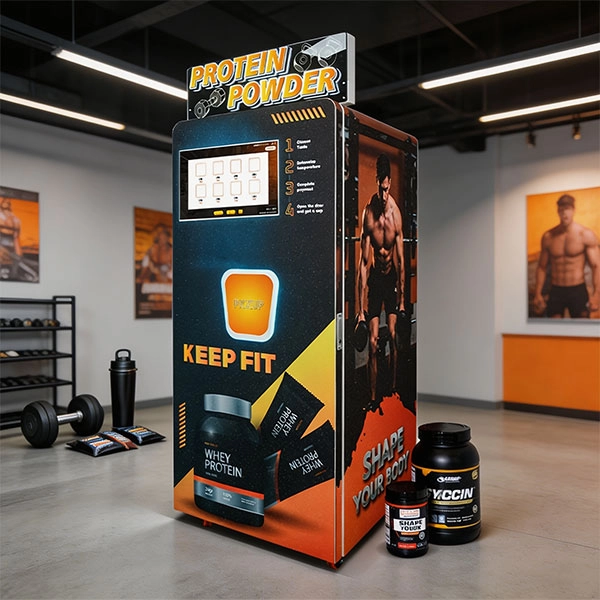
The product parameters list daily cup estimates by venue type:
| Venue type | Typical daily cups |
|---|---|
| Commercial gym with 500+ members | 40+ cups per day |
| University sports centre | 80+ cups per day during peak |
| Corporate fitness centre | Premium pricing possible |
| Hotel fitness centre | 24/7 revenue opportunity |
| Sports complex | 60+ cups on event days, higher price point |
| CrossFit or boxing club | Brand co-label customisation available |
A commercial gym with five hundred or more members typically generates enough after-workout demand to sustain daily sales in the forty to fifty cup range. University sports centres can even outperform that figure during peak hours because student populations are dense and price-sensitive but volume-driven. Hotels with round-the-clock fitness rooms offer a different pattern: lower hourly volume but continuous revenue that does not stop when the front desk closes.
For operators considering multiple sites, Wider Matrix lists typical monthly profit ranges of $2,000 to $8,000 or more, depending on location, price point and member count. These are reference figures, not promises.
Why in-cup mixing matters more than you might expect
Most cheaper nutrition kiosk solutions stir powder inside the machine’s internal pipes. That approach has two problems. First, residue builds up over time and creates a sanitation risk. Second, clumping becomes common when powder meets moisture inside narrow channels, and cleaning those channels manually is tedious and inconsistent.
The WM186 avoids both problems by injecting powder directly into the disposable cup and then mixing there. The path is shorter, the surface area exposed to moisture is smaller and the automatic high-temperature self-clean cycle after each cup keeps the injection line free. For the operator, this means less time spent scrubbing pipes and less risk of a customer receiving a lumpy shake.
Wider Matrix compares this to internal stirring systems from other brands, claiming faster cleaning, fewer clogs and lower maintenance downtime. Buyers should still ask for independent verification of those claims and request live machine demonstrations before committing.
IoT cloud management and multi-site operations
One machine is manageable on site. Ten machines across different locations require a remote platform. The WM186 supports IoT cloud management, which gives the operator a central dashboard to view sales, inventory levels and equipment health. Alerts can be pushed to a phone or to the after-sales team when a hopper runs low or a fault appears.
The system also supports OTA remote updates, meaning new recipes and promotions can be pushed to all connected machines without visiting each one. For a franchise operator or a chain of gyms, this reduces travel time and keeps the offering consistent across sites.
Multi-currency and multi-language interfaces are listed, which is relevant for international operators or venues in tourist areas. The platform can track orders, monitor daily weekly and monthly performance and support promotional rules such as discounted bundles or time-limited offers.
Where to place the machine for maximum impact
Location is the single most important variable after the machine itself. A badly placed kiosk will underperform even if the unit is technically sound.
Wider Matrix has published guidance on vending machine location strategies and a general overview of where vending machines are most profitable. Those resources apply to nutrition kiosks as much as they do to snack or drink units. The principles are similar: place the machine where the intended customer naturally pauses after the activity that creates the demand.
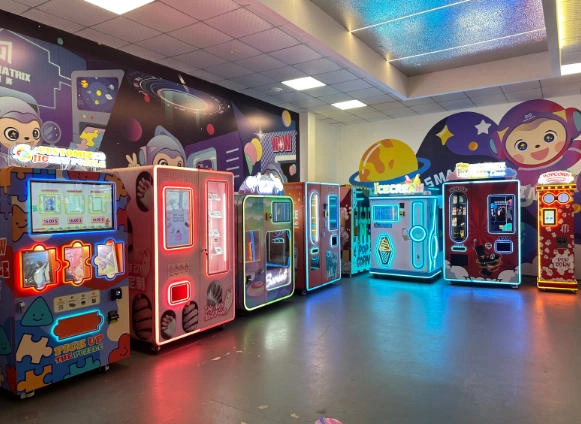
In a gym setting, that means near the exit, beside the locker room, or in the corridor between the weights area and the cardio floor. It should be visible from the main walkway but not blocking traffic. The floor area required is modest, but the machine still needs power, a stable surface and space for a person to stand while they interact with the screen.
Before finalising a placement, observe where members actually stop after training. Some gyms have natural choke points near the registration desk. Others have a separate recovery lounge where members linger. The right spot is where the member is already slowing down and thinking about what comes next, not where they are rushing to leave.
Competitive positioning against other brands
The WM186 is not the only nutrition kiosk on the market. Wider Matrix lists a few distinguishing factors:
- In-cup mixing versus internal stirring
- Seven hoppers with three temperature zones versus two or three hoppers with single temperature control
- IoT cloud management for 100 plus machines versus on-site-only monitoring
- Full OEM and ODM support with OTA recipe updates versus no custom branding
- A one-year warranty with lifetime technical support versus a standard six-month warranty
These comparisons are supplier-provided. A buyer should verify each claim through independent testing, third-party reviews and a written confirmation from the manufacturer. The warranty length, in particular, is worth negotiating if multiple units are being purchased.
For operators who want to compare manufacturers more broadly, Wider Matrix also maintains a guide to choosing the right vending machine manufacturer. The evaluation criteria in that article are useful as a checklist regardless of which brand is being considered.
Who is Wider Matrix?
Wider Matrix is a manufacturer and supplier of vending machines, founded in 2016 and based in Guangzhou, China. The company states it has shipped over 3,000 units to more than 130 countries, employs a team of over 50 engineers and offers global shipping with factory direct pricing. The company claims over 15 years of experience in vending machine development and a 24-hour response time for technical support.
The company also notes that it holds independent R&D patents, including KC, CE and PSE patents, and has received over 30 industry awards.
How to request a quotation from Wider Matrix
The most reliable way to get accurate pricing is to contact the manufacturer directly. Wider Matrix recommends using their contact page for quotation requests.
When requesting a quote, provide the following details so the supplier can give a complete package price:
- Number of units and desired configuration
- Target venue type and location
- Preferred powder blends and whether you need custom branding
- Required payment terminal setup
- Shipping destination and preferred incoterms
- Any local compliance requirements you need the supplier to support
A complete quotation should separate the machine cost, consumables starter kit, payment equipment, freight, insurance and any optional installation support. If the supplier bundles everything into one figure without breakdown, ask for itemised pricing before paying.
Final buying checklist
Before placing an order for an unattended post-workout nutrition vending kiosk, confirm the following:
- measure the installation area and check the delivery path
- identify the target venue and estimate realistic daily cup sales
- choose the hopper configuration and powder blends
- verify local payment terminal compatibility and electrical requirements
- request an itemised quotation covering machine, consumables, freight and optional services
- compare at least two suppliers before deciding
- ask for customer references and current certification documents
- confirm warranty terms, spare parts availability and after-sales response time
- test the machine or watch a live demonstration if possible
A post-workout nutrition vending kiosk can add meaningful revenue to a gym with minimal ongoing labour. The WM186 offers a feature set that is above average for the category, particularly in hopper capacity, temperature control and remote management.