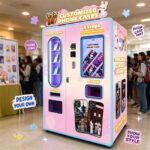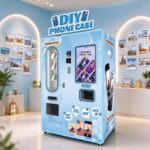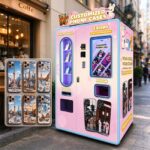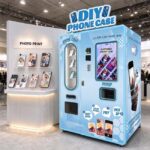


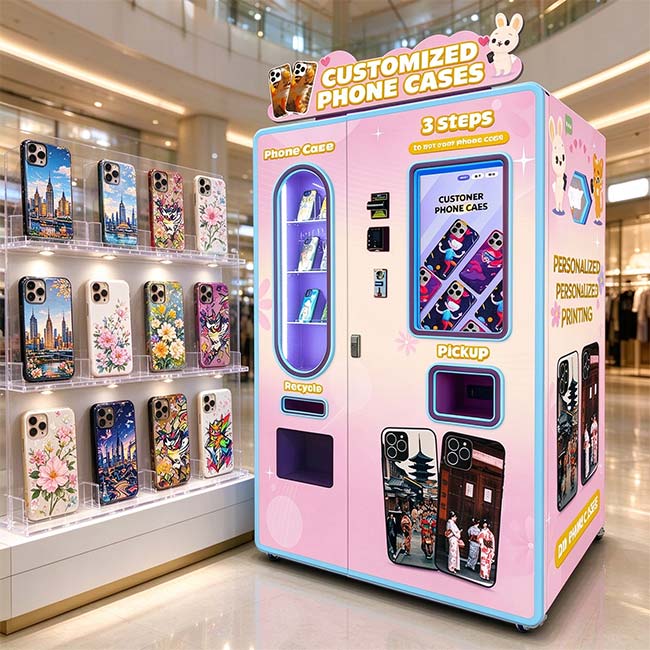
A phone case printing business used to mean one of two things: a warehouse of stock you hoped would sell, or a mall kiosk with a heat press and a queue of people waiting. On-demand printing changed the math. You produce only what a customer has already paid for, one case at a time, and the blanks sitting inside your machine cost about a dollar each instead of a dollar plus a design nobody wanted.
So here is the short answer. An on-demand phone case printing business works when three numbers line up: your blank costs under $2, your customer pays $18 to $30, and the gap between order and finished case is minutes rather than days. Everything else, the niche, the artwork, the venue, exists to protect that spread. Below are the three ways people run this model, what each one really costs, and where the money tends to leak out around month three.
The three routes into on-demand case printing
Almost every operator runs one of three setups. They differ in upfront cash, in who does the work, and in how long the customer waits.
| Route | Typical upfront | Cost per case | Order to handover | Staff on site | Best fit |
|---|---|---|---|---|---|
| Print kiosk you own | Roughly $5,000 to $7,000 for the machine, before shipping and duties | About $1.30 for a standard TPU and PC blank, plus ink and power | 1 to 3 minutes | None; you visit to restock and service | Malls, airports, tourist strips, campuses |
| Print-on-demand dropship | Near zero; you pay per order | Commonly $8 to $14 including basic shipping | 2 to 7 days | None | Online stores, Etsy and Instagram sellers, low-risk testing |
| Manual booth or small print shop | $1,500 to $6,000 for a heat press or desktop UV unit, plus deposit | $1 to $3 in materials | 5 to 20 minutes | One person while open | Events, weekend markets, existing accessory shops |
The route picks your ceiling for you. Dropship caps you at whatever margin survives shipping and platform fees. A staffed booth caps you at the hours someone stands there. A machine caps you at how many people walk past it.
What one case actually costs you
Most guides stop at material cost and call it margin. Real net margin includes card processing, rent or revenue share, the electricity the machine draws, and the cases you reprint because the customer did not like the crop.
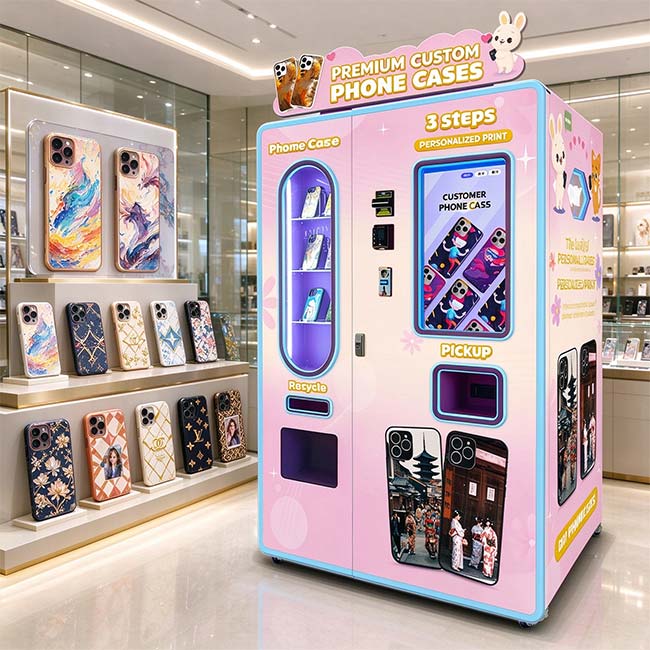
Here is a working model. Sale price is $18. The blank is $1.30. I have allowed $0.55 per case for ink and power, and you should replace that with your own supplier figure once you have the per-case ink yield in writing. Card fees are modelled at 2.9% plus $0.30, which is typical for a small merchant account.
| Monthly line | Slow: 4 cases/day | Base: 10 cases/day | Good: 20 cases/day |
|---|---|---|---|
| Revenue at $18 | $2,160 | $5,400 | $10,800 |
| Blanks | $156 | $390 | $780 |
| Ink and power allowance | $66 | $165 | $330 |
| Card fees | $72 | $166 | $322 |
| Fixed rent | $500 | $700 | $900 |
| Net before tax | $1,366 | $3,979 | $8,468 |
| Payback on a $4,999 machine | About 3.7 months | About 1.3 months | Under a month |
Two caveats matter more than the table itself. First, if your venue takes a 20% revenue share instead of fixed rent, subtract $432, $1,080 and $2,160 from the bottom line at those three volumes, which is a very different business. Second, payback above excludes shipping, import duty, installation and the first stock order. Add those before you believe any payback number, including mine.
If you want the cost side broken down line by line, including the consumables and service costs most operators forget, this walkthrough of how the phone case printing vending machine business model works is worth reading before you commit capital.
Inside the machine: what to check before you buy
A print kiosk is a UV printer, a stock carousel and a payment terminal in one cabinet. The specification that matters is not the screen size. It is how many blanks it holds, which print head is fitted, and whether the thing can be serviced where you live.
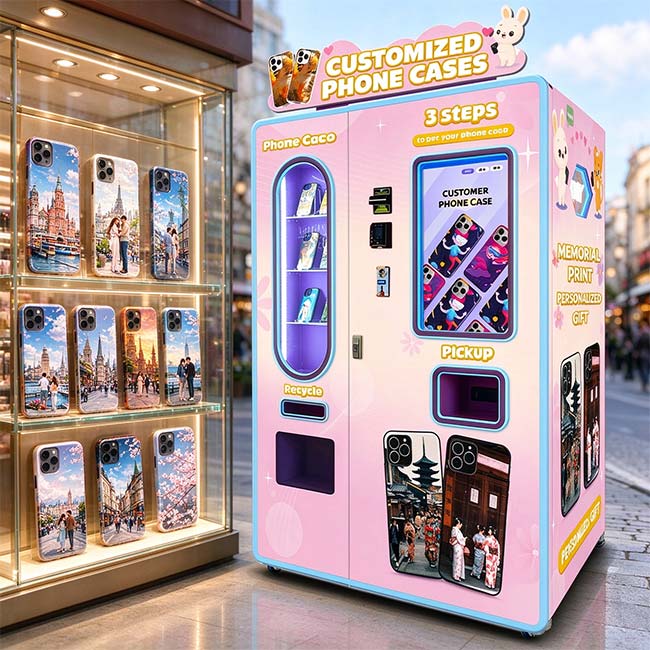
As a concrete reference point, the WM880 from Wider Matrix is a useful example of what this class of machine looks like in the field. Wider Matrix has been building vending hardware since 2016 and has exported more than 3,000 machines to over 130 countries, which matters mainly because spare parts and support need to exist after year one.
| Item | WM880 specification |
|---|---|
| Footprint | 1340 x 990 x 2170 mm, 380 kg |
| Power | 410W, 110V to 220V |
| Ink capacity | 2,000 ml |
| Blank storage | 1,020 cases on the F1080 version, 1,025 on the i1600 version |
| Print head options | Epson F1080-A1 as base; Epson i1600-U1 as standard, which the maker rates at roughly triple the speed, four times the lifespan and twice the clarity of the F1080; Epson i3200-U1HD as an optional upgrade. Upgrades between heads are lossless. |
| Case material | TPU and PC composite, with two lens cover protection options |
| Device coverage | Apple, Samsung, Google Pixel, Xiaomi, Huawei, OPPO |
| Payments | Coin, cash, credit card, NFC and QR |
| Single-unit reference price | US$4,999 for the F1080 version, US$5,999 for the i1600 version |
The customer flow takes four steps. They scan the QR code on the screen, choose their phone model, upload a photo, and pay. The machine prints and dispenses in about one to three minutes. There is an optional stock identification camera that fits on top of the cabinet and adds $200 if you want per-slot inventory visibility from your phone rather than counting by eye.
That 1,020-blank capacity is the number to think hardest about. At ten sales a day it looks like three months of stock, but sales are not evenly distributed. You will refill the two or three newest iPhone models every week while the older Samsung blanks sit there for a quarter. Capacity is not the same as the right mix. For the broader picture on how these cabinets are configured and sited, the complete guide to the custom phone case vending machine covers the operational detail.
Machine versus dropship: the comparison the supplier pages skip
Both models are legitimate. They solve different problems, and plenty of operators eventually run both.
| Dimension | Print kiosk you own | Print-on-demand dropship |
|---|---|---|
| Gross margin per case | Very high; the blank is roughly $1.30 | Moderate; base plus shipping eats $10 or more of a $25 retail price |
| Cash flow | You pay upfront for hardware and stock, then collect daily | You pay after the sale, so cash is tight but risk is low |
| Personalisation depth | Photo upload, in-person preview, customer sees the result in minutes | Photo upload, but no in-person preview and no instant gratification |
| Model coverage | Limited by the blanks you physically stock | Limited by the supplier catalogue, usually broader |
| Design risk | None on the design side; every print is already sold | None, but you carry the listing and ad spend |
| Returns and defects | You handle them on the spot, which is cheap and builds trust | Supplier handles them, slowly, and the customer blames you |
| Scaling | Add machines per location; needs capital and site hunting | Add ad budget; almost no ceiling on reach but margins compress |
| Best use | Foot traffic you can convert on impulse | Audiences you can reach online, gifting seasons, testing designs |
A machine without foot traffic is a $5,000 paperweight. A dropship store without ad budget is a listing nobody sees. Neither model fixes a distribution problem you have not solved.
Picking a venue without guessing
Vending operators who fail usually fail here, not on the hardware. A mall with 40,000 daily visitors is worthless if your machine sits in a dead corridor by the service lift.
| Venue type | What drives sales | Deal structure you will typically be offered |
|---|---|---|
| Shopping mall atrium or concourse | Weekend family traffic, teenagers, gift buyers | Fixed monthly rent or a revenue share, usually negotiated per site; ask for a three-month trial rate |
| Airport and transit terminals | Bored travellers with time to fill, high card usage | Concession contracts, often with a minimum guarantee; harder to enter without a track record |
| Cinema lobbies | Arrivals 20 minutes early, groups | Revenue share is common; footfall is concentrated into evening peaks |
| University campuses | Students, term-time seasonality, strong photo-sharing behaviour | Fixed term contracts aligned to the academic year; expect a long summer dip |
| Tourist strips and attractions | One-off buyers, souvenir framing, willingness to pay more | Seasonal leases; check whether power and a canopy are included |
| Hospitals and transport hubs | Waiting time and gifting occasions | Fixed rent, carefully negotiated; low vandalism risk, steady volume |
Before signing anything, ask three questions. What is the actual footfall past this exact spot, not the building total? Is there a power outlet within reach, and is 410W available on that circuit? And can you exit the agreement in 60 days if the site underperforms? A landlord who refuses the last one is telling you something. My startup checklist for a phone case business turns these into a form you can carry around.
Model coverage: the quiet killer
Blanks are cheap per unit and expensive in aggregate. If you carry 1,020 cases across twelve models, that is 85 per model. If a customer walks up with a three-year-old mid-range Android that you did not stock, you lose the sale and you lose the demo, because the person behind them is watching.
A workable rule for a first machine is to cover the current and previous two generations of the top three Apple models, the top three Samsung models, and one or two high-volume budget lines for your specific market. General patterns hold: Apple dominates in the US, UK and Japan, Samsung leads in South Korea and performs well across the EU, and Xiaomi, OPPO and Huawei carry large shares across Southeast Asia and parts of the Middle East. Check your local market rather than importing an assumption from a US blog.
Refresh the mix within four to six weeks of a major phone launch. New model owners buy cases in the first fortnight after they unbox, and that window is the single best sales period you will get all year.
Artwork, durability and the IP line you cannot cross
On a kiosk, the artwork comes from the customer. Your job is to make sure the preview matches the print, because a bad crop is the most common refund request in this business.
Set up the software so the print area is shown at the correct aspect ratio and the safe zone is visible, then print a handful of test images at the sizes customers actually upload. Face crops from vertical phone photos behave differently from landscape photos, and dark images look flatter on a case than on a screen. Run a scratch test with a coin and a UV fade test by leaving one case on a windowsill for two weeks. If the print scuffs, change the blank supplier before you scale. The UV printing operating playbook goes deeper into ink, cure and blank quality.
Then there is the line you cannot cross. Customers will upload football club crests, cartoon characters, car badges and photos of celebrities. Printing those creates trademark and copyright exposure for you, and on a vending machine there is a paper trail in the payment system. Put a clear on-screen notice that customers confirm they own the image rights, train whoever restocks the machine to flag obviously licensed content, and refuse sports logos as a blanket rule. Likeness rights and fan art sit in the same category. It is far cheaper to lose one $18 sale than to answer a takedown letter.
Also treat customer photos as sensitive data. Do not retain uploads after the print completes, and say so on the screen. Several jurisdictions treat a facial photo as personal data, and a machine that quietly stores images is a compliance problem you do not need.
Compliance and payments, the boring parts
Electrical equipment sold into the EU and UK needs CE or UKCA marking, and the machine should arrive with RoHS compliance documentation. Ask for the certificate pack before you wire a deposit, not after. Local requirements vary more than suppliers admit: vending permits, signage rules, public liability insurance and accessibility clearance in the US are all site-specific. Your landlord usually knows what the local authority expects.
On payments, compare the processor’s rate against your average sale. At $18 a case, a 2.9% plus 30 cent rate costs you roughly 5% all in. Some operators add a card surcharge and some absorb it, and in a few markets surcharging is restricted. Check before you build it into your price.
Keep sales tax or VAT records from day one. Vending revenue is easy to under-report and easy to audit, because the payment processor already has the data.
A six-week launch plan
| Week | What gets done |
|---|---|
| 1 | Choose the route and the machine. Request the certificate pack, spare parts list and a written per-case ink yield. Order sample blanks for three or four models. |
| 2 | Tour venues with a one-page pitch: expected revenue, power draw, footprint, insurance. Get two or three offers in writing, including exit terms. |
| 3 | Place the machine order and the first blank order. Set up the business entity, insurance and merchant account in parallel, because approvals take longer than you think. |
| 4 | Build the artwork policy, refund policy and the on-screen notices. Print ten test cases and photograph them next to the source image. |
| 5 | Machine arrives. Install, connect the remote dashboard, test every payment method with a real card, run twenty prints back to back and time them. |
| 6 | Soft launch for a week. Track refusal rate by phone model, since that tells you exactly which blanks to add next. |
If this is your first retail venture rather than a second machine, a slower version of the same plan is covered in how to start a phone case business, which spends more time on entity setup and supplier vetting.
Risks worth pricing in
| Risk | What it costs | How to reduce it |
|---|---|---|
| Blank obsolescence after a phone launch | The unsold share of your stock, potentially a few hundred dollars per cycle | Keep the old-model share under 30% of stock and reorder weekly rather than monthly |
| Downtime from jams or print head faults | Lost sales plus a site visit; a head replacement is not cheap | Remote monitoring with fault alerts, a spare print head on the shelf, and a maintenance routine you actually follow |
| Failed prints and refunds | Roughly $2 in materials per incident, plus goodwill | Preview matching, a printed sample at the till, and a no-questions reprint policy |
| Seasonality | Summer dips on campus, December spikes almost everywhere | Model cash flow on the slowest quarter, not the average |
| Rent escalation or a weak site | Fixed costs that do not fall when sales do | Short initial terms, exit clauses, and a trial rate before a multi-year deal |
| Theft or vandalism | Coin box, screen or cabinet damage | Insurance, and placement within camera view |
Operators who have run these machines for a few years tend to say the same thing: the hardware is the easy part. The real-world operator guide to profit and pitfalls collects more of those lessons from the field.
An illustrative first year
Take one machine in a mid-size city mall, positioned on a concourse with a steady weekend crowd. The operator priced at $18, negotiated a trial rent of $650 a month, and averaged 11 cases a day across the year with a December peak near 30 and a February trough near 5. That is daily averages, not a promise, and your site will behave differently.
On those numbers, monthly net before tax lands around $4,400 in an average month. Annualised, after the machine cost, shipping, duty, the first stock order and one print head replacement, the capital is recovered somewhere in months four to six. The two things that moved the outcome most were blank mix accuracy and site position within the building, not the print quality. Print quality was simply assumed to be good enough, which is the minimum bar.
Mistakes that show up again and again
- Buying the machine before securing the site. The site determines whether the machine pays for itself.
- Stocking every phone model evenly instead of weighting toward the three that actually sell.
- Setting the price too low because the blank is cheap. A $12 case signals a $12 experience, and you have already paid for the rent.
- Skipping the sample order. Ten test prints reveal more about blank quality than any specification sheet.
- Ignoring the refusal rate. Every customer who cannot find their model is a data point you paid for.
- Treating the machine as passive income. It needs restocking, cleaning and stock decisions on a schedule.
FAQ
How much does it cost to start an on-demand phone case printing business?
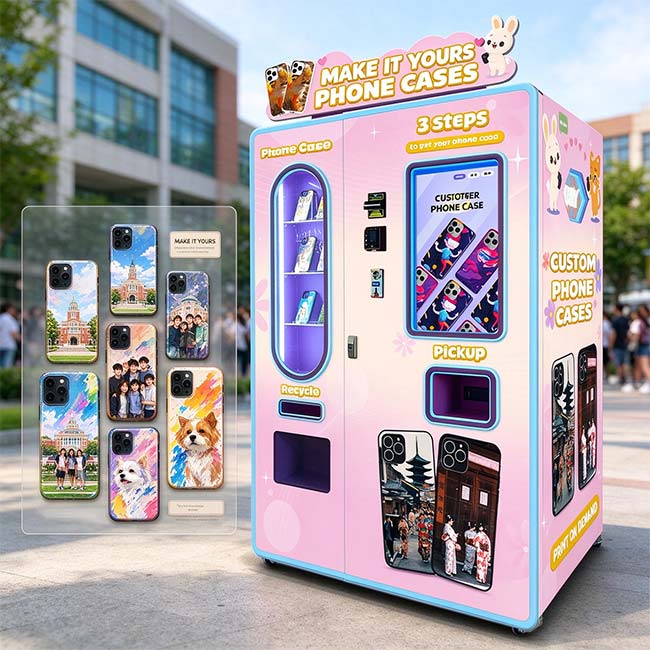
A single print kiosk starts at roughly US$5,000 at the entry configuration, with the higher-specification print head version around US$5,999. Add shipping, import duty, the first blank order of around 1,000 cases at about $1.30 each, and a security deposit on the site. A realistic all-in figure for one manned location sits between $7,000 and $10,000. Dropship costs close to nothing to start but returns a much thinner margin per case.
What profit can I expect per case?
At an $18 sale price with a $1.30 blank and modest ink and power costs, gross profit per case is roughly $16 before rent and card fees. Once those are allocated across realistic volumes, net profit typically lands between $9 and $15 per case depending on your rent deal and daily volume.
Can the machine run without staff?
Yes. Customers scan, choose a model, upload a photo and pay, and the case prints in one to three minutes. You still need someone to restock blanks, empty the cash box, clean the print area and handle refunds, which is usually a weekly visit plus remote monitoring.
How many phone models should I stock?
Start with twelve to fifteen models and weight the mix toward current and previous-generation flagships. Track refusal rate from week one and add whatever customers ask for. Refilling the top three models weekly is normal.
Which is better, a vending machine or print-on-demand dropshipping?
A machine wins on margin and on impulse purchases in a physical location. Dropship wins on reach, on zero capital risk and on catalogue breadth. If you have a good site, the machine earns far more per sale. If you have an audience but no site, start with dropship.
How long does the print last?
That depends almost entirely on the blank and the ink, not the machine. Ask your supplier for the ink type and run your own scratch and UV tests on samples before you scale. A quality UV print on a properly coated TPU and PC case will outlast the customer’s phone. A cheap uncoated blank will not.
Do I need a licence or permit?
You need a business registration and, in most places, public liability insurance. Site-specific requirements vary: some landlords and local authorities require vending permits, signage approval or accessibility clearance. Check with the venue and your local authority before installation rather than after.
What power and space does a machine need?
The WM880 draws 410W on 110V to 220V and measures 1340 x 990 x 2170 mm at 380 kg. You need a standard outlet nearby and enough clearance in front for two people to stand and use the screen comfortably.
Can I print licensed characters or team logos?
No. Trademarked characters, sports crests, brand logos and celebrity photos carry real legal exposure. Tell customers they must own the rights to what they upload, and refuse obviously licensed content.
How do I get better pricing on multiple machines?
For orders of multiple units, contact the sales team for a personalized quote with volume discounts. Rates depend on configuration, destination and order size.
The short version
An on-demand phone case printing business is a location business wearing a technology costume. The spread between a $1.30 blank and an $18 sale is generous enough to survive a lot of mistakes, but it does not survive a bad site, a wrong blank mix, or a machine nobody can service.
If you are leaning toward hardware, do three things before you spend anything: tour at least four venues and get the footfall numbers in writing, order sample prints and test them yourself, and put your own rent and card fees into the model above instead of mine. Then decide. If you want to compare specific configurations side by side, the high-ROI machine blueprint lays out the options with the same numbers-first approach.