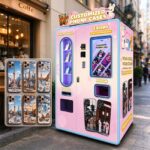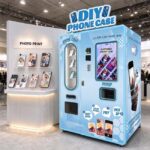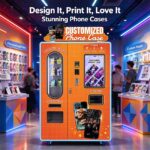


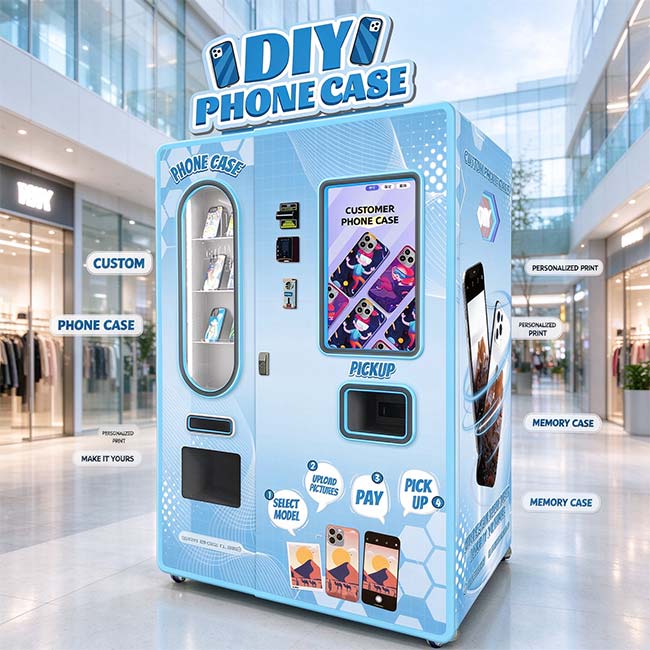
Most people searching for phone case vending machine ROI want one thing: does the math actually work? The short answer is yes, but only if you pick the right location and price the case correctly. A typical unit costing around US$4,999 to US$5,999, selling custom cases at US$15 to US$20 with roughly US$1.30 in blank and ink cost per case, can pay for itself in three to six months at 15 to 25 sales per day.
In a slow spot doing 5 sales a day, payback stretches past a year. Below I’ll walk through the full numbers, line by line, so you can judge for yourself instead of trusting a vendor’s “three months, guaranteed” pitch.
The cost per case, itemized
This is where most ROI articles go quiet. You need to know your contribution margin before you can predict anything.
| Cost item | Typical figure | Notes |
|---|---|---|
| Blank case (TPU + PC) | US$1.10–1.30 | Standard models at 1,000 pcs; magnetic versions run US$2.10–2.30 |
| UV ink | ~US$0.03–0.05 | A US$100 4-color set prints thousands of cases before refill |
| Payment processing | ~US$0.45–0.60 | 2.5–3% on a US$15–20 card transaction |
| Rent or revenue share | US$1.50–3.00 per case | Assumes US$300–600/month venue cost at 15–25 sales/day; rev-share deals often take 10–20% of gross |
| Misprints and refunds | ~US$0.15 | Budget 3–5% for failed prints, bad uploads, refund requests |
Add it up and your all-in cost sits around US$2.50 to US$4.50 per case. At a US$18 average selling price, you keep roughly US$13.50 to US$15.50. That’s your real margin, not the 90% gross margin some pages throw around before rent, fees and waste.
Three payback scenarios
Here’s the same machine at three different locations. Assumptions: US$5,999 machine (the standard i1600 version of a typical UV printer kiosk), US$18 average price, all-in cost of US$3.50 per case.
| Scenario | Sales/day | Monthly net profit | Payback |
|---|---|---|---|
| Conservative (small mall corner) | 8 | ~US$2,750 | ~2.5–3 months |
| Base (mid-traffic mall or transit hub) | 18 | ~US$7,800 | ~3–4 weeks |
| Optimistic (theme park, airport peak season) | 35 | ~US$15,200 | ~2 weeks |
Wait, those payback figures look almost too good. That’s because they exclude shipping, import duties, the first consumable order, and your time. Add US$1,000–2,500 in landing costs and a slower first month while foot traffic finds the machine, and a realistic range is 2 to 6 months in a decent location. If you want to plug in your own rent and footfall numbers, our ROI calculator guide walks through the formula.
Also worth being honest about: the “optimistic” scenario is an outlier. A machine printing 35 cases a day is doing well above average. Plan your business around the base case and treat anything better as a bonus.
What actually kills ROI
More machines fail from fixable operational mistakes than from bad hardware. The big four:
- Wrong model mix. You stock 1,000+ blank cases, and 30% of them are for phone models nobody carries anymore. Refresh your SKU mix every couple of months, especially around new iPhone launches. Dead inventory is money sitting in a cabinet.
- Location rent that eats the margin. If a venue demands 25% of gross plus a fixed fee, run the numbers before signing. Our cost breakdown article includes the rent ceiling at which a location stops making sense.
- Downtime. A clogged print head on a machine idle for a week is a common failure. Run a test print every 2–3 days and keep a spare head if you’re running multiple units.
- Underestimating labor. Restocking, cleaning, and collecting cash take 1–2 hours per visit. With route density (5+ machines per city), that’s manageable. One machine two hours away is not.
What to look for in the machine itself
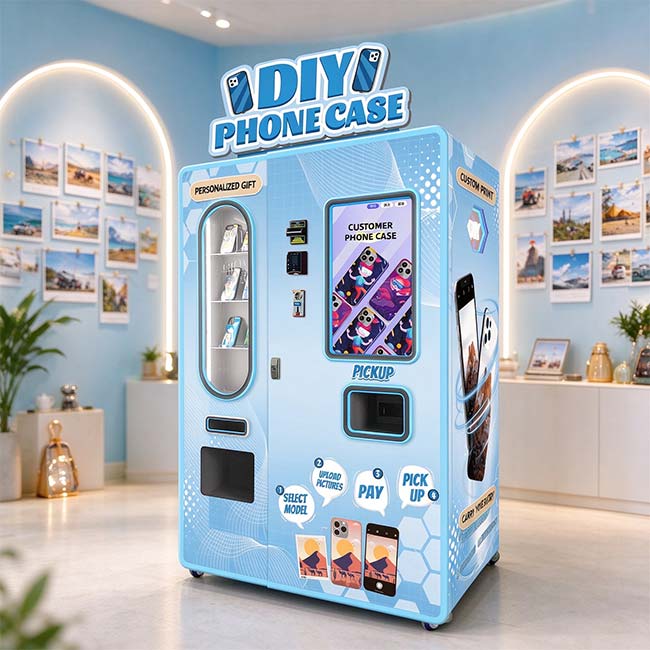
Specs matter less than reliability and upgrade path, but here’s what to compare. As an example, the WM880 from Wider Matrix (the manufacturer I work with) covers the typical baseline: 1,020–1,025 case storage, 410W power draw, Epson print heads (F1080 base, i1600 standard, i3200 upgradeable), cloud backend for remote sales and inventory monitoring, and multi-payment support including card, NFC and QR. The F1080 version lists at US$4,999 and the i1600 at US$5,999 for small orders; for orders of multiple units, contact our team for a personalized quote with volume discounts.
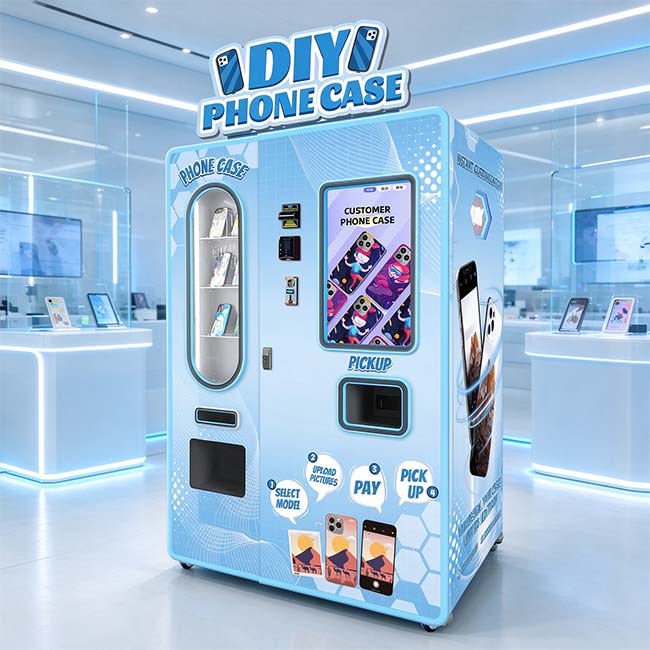
Print speed is 1–3 minutes per case, which is fine because customers wait while watching their design print. Anything over 5 minutes creates queue problems at peak. Whichever supplier you shortlist, ask for: warranty length (one year is standard), spare-part lead time, whether the ink is proprietary, and the real-world misprint rate from existing operators, not the brochure.
Machine vs the alternatives
Before committing, it’s fair to compare against other ways to sell custom cases:
| Model | Upfront | Margin per unit | Labor | Main risk |
|---|---|---|---|---|
| Phone case vending machine | US$5,000–6,000 | US$13–16 | 1–2 h/week per unit | Location quality, model obsolescence |
| Online print-on-demand | ~US$500 | US$3–6 | Low but customer acquisition is hard | Ad costs, competition |
| Manned mall kiosk | US$15,000+ | Similar margin | Full-time staff wages | Labor cost dominates |
The vending machine wins on the combination of impulse purchase timing and zero staffing. Print-on-demand wins on capital, but you’ll spend most of the margin acquiring customers. If you’re weighing the decision further, our guide on whether phone case vending machines are profitable covers the demand side in detail.
Location: the variable that outweighs everything else
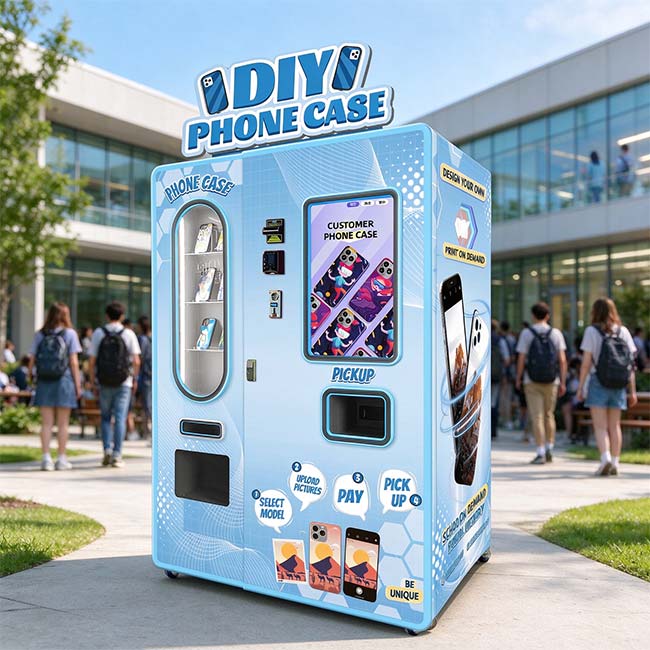
Foot traffic predicts sales better than any other factor. From operator data across venues, conversion tends to run roughly 0.5–1.5% of passersby, so a spot with 500 daily passersby at 1% conversion gives you ~5 sales a day, which is barely breakeven after rent. Aim for venues with 2,000+ daily footfall: mall entrances near fashion stores, cinema lobbies, transit hubs, tourist zones and game centers all perform. There’s a deeper breakdown in our article on maximizing ROI in mall environments.
Negotiate a revenue-share lease (10–15% of gross) for your first machine so the venue shares your risk. Flat rent only makes sense once you have real sales data.
Realistic expectations, in one place
- Startup cost all-in: US$7,000–9,000 including shipping, duties and first consumables
- Net profit per case after all costs: US$13–15
- Realistic sales: 8–25/day in a good location, seasonal swings included
- Payback: 2–6 months in a decent spot; a year or more in a marginal one
- Ongoing work: restocking weekly or biweekly, test prints every few days, monthly model-mix review
If the numbers above still look good to you, the next step is validating a specific location: count footfall at two different times of day, check what nearby phone accessories sell for, and only then order the machine. Our break-even data guide and full cost breakdown both go deeper on the assumptions behind these figures.
FAQ
How much does a phone case vending machine make per month?
At 15 sales/day at US$18 average with US$3.50 all-in cost per case, gross profit is about US$6,500/month before fixed costs like rent allocation. Net after venue costs typically lands between US$4,000 and US$7,000. Small locations doing 5–8 sales/day earn US$1,500–2,500/month.
How long until the machine pays for itself?
Most operators in decent locations recover the investment in 2–6 months. Claims of two-week payback assume 30+ sales per day, which only happens in exceptional spots or during holiday peaks. Model your business on the base case, not the best case.
What margin do I make on each case?
Blank case plus ink runs US$1.15–1.35 for standard models. After payment fees (about 3%), misprint allowance and rent share, expect to keep US$13–15 on an US$18 case, roughly 70–80% net of variable costs.
Do I need to stock cases for every phone model?
No. Cover the current-generation iPhones, the top Samsung A and S series, and whatever dominates your local market (Xiaomi, OPPO and Huawei in many Asian and Middle Eastern markets). A 1,000-case machine holds enough depth across 30–50 popular models. Prune slow movers monthly.
What ongoing costs should I budget for?
Consumables (blanks and ink), venue rent or revenue share, payment processing, spare parts after warranty, and your restocking labor. Electricity is negligible; a 410W machine costs a few dollars a month to run.
Is it a bad idea in any situation?
Yes, in a few cases: venues with under 1,000 daily footfall, humid environments without climate control, spots demanding more than 20% revenue share plus fixed rent, and markets saturated with cheap generic case sellers at under US$5. In those situations your ROI timeline can stretch beyond 12 months, and the capital would work harder elsewhere.