

Ask ten operators what are the best vending machines and you will hear ten different answers. The honest version depends on your location, your foot traffic and what you can restock without hiring anyone. At Wider Matrix’s factory in Panyu, Guangzhou, the question gets answered with consumable costs and daily sales figures rather than travel photos, and that is the frame this guide uses.
How to judge a vending machine when you are the one paying
Start with the six numbers that decide whether a machine works for you. Model names matter later.
- Consumable cost per sale. If the cup, the powder and the packaging take more than about 40% of the retail price, rent will usually finish the margin off.
- Foot traffic and dwell time. An office lobby at lunch and a cinema exit at 11pm are two different businesses.
- Footprint and floor loading. Some machines here weigh 640 kg and need a flat, load-bearing surface.
- Power supply. A household socket and a three-phase connection are very different installation costs.
- Payment fit. Card, QR or cash has to be configured for your market before the machine ships.
- Restocking and support. A 60-channel snack cabinet refills in 20 to 30 minutes, while a flower machine needs a trained florist on site.
What are the best vending machines by what they sell
Buying decisions usually start with a product rather than a brand, so the table groups the factory catalog the same way. Every figure below is the single-unit reference price for the base machine.
| What it sells | Model | Size or key figure | Single unit | Where it earns |
|---|---|---|---|---|
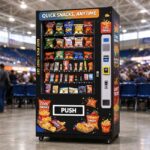
| Snacks and drinks | WMT-B01+ | 1942 x 802 x 790 mm | US$1,800 | Offices, factories, dorm lobbies |
| Cotton candy | WM980 | 132 x 195 x 67 cm | US$4,800 | Malls, fairs, cinemas |
| Ice cream cups | WM550 | 227 x 93 x 95 cm | US$5,799 | Malls, food courts |
| Fresh popcorn | WM680 | 570 x 540 x 1930 mm | US$1,800 | Theme parks, cinema lobbies |
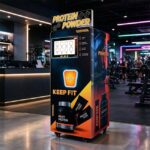
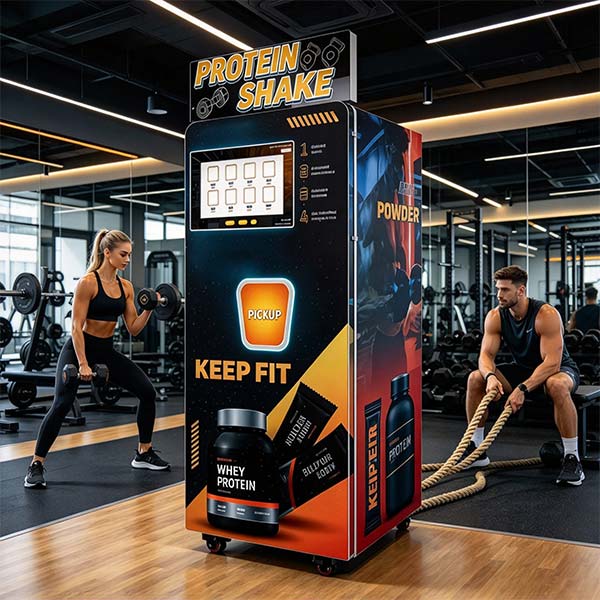
| Protein shakes | WM186 | 7 hoppers, 60+ cups per hour | US$4,150 | Gyms, sports centers |
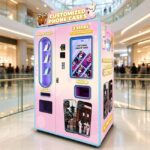
| Custom phone cases | WM880 | 1340 x 990 x 2170 mm | US$4,999 | Malls, airports, campuses |
| Printed press-on nails | WM860 | 27-inch touch screen | US$5,800 | Malls, cinemas, salons |
| Photo jigsaw puzzles | WM520+ | 970 x 1100 x 2200 mm | US$5,500 | Tourist spots, malls |
| Inflated balloons | WM688 | 100 x 82 x 210 cm | US$3,200 | Parks, stations, fairs |
| Fresh smoothies | WM666 | 63 flavors, 315 cups stored | US$9,400 list price | Malls, transport hubs |
| French fries and fried snacks | WM888 | 193 x 110 x 240 cm | US$9,800 list price | Stations, night markets |
| Ice, bagged or bulk | WMT-I01 | 150 kg per 24 hours | US$4,600 | Gas stations, seafood markets |
| Fresh bouquets | Grid Series 8 | Refrigerated at 2 to 25C | US$3,500 | Hospitals, stations, campuses |
Three groups fall out of that list. Everyday consumables such as snacks, drinks, ice and flowers earn a thin margin on high volume, so they live or die on location quality. Made-to-order machines such as phone cases, nail designs and jigsaw puzzles earn a much wider margin per sale and sell more slowly. Novelty machines like cotton candy, balloons and popcorn sit between the two, with a short and loud peak at weekends and events.
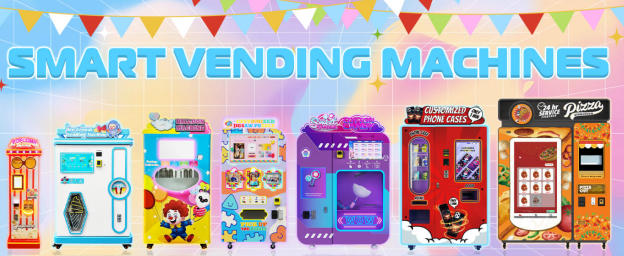
A shopping mall usually narrows to a made-to-order machine near the food court or a snack cabinet near the entrance. The placement questions are identical for both: is there power, is the floor flat, and does anyone walk past after 8pm? Our guide to vending machines for shopping malls takes that comparison further.
Which of these pays for itself fastest
Gross margin and profit are not the same thing. A snack cabinet moving 300 items a day at a thin margin can beat a machine with an 80% margin that sits idle. Profit per day at a realistic volume is the only comparison worth making, and it is the base of any honest ROI of vending machines calculation.
The nail printer is the clearest example. Material cost runs around US$1.50 a pair against a retail price of US$8 to US$15, so gross margin sits above 80%. At 30 orders a day and US$8 a set, that is about US$195 in daily profit, or roughly US$5,850 a month. A buyer running one in a Dubai mall reached 45 orders a day, cleared US$5,400 in monthly profit and recovered the US$5,800 machine in 15 days, then ordered three more units.

Protein shakes behave in a similar way. The WM186 costs US$4,150, powder runs US$0.80 to US$1.50 a cup, and a commercial gym selling 30 cups a day at US$5 returns about US$120 in daily profit. Flower machines sit at the other end of the scale, with bouquets costing US$4 to US$8 and selling for US$15 to US$25. Ten to thirty sales a day is US$100 to US$450 in daily gross profit at a mid-traffic site.
Across the catalog, a well-placed machine pays back in one to three months. Foot traffic, pricing and restocking discipline move that number in either direction, and every figure above is an example rather than a promise.
If you want that same calculation run on your city and your rent, ask the team for a personalized quote.
Three machines worth a closer look
Lowest entry cost: the snack and drink cabinet
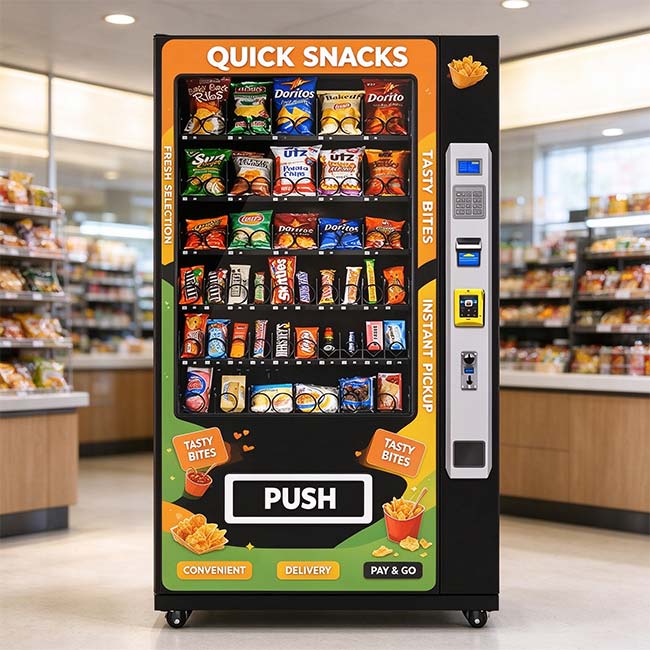
The WMT-B01+ is US$1,800, holds 180 items across 36 channels and fits a 1942 x 802 x 790 mm footprint. It uses an intelligent lift platform, which lowers each product to the collection point instead of dropping it, and that one detail is why crisps, biscuits and glass bottles survive the trip. A 300-item cabinet selling 30 transactions a day at US$1.80 brings in about US$54 daily, of which roughly US$19 is gross profit after product cost. The trade-off is thin margins, so this machine rewards a busy, ordinary location over a clever one.
Customization that sells: the phone case printer
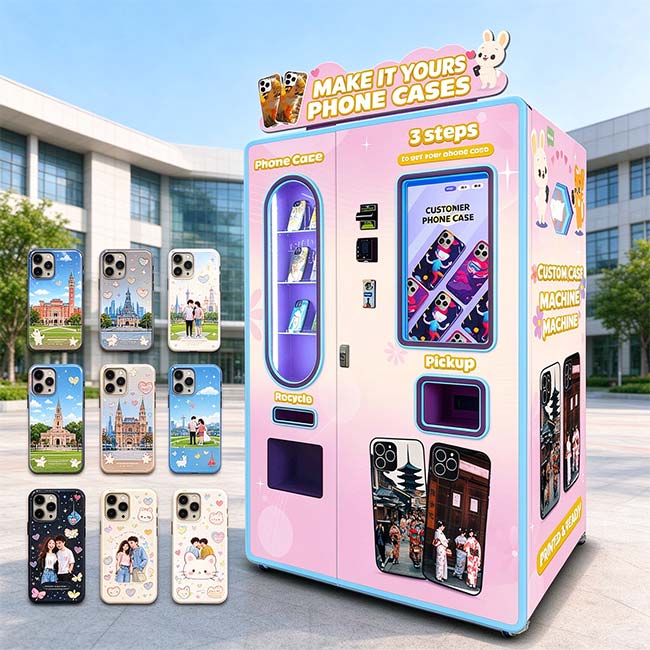
The WM880 stores 1,020 blank cases, takes a photo upload through the screen, and prints a full-color case in one pass. The base F1080 print head version is US$4,999, and the i1600 version is US$5,999 with three times the print speed and a longer head life. Blanks cost from about US$1.30 each, and the machine covers iPhone, Samsung, Google Pixel, Xiaomi, Huawei and OPPO models. Sales depend on who walks past, since nobody buys a custom case on impulse in an empty corridor. The phone case vending breakdown covers the rest of the numbers.
The crowd magnet: cotton candy
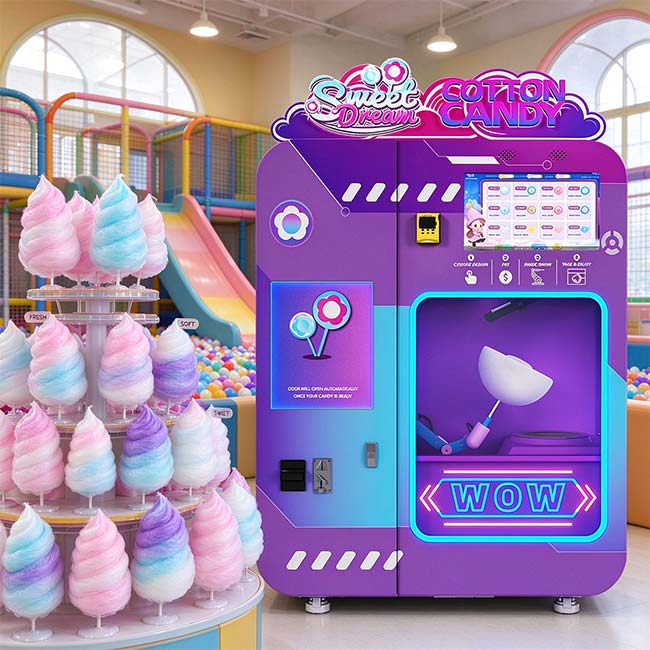
The WM980 turns 28 to 30 grams of sugar into one of 36 shapes with a 4-DOF robotic arm, meaning four motorized joints that move in four directions. Four 2 kg tanks hold a day of sugar, and one unit is US$4,800. The outdoor WM668 adds six tanks and a rainproof roof for US$5,299. Sugar costs about US$3.25 a bag and each paper stick adds roughly five cents, so most of the retail price stays with the operator. The machine draws 500W on standby and 3000W while it spins a candy, which is worth checking against your circuit before you order. This cotton candy machine review goes deeper on shapes, flavors and consumables.
Real limits a factory will tell you about
Weight and power come first. The WM550 ice cream machine is 227 x 93 x 95 cm and 640 kg, and it draws 3000W. The WM888 fryer needs an 11,500W supply at 220V or 380V and about 2 square metres of floor. Neither belongs in a rented kiosk until somebody has checked the electrical board and the floor.
Heat changes output more than buyers expect. The WMT-I01 ice machine produces 150 kg every 24 hours in a 25C room, and output drops once ambient temperature passes 35C. Snack machines work best below 32C for a related reason: chocolate and crisps do not enjoy a hot corner.
Consumables need a plan and a person. Fryer oil is changed every 150 to 200 servings. Flower machines are restocked once or twice a week, and a visit takes 30 to 60 minutes because bouquets arrive pre-hydrated with water tubes. None of it is difficult, but it has to be somebody’s job.
Buying direct: what to settle before you transfer money
Wider Matrix has built machines in Panyu, Guangzhou since 2016 and has shipped more than 3,000 units to over 130 countries, with 50 or more engineers on the design side. The line carries CE, ISO 9001 and RoHS certification, plus CCC, CB, RCM, PSE, FCC or KC on specific models. Every unit is assembled and tested before it leaves the factory, and the warranty runs one year with lifetime technical support and a 24-hour response window.
Four questions are worth asking any supplier. Which certification covers your country? Is the payment module set up for your market? What do spare parts cost? And who trains the person restocking the machine? On the last point, Wider Matrix supplies video guides plus restocking and troubleshooting training with each order.
Voltage is not a small detail. Machines ship for 220-240V or 110V at 50/60Hz, and a North American conversion adds about US$110 on a snack model. OEM and ODM work covers body graphics, screen language, voltage and product mix if you plan to run these under your own brand. If you are still comparing manufacturers, this piece on what company makes the best vending machines explains how to tell a real factory from a trading company.
For orders of multiple units, contact our team for a personalized quote with volume discounts.
Questions buyers ask before ordering
What are the best vending machines for a first machine on a small budget?
A snack and drink cabinet. The WMT-B01+ costs US$1,800, holds 180 items and needs nothing more than a standard socket and a flat floor. It is also the easiest machine to restock while you learn the business.
Can the machines take card and QR payments?
Yes. Coin, banknote and change dispensing are standard on most models, and card or contactless terminals are fitted per market through the MDB protocol, the standard that lets a payment device talk to the machine controller. QR and mobile wallet support depends on your local provider.
Do I need a water line or a drain?
It depends on the product. Snack, phone case, nail and cotton candy machines need power only. Smoothie, fries and ice machines need a mains water connection, and the ice machine also wants a floor drain plus 30 cm of clearance at the back and sides.
How long until the machine pays for itself?
Typically one to three months at a good site. The Dubai nail printing kiosk cleared its US$5,800 machine in 15 days, which shows what heavy foot traffic can do. A quiet location can take far longer, because traffic and pricing decide the outcome.
What happens if a machine breaks down in another country?
Spare parts ship at cost, and technical support answers within 24 hours. Most models also report faults and stock levels through a cloud dashboard, so a stuck motor or an empty channel is usually visible before a customer notices.
Wider Matrix quotes the machine price, the shipping cost and the lead time together, so you see the real landed figure before you commit. Send your country and the machine you have in mind, and the team will reply within 24 hours with exact pricing, a recommended configuration and a plain answer on whether your location supports it. No obligation.