

The best locations for vending machines in usa are sites with at least 50 daily users, a captive audience, and weak nearby food or drink options. Offices with 150 or more staff, hospitals, warehouses, apartment complexes, factories, universities, gyms, and transit hubs usually beat tourist spots on repeat sales.
In the US, the profit difference between two similar sites often comes down to rent, commission, ADA clearance, and permit friction. This guide ranks the site types, gives planning dollar bands, and shows how to vet a location before you sign.
How to judge a US vending site before you talk rent
A site is not a location type. It is a specific doorway, break room, lobby, or corridor. Use five filters before rent: daily users, captive time, food alternatives, route distance, and install friction. A 300-person office with a subsidized cafeteria may sell less than a 100-person warehouse with no nearby store. Count people at 10 am, noon, and 3 pm. Ask where they eat now. Then check power, delivery access, and who signs. For a deeper data view, see this data-driven guide to high-traffic locations.
Best locations for vending machines in usa, ranked by profit and rent
The table below is a planning tool. Revenue bands assume a standard snack and drink mix or a single specialty machine. They are not promises. Replace them with a two-week test if the site allows it. For a longer list of specific venues, use this 171+ best vending machine locations guide.
| Location type | Daily users to target | Monthly revenue planning band | Typical rent or commission | Saturation risk | Contract friction | Best sellers |
|---|---|---|---|---|---|---|
| Office building | 150 to 800 | $600 to $2,500 | $150 to $500 flat or 10% to 20% | Medium | Medium | Snacks, coffee, cold drinks |
| Hospital and clinic | 500 to 5,000 | $1,200 to $6,000 | 12% to 25% commission | High | High | Snacks, drinks, fresh food if licensed |
| Manufacturing plant | 200 to 1,000 | $800 to $3,500 | $200 to $800 flat | Medium | Medium | Energy drinks, snacks, protein |
| Warehouse and distribution center | 150 to 700 | $700 to $3,000 | $150 to $600 flat | Low to medium | Medium | Drinks, snacks, quick meals |
| University campus | 1,000 to 10,000 | $1,000 to $5,000 | 10% to 25% commission | High | High | Snacks, drinks, coffee, late-night food |
| Apartment complex | 100 to 500 residents | $400 to $1,800 | $100 to $400 flat or 5% to 15% | Medium | Low to medium | Drinks, snacks, ice |
| Gym and fitness center | 200 to 1,000 | $500 to $2,500 | $200 to $600 flat or 10% to 20% | Medium | Low | Protein shakes, water, bars |
| Hotel and motel | 50 to 300 rooms | $500 to $2,500 | 10% to 20% commission | Medium | Medium | Snacks, drinks, travel items |
| Transit station | 1,000 to 20,000 | $1,000 to $6,000 | 15% to 30% commission | High | Very high | Drinks, snacks, quick food |
| Airport | 5,000 to 50,000 | $3,000 to $15,000 | 20% to 35% commission | Very high | Very high | Packaged food, drinks, travel items |
| Car dealership and service center | 50 to 300 | $400 to $1,500 | $100 to $400 flat | Low | Low | Snacks, drinks, coffee |
| Laundromat | 50 to 200 | $300 to $1,200 | $100 to $300 flat or 10% | Medium | Low | Snacks, drinks, detergent |
| Cinema and entertainment venue | 200 to 2,000 | $500 to $3,000 | 15% to 25% commission | High | Medium | Popcorn, candy, drinks |
| Mall or retail corridor | 1,000 to 10,000 | $800 to $4,000 | 15% to 30% commission | High | High | Impulse items, phone cases, candy, drinks |
| Construction site | 30 to 200 | $400 to $1,500 | $0 to $300 flat | Low | Low | Energy drinks, snacks, water |
The highest revenue rows are not always the best rows. Airports and hospitals have high sales but long contracts, high commissions, and slow payment. A 150-person office at $900 monthly with a 12-month agreement can be easier to operate than a transit contract that takes six months to approve.
The unit economics that decide whether a site is actually good
Use a simple model. Suppose average sale is $2.00, COGS is $0.90, and card fee is 3%, or $0.06. Gross margin is $1.04 per item. Fixed monthly costs are rent $300, restock labor $250, and repairs plus insurance $100, for $650. Break-even is $650 divided by $1.04 x 30, which is 20.8, so 21 items per day. At 40 items per day, net before tax is about $598 per month. A $3,500 machine and install pays back in about 5.9 months. If the site asks for 20% commission instead of flat rent, rerun the math with commission on sales, not profit. This profitability guide shows how location type changes the mix.
US rules that can kill a site after the handshake
Permits are local. A machine in a private break room may need no vending permit, while a public lobby may need a business license, sign permit, or peddler license. Check city, county, and state rules before signing. Sales tax registration is separate in many states. Packaged snacks usually avoid health department permits. Fresh food, cotton candy, ice, and smoothies can trigger food handling rules. ADA matters in public buildings: keep a 36-inch clear path, put controls and the delivery bin within reach, and leave clear floor space for a wheelchair. If the machine blocks a fire exit or extinguisher, the landlord will remove it. Insurance should name the property owner as additional insured if the lease requires it. For placement details, read where to place vending machines.
How to vet a site in person without wasting two weeks
Visit at three different times on two different days. Count people for 15 minutes and multiply by four. Note how many carry food or drinks. Walk the nearest 400 meters and list every cafe, convenience store, and free coffee station. Ask the manager three questions: who controls vending, what commission or rent they expect, and what hours the machine can be serviced. Take photos of the power outlet, floor space, delivery path, and cell signal. If the machine needs water, check the water line and drain. If it needs 220V, confirm the panel. This location finding guide has a longer checklist.
- No dedicated circuit and no permission to add one.
- Commission above 20% on low-ticket snacks unless traffic is proven.
- Exclusive contract longer than 24 months with no termination clause.
- Access only through a staffed security desk with limited hours.
- Peak traffic lasts under 90 minutes and the rest of the day is empty.
- Landlord refuses a written agreement or insurance certificate.
Site types that look busy but usually underperform
Tourist sidewalks, convention centers, stadium concourses, and festival grounds can show huge foot traffic for a few days. A machine needs repeat buyers and easy restock. A beachfront kiosk can sell 200 drinks on Saturday and 10 on Tuesday. A hospital cafeteria that stays open until 10 pm can erase the late-night demand for snacks. A luxury gym with free protein shakes and a smoothie bar leaves little room for a paid machine. A school with a 30-minute lunch and strict rules on food sales may not be worth the permit work. These sites can work, but price them as event or seasonal revenue, not as stable monthly income.
Route density: why three nearby stops beat one big contract
A route makes money on minutes, not just on sales. If one stop is 50 minutes away and needs two restocks a week, that is 100 minutes of driving. Three offices within 15 minutes can be serviced in the same trip. Use route profit, not site profit: gross profit per stop minus drive time, parking, and service minutes. A $300 monthly profit at a site 10 minutes away can beat a $700 monthly profit at a site 70 minutes away once labor and vehicle cost are counted. Keep new sites inside a 25-minute radius until the route has enough density to justify a second vehicle.
Negotiating the site agreement in the US
Most private sites use a flat monthly rent or a commission on sales. Commission of 10% to 20% is common for offices, apartments, and gyms. Hospitals, airports, and transit systems often ask for 20% or more and may require a formal RFP. Ask who pays electricity. A snack and drink machine may use $15 to $40 per month in power, but a hot food or ice machine can use more. Ask about exclusivity. If the landlord wants a 3-year exclusive, ask for a sales performance clause or a 90-day exit. Confirm term, renewal, termination, damage, and removal. Get the name of the person who can sign. Here is a short outreach line: Hi [name], I place and service vending machines for [building type]. I can cover the break room with a cashless snack and drink machine at no cost to you, and pay [X]% of sales. Can we meet for 15 minutes this week? Adjust the number before you send it.
Machine fit by US location, from a factory floor view
The site decides the machine, not the other way around. A gym with 45 protein shake sales per day needs a different footprint and power draw than an apartment lobby selling ice bags. Wider Matrix builds vending machines in Guangzhou and has shipped 3,000+ units to 130+ countries. The table shows a few direct matches. For a broader list, see what places need vending machines.
| US site type | Wider Matrix machine | Single-unit reference price | Why it fits |
|---|---|---|---|
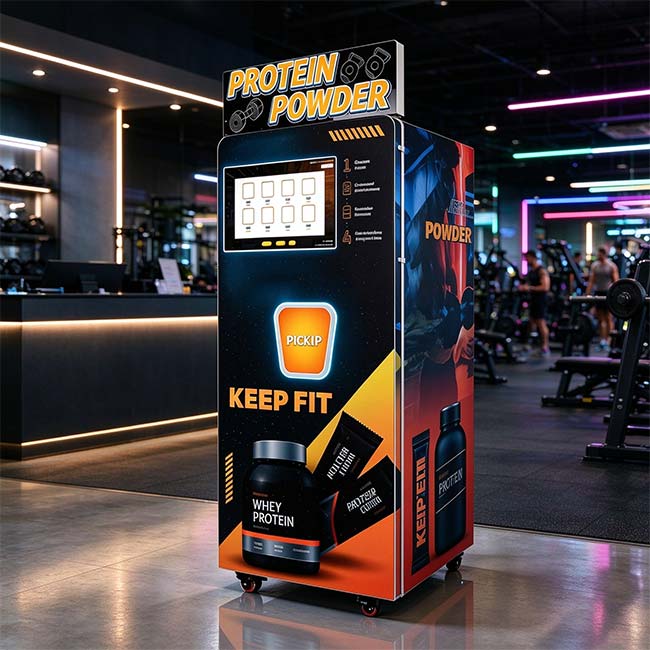
| Gym or fitness center | WM186 protein shake machine | US$4,150 | 60 seconds per shake, 7 powder hoppers, 3 temperature zones |
| Apartment, gas station, convenience store | WMT-I01 ice vending machine | US$4,600 | 150 kg per 24 hours, bagged or bulk, 6 to 8 minutes per batch |
| Cinema, park, mall | WM680 popcorn vending machine | US$1,800 | 120 seconds per serving, 140 cups pre-loaded, 5.6 kg corn storage |
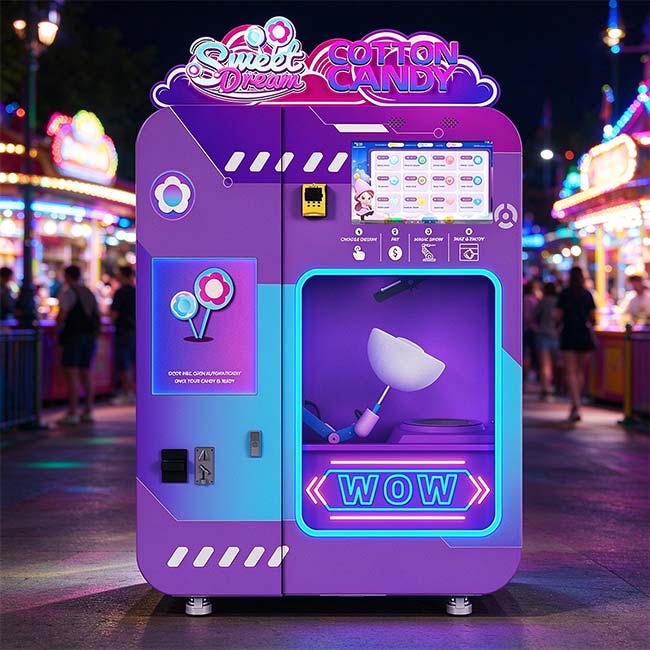
| Mall or family venue | WM980 cotton candy vending machine | US$4,800 | 36 patterns, 4 x 2kg sugar tanks, 24H unattended |
| Mall, airport, campus | WM880 phone case vending machine | US$4,999 for F1080 version | Custom print, 1,020 case storage, cashless payment |
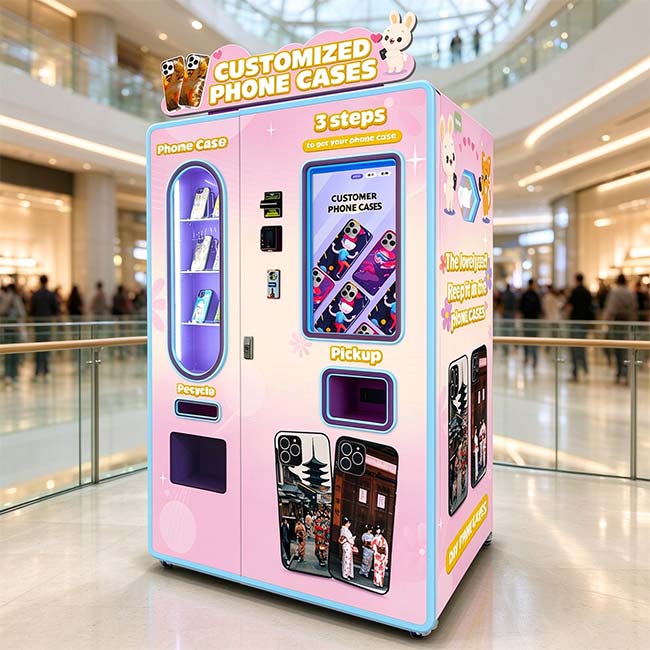
These are single-unit reference prices. For orders of multiple units, contact our team for a personalized quote with volume discounts. Every unit is assembled and tested before shipment and comes with a 1-year warranty plus lifetime technical support.
Two US placement examples with numbers
Example 1, Miami gym. A mid-size gym placed a WM186 protein shake machine. It sold about 45 cups per day at $5.50. Material cost was $1.20 per cup. Daily gross profit was $193, monthly gross profit was $5,800+, gross margin was 78%, and payback was about 3 months. The site worked because members trained before and after work, the gym had no smoothie bar, and the machine fit in 1 square meter.
Example 2, Florida gas station ice. This is an illustrative plan, not a guarantee. An operator runs 60 bags per day at $2.50. Consumable cost is about $0.40 per bag. Gross profit is about $126 per day, or $3,780 per month. The base WMT-I01 produces 150 kg per 24 hours, so 60 bags use 120 kg if each bag is 2 kg, inside the standard rating when ambient temperature stays near 25°C. Output drops above 35°C, so shade and ventilation matter at a gas station.
FAQ
How many people per day does a vending machine need in the US?
A snack and drink machine can break even at around 20 to 25 items per day if rent is low. A site with fewer than 50 daily users is weak unless the same person buys twice or the machine sells high-ticket items. 150+ daily users with limited food options is a stronger target.
Do I need a permit to place a vending machine in the US?
It depends on the city, county, and state, and on whether the machine is in a public area or a private break room. Common requirements include a business license, sales tax permit, sign permit, and health permit for fresh food or ice. Ask the landlord and the local building department before you order the machine.
What commission should I expect to pay at a US site?
Private offices, apartments, and gyms often pay 10% to 20% of sales or a flat $150 to $600 per month. Hospitals, airports, and transit systems can ask for 20% to 35% and may require a formal contract. Run the unit economics with the commission before you agree.
Are hospitals or airports better for vending machines?
Hospitals usually give steadier 24-hour traffic and easier route planning. Airports can produce higher sales but have long approval times, high commissions, and strict access rules. For a first route, a hospital or a large office park is often easier to manage.
How many machines can one route support?
A single operator with a van can usually service 20 to 35 machines in a tight radius before restock time becomes the limit. The exact number depends on machine size, sales velocity, and how often each site needs refilling. Add sites within the same 25-minute drive before adding a second vehicle.
Can I place a machine in an apartment complex without a lease?
Get a written agreement even if the property manager calls it a trial. The agreement should cover rent or commission, term, electricity, access hours, damage, insurance, and removal. A handshake is not enough when the property changes managers.
If you are choosing between site types and want the machine spec to match the traffic, Wider Matrix builds vending machines in Guangzhou and ships worldwide. Tell us the US site type, daily traffic, and product you want to sell, and we will send a quote with the right model and consumable costs. For multiple units, contact our team for a personalized quote with volume discounts.