



A protein shake vending machine with remote monitoring is only worth the money if the software stops silent losses before they cost you a week of sales. This page walks through what the WM186 reports back (cup counts, per-hopper levels, component health, payment terminal status), why the pushed fault alerts matter more than the dashboard itself, and how throughput, in-cup mixing, self-cleaning and cashless payment decide whether the machine survives a 6pm rush. It also sets out the factory direct price of US$4,150, per-cup costs of $0.80 to $1.50 against a $3.00 to $8.00 retail range, modeled daily volumes with payback, what to clear with a venue before installation, and four questions to put to any supplier before you order.
Most shake machines do not fail in a way anyone notices. A hopper runs dry on a Monday morning, the screen still lights up, and a dozen members walk past before the front desk hears about it. That gap is what remote monitoring closes, and it is why operators shopping for a second or third machine ask about the software before they ask about the price.
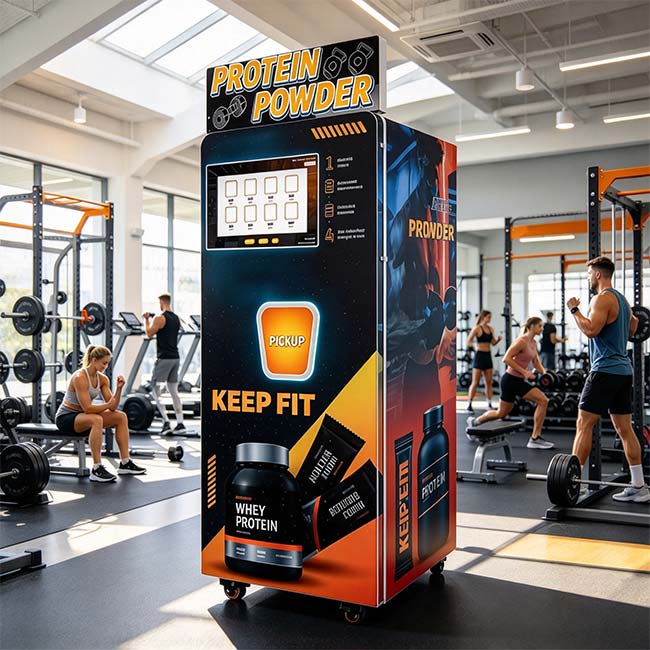
The WM186 from Wider Matrix carries that monitoring inside the machine rather than bolting a tracker onto it. Cup counts, hopper levels and component health report to a cloud dashboard, faults push to your phone and to the after-sales team, and the same connection carries new recipes and prices back out. Below is what the system tracks, where it saves you a drive, and the specs that decide whether the machine keeps up with a 6pm rush.
What the remote monitoring covers
The WM186 runs on an IoT cloud backend that reports three things: sales, inventory, and machine health. Sales means cups and revenue broken down by machine, by product and by hour, which tells you whether the evening spike is real or whether Saturday mid-morning is the better window. Inventory covers all seven powder hoppers at 4L each. Health covers the parts that stop a machine selling, namely the mixer drive, the water and temperature systems, and the payment terminal.
Faults do not wait for you to log in. The self diagnosis module sends an early warning to your phone and to the after-sales team at the same time, so a replacement part can be on its way before the machine goes dark. Firmware, recipes and prices arrive over the air, which is the difference between launching a seasonal flavor in an afternoon and visiting every site with a service laptop. The broader category is covered in how the software side of a smart machine works, if you want the full picture before you compare models.
One dashboard holds 50 or more machines. That number starts to matter somewhere around the third location, when driving between sites to eyeball stock stops being a reasonable use of a morning.
Why the alerts matter more than the dashboard
A machine that stops selling does not send you a bill. A 4L hopper of whey at a busy gym is two or three days of stock in peak season, and the flavor that empties first tends to be the one members came for. Without a low level warning, the machine earns nothing from the moment the powder runs out until somebody opens the cabinet.
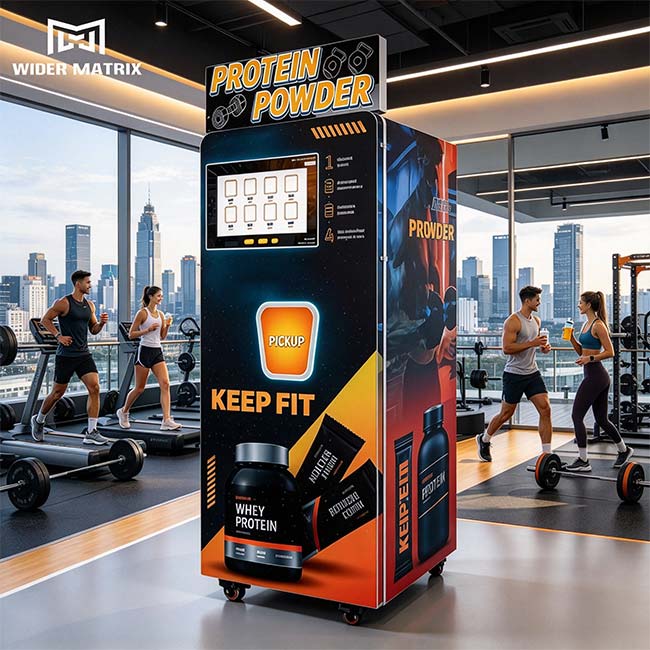
Temperature is the second quiet failure. The WM186 holds three zones: cold, room temperature and hot. A drink that comes out warm when the member paid for cold turns into a complaint at the front desk rather than a line in a report, and you usually hear about it after several have already gone out wrong.
Payment terminals drop offline for reasons that have nothing to do with the machine, and to a member a dead reader looks identical to a broken one. Remote monitoring logs it as a fault event, which turns a week of quiet losses into one call to the payment provider.
Throughput when the queue forms
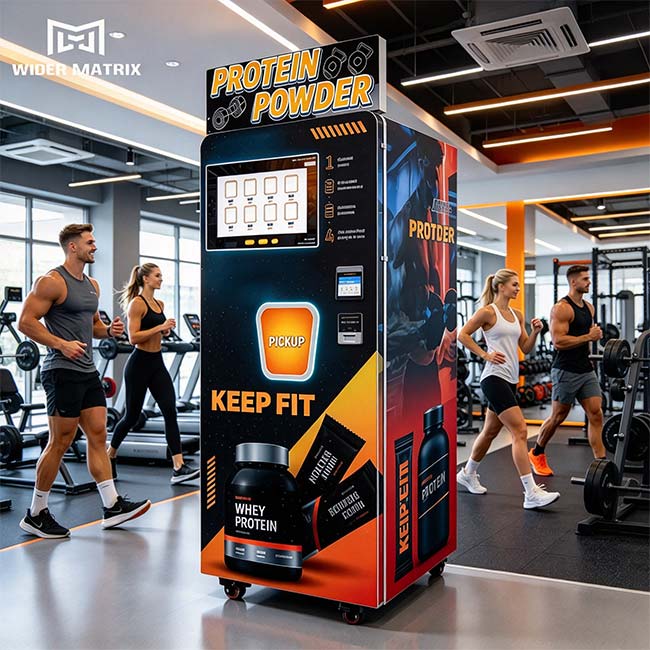
Oversight does not help if the machine cannot keep up. A protein shake vending machine that takes two minutes a cup loses the sale at 6pm, because nobody waits behind a member who is already late for a class. The WM186 dispenses a shake in roughly 60 seconds, peaks above 60 cups an hour, and the 21.5 inch touchscreen takes a member under 30 seconds to browse, customize and pay. Seven powders plus their add-ons fit on one screen without scrolling.
Wider Matrix publishes daily volume by venue type: a commercial gym with 500 or more members averages 40+ cups a day, a university sports center peaks at 80+ cups, and a sports complex on event days moves 60+ cups at $6 to $8 each. Buy for your average day and stock for your peak day, because the hoppers become the constraint long before the mixer does.
Mixing and cleaning, where shake machines usually fail
The part that decides whether a protein shake vending machine earns its footprint is not the screen, it is what wet powder does inside the cabinet. The WM186 uses a patented in-cup mixing system. Powder goes straight into the disposable cup and mixes there, so no shared pipe carries residue from one drink to the next. No shared pipe means no internal buildup and no flavor carryover from a mass gainer into a plant protein.
Machines that stir inside a mixing chamber have to be stripped and scrubbed, and whatever the cleaning misses is what eventually blocks the line. The WM186 runs an automatic high temperature cleaning cycle after every cup instead. A fault the machine can clean its way out of is a fault you never drive to, and that is arguably the more useful half of remote monitoring.
Payments and running without staff
Unattended works only when paying is quicker than the queue behind you. The machine takes Nayax and Pax terminals, credit and debit cards, Apple Pay, Google Pay, WeChat Pay, Alipay and NFC, and it speaks MDB, so it can be dropped into an existing vending estate. Paying by phone at a vending machine is no longer a novelty for most members, and the machine treats a wallet tap like any other card transaction.
No counter, no staffed hours, no cash to reconcile at the end of the week. It sells at 6am before the first class and at 11pm after the last one, which is exactly where a staffed shake bar stops making financial sense.
Running several machines from one screen
Multi site is where the monitoring pays back. A gym group can see which branch is underperforming before the monthly report lands, push one price change to every cabinet at once, and load a location specific recipe without a visit.
Branding travels the same path. OEM and ODM support covers logo, cabinet color and recipe sets, and CrossFit and boxing clubs often co-label the machine under their own name. Wider Matrix has shipped more than 3,000 units to over 130 countries since 2016, so export paperwork and local voltage configuration are routine rather than a first-time experiment.
What the numbers look like
The WM186 is US$4,150 factory direct, with seasonal discounts and bulk order discounts available. Cups retail between $3.00 and $8.00 depending on the venue, and consumables run $0.80 to $1.50 a cup, averaging around $1.20. That works out to a gross margin of 60% to 75%.
| Cups per day | Price per cup | Daily revenue | Daily profit | Monthly profit at 30 days | Payback |
|---|---|---|---|---|---|
| 15 | $4.00 | $60 | $45 | $1,350 | about 3 months |
| 30 | $5.00 | $150 | $120 | $3,600 | about 1 month |
| 50 | $5.00 | $250 | $200 | $6,000 | about 1 month |
| 80 | $6.00 | $480 | $400 | $12,000 | under 1 month |
Read the payback column as arithmetic on those volumes rather than a forecast, because footfall is what decides it. A mid-size gym in Miami reported around 45 cups a day at $5.50 a cup against a material cost of $1.20, which came to about $193 a day and more than $5,800 a month in gross profit, a 78% margin, and payback inside three months. That is one location with its own traffic. Where the cabinet sits in relation to the locker room and the exit moves the number more than any spec on this page.
If this is your first machine, read up on what vending machines cost up front and on starting a vending machine business before you commit budget to the cabinet itself.
Picking the spot, and what to clear first
Placement rules are local. Some cities require a vending permit, some venues have an exclusive food service contract, and gyms that retail supplements may have their own exclusivity clauses. Clear it with the venue and the local authority before you sign, because the machine installs in a day and the paperwork can take considerably longer.
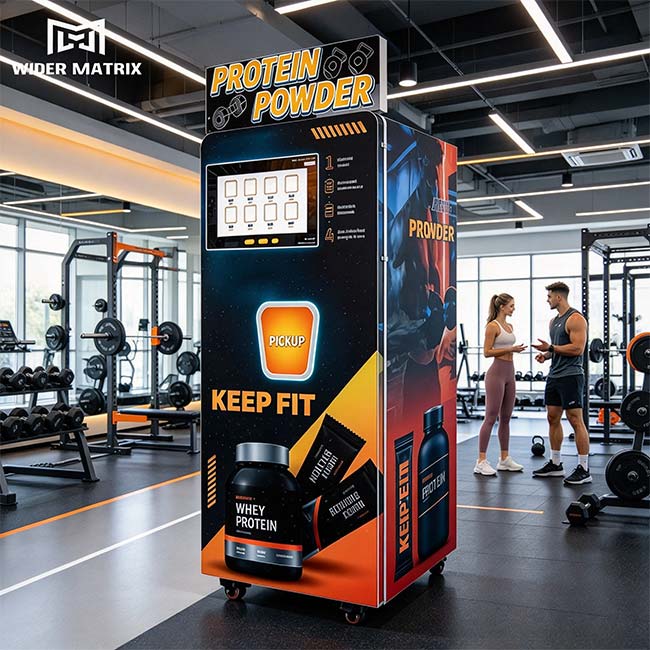
The sites that work for a protein shake vending machine share one trait: people walk past while thinking about training. Commercial gyms above 500 members, university sports centers, corporate fitness centers, hotel gyms that sell a 24/7 amenity, sports complexes on event days, and CrossFit or boxing clubs. There is more on choosing a spot for the machine if you are weighing two or three options inside the same building.
What to ask any supplier before you order
Four questions separate a machine you run from a machine you babysit. Does the dashboard show per hopper levels or one combined total? Does it push alerts, or only store logs you have to remember to check? Who else receives the fault alert, just you, or the after-sales team as well? And can recipes and prices be changed over the air, or does a technician need to visit?
Ask about the warranty in the same breath. The WM186 carries a one year warranty plus lifetime technical support, and Wider Matrix replies within 24 hours. The factory sits in Guangzhou with more than 50 engineers, and the team has over 15 years in automated retail behind it. Our guide to what to ask a vending machine manufacturer goes deeper on vetting suppliers.
Frequently asked questions
How much does a protein shake vending machine with remote monitoring cost?
The WM186 sells for US$4,150 factory direct, with seasonal discounts and bulk order discounts available. Cups retail from $3.00 to $8.00 and the consumable cost is $0.80 to $1.50 per cup, averaging about $1.20. Machine, software and payment configuration are included in that price rather than sold as separate items.
Can a protein shake vending machine run unattended overnight?
Yes. The WM186 is built for 24/7 unattended operation with no staff and no counter, and the self diagnosis module pushes fault warnings to your phone and to the after-sales team. The high temperature cleaning cycle runs after every cup. Someone still needs to refill the seven 4L hoppers and load cups.
What does the remote monitoring actually show?
The cloud dashboard tracks sales by cup, by product and by hour, hopper levels for all seven powders, and equipment health covering the mixer, the water and temperature systems and the payment terminal. Faults are pushed to your phone as early warnings. One dashboard handles 50 or more machines, and recipes and prices can be updated over the air.
How many shakes can it serve in an hour?
A cup takes about 60 seconds and peak capacity is above 60 cups per hour. Members finish browsing, customizing and paying in under 30 seconds on the 21.5 inch screen. Published daily volumes by venue are 40+ cups at a commercial gym with 500 or more members, and 80+ cups at a university sports center at peak.
Can members pay with their phone?
Yes. The machine accepts Apple Pay, Google Pay, WeChat Pay, Alipay and NFC, plus credit and debit cards through Nayax or Pax terminals. It also supports the MDB protocol, so it can join an existing vending estate without replacing the payment hardware you already run.
How much cleaning and maintenance does it need?
Powder is injected straight into the disposable cup, so there is no mixing pipe to strip and scrub, and the machine runs an automatic high temperature clean after every cup. Your routine work is refilling the seven 4L hoppers and loading cups. The WM186 comes with a one year warranty and lifetime technical support, with responses within 24 hours.
Should I buy, rent, or staff a shake bar instead?
A staffed bar gives you a person and a wage bill, and it closes when the gym goes quiet. Owning the machine keeps the full margin per cup, opens up OEM branding, and keeps selling at 6am and 11pm. Renting suits a short trial or a single event. Ask for both quotes and compare them against the number of months you expect to run the spot.
Get the numbers for your own site
A protein shake vending machine with remote monitoring only pays back on a site with the traffic to feed it. Send us the venue type, the opening hours and roughly how many members walk past the spot you have in mind. You get back the WM186 spec sheet and a factory direct quote, including bulk pricing if you are ordering more than one unit. Talk to the Wider Matrix team, or browse the current machines.