


A budgeting guide for anyone checking whether a protein shake vending machine is affordable to launch. It leads with the machine price, US$4,150 factory direct from Wider Matrix, then separates that one-time cost from the first powder and cup stock, freight, placement, and the smaller ongoing costs people forget. It includes the per-cup margins, a revenue projection, a real Miami gym case, and the mixer and cleaning details that separate a durable WM186 from cheaper machines. Written to answer “protein shake vending machine startup cost” and to route a budgeting reader toward a quote.
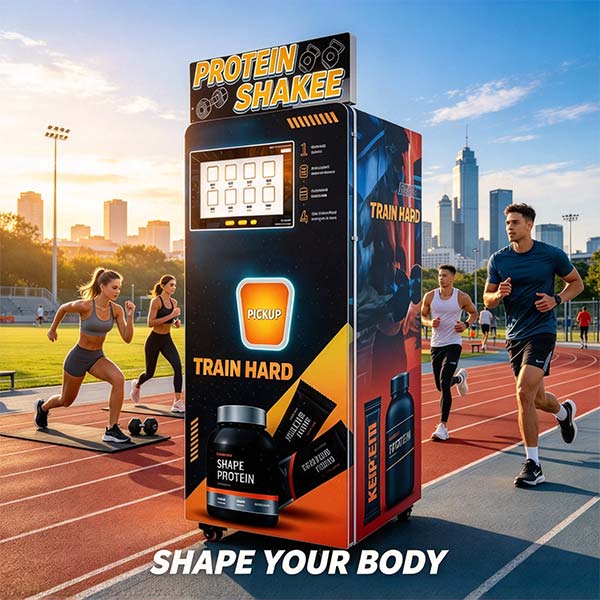
The machine itself is US$4,150, factory direct. That is the number to anchor on, but it is not the whole answer. A protein shake vending machine startup cost has four other parts you will lay out before the first cup sells: your first order of powder and cups, freight, whatever the gym charges for the spot, and a small cash cushion. This guide goes through each one, using the WM186 from Wider Matrix as the reference machine.
If you are reading this, you are probably at the stage where the idea has legs and you are checking whether you can fund it without overcommitting. That is the right sequence. Most people who lose money on a vending machine do not lose it on the machine; they lose it by starting with no stock money left, or by signing a placement they cannot carry through a slow first month. So the honest cost sheet below separates the fixed number from the moving ones.
Why people search for the startup cost first
The search matters because of who runs it. This is not someone buying a birthday gift. It is a gym owner, a fitness trainer with a side account, or a first-time vending operator deciding whether a protein shake vending machine fits their budget. They want one figure, the total, before they talk to a supplier. A buyer at this stage is scared of two things: underfunding the launch and paying too much on the machine because they cannot tell a factory price from a reseller markup.
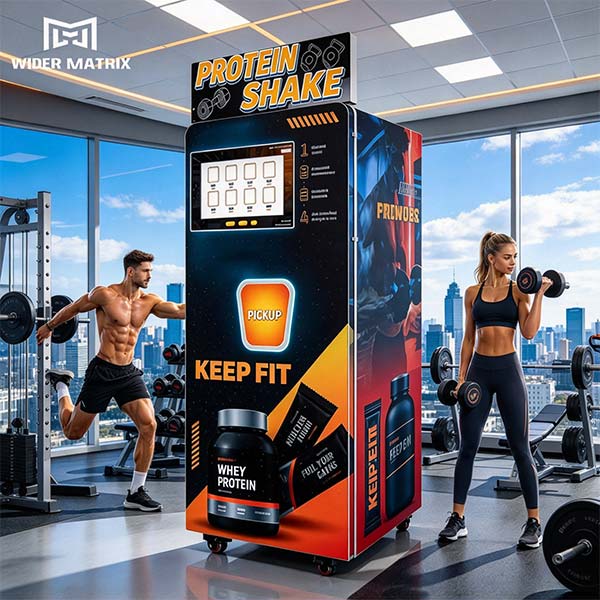
Gyms are one of the strongest places for this product because the customer is already standing there wanting a shake. Whey, plant protein, a mass gainer, a pre-workout: these sell every day to people who train. The machine runs without staff, which keeps the monthly cost down, and the GMV per cup is high enough that a quiet week still covers the powder.
The machine: US$4,150 and what that buys
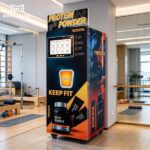
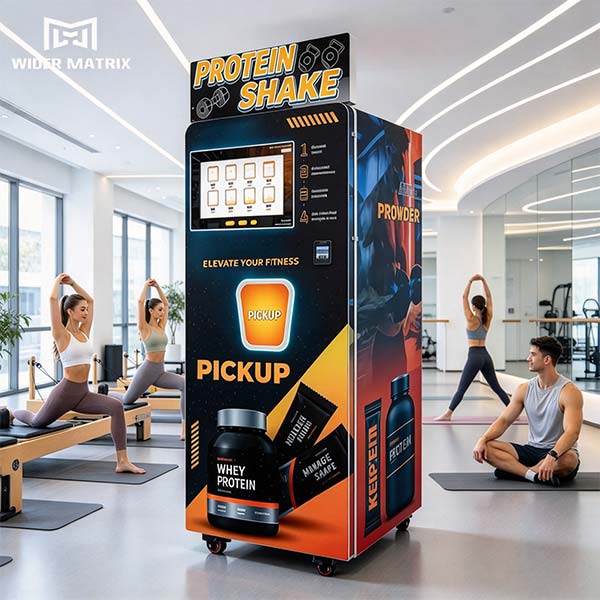
The WM186 costs US$4,150 direct from the factory in Guangzhou, which is lower than a resold equivalent partly because there is no trading company in the middle. For that price you get seven powder hoppers, each holding four liters, so one cabinet can serve whey, plant-based protein, mass gainer, a BCAA, creatine, a pre-workout, and one slot you keep for your own recipe or brand. It runs three temperature zones, cold, room, and hot. The 21.5-inch touchscreen takes a customer from browsing to payment in under 30 seconds, and the machine dispenses a finished cup in about 60 seconds at up to 60 cups an hour.
Payments cover card, Apple Pay, Google Pay, WeChat Pay, and Alipay, plus NFC, so you are not stuck waiting on cash. If you want to set the machine price against what other vending classes cost, the guide on what vending machines cost gives the wider picture.
The consumables: what each cup eats
Powder and cups run US$0.80 to US$1.50 per serving, and most operators land around US$1.20. Retail sits between US$3.00 and US$8.00 a cup depending on the venue, which puts the gross margin between 60% and 75%. In concrete terms: if you move 30 cups a day, that is 900 cups a month, so your first month of stock costs somewhere between US$700 and US$1,300 before you add anything else. That stock number, not the machine, is what a lot of new operators forget to budget.
For a step-by-step look at the full launch sequence beyond the hardware, the guide on starting a vending machine business walks through the setup in order.
The costs that are not on the brochure
Three line items move the most between one buyer and the next.
The biggest is placement. A gym will usually charge you rent, take a cut of sales, or both, and this can range from a modest flat weekly fee to a revenue share that surprises you at the end of the month. Spelled-out terms on whether owners pay for locations are worth reading before you agree to a number.
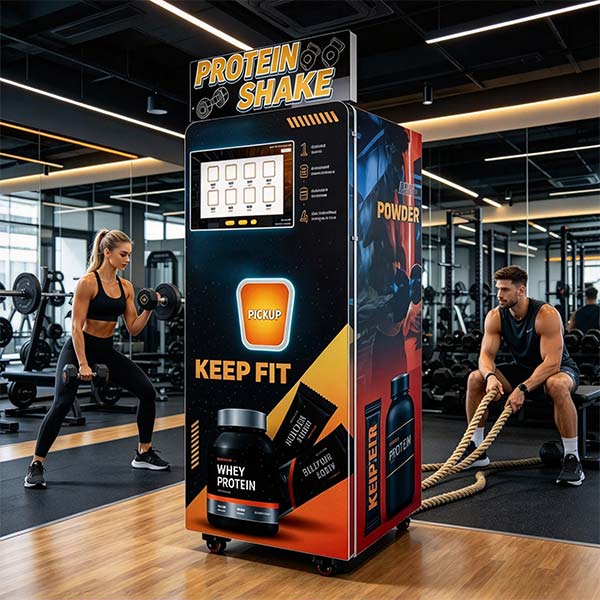
Then comes freight. The WM186 ships from Guangzhou, so what you pay depends on your country and how far inland the machine has to travel. The last item is the quiet monthly ones: card processing fees, electricity, and the restock trips for powder and cups. None of them are large on their own, but they add up, and they are the difference between a clean payback and one that drags an extra month.
What this machine does not need is staff. It is unattended and sells 24 hours, which is the main reason the operating cost stays lower than almost any drink counter.
What the machine earns back
Here is the return at four volumes, using a US$1.20 material cost.
| Daily cups | Price per cup | Daily revenue | Daily profit | Monthly revenue | Payback |
|---|---|---|---|---|---|
| 15 | $4.00 | $60 | $45 | $1,350 | ~3 months |
| 30 | $5.00 | $150 | $120 | $3,600 | ~1 month |
| 50 | $5.00 | $250 | $200 | $6,000 | ~1 month |
| 80 | $6.00 | $480 | $400 | $12,000 | <1 month |
A real operator number is more useful than a projected one. A mid-size gym in Miami moves about 45 cups a day at US$5.50, clear a US$193 daily profit and around US$5,800 a month at a 78% margin, and paid the machine off in three months. If you want to sanity-check that against the broader trade, the guide on how much a vending machine can make runs similar math for other machine types.
What to check before you pay
Not every cheap machine is cheap. The two places manufacturers cut corners on a protein shake vending machine are the mixer and the cleaning.
A machine that stirs powder with an internal blade clumps, and clumps mean you spend your day cleaning dried powder out of the works. The WM186 mixes inside the disposable cup itself, so there is no pipe or blade to clog, and it runs a high-temperature self-clean after every serving. That second part is what keeps a machine running unattended for weeks instead of being pulled offline by a gym manager who is tired of smelling old milk.
Allied to that is the software. A smart vending machine should tell you when a hopper is low and flag a fault before it becomes a stranded customer. The WM186 pushes those warnings to your phone, updates recipes over the air, and can manage 50+ units from one dashboard if you grow past one location. For the full list of what to demand from a supplier, Wider Matrix keeps a guide on choosing a vending machine manufacturer.
Why operators buy the WM186 from Wider Matrix
Most of the cheaper machines on the market run two or three hoppers, one temperature, and a stirrer that clogs. The WM186 holds seven hoppers across three temperature zones, dispenses a clean cup in under 60 seconds where the stirring machines take two to four minutes, and carries a one-year warranty with lifetime support rather than the six months the off-brands offer.
The business side matters just as much for a startup. Wider Matrix sells factory direct, so the US$4,150 price is not a reseller’s markup. The company has shipped more than 3,000 machines to over 130 countries since 2016 and keeps about 50 engineers on staff, with a target of responding inside 24 hours. Because the machine is built around in-cup mixing, you can also brand the cabinet, colors, and your own protein recipe, which is how CrossFit boxes and boxing gyms turn the unit into a house-brand product.
For the factory and company background, see Wider Matrix.
Frequently asked questions
How much does it cost to start a protein shake vending machine?
The machine is US$4,150 factory direct. On top of that budget your first powder and cup stock, which runs roughly US$700 to US$1,300 for the first month at 30 cups a day, plus freight and whatever the venue charges for placement.
Is a protein shake vending machine profitable?
At 30 cups a day the machine clears about US$120 a day and US$3,600 a month, paying for itself in about a month. The gross margin runs 60% to 75% because powder and cup cost sit around US$1.20 against a US$3 to US$8 retail price.
How much money do I need for one machine in a gym?
Plan on the US$4,150 machine, one month of consumables, and freight. The gym’s rent or revenue share is the real variable, so get that number in writing before you count your return.
Do I need staff or a permit to run one?
No staff: the machine is unattended and self-cleaning. Whether you need a food or health permit depends on your city and where the unit sits, so confirm local rules before you sign a placement.
How long until it pays for itself?
Most placements recover the machine within one to three months. The Miami gym paid it off in three months on roughly 45 cups a day.
The fastest way to move from budgeting to deciding is to price your own scenario: how many members the gym has, what it charges for a shake now, and whether it will let you place the unit. If you want the WM186 numbers worked out for your location, contact Wider Matrix and a sales engineer will build the projection with you.