



If you are looking for a self-service ice cream vending machine UK buyers actually want, the first thing to know is that the market has moved on from freezer cabinets filled with wrapped cones. Operators now want fresh soft-serve machines that take payment, dispense a cup, and do not need someone standing there with a scoop.
This guide is written for anyone thinking about buying one in the UK in 2026. We cover the real price of an ice cream vending machine, whether you need a licence, how much you can make, and what to look for in a supplier. We also explain where Wider Matrix fits in, because we ship these machines to UK operators regularly and have learned what works on British high streets, retail parks and tourist sites.
What counts as a self-service ice cream vending machine in the UK?
There are two completely different products hiding under the same name.
The first is a refrigerated cabinet or locker-style unit that sells pre-packaged ice cream bars, tubs and lollies. Customers open a door, take a product, and the machine charges their card. These are basically vending fridges. They work, but the profit per item is low and the experience is nothing special.
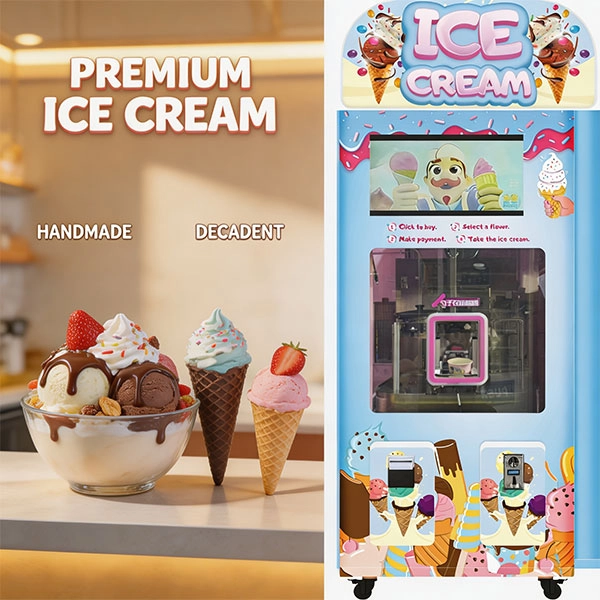
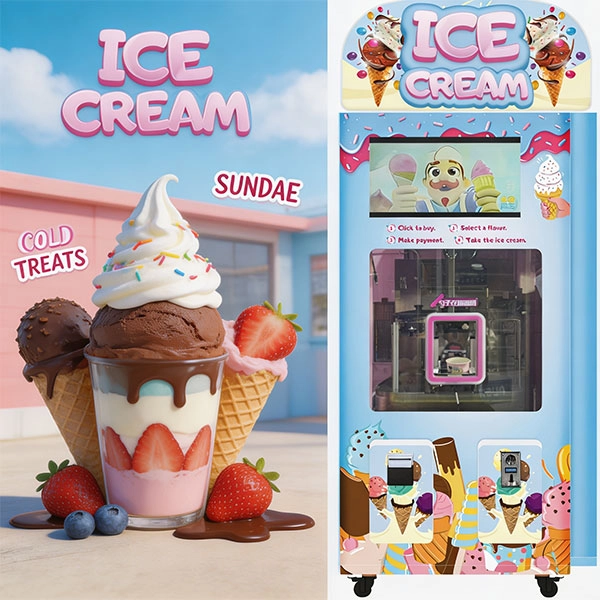
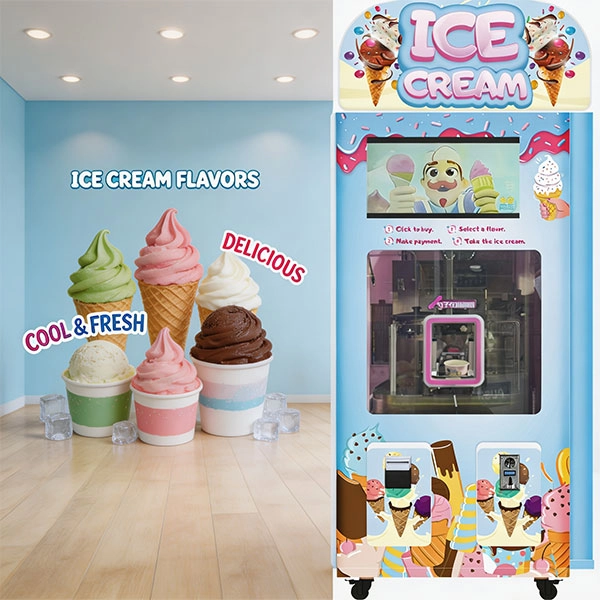
The second type is a fully automatic soft-serve machine. The customer taps a touchscreen, chooses a flavour and toppings, pays by card or phone, and the machine mixes, freezes and dispenses a fresh cup in about fifteen seconds. That is the category most operators mean when they search for a self-service ice cream vending machine UK.
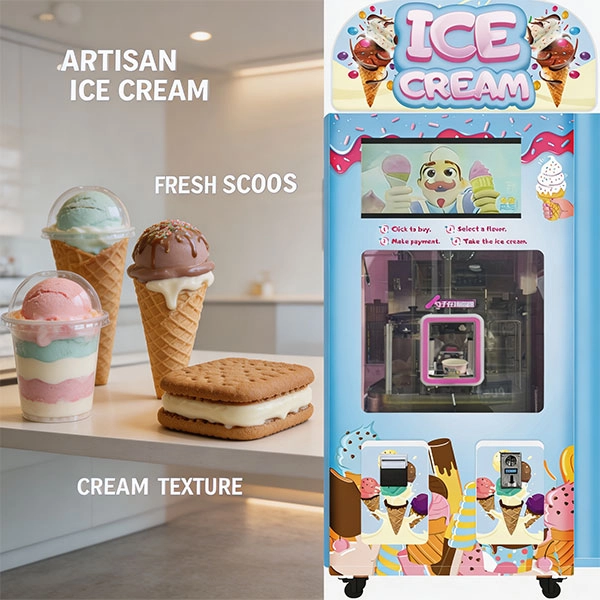
Wider Matrix builds the second type. Our WM550 automatic ice cream vending machine is a floor-standing soft-serve unit that runs unattended. It holds up to 300 cups per batch, offers one to three flavours, and accepts coins, notes, credit cards and NFC payments. The smaller mini ice cream vending machine is better for tight spaces such as small forecourts, holiday parks or indoor leisure centres.
Do I need a licence for a vending machine in the UK?
This is the most common legal question we get. The short answer is: usually not a specific “vending machine licence,” but you almost certainly need to register as a food business and possibly get local permission for the physical placement.
According to UK government rules, if you sell, store, handle, prepare or distribute food, you must register with your local authority at least 28 days before trading. That includes vending machines that sell food or drink. Registration is free and applies whether you trade from premises, a mobile unit, a stall, or a machine in a car park.
If you place the machine on someone else’s land, you also need a site agreement with the landowner. For public land, such as a high street or council car park, you may need a street trading licence or consent. Shopping centres, gyms and tourist attractions usually have their own commercial terms. We always tell buyers to sort the site before they sort the machine.
There are also electrical safety, CE or UKCA marking, and hygiene rules to think about. If you buy from a UK or EU supplier, the machine should already meet these standards. If you import from outside the EU, make sure the paperwork is correct before the machine leaves the factory. We have written more about this in our guide to whether you need a licence to own a vending machine in the UK.
Do you need a licence to sell ice cream in the UK?
Yes, in practice. Ice cream is food, so the same food business registration requirement applies. You register through your local council, not through a central government office. The council may inspect the machine for hygiene, temperature control, allergen labelling and cleaning routines.
You do not need a personal licence to sell alcohol or a street trading licence for every machine, but you do need to think about:
- Food business registration with the local authority
- Allergen information displayed on or near the machine
- Traceability records for ingredients and mixes
- A written cleaning and maintenance schedule
- Public liability insurance
If the machine is run by an employee or contractor on your behalf, you should also make sure they have basic food hygiene training. A Level 2 Food Safety certificate is cheap and shows the council you are taking it seriously.
How much does an ice cream vending machine cost?
Pricing varies by machine size, flavour count, payment options and country of origin. Chinese-built machines tend to cost less than European or American equivalents, and the gap has narrowed on quality in the last few years.
At Wider Matrix, our 2026 ice cream vending machine prices are:
- WM550 single flavour: US$5,799 for one unit, with tier pricing for 3–5 and 6–10 units
- WM550+ three flavours: US$6,799 for one unit, with tier pricing for 3–5 and 6–10 units
- Mini ice cream vending machine: US$4,400 for 1–4 units, with tier pricing above that
Those are machine-only prices. The full start-up cost in the UK also includes shipping, import VAT and duties, a payment gateway, site rent or commission, initial mix and cups, and any electrical or signage work. A realistic UK budget for one landed and running machine is roughly £5,000 to £10,000, depending on the model and whether you buy direct from a manufacturer or through a UK distributor.
Consumables matter too. Our standard ice cream cups cost around US$0.08 to US$0.12 per cup depending on volume, and spoons are about US$0.03 each when bought in bulk. The mix itself varies by supplier, but soft-serve mix typically costs between £0.40 and £0.70 per finished 100g serving.
If you want a deeper breakdown, read our new ice cream vending machine price guide or the general buyer’s guide to ice cream vending machines for sale.
Is vending machine owning a profitable business in 2026?
It can be, but location matters more than the machine. A good self-service ice cream vending machine in a bad location will lose money. A mediocre machine in a brilliant location can do well.
Here is a rough UK profit model for a single soft-serve machine:
- Average sale price: £2.50 to £4.00 per cup
- Cost of mix, cup and spoon: roughly £0.70 to £1.10 per serving
- Gross margin per cup: around £2.00 to £2.80
- Daily sales in a strong summer location: 30 to 80 cups
- Daily gross profit: £60 to £220 in season
In the UK the season is the limiting factor. A seaside promenade or holiday park can do strong numbers from April to September and then drop sharply in winter. Indoor locations such as shopping centres, bowling alleys or trampoline parks smooth this out, but footfall can be lower per machine.
Most UK operators we speak to expect a single ice cream vending machine to pay back in 8 to 18 months if the site is right. That is slower than a high-traffic US location, but faster than many traditional retail businesses. We have a full profit analysis in our article on whether ice cream vending machines make money.
How many machines do you need to make a real income?
This depends on your definition of real income. One well-placed machine might clear £500 to £1,500 gross profit per month in season. After site commission, insurance, maintenance and restocking, the net is lower, but it is still a genuine side income.
To make a full-time living or clear six figures, you need a route. The maths is simple: if one machine averages £800 net profit per month after all costs, you need roughly ten machines to make £100,000 a year. In practice, some machines will over-perform and others will under-perform, so most serious UK operators plan for twelve to fifteen machines to hit that target comfortably.
We have written about the numbers in detail in our guide to how many vending machines you need to make $100k. The figures are in dollars but the logic is the same.
Where should you put a self-service ice cream machine in the UK?
Location is everything. The best UK sites for self-service ice cream vending machines include:
- Seaside towns and promenades
- Holiday parks and caravan sites
- Theme parks and zoos
- Retail parks near family attractions
- Shopping centres, especially near cinemas or play areas
- Leisure centres, trampoline parks and bowling alleys
- University campuses during warm months
The ideal site has high family footfall, limited nearby competition, permission to trade, and reliable power. It also needs somewhere you can refill mix and cups quickly. A machine that runs out on a sunny Saturday afternoon is a machine that loses money.
Our guide to where vending machines are most successful goes deeper on how to evaluate a site.
What to look for in a self-service ice cream vending machine supplier
Not every supplier is worth importing from. We have seen UK buyers get caught out by machines that look good in a video but fail after three months of real use. Before you buy, check the following:
- Cooling system: Can it keep mix at a safe temperature in a hot summer?
- Dispensing speed: Fifteen seconds per cup is a practical benchmark.
- Payment options: UK consumers expect contactless card and phone payments. Coin and cash alone will lose sales.
- Cleaning cycle: Daily and weekly cleaning should be straightforward, not a two-hour job.
- Remote monitoring: Can you check sales, stock and fault codes from your phone?
- Spare parts and support: How quickly can you get a compressor, pump or payment reader replaced?
- Certification: CE or UKCA marking is essential for UK import and site acceptance.
- UK references: Has the supplier actually shipped machines to the UK before?
Wider Matrix has shipped multiple batches to the UK, including direct shipments to UK branches and follow-up deliveries. We know the voltage, plug, certification and logistics requirements for British customs and commercial sites.
Why Wider Matrix machines are built for this
Our automatic ice cream vending machine range is designed for unattended, 24-hour operation. The WM550 measures 227 × 93 × 95 cm, weighs 640 kg, runs on 220V/50Hz (compatible with UK power with the right installation), and outputs up to 28 litres per batch. The touchscreen is 21.5 inches, so customers can see the menu clearly and operators can run adverts or promotions when the machine is idle.
The WM550+ adds a second base flavour plus a mix flavour, giving 27 possible combinations with sauces and small toppings. If you want a lower entry price, the mini ice cream vending machine is 81 × 126 × 180 cm, holds 90 cups and costs US$4,400 for one to four units. It is a good way to test a site before committing to a larger machine.
Every machine takes coin, cash, credit card and NFC. That matters in the UK, where contactless has become the default payment method.
Common mistakes UK buyers make
We have seen the same errors repeat themselves. Avoid these and you will be ahead of most new operators:
- Buying the machine before securing the site
- Ignoring winter trade and relying only on outdoor summer traffic
- Choosing a supplier with no UK shipping or support experience
- Forgetting that food business registration applies to vending machines
- Not budgeting for VAT, duties and delivery on top of the machine price
One buyer we worked with found a perfect forecourt in Cornwall, signed the site, then ordered the machine. That is the right order. Another buyer bought two machines first and then spent six months trying to find permission to place them. That is the expensive order.
How to get started
If you are serious about a self-service ice cream vending machine UK customers will actually use, start with the site, then match the machine to the location. A busy indoor family venue might suit the compact mini model. A seaside pitch or large retail park might justify the higher capacity WM550 or WM550+.
Get your food business registration in place, agree a site deal, and budget for shipping, installation and at least three months of running costs before you expect to break even.
If you want current pricing, specifications and lead times for the UK, contact Wider Matrix directly. We can share the latest machine specs, UK shipping options, and answer the practical questions that determine whether your first machine turns into a real business.
Related reads: Find current ice cream vending machines, prices and suppliers | How much does it cost to start a vending machine business in the UK? | Can you buy a vending machine and put it anywhere in the UK?