



If you are weighing a popcorn vending machine for a US location, the short version is this: the WM680 starts at $1,800 a unit, pops a fresh 32 oz serving in about two minutes without oil, and ships factory direct from Wider Matrix in Guangzhou. The machine handles the payment, the popping, and the remote sales reporting for you, which means a lot of the ops work disappears. Send us your location and order size and we will come back with landed cost, shipping time, and a custom wrap for your brand.
Most people searching for a popcorn vending machine in the USA are not doing it out of idle curiosity. They have a spot in mind, a lease, an empty corner in a lobby, or a whole route of machines they already run. The question underneath is usually the same one: will this thing pay for itself without eating my week?
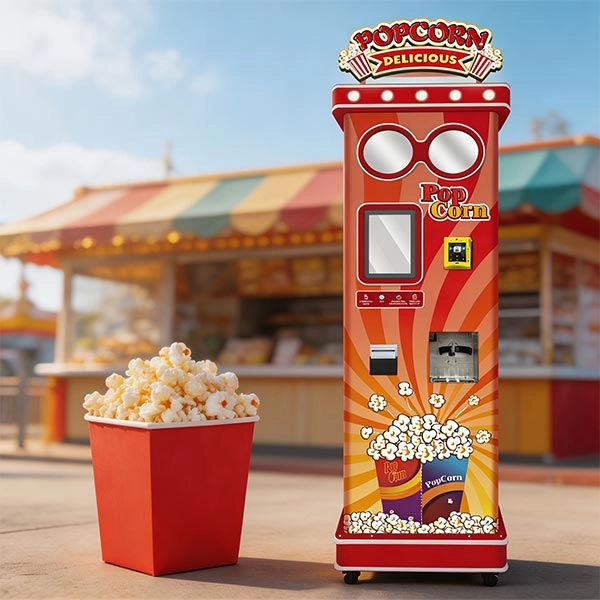
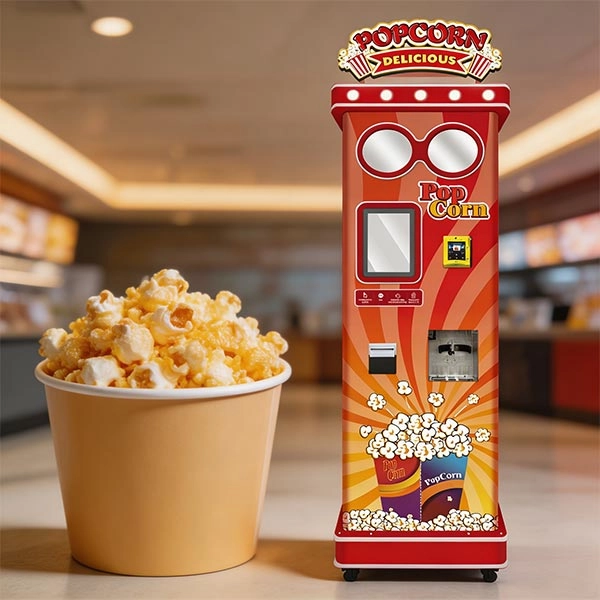
It can. The WM680 popcorn vending machine from Wider Matrix starts at US$1,800 per unit for orders of one to five, and it does the part of the job that causes the most headaches on its own. A customer walks up, picks a flavor on the screen, pays by coin, cash, card, NFC, or QR code, and the machine drops a fresh 32 oz cup about two minutes later. No attendant, no popping oil to manage, no register to balance at the end of the day.
How the WM680 actually works
The WM680 is an air-pop machine, not a kettle popper. It uses a 360 degree thermal cycle with hot air circulation, so the kernels pop evenly and there is no oil involved anywhere in the process. That single detail solves more problems than buyers expect. There is no oil to source, no oil to filter or store, no smell that builds up, and no gunked up kettle to scrub out every night.
The dry kernels sit in a 5.6 kg hopper, and the machine holds 140 pre-loaded cups at 40 grams per serving. Each cup is a standard 32 oz size, 114 mm across the top, 90 mm at the bottom, and 142 mm tall. Order to collection runs about 120 seconds. The whole thing stands 570 mm wide, 540 mm deep, and 1,930 mm tall, weighs 70 kg, and pulls 3,000W on 220V.
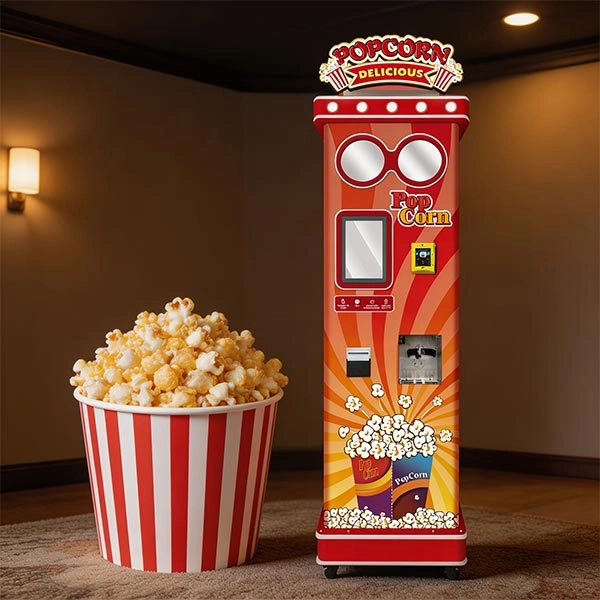
That 220V spec is worth noting if you are placing a machine in the US. Commercial kitchens and many retail spots run 208 to 240V service without a problem, but a standard 110V wall outlet will not do it. Confirm the power at your site before you order, and we can help you sort out what kind of connection the machine needs. It is a two minute conversation that avoids an expensive surprise on install day.
What you can expect to make from one machine
People ask some version of “is a popcorn business profitable” more than any other question, and the honest answer is that the machine is rarely the weak link. Popcorn has brutal margins even when you buy kernels and cups at retail, and they improve once you buy in bulk. A 40 gram serving of popped corn costs pennies to produce and sells for a few dollars across most of the US. The real variables are placement and traffic.
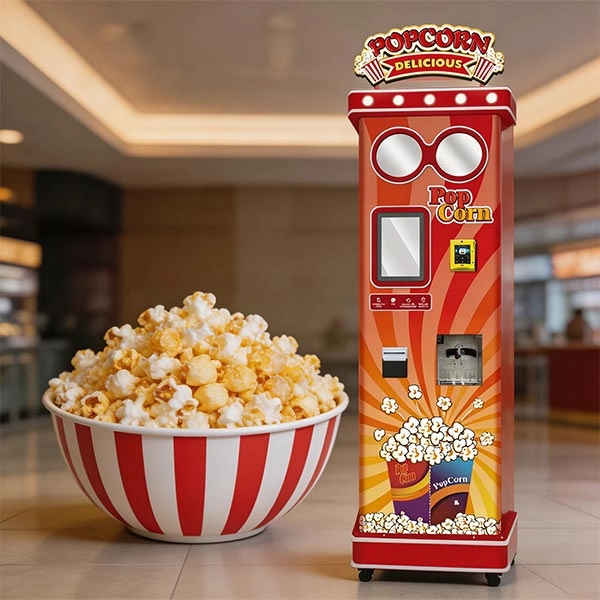
Where these machines shine is steady foot traffic with a few minutes to spare: movie theater lobbies, malls, family entertainment centers, sports venues, colleges, break rooms, hotel game rooms, and laundromats near a snack counter are all proven spots. In a quiet corner the same machine sits idle. Ten good placements beat thirty bad ones, and this is the point where a lot of first time operators go wrong. Pick the location before you pick the count.
If you want to run the numbers properly, our page on whether popcorn machines are profitable walks through the economics in more detail than I want to repeat here. The short version: because the machine runs unattended and air-pops without oil, your ongoing input cost is mostly corn, cups, and electricity, which is why the unit tends to earn back its price faster than a staffed kiosk would.
Where to put these machines
The best operators I have worked with do not treat a popcorn vending machine as a snack dispenser. They treat it as a mini concession stand that runs without labor. The transparent window and the popping happening right in front of the customer do a lot of the selling for you, and the LED lighting and HD screen pull people across the room.
Cinemas are the obvious first choice, and they remain the strongest single category. A movie without popcorn is not really a moviegoing experience, and a machine like the WM680 removes the need to staff a counter for the slow weekday matinee shift. Theme parks and family entertainment centers are a close second, because parents will pay a couple dollars to avoid a meltdown. Grocery store entrances, gyms, and university student centers round out the list.
What I would not do is buy ten machines and scatter them without testing the first two or three. Run them for sixty days, watch the sales report from the remote app, and only then expand. The machine gives you daily and weekly revenue statements, so the data tells you exactly which location is earning its keep.
What to check before you buy a popcorn vending machine
There are a handful of things that separate a machine you keep for years from one that becomes a permanent headache, and most of them are boring. Start with the things you can see and touch.
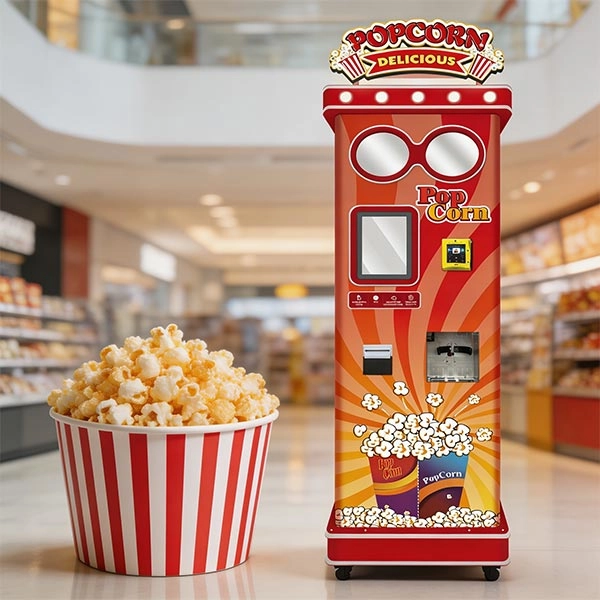
- Build. The WM680 uses a thickened metal body with a reinforced plate, because vending machines get bumped, kicked, and leaned on. Lightweight plastic cabinets do not survive a busy arcade.
- Payment. You want coin, cash, card, NFC, and QR covered so you are not turning away customers. Cashless payment is not optional anymore in US locations.
- Remote access. You should be able to see sales, stock, and alarms from your phone instead of driving to every machine. The WM680 gives you revenue statements, order history, and machine status through a PC or mobile app, with multi-currency and multi-language support built in.
- Service layout. A banknote counter and a clear fetching box matter more than they look like they should. A jammed bill or a cup that lands badly will cost you trust fast.
I wrote a longer checklist on what to look for before you buy, and it is worth ten minutes if this is your first machine. The same errors come up over and over in sourcing conversations, and almost all of them are avoidable.
How much a popcorn vending machine costs
The WM680 runs US$1,800 per unit for one to five machines, and there is tier pricing if you order six or more, so a route operator buying in volume pays less per unit. The cups are the main consumable: $0.12 each at 1,000 pieces, dropping to $0.10 at 10,000 pieces. Kernels you can source locally or we can point you to options, but the machine is designed around dry corn, which you can buy almost anywhere.
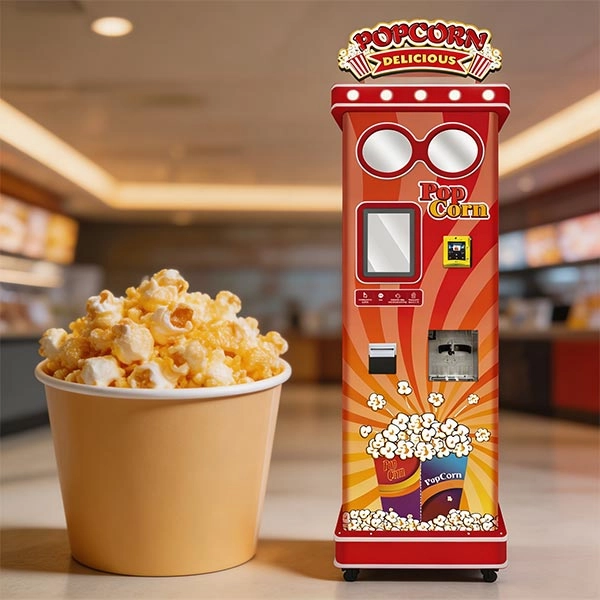
When people ask how much a vending machine costs in the US, the sticker price is only part of the answer. The full landed cost includes freight from the factory, any import duties, and local delivery. Those numbers shift with order size and destination, which is why we quote them per order rather than printing a flat number that will be wrong for someone in Texas and someone in New York alike. Send us the destination and the quantity and we will give you a real landed figure.
For a deeper breakdown, our popcorn vending machine price page covers the machine, shipping, and consumables together, and there is a quotation page where you can get specifics for your order.
Choosing a supplier you will not regret
This is where more money is lost than on the machine itself. A popcorn vending machine is not a one time purchase if you plan to run it for years. You need the seller still answering email when a board fails in month fourteen.
Wider Matrix is the manufacturer, not a middleman. The company is based in Guangzhou, Guangdong, and has focused on vending machines and smart robots since 2016, with more than 3,000 machines deployed and a team of over fifty. The machine is made in the factory that sells it, which means when you have a question about a component, the person who built it is on the other end of the line, not someone reading a spec sheet.
You want a supplier who has shipped to the US before and knows what that means for paperwork, voltage, and after-sales support. Wider Matrix has shown machines at trade events in Orlando, Florida, alongside shows across Europe, the Middle East, and Asia. If you are sourcing from overseas and this is your first import, read our guide on finding a popcorn vending machine supplier in the USA before you wire money to anyone. It covers the questions most people only think to ask after a shipment has already gone wrong.
What happens after the machine arrives
A machine you can buy but not support is a machine you should not buy. The WM680 ships with the control system already set up, and because it is air-popped with no oil system, day to day maintenance is mostly refilling corn and cups and giving the chamber a wipe down. The remote app shows you alarms and machine status, so a lot of issues can be diagnosed before someone even calls you.
Support is available around the clock, which matters when your machines run at 9 PM on a Saturday and a customer is standing in front of one. Warranty and spare parts are part of the factory service, and since the machine is built in house, parts are not an eighteen week wait. For the issues that do come up on any commercial machine, our page on common problems with popcorn machines walks through the usual suspects and fixes. The metal cabinet and air-heating design mean the main wear items are simple and cheap, which is exactly how you want it.
On lifespan, a well placed machine with routine care runs for years. How long a commercial popcorn machine lasts comes down to build quality and how hard it gets used, and both are in your control at the buying stage.
Why an air-pop design beats a kettle for vending
This is the part where I probably sound like I am selling, but it is genuinely how the field splits. Kettle poppers make great popcorn and awful vending machines. The kettle needs oil, it needs cleaning, it needs someone watching it, and it needs downtime to cool. A vending machine has none of that labor around it.
The WM680 pops without oil, which answers the “what kind of oil is best” question cleanly: none. No oil means no rancidity, no residue, and no fire risk from a hot oil bath running unattended at 11 PM. It also means the machine meets clean, hygienic production standards easily, which is relevant when a venue health inspector asks about the snack equipment.
That said, the best commercial popcorn machine for you is the one that matches your volumes and your staffing. If you are selling popcorn at a state fair from a manned booth, a classic kettle machine you can flavor by hand might suit you better. If you need a machine that earns money while you are not there, the WM680 is built for exactly that job.
Frequently asked questions
Is owning a popcorn vending business profitable in 2026?
It can be, and the deciding factor is placement more than the machine. Popcorn itself has strong margins, so a machine in steady foot traffic with a few good locations tends to pay for itself quickly. The WM680 removes most of the labor and oil costs, which keeps the ongoing expenses low. Run the numbers for your specific site before scaling up.
How much does a commercial popcorn machine cost?
The Wider Matrix WM680 is US$1,800 per unit for one to five machines, with tier pricing available for six or more. Cups run $0.12 each at 1,000 pieces and $0.10 at 10,000 pieces. Landed cost to your US location depends on freight and destination, so contact us for an exact quote for your order.
What is the best popcorn machine in 2026?
For unattended vending, the WM680 is a strong default: it air-pops a fresh 32 oz serving in about two minutes, takes coin, cash, card, NFC, and QR payments, and reports sales to your phone. It is fully customizable on the outside, so the machine can carry your logo and colors. For manned, high volume concessions, a traditional kettle machine may be a better fit.
How much should I sell my popcorn for?
Pricing depends on your local market and venue, but a 40 gram serving that costs pennies to produce typically sells for a few dollars in most US locations. Start near your local cinema or mall prices and adjust by location. If you want help setting an initial price for your area, send us a note and we can walk through it.
What kind of oil is best for popcorn?
For a vending setting, the best answer is none. The WM680 uses hot air circulation, so it pops clean dry kernels without any oil. That removes oil sourcing, cleaning, and fire risk from your operation entirely.
How much is a small popcorn machine?
The WM680 is a compact footprint at 570 x 540 x 1,930 mm and lists at US$1,800 for smaller orders. If you are looking at a different size or capacity, contact us with your space and volume and we will match you to the right model rather than sell you the wrong one.
Can I buy the machine and import it to the US?
Yes. Wider Matrix ships to the US and has shown at trade events in Orlando. For larger orders, take a look at our guide on bulk importing from China, which covers what a multi-unit order involves from the factory to your door, including paperwork and freight.
If you already know which model you want and are ready to buy, choosing a supplier is where most people get burned, so vet anyone you talk to against that list. We would rather you ask us the hard questions now than discover a problem after a machine is sitting in your lobby.
Send us your location, your order size, and whether you want standard wraps or a custom brand, and we will come back with a price, a timeline, and answers to whatever else you need before you commit. There is no obligation in asking, and a bad first machine is far more expensive than a few emails.