



(US$1,800 for the WM680 machine, US$0.10 to 0.12 per cup, variable kernel and shipping costs), walks through the per-cup profit math, covers location selection, machine specs to verify before purchase, permits, supplier vetting, common operational problems, and a six-question FAQ.
Last updated: September 2026
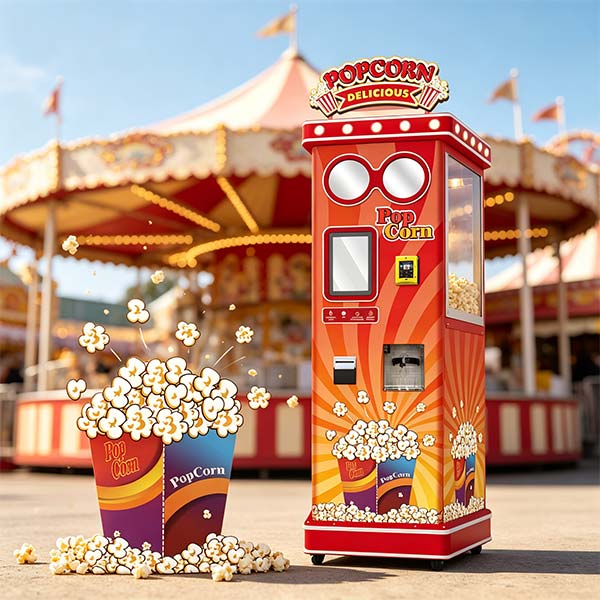
A popcorn vending machine startup business is small by design. One machine, one location, one product, and no staff on the line. The machine pops the corn on demand, the customer pays, and the popcorn is ready in two minutes. That last part is the business case. The snack is made at the point of sale, it smells like it was made at the point of sale, and nothing in a bagged snack vendor comes close to that.
This guide goes through the numbers and the setup: what a machine costs, what each cup costs to make, where the machine needs to sit, and what to check before you commit to a supplier.
How the business runs
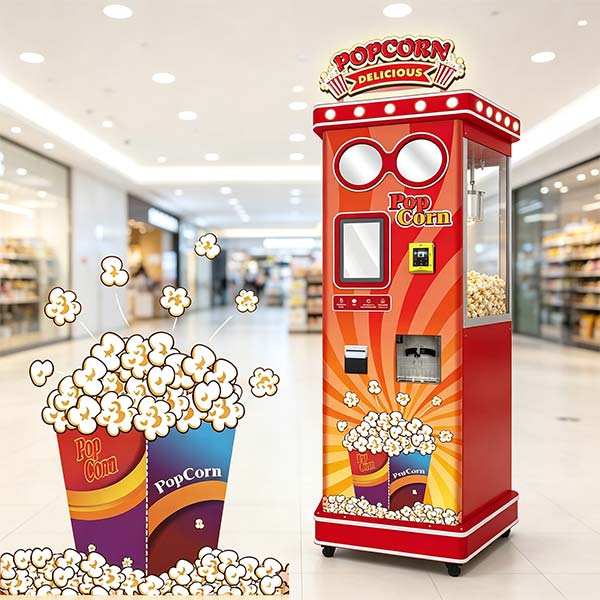
A customer picks a flavor on the screen, pays, and the machine does the rest. On the WM680 popcorn vending machine from Wider Matrix, one pop takes about 120 seconds. The hopper holds 5.6 kg of dry kernels and the cup rack holds 140 cups. Each serving is 40g of popcorn in a 32oz cup. When the load runs low, you top up corn and cups and walk away. As a category, fresh popcorn vending machines sit between a bag vendor and a concession stand: the customer pays less than the theater, and the product is made in front of them.
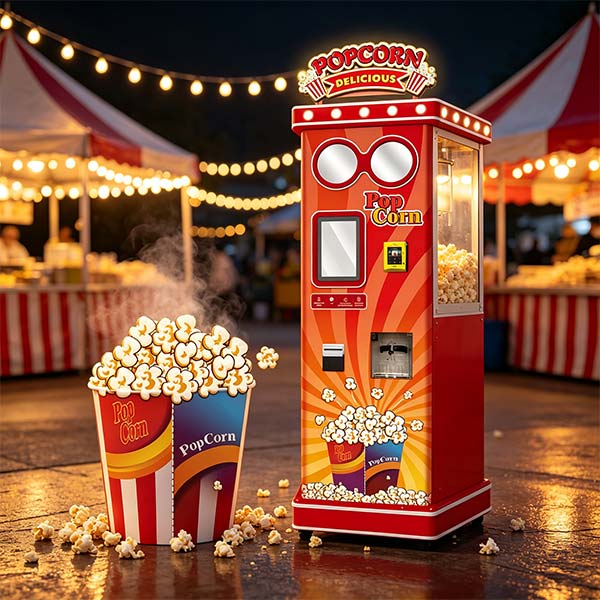
Compared with a standard snack vendor, the difference is the product itself. A bag vendor resells someone else’s snack. A popcorn machine makes it. The transparent window shows the corn popping, and the LED panel is visible from across the room, so the machine keeps selling while you are not there.
Startup costs
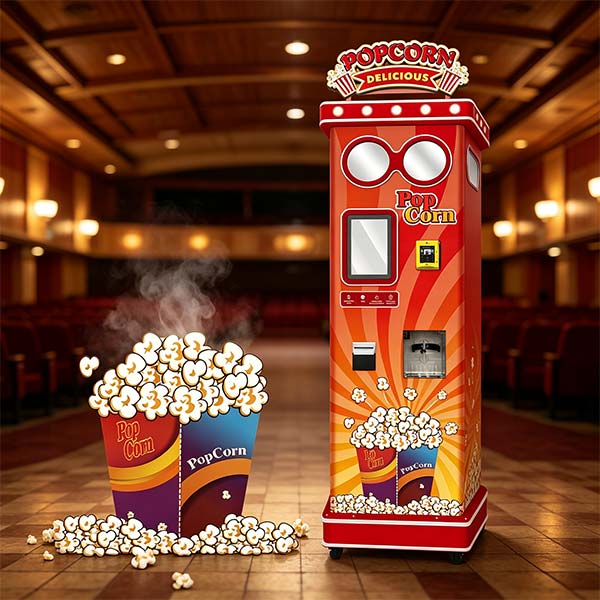
The biggest line is the machine. Wider Matrix lists the WM680 at US$1,800 per unit for orders of 1 to 5 machines, with tiered pricing for 6 to 10. Current configurations are on the popcorn vending machine for sale page.
| First cycle cost | Amount |
|---|---|
| WM680 machine (order of 1 to 5 units) | US$1,800 per unit |
| Popcorn cups, 1,000 pcs | US$0.12 per cup |
| Popcorn cups, 10,000 pcs | US$0.10 per cup |
| Dry kernels, one 5.6 kg fill | varies by supplier and country |
| Shipping and installation | varies by destination |
| Location fee | varies, often a percentage of sales or a fixed monthly amount |
Only two lines have fixed numbers you can verify before ordering: the machine and the cups. Kernels depend on where you buy them. Shipping depends on the destination. Ask your supplier for a per batch kernel cost before you sign anything, because that one number is what separates a good margin from a thin one.
The profit math
Here is the shape of it with the numbers above. Assume you price a 32oz cup at US$5. That is your call. Set it from what the site’s visitors already pay for a snack, then run the math at that price. The cup costs 10 to 12 cents in bulk. Kernels are the variable: take the cost of a 5.6 kg load, divide by the number of 40g cups it produces, and add the cup. That is your cost per sale before power, the location fee, and your own time.
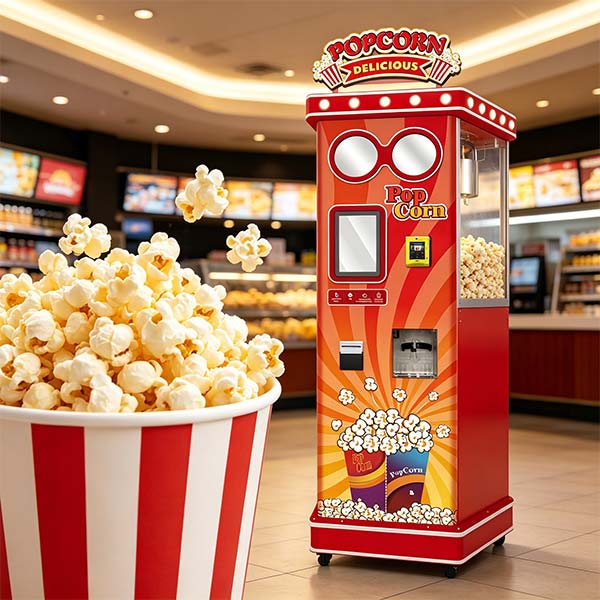
Power is small. The WM680 draws 3000W, so one 120 second pop uses about 0.1 kWh, a couple of cents at typical commercial rates.
What moves the margin is the sale price and the location fee. A machine in a transit hub moves far more cups a day than one in a quiet lobby, and the quiet lobby usually asks for less rent. For a first machine, that trade off is the whole strategy, and a look at popcorn vending machine price options across configurations helps before you fix on one.
Where to place the machine
The rule of thumb for where to put vending machines holds even harder for popcorn: foot traffic at a moment of hunger. Cinemas and arcades, event venues, amusement parks, campuses, and transit corridors are the usual picks, because people there are already standing around with time to kill. For a small business or a first vending route, popcorn is a low friction entry: one machine, one site, no inventory beyond corn and cups.
Two practical details. Get the machine where the pop is visible, because the transparent window is the demo. And get the site agreement in writing, including who restocks and how the fee works. A percentage of sales aligns the site owner with you; a fixed fee is easier to plan around. If this is your first machine overall, a walkthrough of how to start a vending machine business plus a vending machine cost breakdown will save you a few bad site agreements.
What to check in the machine
Most popcorn vendors look similar on the outside. The parts that matter are in the workflow. The WM680 uses an airburst heating system that circulates hot air in a 360 degree cycle, so the corn pops without oil. No oil means less cleanup and fewer burnt batches. Payment takes coin, cash, card, NFC, and QR, which matters in markets where cashless is the default. The machine reports to a PC or phone app with daily sales, order history, and alarms, so you see a low corn or cup load before a customer hits it. The build is metal and it weighs 70 kg, which keeps it in the same footprint as a standard beverage vendor.
| WM680 quick specs | Value |
|---|---|
| Power | 3000W, 220V |
| Dimensions (W x D x H) | 570 x 540 x 1930 mm |
| Net weight | 70 kg |
| Corn storage | 5.6 kg dry kernels |
| Cup storage | 140 cups, 40g popcorn per serving, 32oz cup |
| Pop time | about 120 seconds |
| Payment | coin, cash, card, NFC, QR |
| Remote monitoring | PC and phone app |
Durability is the line people forget. Ask how long the machine lasts under daily use and what the warranty covers. How long a commercial popcorn machine lasts depends on the heating system and the cleaning routine, and the gap between a cheap build and a commercial one shows up in year two, not in the showroom. Wider Matrix also customizes layouts, skins, luminous characters, and color, and does OEM and ODM for branded deployments.
Permits and paperwork
Register the business, put the site agreement in writing, and check local food rules for snacks made on site. Requirements change by city and by country, and some venues want proof of insurance before anything is plugged in. Budget about a week for paperwork. It is rarely the slow part, except where the site is public space and a municipal permit is involved.
Choosing a supplier
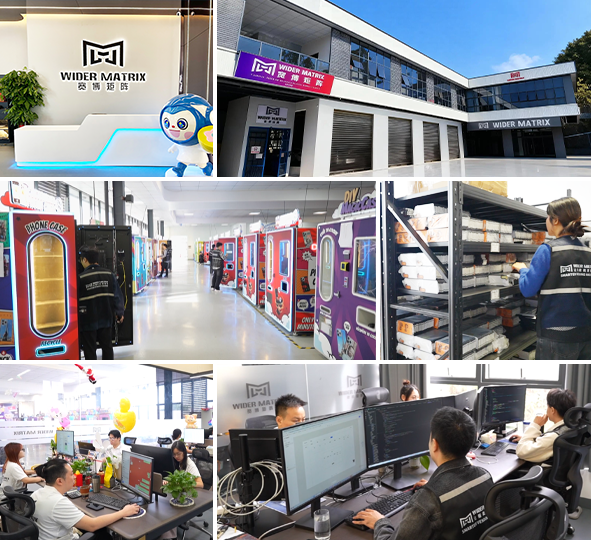
On the machine side, Wider Matrix (GZ) Technology Co., Ltd. is based in Guangzhou and has spent five years in vending machines and smart robots: 3,000+ units deployed, a 50+ person team, 5+ independent R&D patents, 30+ industry awards, and ISO 9001 with CE and RoHS certification. The background is on the About Wider Matrix page, and the team shows up at trade fairs in Orlando, Barcelona, London, Saudi Arabia, and Shanghai. Seeing a supplier at the fairs your market cares about is a reasonable proxy for export experience.
Before you pay, get five numbers in writing: the per batch kernel cost, the cup supply price, the spare parts list, the shipping lead time, and the warranty terms. A supplier who hesitates on the first number has already told you something.
Problems you will run into
The problems that show up in real deployments are a short list: a jammed pop at peak hour, a cup hopper that runs dry on a Saturday, a payment reader that drops out, and a load of kernels past its prime that pops unevenly. None of these kills the business. The surprises do: running out of cups with no spare, or an alarm you only notice three days later. The monitoring app handles the alarm case. A spare parts kit and a restock habit handle the rest. A longer rundown of common problems with popcorn machines is worth reading before you buy, and if you are weighing this against other snack vending, are popcorn machines profitable is the fair question to start with.
Questions people ask before buying
How much does a popcorn vending machine cost?
A commercial automatic machine like the Wider Matrix WM680 lists at US$1,800 per unit for orders of 1 to 5, before shipping. The per batch kernel cost and the warranty terms move the real ROI more than the sticker price does.
Is a popcorn vending machine business profitable?
The margin per cup is wide, because the machine makes the product instead of reselling it. Profit depends on two things you control: the sale price and the cups per day the location produces. The machine cost is fixed, so the location does the work.
How much popcorn does the WM680 hold?
5.6 kg of dry kernels and 140 cups per fill. Each serving is about 40g of popcorn in a 32oz cup, and one pop takes about 120 seconds.
Can the machine run unattended?
Yes. The WM680 takes coin, cash, card, NFC, and QR payment and pops on demand. The phone app sends sales and alarm notifications, so a restock visit is planned, not a rescue.
Where do popcorn vending machines make the most money?
High foot traffic places where people are idle and hungry: cinemas, arcades, event venues, amusement parks, campuses, and transit hubs. The smell and the visible pop do the selling, so visibility matters as much as the foot count.
How often do you need to restock?
It depends on the site. One fill of the WM680 is 5.6 kg of kernels and 140 cups. A busy cinema location burns through that fast; a slower site may take a week. The app flags the load when it runs low.
The next step
If you are weighing a popcorn vending machine startup business, the order is: machine numbers first, then the location, then the paperwork. When you are ready for real figures, request a quote from Wider Matrix and ask for the per batch kernel cost with it. With that one number, you can work out the margin for your site before you decide anything.