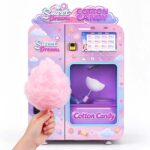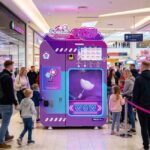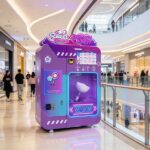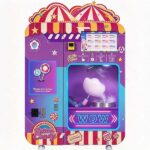


You are buying a machine that will sit in the same spot for years, so the options you pick now, cabinet color, screen language, shape library, payment setup, and branding, are expensive to change after installation. Cotton candy vending machine customization in 2026 usually works through a supplier’s option list instead of a fully bespoke build: cabinet wrap, touchscreen interface, flavor and color settings, payment integrations, and white-label software. Define your venue, your audience, and your budget before requesting a quote, because every option shifts lead time and cost.
What customization covers on a cotton candy vending machine
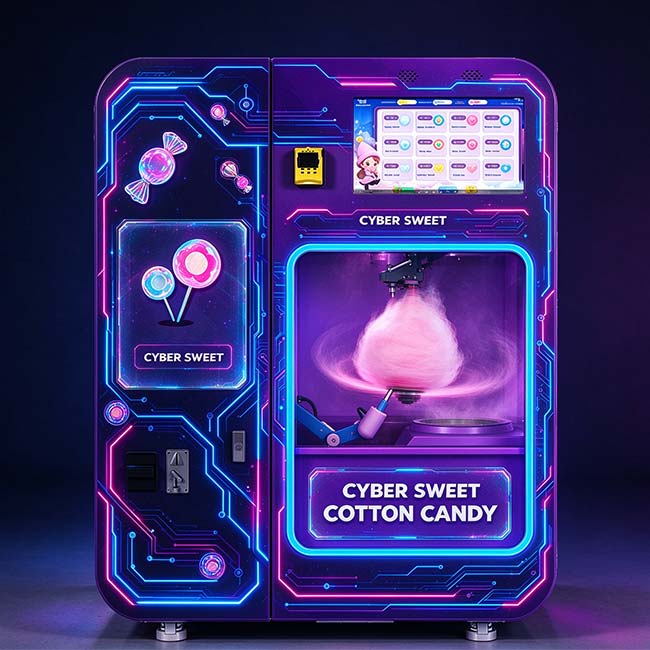
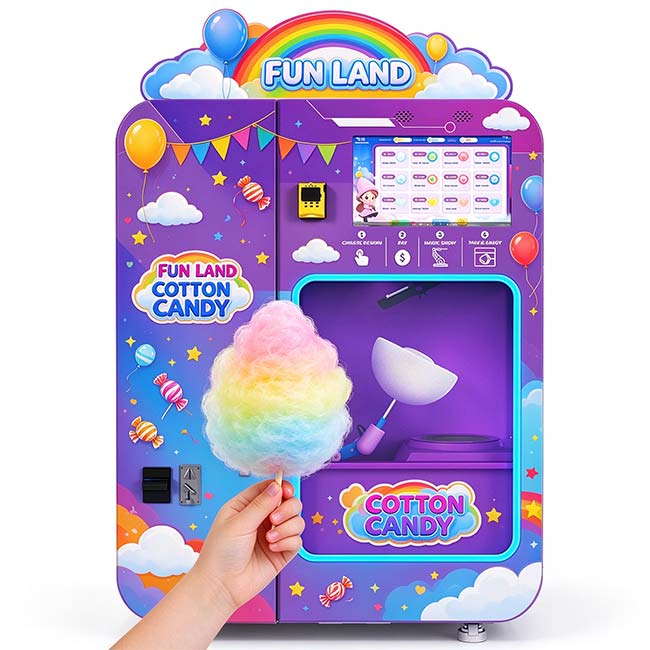
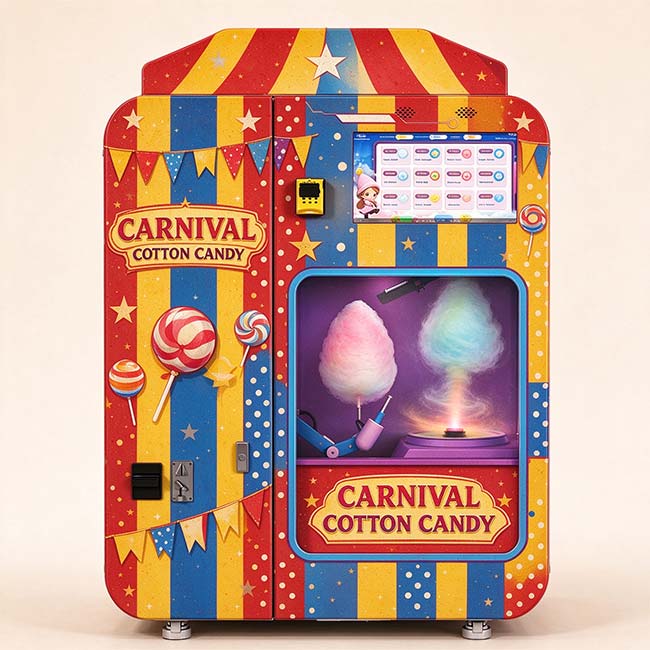
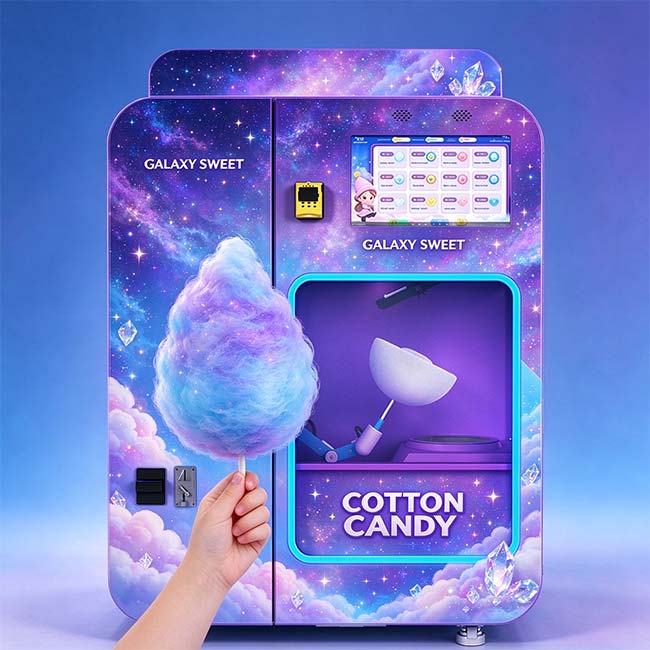
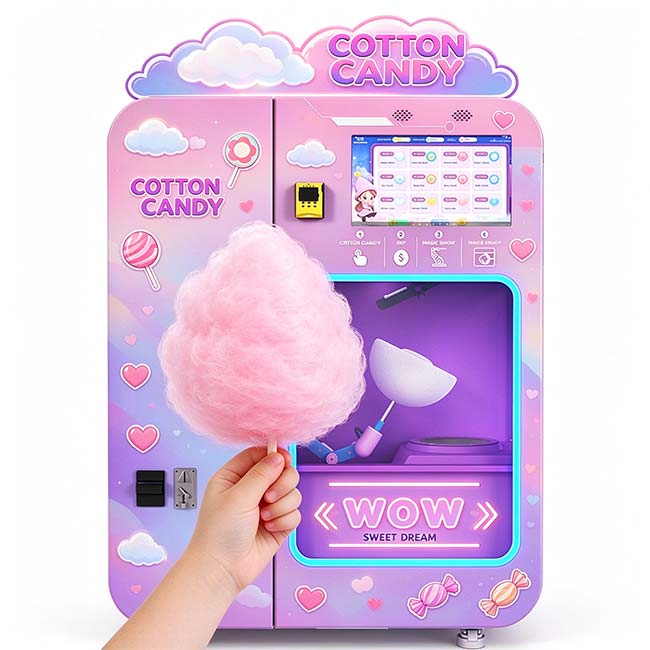
Most operators picture a sticker wrap when they hear the word customization. The wrap is the most visible change, but suppliers can modify much more than the outside of the cabinet.
- Cabinet and shell. Cabinet color, custom wrap, light strips, lock type, wheel style, and cabinet size determine where the machine fits and how it looks.
- Touchscreen and interface. Screen size, menu language, preloaded shape library, logo on the idle screen, and promotional videos can all be adjusted.
- Flavors and colors. Most units accept four to eight sugar colors. Some suppliers let you lock the flavor lineup to match your venue.
- Toppings. One or two topping nozzles add sprinkles or flavored dust, and the topping brand can appear on the menu.
- Payment systems. Cash, coins, QR codes, bank cards, NFC, and event vouchers can be mixed to match local habits.
- Software and remote monitoring. Custom pricing, sales reports, remote restart, and white-label apps are common add-ons.
- Special options. Automatic cleaning, night mode, air recirculation, and advertising screen cycles come on higher-end units. The fully automatic cotton candy vending machine WM980 includes several of these features from the factory.
Some of these changes happen before shipping, while others are software settings you can change later. Screen menus, pricing, and flavor selection are usually in the software category. Wraps, cabinet colors, and custom payment hardware are permanent.
Step-by-step customization process
Every factory has its own workflow, but this is the normal shape of an order.
- Quote request. Send floor dimensions, power supply, expected daily traffic, branding assets, and your target price.
- Spec and price proposal. The supplier confirms the configuration, MOQ, lead time, warranty, and freight options. Ask for the spec sheet in editable form so you can compare quotes.
- Design proof. You review the cabinet wrap, touchscreen UI, and logo placement. Budget 3 to 7 days for this stage.
- Production. A standard machine takes 4 to 6 weeks. Heavy branding adds 2 to 4 weeks.
- Shipping and import. Sea freight adds 4 to 7 weeks. Air freight is faster but expensive for a machine that weighs over 300 kg.
- Installation and testing. Keep one day on site for setup, network connection, payment testing, and staff training.
What does customization add to the price?
The ranges below come from current supplier quotes and are meant as planning guides, not fixed prices. A fully automatic machine sells from roughly US$5,500 to US$15,000 before freight, depending on size, screen, and payment hardware. Customization usually adds 10% to 30% on top.
| Customization level | Typical extra cost | Extra lead time | Typical MOQ |
|---|---|---|---|
| Standard machine | None | None | 1 unit |
| Custom wrap and cabinet color | +7% to +15% | 1 to 2 weeks | 1 unit for a wrap; 5 to 10 for special cabinet colors |
| Full branding package | +15% to +30% | 3 to 4 weeks | 5 to 10 units |
| White-label software and remote monitoring | US$500 to US$2,000 setup plus monthly fee | 2 to 3 weeks | Depends on the supplier |
A logo-only wrap is often available for a single machine. A new cabinet color, custom shape library, and branded interface push the MOQ higher, which matters if you are testing one location.
ROI scenarios you can plan around
Before you pay for branding, put a revenue number on the site. The model below assumes a US$5 selling price, US$0.70 for sugar and packaging, 3% for payment processing, and a 30% location commission. Each serving leaves about US$2.65. Fixed costs of US$400 per month cover electricity, cleaning supplies, and internet. Machine price is US$12,500 installed.
| Daily servings | Monthly contribution | Fixed costs | Monthly net | Payback on US$12,500 |
|---|---|---|---|---|
| 15 | US$1,193 | US$400 | US$793 | About 16 months |
| 40 | US$3,180 | US$400 | US$2,780 | About 5 months |
| 80 | US$6,360 | US$400 | US$5,960 | 2 to 3 months |
These are planning numbers, not promises. A seasonal site can drop below 15 servings a day for months, while a festival weekend can pull a month of revenue into a couple of days. For a deeper breakdown, read the cotton candy vending machine cost guide for 2026. The data on vending machine profitability also helps you compare this product against other equipment.
Customized, standard, or combo: which one fits your site?
Not every location needs a heavily customized machine. The table below shows the trade-offs.
| Criteria | Standard | Customized | Combo |
|---|---|---|---|
| Upfront cost | Lower | 10% to 30% more | Varies by unit |
| Lead time | 4 to 6 weeks | 6 to 10 weeks | 4 to 8 weeks |
| Brand impact | Screen logo only | Full cabinet, screen, and UI | Depends on the machine |
| Flexibility | Software-level only | Software plus hardware changes | Multiple products in one footprint |
| Maintenance | Simple, common spare parts | Custom parts may take longer to replace | More systems to service |
| Best for | First location, low traffic, seasonal test | Established location with a strong brand | Venues short on floor space |
Combo units usually pair cotton candy with popcorn or ice cream so each transaction can be larger. They are worth looking at if floor space is tight. Compare the options in the vending machine products catalog.
Installation and compliance checklist
- Power. Most machines need a dedicated 110V or 220V outlet rated around 2,700W. Confirm this before signing a lease.
- Floor and size. A full-size cabinet can weigh over 300 kg. Check floor load limits and door widths for delivery.
- Temperature. Many units are rated for indoor use above 0°C. Outdoor placement needs a climate-rated cabinet, and even then rain and humidity create extra maintenance.
- Certifications. Ask for CE and UL or ETL. Payment and wireless modules should carry FCC approval. Food-contact parts need food-grade documentation.
- Cleaning access. Automatic cleaning helps, but you still need access to the sugar bin, spinning head, and waste tray.
- Network. Remote monitoring and card payments need stable Wi-Fi or Ethernet at the machine.
Maintenance and troubleshooting
Customization changes the look and features, but it does not change the maintenance routine. A fully wrapped machine still needs the same basic care as a standard one.
- Clean the sugar bin and spinning head after every 80 to 100 servings, or at least once a week.
- Wipe the touchscreen and payment reader daily.
- Check the waste tray and air filter weekly.
- Keep spare sugar cartridges below 25°C and away from humidity.
- Stock a spare spinning head and heating element because they wear out first.
- Update shape files and pricing through the supplier’s software.
Common failure patterns: cotton comes out too dry, which points to sugar or temperature settings. The machine stops mid-cycle, usually a low hopper or a cup sensor. Payments fail, which a reboot of the payment module often fixes. Shapes look wrong, which means the robotic arm needs recalibration after the head is replaced.
Three configuration patterns we see most often
These are the three request types that show up in most supplier inboxes.
- Mall kiosk with full branding. Full cabinet wrap, four sugar colors, card and QR payment, large shape library, and remote monitoring. This is the most expensive setup and earns its keep in high traffic.
- Cinema lobby with a compact machine. Smaller cabinet, two colors, a shape library tied to children’s movies, and cash plus card payment. The shape library changes monthly to match new releases.
- Tourist spot with voucher and event pay. QR payment plus event vouchers, local language UI, and a custom mascot on the wrapper. Seasonal staff need little training because the machine runs unattended.
Before you copy any of these, check your own foot traffic. The mall kiosk pattern only works when the mall already brings consistent crowds.
Avoid these customization mistakes
- Customizing a machine before you have a committed location. Venue changes have a way of wasting branded cabinets.
- Choosing a shape library based on what looks cute instead of what the audience will pay for.
- Ignoring payment habits in the region. A QR-only setup will frustrate cash-heavy tourist areas.
- Missing seasonal deadlines. Summer holiday, Christmas, and Chinese New Year all mean long lead times. Start three months earlier.
- Assuming custom parts stay available forever. Ask how long the supplier will stock non-standard spare parts.
Sourcing checklist for a custom cotton candy machine
- MOQ for each customization option, separately.
- Production lead time and what part of it locks after design approval.
- Warranty length, what it covers, and whether custom parts are excluded.
- Spare parts price list and delivery time.
- Certifications and food-grade documentation.
- Remote software access and update policy.
- Shipping terms, customs duties, and insurance.
- At least one installed reference you can call.
A serious supplier sends a rendering of your wrap and UI before production. If they only send a price quote, ask for the visual proof. For a complete walkthrough, check the self-service cotton candy vending machine supplier buying guide.
Frequently asked questions
How long does a customized cotton candy vending machine take to build?
A standard machine takes 4 to 6 weeks. Custom wraps add 1 to 2 weeks. Full branding with UI work and custom shapes adds 3 to 4 weeks. Sea freight then adds 4 to 7 weeks depending on the destination.
What is the MOQ for custom branding?
Most factories produce one machine with a custom wrap. Custom cabinet colors, white-label software, and a dedicated shape library usually require 5 to 10 machines unless the supplier offers a pilot MOQ. Ask before you get attached to a design.
Can I change the shape library or flavor colors after installation?
Usually yes. Shape files and flavor color settings live in the machine software, so changes take minutes. Cabinet wraps and printed screen overlays cannot be changed after production.
Will customization affect the warranty?
Sometimes. The base machine is usually covered, while custom paint, wraps, and non-standard parts are excluded. Get the full warranty terms in writing before paying a deposit.
What certifications should a customized machine have?
CE and at least one North American safety mark such as UL or ETL cover the machine. Payment modules need FCC approval or the local equivalent. Food-contact surfaces should come with a food-grade material certificate.
Is a customized machine worth the extra cost?
It depends on the location. A high-traffic site with a known brand can recover the extra cost quickly. A first location or seasonal test is better served by a standard machine with a strong screen menu. Use the ROI scenarios above to set your own target.
Final thoughts
A customized cotton candy vending machine gives you a visible edge in a busy venue, but it does not replace good site selection. Start with traffic numbers, choose a configuration that fits your brand and your maintenance schedule, then get every detail written into the quote. Compare at least two suppliers before committing. The extra week of homework is cheaper than a rework after delivery. If you are still comparing machine styles, the guide on what machine makes cotton candy in vending machines explains the difference between countertop units and fully automatic cabinets.