


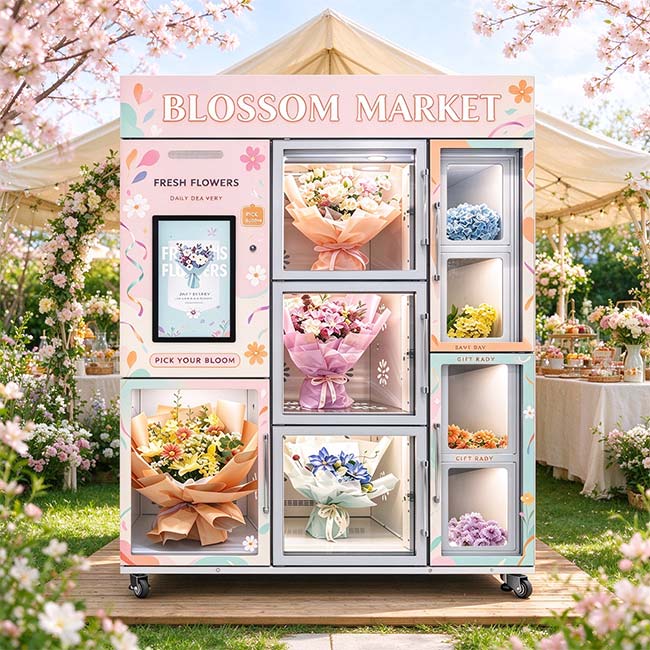
A flower vending machine is a small refrigerated shop that works 24 hours a day. It also leaves less room for error than a snack machine, because the product inside is still alive and aging with every hour.
The most common problems with flower vending machines are temperature and humidity failures, jammed dispensing slots, payment errors, condensation on the glass, and restocking routines that leave stock sitting too long. Most of these problems are preventable with a weekly checklist, a remote temperature alert, and a restock cycle matched to demand.
Start With a Simple Diagnosis
Before you open the service door, sort the failure into one of three buckets: environment, hardware, or operations. Environment problems show up as wilted flowers, fogged glass, or warm air. Hardware problems show up as stuck slots, locks that will not release, or payment terminals that ignore customers. Operations problems show up as old stock, empty slots, or a machine in a location that sells nothing.
This table gives the quick path from symptom to fix.
| Symptom | Likely cause | Quick fix |
|---|---|---|
| Flowers look tired within a day | Temperature too warm or stock was already old | Check the display reading, rotate stock, and keep the cabinet near 2 to 8°C |
| Glass fogs up or water pools inside | High humidity, blocked drain, or a worn door seal | Wipe the seal, clear the drain line, run the anti-fog cycle |
| A slot does not unlock after payment | Lock relay, door sensor, or a jammed bouquet | Use the service menu to test the lock, then clear the shelf track |
| Card or QR payment fails | Dirty reader, weak signal, or outdated terminal settings | Clean the reader, check the connection, update payment settings |
| The machine is offline in the app | Network failure or power interruption | Reboot the controller, check the antenna, set a local alarm |
Temperature and Humidity Failures
Cut flowers need cold, steady air. If the compressor cannot keep the cabinet cool, ethylene gas builds up, petals soften, and stems lose water. The usual culprits are dirty condenser coils, a worn door seal, a failing thermostat sensor, or airflow blocked by overfull slots. Start with the cheap fixes: clean the coils, check the seal, and make sure air can move between compartments.
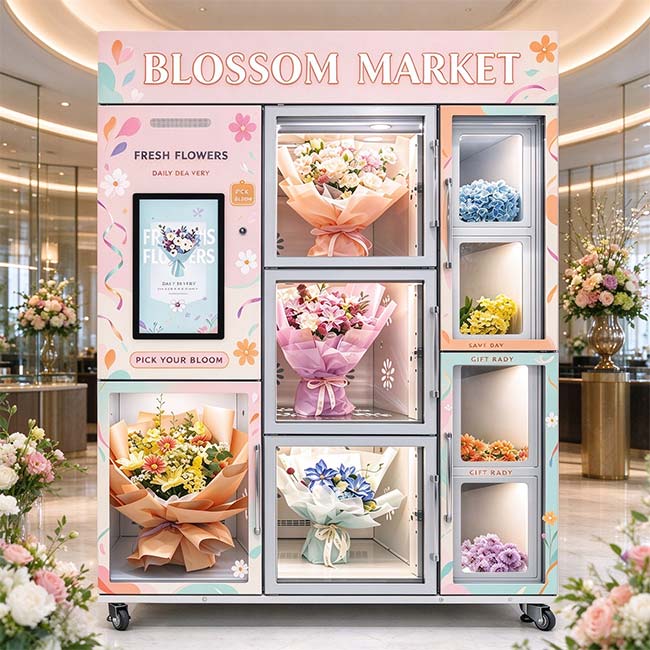
Humidity deserves the same attention. Condensation on the glass is an eyesore and a freshness problem. The droplets land on the wrapping, weaken the stems, and speed up mold. An electric anti-fog system keeps the display clear, but the drain line still needs a regular wipe-down.
Power loss is the third silent killer. A short outage leaves the compressor off long enough to warm the cabinet, and the flowers age even when they look fine. A temperature alarm tells you when to move stock into a cold room.
Why Flowers Wilt in Vending Machines
Flowers keep respiring after harvest, and they release ethylene gas inside a closed cabinet. That gas accelerates aging, especially when temperatures drift upward. Wrapped bouquets also lose moisture through stems unless they sit in water picks or florist tubes.
Choose flowers that tolerate machine life. Roses, lilies, sunflowers, carnations, and chrysanthemums hold up well. Delicate novelty arrangements with loose petals or very tall stems cause more spoilage and more jams.

Restocking is the real freshness lever. A machine that is topped up without rotating stock builds a backlog of old bouquets. In the quiet season, once a week may be enough. In gifting peaks, budget for two or three visits per week.
Spoilage varies by climate and restock discipline. In our field experience, machines with weak cooling lose 8 to 15 percent of stock, while a stable refrigerated unit with proper rotation keeps losses below 5 percent. A typical scenario is the mall pilot that lost close to 30 percent of a batch because a thermostat sensor failed and the cabinet sat at 16°C for two days; the problem only showed up when staff opened the wilted stock. Another common case is the hospital operator who cut losses sharply by restocking single stems daily and setting a temperature alarm. Both point to the same habit: watch the temperature, move the stock.
Dispenser and Jam Problems
Bouquets are not uniform cans. A sleeve of wrapping paper can catch on a shelf guide, and stems can block the lock mechanism. The easiest fix is packaging discipline: use one standard width, trim stems to a common length, and never stuff an extra bouquet into a slot.
Clean the dispense track and shelf guides every week. Petal and leaf debris is surprisingly good at jamming moving parts. Most machines include a service mode that opens the lock or door so you can clear the jam without pulling the cabinet.
If a customer reports a stuck slot, check the lock sensor before blaming the whole machine. The individual lock on the purchased compartment should release once payment clears. When it does not, the issue is usually a dirty sensor or a small piece of debris.
Payment System and Card Reader Glitches
Impulse buyers do not wait for a reboot. Dirty card readers, weak mobile signals, and outdated payment settings cause the most abandoned carts. Wipe the reader daily, check the terminal connection, and keep the payment platform updated. Have a refund process ready for the moment a customer pays but the slot does not open.
Connectivity and Remote Monitoring Blackouts
When a machine goes offline, you lose the two things that protect flowers: temperature visibility and stock visibility. A remote alert should cover temperature drift as well as low inventory. If the cellular module fails, a local service menu and a scheduled site visit still keep you in control.
Location Mistakes and Seasonal Demand
A busy street is not always a gifting street. Flower machines do well near supermarkets, hospitals, hotels, transit stations, and office lobbies, where people remember a gift at the last minute. Before signing a site, watch foot traffic for a few days. Ask whether people are carrying bags, walking with purpose, or already buying small gifts. That context matters more than raw visitor counts.
Demand swings hard. Valentine’s Day and Mother’s Day can sell out a 24-slot machine in a day, while ordinary weeks may move only a few bouquets. Plan inventory around the calendar and keep slow-season stock small. If you are new to vending, our starter guide for a vending machine business covers site selection and the first steps.
Vandalism, Theft, and Power Outages
Flower machines attract attention. Sealed, individually locked compartments limit theft because only the purchased slot opens. If someone forces a door, the damage stays in one compartment and the rest of the stock stays safe.
Power failures are more about freshness than theft. A UPS can keep the touchscreen and control board alive, but it will not run a refrigeration compressor for long. In areas with regular outages, keep a cooler or cold room available and move the stock when the alarm goes off.
Maintenance Checklist and Service Costs
Most breakdowns arrive in stages. A monthly cleaning routine prevents the compressor from working too hard, keeps readers sensitive, and stops debris from reaching the moving parts.
| Frequency | Task |
|---|---|
| Daily | Wipe the card and QR reader, check the on-screen temperature. |
| Weekly | Rotate stock, remove debris, clean the glass, inspect door seals. |
| Monthly | Clean condenser coils, test every slot with a trial vending cycle, clear the drain line. |
| Quarterly | Have a refrigeration technician inspect the compressor, thermostat, and airflow. |
Repair pricing varies by country and technician. Use these ranges as a planning tool, not a fixed quote: thermostat sensor replacement runs roughly $50 to $150, a door lock or latch $80 to $200, card reader service $60 to $150, and compressor work $300 to $700.
Most of that cost is avoidable. Clean condenser coils, check seals, and remote monitoring do more for reliability than any single repair.
What to Look for in a Flower Vending Machine
If you are buying a machine, make sure the design prevents common failures from the start. Make sealed slots, anti-fog glass, air-cooled refrigeration, and a remote dashboard standard items on your checklist.

Wider Matrix flower vending machines come in 9 models with 5 to 24 slots. They hold a 2 to 25°C freshness zone, use an electric anti-fog system, and lock each compartment individually. The cabinet uses one-piece polyurethane foam insulation for stable temperature, and the machines carry CE, FCC, RoHS, SGS, and ISO 9001 certification. The company has exported more than 3,000 machines to over 130 countries since 2016, which matters when you need spare parts or technical support later. For the broader cost picture, including the price guide for different vending machines, see our vending machine price guide.
Factory-direct pricing for the flower machines is roughly $3,000 to $6,500 per unit depending on slot count and payment options. The same factory audit questions apply to other equipment too; our guide to choosing a vending machine supplier in China is a useful checklist for any operator.
Keep It Simple: Prevent Before You Repair
Most common problems with flower vending machines are warning signs that build slowly. Wilting starts one hour after the temperature drifts. Jams start with one overstuffed slot. Payment failures start with a dirty reader. You can fix all of them with a cleaning cloth, a service mode, and a temperature alert.
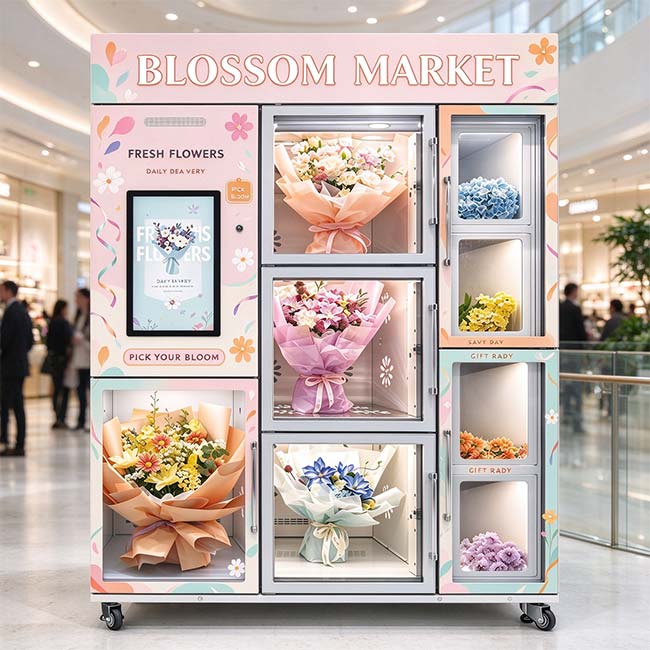
Set the routine before the season gets busy: monitor temperature remotely, restock on a fixed schedule, clean the high-touch surfaces every day, and test each slot weekly. That is the shortest route to a machine that sells flowers instead of problems.
Frequently Asked Questions
What temperature should a flower vending machine be?
Keep the cabinet at the cooler end of its range, ideally near 2 to 8°C for cut flowers. Most flower machines are designed for a 2 to 25°C range, but you do not want to run them warm unless the product needs it.
How often should I restock a flower vending machine?
Plan once a week in normal periods and two or three times a week around gifting peaks. Rotate old stock to the front and check each bouquet for wilting before loading it.
What is the most common cause of flower wilting in a vending machine?
Temperature drift and old stock. A failing thermostat or dirty condenser raises the cabinet temperature, and flowers that stay in the machine too long age even when the temperature is correct.
Can I fix jams and payment errors myself?
Most minor jams, dirty readers, and lock sensor issues can be handled with the service menu and basic cleaning. Compressor and electrical work should be left to a qualified technician.
Are flower vending machines profitable?
Profitability depends on location and restocking discipline. A machine in a steady foot-traffic spot can sell 10 to 30 bouquets a day with strong margins, but a poorly placed machine will sit quiet. Start with site selection and a machine that sends remote alerts.