

If you have walked through a shopping mall or an amusement park in the last couple of years and spotted a machine spitting out inflated balloons on demand, you are not the only one paying attention. Balloon vending machines are going into more locations than most people realize, and they are catching the eye of operators who want something different from the usual snack-and-soda route.
But getting a straight answer on pricing, finding a supplier that delivers, and figuring out whether these machines make real money is harder than it should be. A lot of manufacturer websites hide the numbers. Alibaba listings show one price in the headline and a different figure when you ask. And the people who run these machines day to day rarely post their numbers online.
This article pulls together what we know about balloon vending machines in 2026: the current prices, the suppliers worth talking to, and the realistic profit picture. We will also look at how they compare to other vending categories and why Wider Matrix, a manufacturer that has shipped machines to more than 20 countries, keeps showing up in discussions about vending equipment that makes money.
What a balloon vending machine does
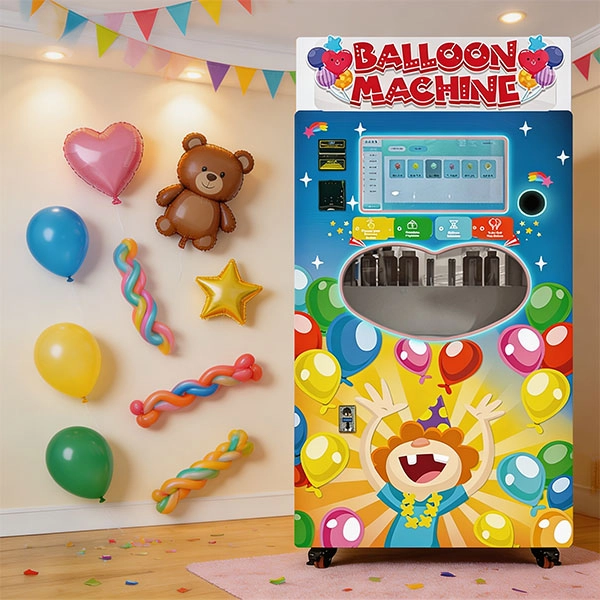
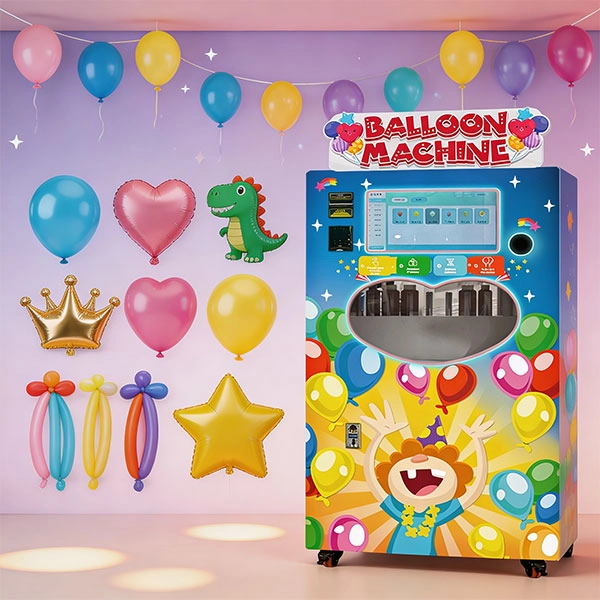
Most balloon vending machines work on a simple principle. A customer picks a balloon type or design on a touchscreen, pays with a card or phone, and the machine inflates and seals the balloon inside a clear compartment before dropping it into the collection bin. The whole thing takes 30 to 90 seconds depending on the model.
There are a few different categories on the market right now:
- Helium balloon machines. These use a helium tank inside the machine to inflate latex or foil balloons. Helium costs have gone up and down over the last few years, which makes the operating math trickier than it used to be. Some operators report helium as their single biggest consumable expense.
- Air-filled balloon machines. These skip helium entirely and use a small air pump instead. The balloons do not float, but they are cheaper to produce and the machine itself is simpler. A few manufacturers have started bundling sticks and clips so the balloon still looks presentable when a kid carries it around.
- Balloon twisting and shaping machines. A smaller category. These use a robotic arm or a series of automated steps to twist balloons into animal shapes or simple figures. They cost more upfront and need more maintenance, but they also charge a higher price per balloon. Think $5 to $8 instead of $2 to $3.
The machines that show up most often in malls, family entertainment centers, and arcades are the helium and air-filled types. Full twisting robots are still rare and mostly in theme parks or high-end tourist spots.
How much does a balloon machine cost?
This is the question that brings most people to the search results, and the answer depends on what kind of machine you are looking at and where you are buying from.
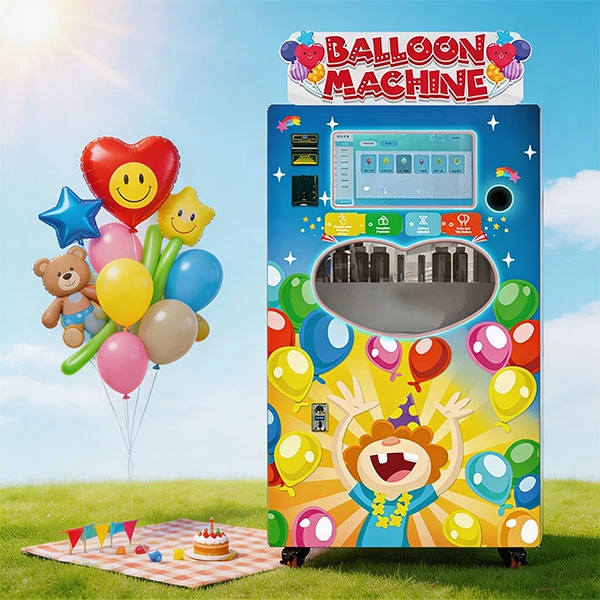
Based on current listings and conversations with operators, here is the rough breakdown for 2026:
- Entry-level air-filled machines: $2,500 to $4,500. These are the simplest models. Usually made in China, shipped from a handful of factories in Guangdong. They handle one or two balloon types and run on a basic PLC control system. Expect a smaller touchscreen, fewer payment options, and less inventory capacity.
- Mid-range helium or dual-mode machines: $5,000 to $9,000. These can handle both helium and air-filled balloons, or they come with a larger helium tank and more capacity. The build quality is noticeably better on these units. Payment systems usually include Nayax or similar card readers out of the box.
- High-end robotic balloon machines: $12,000 to $20,000 and up. These are the ones that twist, shape, or do something more complex than just inflating. The market for these is small. A few Japanese and Korean manufacturers lead this category, and the lead times are long.
One thing to watch for: some suppliers quote a price that does not include the helium tank, the payment system, or shipping. By the time you add those in, a “$4,000 machine” can turn into a $7,000 landed cost. Always ask for the all-in price with freight, payment hardware, and the first batch of consumables before you compare quotes.
For a broader look at machine pricing across categories, Wider Matrix has a detailed breakdown of vending machine costs that covers not just the sticker price but the real cost of getting a machine up and running.
Are balloon vending machines profitable?
A balloon vending machine in a decent location can pull in $800 to $2,000 a month in gross revenue. The per-unit cost to produce a balloon, including the balloon itself, helium if used, and a small amount of electricity, runs somewhere between $0.30 and $1.20. The selling price is usually $2 to $5 per balloon. That math looks good on paper.
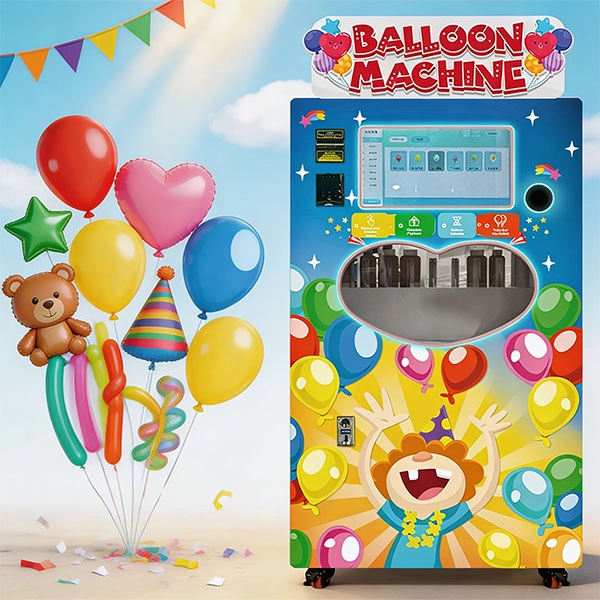
But margin on one balloon is not the full picture. The monthly net after rent, helium refills, maintenance, and the occasional service call is what matters. Operators who run these machines consistently point to a few things that make or break the numbers:
- Location rent. A busy mall spot might charge $300 to $600 a month just for the floor space. A family entertainment center might ask for 20% to 30% of revenue. That changes the math fast.
- Helium price swings. Helium is not a commodity with a stable price. Supply disruptions happen, and when they do, the cost of filling a balloon can double. Operators who run air-filled machines or hybrid models have more predictable costs.
- Machine downtime. A jammed balloon, a clogged nozzle, a payment reader that stops working. These things happen. If you cannot get to the machine within a day or two, those lost sales add up.
Wider Matrix has published a deeper analysis on whether balloon vending machines are profitable, and the short version is that they can be, but the operator matters more than the machine. The same unit in two different locations with two different owners can produce completely different results.
If you are still in the research phase and want to know where to find a balloon vending machine, start with trade shows and direct manufacturer inquiries rather than general marketplaces. The quality difference between a factory-direct machine and a resold unit with no support is significant.
What type of vending machine is the most profitable?
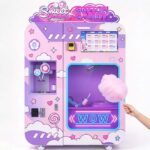
This question gets asked constantly, and the answer shifts depending on what you measure. If you look at gross margin per transaction, cotton candy machines and custom puzzle vending machines tend to come out on top. Both turn low-cost raw materials into a product that sells for $5 to $15.
If you look at total revenue per machine per month, food vending machines, especially pizza and ice cream machines in high-traffic areas, can hit $3,000 to $5,000 a month. But they also have higher operating costs, more spoilage, and more maintenance.
Balloon machines sit somewhere in the middle. They are not the highest-margin category, and they are not the highest-revenue. Their advantage is that they are easy to explain to a location owner, they appeal to kids and families, and they do not require daily restocking. A balloon machine can run for a week or two between refills if the helium tank is large enough.
One category that more operators are looking at is the custom jigsaw puzzle vending machine. These machines print a personalized puzzle on demand, usually from a photo the customer uploads on the spot. The consumable cost is low, the perceived value is high, and the machine itself is a novelty that draws foot traffic. Wider Matrix manufactures the WM520 puzzle vending machine and the newer WM520+, both of which print a full custom puzzle in about three minutes. The consumable cost per puzzle runs between $0.80 and $1.20, and the selling price is typically $9.90 to $20. That is a margin structure that beats most balloon machines.
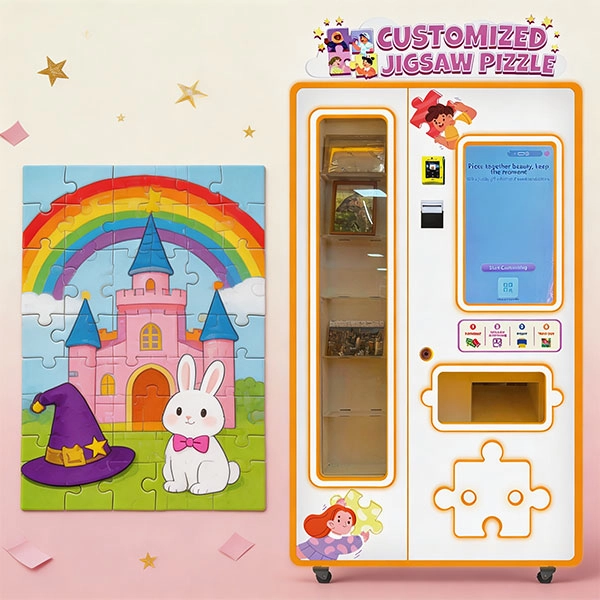
If you are comparing categories, look at the jigsaw puzzle making machine price alongside balloon machine quotes. The upfront cost is similar, but the long-term margin picture can be different.
Is vending machine owning a profitable business in 2026?
The short answer: yes, but it depends less on the year and more on the machine, the location, and the operator.
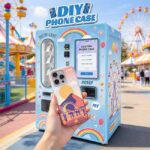
The vending industry has been shifting. Traditional snack and drink machines still work, but the margins are getting squeezed by inflation on the product side and resistance to price increases on the customer side. The machines that are doing well in 2026 are the ones that make something on the spot: a custom phone case, a personalized puzzle, a fresh cotton candy, a balloon animal. Customers pay more because they are buying an experience and a custom item, not a bag of chips.
Wider Matrix has been in this space for years, and their product line reflects where the market is going. The custom jigsaw vending machines they produce, along with phone case printers, cotton candy robots, and popcorn machines, all share the same logic: low consumable cost, high perceived value, and a show that attracts attention in a crowded retail environment.
If you are thinking about starting a vending machine business in 2026, the first decision is not which machine to buy. It is where you are going to put it. A great machine in a bad location loses money. A decent machine in a great location prints cash. The location hunt should start before you pay for anything.
How many vending machines do you need to make $100k?
This is a question that comes up a lot on forums and in YouTube comments, and the answer is not a clean number. It depends on what each machine makes and how much of that stays after costs.
Here are the rough numbers. If a single machine nets $500 a month after rent, consumables, and maintenance, you would need about 17 machines to hit $100,000 a year in profit. If each machine nets $1,000 a month, you need 8 or 9. If you are running high-margin custom machines like the WM520 puzzle vending machine and netting $1,500 to $2,000 a month, you might only need 4 to 6 machines to clear six figures.
The real constraint is not the number of machines. It is the number of good locations you can secure and the time you can spend servicing them. Wider Matrix has a detailed breakdown on how many vending machines you need to make $100k that goes deeper into the math with different machine types and revenue scenarios.
Most operators who hit six figures do it with a mix of machine types in a mix of locations. A few balloon machines in family entertainment centers, a couple of puzzle machines in malls, maybe a cotton candy robot at a tourist spot. Diversifying across categories makes the income more stable and reduces the risk of a single machine type or location type going soft.
Finding balloon vending machine suppliers
There are three main places to find balloon vending machine suppliers in 2026:
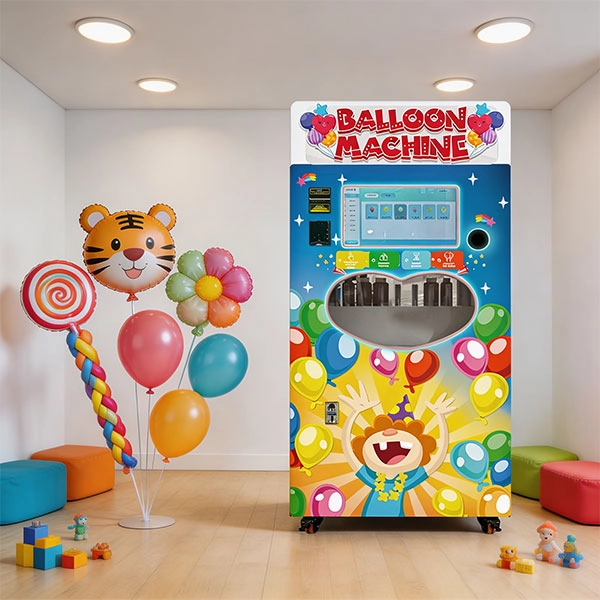
Direct from Chinese manufacturers. Most balloon vending machines are made in Guangdong, China. You can find them on Alibaba, Made-in-China, and through direct factory websites. Prices are lower, but support is uneven. Some factories are excellent. Others will disappear after you wire the payment. If you go this route, use a trade assurance order, ask for a video call showing the factory floor, and talk to at least two previous buyers before you send money.
Through vending machine distributors. A handful of companies in the US, UK, and Europe import these machines, add local payment systems, and resell them with a warranty and support. You pay a markup, but you also get someone to call when the machine breaks. For a first-time operator, this is usually the safer path.
Trade shows. The IAAPA Expo, the NAMA Show, and smaller regional vending expos are where you can see the machines in person, talk to the people who built them, and sometimes negotiate better pricing than what is listed online. Wider Matrix regularly exhibits at these events, and their vending machines range from cotton candy robots to custom puzzle printers and phone case vending units.
When you are comparing suppliers, ask these questions before you commit:
- What is the all-in price including shipping, payment hardware, and the first batch of consumables?
- What is the warranty period and what does it actually cover?
- Do you have a remote monitoring system so I can check sales and inventory from my phone?
- How do I get replacement parts, and how fast do they ship?
- Can you connect me with two current operators who run this machine?
A supplier who dodges any of these questions is probably not someone you want to wire money to.
What Wider Matrix brings to the table
Wider Matrix is a vending machine manufacturer based in China with a global footprint that includes machines in the US, Canada, the UK, Germany, France, Poland, Australia, India, Israel, Dubai, and more than a dozen other countries. Their product line covers custom jigsaw puzzle vending machines, phone case printing machines, cotton candy robots, popcorn machines, ice cream machines, and pizza vending units.
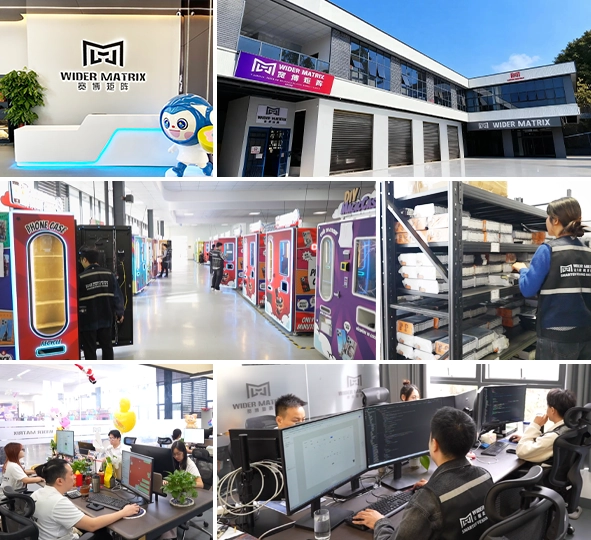
What sets them apart from the average Alibaba supplier comes down to a few things:
- Cloud monitoring across the lineup. Their machines use the SRRS remote monitoring system, which lets operators check sales, inventory levels, and machine status from a phone. For someone running multiple machines across different locations, this is not a nice to have. It is the difference between knowing a machine is out of stock today versus finding out when you drive to it next week.
- AI features that work. The WM520+ puzzle vending machine, for example, uses AI image optimization to adjust contrast, sharpness, and color balance before printing. The machine also has predictive maintenance alerts. These are not gimmicks. They reduce waste and keep the machine running.
- OEM and customization. Wider Matrix offers full customization on machine exteriors, UI language, and even the vending software. If you want a machine wrapped in your brand colors with your logo and a custom payment flow, they can do it.
Their jigsaw puzzle vending machine line, particularly the WM520 and WM520+, is getting attention from operators who want something that is not yet saturated in most markets. The WM520+ prints at 1748 by 2480 dpi on German blue card stock using a 6-color F1080 print head, and the whole process takes about three minutes from photo upload to finished puzzle. The machine holds up to 208 puzzles and 140 photo frames at a time. Pricing starts at $5,500 for the WM520+ and $5,550 for the original WM520.
For operators who are looking at balloon vending machines but want to understand the full range of what is available, Wider Matrix is worth a look. Their product catalog covers more ground than most single manufacturers, and the fact that they have shipped to over 20 countries means their machines have been tested across different power standards, payment systems, and customer expectations.
If you want to talk pricing, lead times, or customization options, their contact page is the fastest way to get a direct response.
What to do next
If you are serious about buying a balloon vending machine, here is a practical sequence that will save you time and money:
- Lock down a location first. Walk into malls, family entertainment centers, arcades, and tourist spots. Ask the manager what they would charge for a small floor footprint. Get a number in writing or at least in an email. Without a location, a machine is a very expensive paperweight.
- Once you have a location and know the rent, work backward. If the rent is $400 a month and you sell balloons at $3 each with a $0.50 cost per unit, you need to sell about 160 balloons a month just to cover rent. Is that realistic in that location? If the foot traffic is there, the math usually works. If the location is dead on weekdays, reconsider.
- Get quotes from at least three suppliers. Ask for the all-in price with shipping, payment hardware, and the first batch of consumables. Compare not just the price but the warranty, the support, and whether they have a remote monitoring system.
- Check the price of a balloon vending machine against alternative categories. A $5,500 balloon machine and a $5,500 puzzle vending machine are the same upfront cost, but the ongoing margin structure and the competition level in your area might tip the decision one way or the other.
- If you are in the US or Europe, factor in at least $500 to $1,000 for compliance, permits, and any electrical or safety certifications your location requires. This is not optional, and it is not included in most factory quotes.
The balloon vending machine market is real, and people are making money with it. The operators who do well are the ones who treat the machine purchase as step two, not step one. Step one is finding the right spot, running the numbers honestly, and picking a supplier that will still answer the phone six months after you pay them.
For anyone who wants to explore the broader vending market before committing to a single category, Wider Matrix has a blog with operator case studies, location strategy guides, and product comparisons that are worth reading before you write a check.