
Your phone case keeps slipping off the shelf. The designs customers want aren’t available, or they cost $30+ from branded stores. Meanwhile, the margins on custom cases are real—US$15-20 retail for a regular case that costs you under US$2 to produce. The gap between what people will pay and what it costs to make is where the money is.
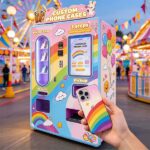
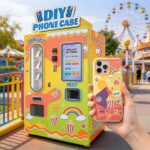
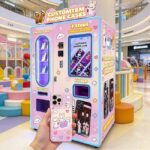
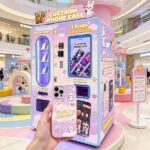
An automatic mobile cover printing machine solves this. It’s a self-service kiosk that prints custom phone cases in 1-3 minutes, runs unattended 24/7, and handles the entire workflow from design upload to product dispensing. With the right equipment, your unit cost sits around US$1.35 per regular case, and you sell them at market price. The return period is measured in weeks, not months.
How Automatic Phone Case Printers Work
The process is straightforward. A customer selects their phone model at the kiosk, uploads or chooses a design, completes payment, and receives their printed case within minutes. The machine handles ink application, curing, quality checking, and product dispensing without human intervention.
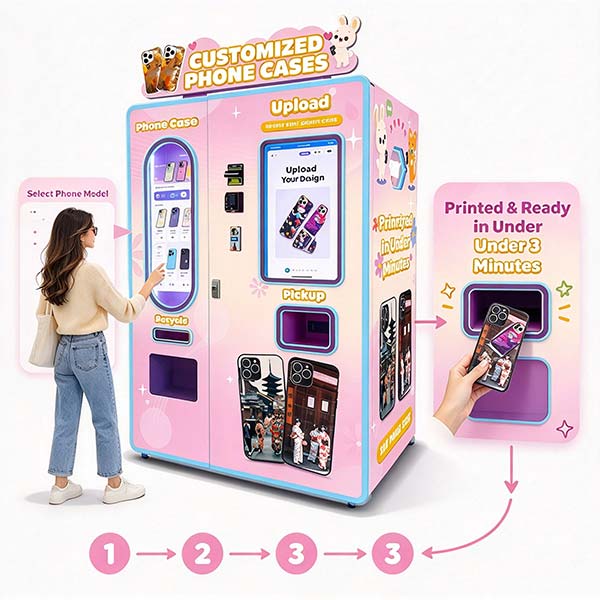
The core technology is UV printing. Ultraviolet light cures the ink instantly as it’s applied, creating durable, scratch-resistant prints that won’t fade or peel. This is what differentiates these machines from older thermal transfer methods. The prints survive daily use—keys in pockets, bag rummaging, washing machine incidents (don’t ask how we know).
Most modern units hold 1,000+ empty cases and 2,000ml of ink, enough for approximately 2,000-2,500 prints before refilling. That’s the capacity you’re working with. Some models use F1080 printheads, others use i1600u1. The difference shows up in print speed and resolution, but both deliver commercial-grade output.
Investment Returns and Cost Breakdown
Let’s talk numbers, because that’s what matters when you’re evaluating whether this business makes sense.
Equipment Pricing
| Product Model | MSRP | Current Price | You Save | Key Features |
|---|---|---|---|---|
| WM880 (i1600u1) | US$5,999 | US$1,501 | High-speed UV printing, auto inventory refresh | |
| WM880 (F1080) | US$4,999 | US$1,251 | Budget-friendly, same print quality |
Per-Unit Economics
| Case Type | Production Cost | US Retail Price | EU Retail Price | Profit Margin |
|---|---|---|---|---|
| Regular TPU+PC | US$1.35 | US$15-20 | €12-15 | ~90% |
| Magnetic | US$2.35 | US$30+ | €25-30 | ~92% |
The math is simple. A regular case costs you US$1.35 to produce (US$1.30 for the empty case plus US$0.05 for ink). You sell it for US$15-20 in the American market. That’s a US$13.65-18.65 profit per unit.
Return on Investment Timeline
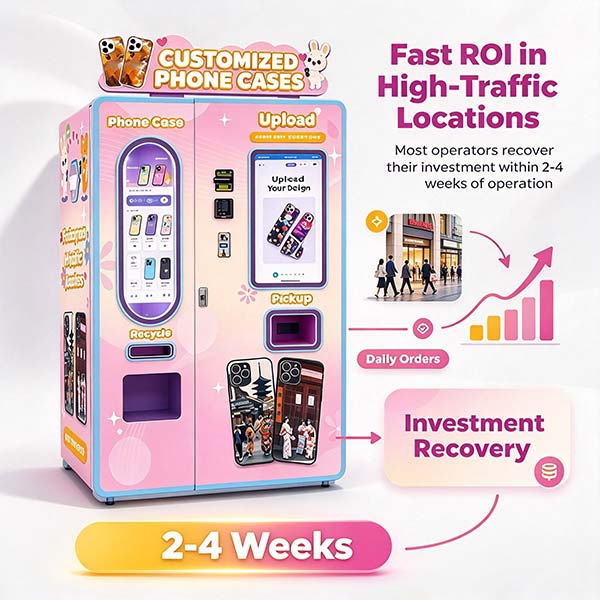
At 30-50 cases sold per day—a realistic target for a high-traffic location—the daily revenue sits at US$450-1,000 depending on case mix. After accounting for production costs, you’re netting US$405-900 daily.
A WM880 at US$4,999 pays for itself in roughly 6-12 days of operation at conservative estimates. Even factoring in maintenance, occasional downtime, and location fees, most operators see full ROI within 2-4 weeks. That’s not theoretical—it’s what the actual customer base generates once the machine finds its spot.
What Makes These Machines Different
Not all phone case printing kiosks operate the same way. There are specific design choices that separate reliable equipment from the rest, and they show up in your operating costs.
Refill time is one area where machines vary dramatically. Competitor models can take hours to reload case inventory. Our systems use an easy-refill slot structure that takes just minutes. When you’re paying rent for floor space and losing revenue during downtime, this matters.
Inventory tracking is another. Manual data entry is error-prone and tedious. Automatic inventory refresh means the machine knows what it has without you feeding it numbers. It also recognizes printing areas automatically, eliminating blank spaces or misprints that waste materials and frustrate customers.
The operating assistant feature pulls historical sales data and recommends which phone models and designs perform best in your location, plus when to reorder consumables. This isn’t theory—these recommendations come from aggregated data across 3,000+ machines shipped to 130+ countries.
Where to Place Your Machine
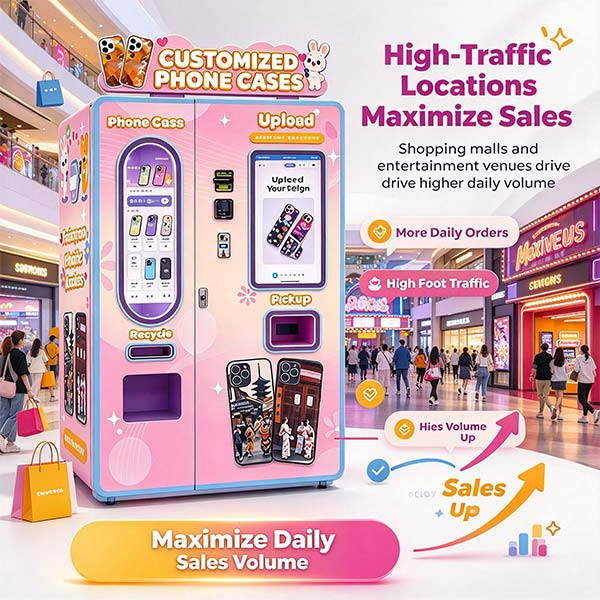
Location determines whether you hit 30 cases per day or 300. The best spots share certain characteristics: high foot traffic, demographics willing to pay for customization, and environment where people have time to wait 2-3 minutes.
Shopping malls and retail complexes are the standard recommendation. They concentrate your target audience—young adults, tourists, gift shoppers—in a controlled environment. University campuses work similarly, with students seeking personalized accessories for their phones.
Entertainment venues—arcades, movie theaters, amusement parks—capture impulse buyers. People waiting in line or passing between activities are more likely to stop and customize a case than someone rushing to catch a train.
Hotels and airports serve a different but valuable segment: travelers looking for souvenirs or protective cases after discovering their phone is unprotected. The margin per case might be slightly lower here, but the volume compensates.
Customer Success Story
Marcus opened a phone case kiosk in a mid-size mall in Texas after researching the market for three months. His concerns were standard: Will people actually use this? Is the ROI real or just marketing? What happens when something breaks?
He chose the WM880 F1080 at the promotional price and placed it near the food court, where foot traffic peaks between 12 PM and 8 PM. Within the first week, he moved 47 cases. By month two, he was averaging 38 per day across a 7-day week.
His biggest insight came from the operating assistant’s data recommendations. It flagged that magnetic cases outsold regular ones 3:1 in his location, despite the higher production cost. He adjusted his inventory mix accordingly, and gross margins improved by 18% within the first month.
The machine paid for itself in 11 days of actual operation. Marcus’s current complaint isn’t about ROI—it’s about finding better locations for a second unit.
Technical Specifications and Certifications
Quality standards matter when you’re investing in equipment that runs unattended in public spaces. The machines we supply carry CE, UKCA, RoHS, KC, BRC, Kosher, and HALAL certifications. These aren’t decorative—they reflect compliance with safety, environmental, and operational standards across major markets.
The warranty covers one year on parts and components, with free air shipment for non-human damage replacements. The packaging includes tools and spare parts because breakdowns shouldn’t mean waiting weeks for a technician. YouTube tutorials walk you through common procedures, and our engineering team runs 24/7 support across three shifts.
Software updates are included. The operating assistant learns from each transaction, improving its recommendations over time. This isn’t a static system—it gets better the longer it runs.
Frequently Asked Questions
How long does it take to print a single phone case?
Most machines complete a full print cycle in 1-3 minutes, depending on design complexity and case type. The actual printing portion is fast; the total time includes selection, payment processing, and dispensing.
What types of phone cases can the machine print?
Standard TPU and PC cases, magnetic cases, and transparent designs. The machine recognizes the printing area automatically, so case orientation doesn’t matter. If it fits in the loading bay, it can be printed.
Do I need technical skills to operate the machine?
No. The interface is designed for unattended operation. Customer-facing screens guide users through selection and payment. Refills take minutes, and the system alerts you when consumables are running low.
What’s the expected lifespan of the equipment?
With normal use, these machines operate reliably for 5+ years. Printheads are replaceable, and spare parts are stocked in the original packaging. Regular maintenance—cleaning printheads, checking ink levels—keeps performance consistent.
How does Wider Matrix support international buyers?
Wider Matrix, the company behind these machines, ships to 130+ countries and provides installation training, deployment planning, operational training, and ROI calculation reports. Their engineering team offers 24/7 technical support, and spare parts ship free for covered issues.
Can I customize the machine’s appearance?
Yes. The external casing accepts custom branding and graphics. This matters if you’re placing units in branded environments or want them to match your business identity rather than look like generic equipment.
What payment methods are accepted?
Most units support credit/debit cards, mobile payments, and QR code scanning. Integration depends on your location’s payment infrastructure, but the systems are designed for the payment options available in your market.
Is there a minimum order quantity for the machines?
No minimum for equipment purchases. Consumables like empty cases and ink have volume pricing tiers—the more you buy, the lower the per-unit cost. At 1,000+ cases, the price drops to US$1.30 per regular case.
Related Topics
Getting Started
The automatic mobile cover printing machine market has moved past the novelty phase. What once seemed like a gimmick now operates as a legitimate revenue stream in locations worldwide. The barrier to entry is the equipment cost, which has dropped significantly as competition increased and technology matured.
At current pricing, the math works even at conservative sales estimates. The real variable is location quality—no machine converts empty space into sales. Evaluate foot traffic patterns, demographic fit, and dwell time before committing to a site.
For detailed specifications, pricing, or deployment planning, contact Wider Matrix. They’ve shipped 3,000+ machines across 130 countries and provide full support from installation through ongoing operations.