


If you have walked through a mall in the last couple of years and stopped to watch a machine spin a pink cloud onto a stick, you already know what an automatic cotton candy vending machine is. The question most people ask next is practical: how much does one cost, and can it actually run as a business? This article answers both with numbers you can check yourself.
What an automatic cotton candy vending machine actually is
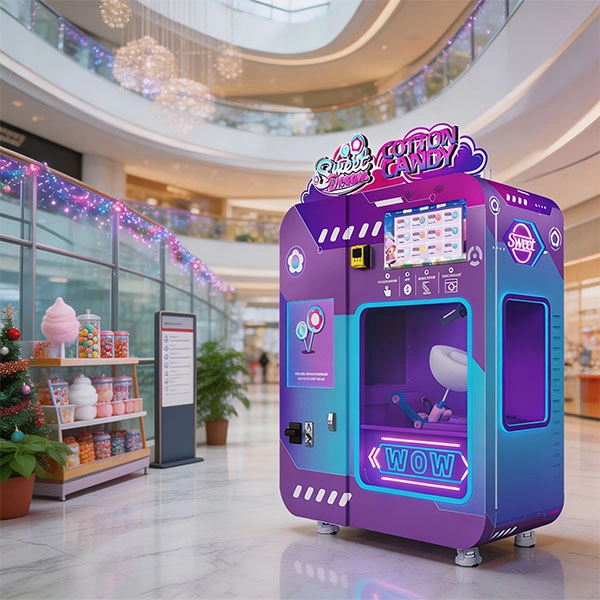
An automatic cotton candy vending machine is a self-contained unit that makes cotton candy from sugar and hands it to a customer with nobody operating it. The machine this article focuses on, the WM980 from Wider Matrix, is built around a 4-DOF robotic arm. That arm replaces the person who used to swirl a paper cone through the sugar floss by hand.
The unit measures 132 × 195 × 67 cm and weighs 300 kg. It draws 500W when idle and 3000W while making candy. Payments go through coin, cash, credit card, or NFC, so it works in places where people do not carry cash.
Nothing about this machine is small or light. That matters for delivery, for the floor where you place it, and for the power outlet it needs. A standard wall socket handles the load, but the weight means you want a ground-level spot with room to move it in.
How the machine turns sugar into cotton candy
The process looks simple from the outside, and it is more involved than it appears. A customer picks one of 36 designs on the touchscreen, pays, and the machine does the rest. Inside, the burner heats the sugar until it spins into fine threads. The robotic arm then wraps those threads around a stick, following the pattern that was selected.
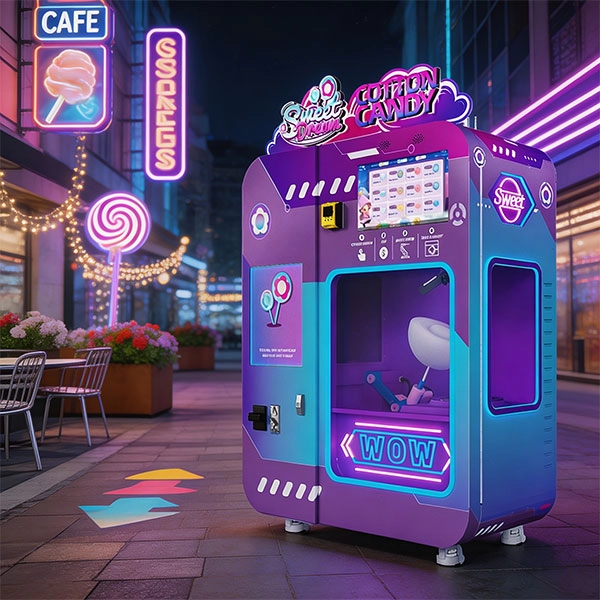
The burner is the part that wears out on cheaper machines. Wider Matrix added an auto-cleaning and humidify cycle that keeps residue from burning onto it, which is the main reason these units last longer than the fairground machines you see at events. The shaping knife is non-stick, so the arm can form flower, mushroom, heart, and cloud shapes without candy sticking to the tool.
Each candy uses 28 to 30 grams of sugar. That number matters more than any other spec on the sheet, because it sets your cost per sale.
The machine runs unattended around the clock. Software updates arrive over the air, so you do not pay a technician to come out and flash new firmware. The display screen doubles as an ad board, which is a second income stream if you sell the slot to a local brand.
The sugar matters more than you think
Cotton candy sugar is not the same as the sugar in your kitchen. The granules are 1.2 to 1.7 mm, they come in six colors, and they are formulated to spin without leaving powder residue inside the machine. Wider Matrix sells six flavors: milk, banana, strawberry, blueberry, apple, and grape.
The price of the sugar is where the margin lives. Bags run:
| Quantity | Price per bag |
|---|---|
| 96 bags | US$3.25 |
| 480 bags | US$3.00 |
| 1,008 bags | US$2.85 |
| 2,004 bags | US$2.75 |
Paper sticks cost US$0.050 each at 2,000 pieces and drop to US$0.038 at 100,000 pieces. They are 10 mm in diameter and 300 mm long, with custom printing available from 10,000 pieces.
Do the math on one candy: 30 g of sugar out of a bag, plus one stick. At the small-quantity prices, your consumables cost stays under US$0.15 per candy. At the larger tiers it drops further. What you charge depends on your market, and the profit margin on cotton candy is worth reading before you set a price.
What an automatic cotton candy machine costs
Wider Matrix sells three versions. The WM980, the standard unit, is US$4,800 for one machine. The WM980+ adds an ambient ring light and a stronger metal cabinet, with 3 kg sugar tanks instead of 2 kg, at US$4,999. The WM668 is built for outdoor use with a high-brightness display and a rainproof roof, at US$5,299.
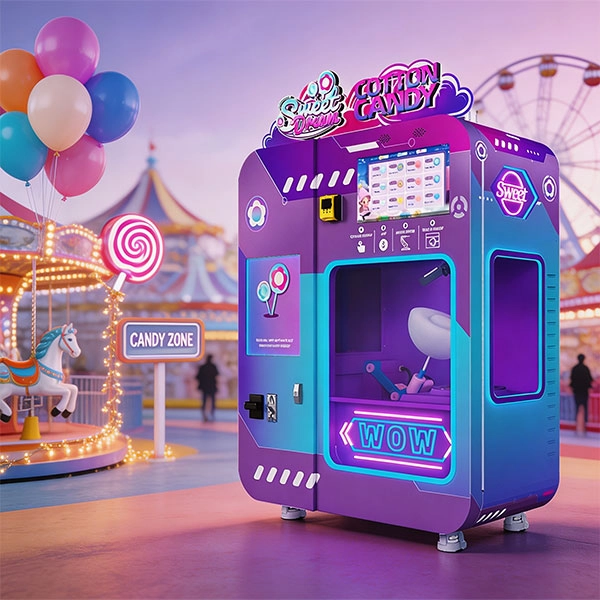
The WM980 ships with four 2 kg sugar tanks. Upgrading to 3 kg tanks adds US$200. Bulk orders get tier pricing, which you negotiate directly with the factory.
Compare that with a staffed cotton candy cart. A cart needs a person for every hour it runs, and that person costs more than the machine in most markets within a year. The machine is paid for once and works 24 hours. That is the whole pitch, and it holds up better in malls and transit hubs than in low-traffic spots.
If you want the full breakdown of what these machines cost and what the price includes, the price guide for automatic cotton candy machines covers it in detail.
Why the Philippines keeps coming up
A large share of the searches for a cotton candy machine in the Philippines comes from operators, not tourists. The reasons are easy to see. Malls in Metro Manila and the provinces run long hours, family gatherings and fiestas buy cotton candy by the batch, and bazaars and school fairs are constant. A machine that works without staff fits those settings better than a rented cart with a hired operator.
That does not mean every location in the Philippines is a good one. Power reliability, import duties, and the cost of sugar delivery vary by region. Ask the factory about shipping to your port and about voltage before you order. What works in a Makati mall may not work in a provincial plaza with different foot traffic.
Where to buy one and what to check first
The WM980 automatic cotton candy vending machine is the model covered in this article, and the cotton candy vending machine collection shows the other versions. Before you order, work through the vending machine manufacturer guide and the supplier guide so you know what to ask.

A short list of questions to put to any seller:
- What is the delivered price to my city, including freight and duties?
- What voltage does the unit need, and does my site have it?
- Who handles repairs, and what does the warranty cover beyond the first year?
- How long does a bag of sugar last at my expected sales volume?
- Can the ad screen be updated remotely, or does someone need to visit?
The bottom line
An automatic cotton candy vending machine replaces a staffed cart with a machine that works around the clock. The WM980 costs US$4,800, uses about 30 g of sugar per candy, and earns back its price through sales and optional ad revenue. It is not a passive investment: you still refill sugar, replace sticks, and check the machine. But compared to hiring someone to stand behind a cart, the economics are straightforward.
If you are still deciding whether the business model makes sense, read whether a cotton candy vending machine is profitable and the 2025 buying guide, then talk to the factory with the questions above.
How this guide was put together
The specifications, prices, and consumable costs in this article come from Wider Matrix’s published product parameters and their product pages. The profitability discussion is based on standard vending economics and is not a guarantee of results. Your actual return depends on foot traffic, rent, local prices, and operating costs. Verify pricing, shipping, and warranty terms with the seller before you commit.