


Most profit articles on ice cream vending are written by people who have never owned a machine, so they hand you an average revenue figure and call it a day. That number does you no good if your location is a quiet office lobby with twenty visitors a day, or a mall food court with a thousand. What matters is per-cup margin, how many cups your machine can actually turn over, and how fast those two numbers pay back the upfront cost. This guide walks the math on real operators, breaks down exactly where the profit comes from, and shows what a Wider Matrix machine at a decent spot looks like on paper before you risk a cent.
Every month someone lands on this question expecting one clean answer. There is not one. The profit from an ice cream vending machine swings wildly depending on where it sits, what you charge, and how much the machine itself costs you. What I can give you is the math operators actually work with, plus the parts most guides skip because they look at revenue and stop before they reach profit.
Why the revenue-first answer is useless on its own
You will read that an ice cream vending machine can pull in a certain amount per week, or that some operators clear six figures a year. Both can be true. Neither helps you decide if your spot earns enough.
Profit on these machines comes from one number: what is left after you buy the cup, the mix, the toppings, the electricity, the location fee, the maintenance, and the machine’s own depreciation. Nudge any of those up and a location that looked great on a revenue table is suddenly losing money every week.
The useful way to think about it is per cup. Work out your margin on the sale of one soft serve, multiply by the cups a machine can realistically dispense in a day, and you have a number you can compare across locations and machine prices.
Working out your per-cup margin
Take the example of a fully automatic soft serve machine like the Wider Matrix WM550. The machine holds up to 300 cups in a single batch and dispenses one in about fifteen seconds, so the throughput is not the bottleneck at most locations. The real question is what it costs you to put one cup in a customer’s hand.
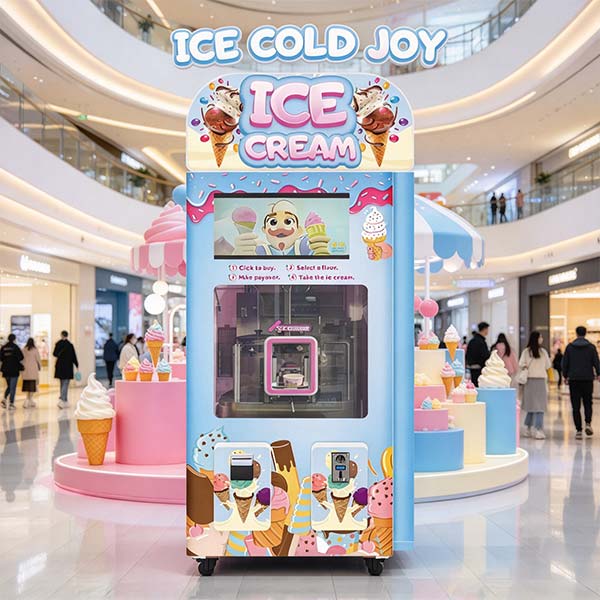
A Wider Matrix 100g cup runs about US$0.12 at volume, or US$0.08 per cup once you order the smaller size in larger quantities. The spoons come in around US$0.03. The soft serve mix, fruit sauces and toppings are your biggest recurring cost and they depend on your supplier and recipe, which is why anyone quoting you a universal margin is guessing.
Set your retail price. If you sell a cup for the equivalent of US$3.50, your mix and consumables might leave you with a gross margin in the range of seventy percent or higher before location fees and power. That margin is healthy, but it only becomes profit if enough cups move.
Where the money actually is
Fresh soft serve works better than most vending categories because the product is something the customer cannot buy elsewhere in the same building. A bag of crisps from a vending machine is the same bag they can get at the shop downstairs. A cup of soft serve from a machine is unique to that spot.
The locations that keep coming up with strong numbers are the same ones regardless of country: tourist areas in warm months, mall food courts, amusement parks, entertainment venues, and any high-foot-traffic indoor space where people wait. University buildings and transport hubs do well because the customer flow is steady all day rather than spiking at lunchtime.
Season matters more for ice cream than for most vending. A holiday spot that sells out all summer can go quiet half the year, which drags your average down hard. Balancing a couple of locations with different seasonal peaks is how many operators keep the machines earning year round.
Payback math on the machine itself
Machine price is the biggest upfront number. The Wider Matrix WM550 single-flavor machine lists at US$5,799, and the three-flavor WM550+ at US$6,799. There is also a smaller ice cream machine at about US$4,400 that works for tighter spaces.
Say you place a WM550 where it averages 40 cups a day at US$3.50 a cup, and your per-cup margin clears US$2 after all variable costs. That is about US$80 a day, or US$2,400 a month at thirty days. On that cash flow the machine pays for itself inside three months before you count location fees, so even after those deductions the payback is still a matter of months on a good site, not years.
The same machine on a poor location that does six cups a day does not even cover its own power and location costs. That is the honest spread. The machine is not the risk. The location is.
Profit depends on the supplier you choose
The purchase price is not the only way a supplier changes your numbers. Machine reliability shows up as uptime, and every day a machine is down is a day of zero sales counting against your fixed costs. A cheaper machine from an unknown supplier can cost you more in lost sales and repairs than the price difference you saved.
Wider Matrix ships these machines with coin, cash, credit card and NFC payment built in, so the same unit takes cash from the occasional tourist wallet and tap-to-pay from everyone else. That matters for capture rate, because every customer who cannot pay the way they want is a lost sale. When you compare suppliers, ask not just about the price but about payment coverage, spare part availability, and how long a warranty actually runs.
Scaling a route past one machine
Once one location proves out, the common move is to add more machines rather than push a single site harder. The profit per machine is finite. Three better machines almost always beat one exhausted location pushed to its limit.
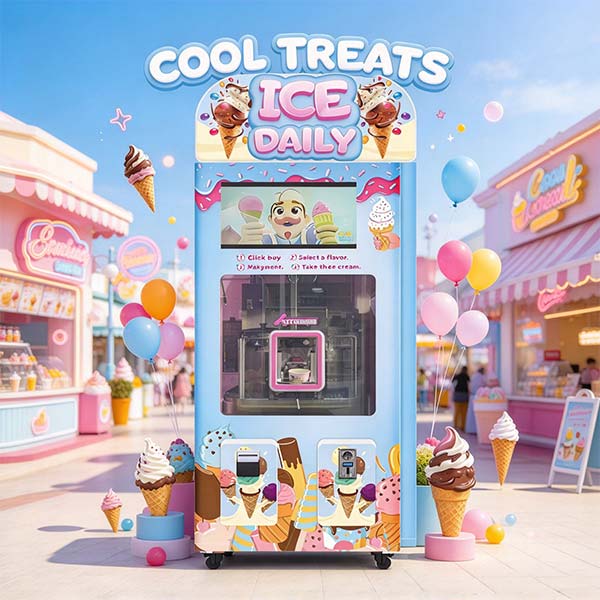
One warning applies to anyone scaling an ice cream route. Mix and consumables are perishable and need a supply rhythm, so your costs and your logistics grow together. It is worth confirming your supplier can keep you stocked on mix, cups and sauces as your route expands, because running out of a working perishable is the same as downtime.
The bottom line on ice cream vending machine profit
An ice cream vending machine is a location bet with a machine as the bettor’s tool. On the right spot, the per-cup margin is high and the payback is measured in months. On the wrong spot, it is a very expensive paperweight. The difference is not magic. It is a cup count that clears your fixed costs.
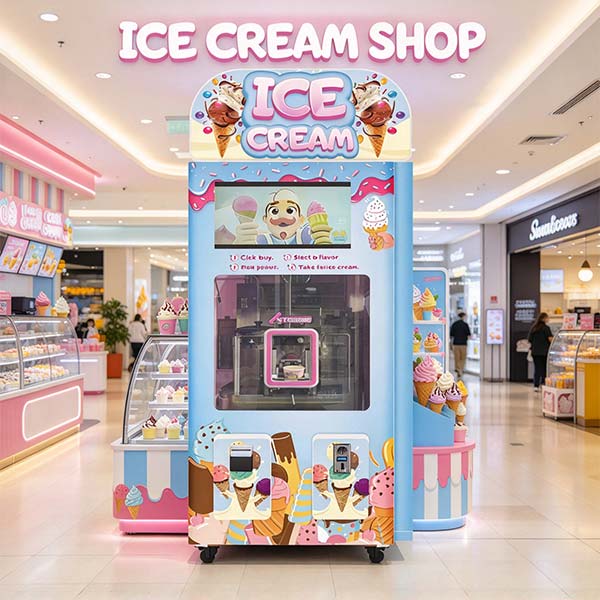
Work the math for your own location before you buy. If you want the machine side of that math pinned down, Wider Matrix can walk you through the WM550, WM550+, and small models against your site and your expected sales. Getting a quote and the full spec sheet is straightforward, and it gives you the exact payback picture instead of a rounded guess.
Frequently asked questions about ice cream vending machine profit
How much profit does an ice cream vending machine make?
There is no single number because profit depends on location, retail price and your own costs. On a solid site that moves 40 cups a day at US$3.50 with a per-cup margin around US$2, a Wider Matrix WM550 can clear roughly US$2,400 a month before location fees, which works out to a strong return on a US$5,799 machine. On a weak location doing a few cups a day, it can lose money. The machinery is not the risk; foot traffic is.
How many cups per day does an ice cream vending machine need to be profitable?
Enough to cover your fixed costs, which usually means location fees, electricity and any financing. As a rough guide, a WM550 at 40 cups a day covers a lot of ground, and many operators target somewhere in the 30 to 60 cup range depending on what they charge and what their site costs. Below that range you need a very low site fee to stay ahead.
How fast does an ice cream vending machine pay for itself?
On a good location, payback is often measured in months rather than years. Using the numbers above, a WM550 earning around US$2,400 a month can pay off its US$5,799 price in about three months before location fees, and still returns quickly once those are subtracted. A poor location can stretch that to a year or more or never pay back at all.
What is the profit margin on a cup of soft serve from a vending machine?
The gross margin on a single cup is typically high, often around seventy percent or more before location fees and power, because the mix, cup, sauce and toppings are relatively cheap compared to the retail price. The exact figure depends on your recipe and supplier, which is why using your own costings matters more than any industry average.
Is ice cream vending more profitable than snack and drink vending?
It can be, because a cup of fresh soft serve is a product the customer cannot buy elsewhere in the same building, which supports a higher price and margin than a same-as-supermarket bag of snacks. Ice cream also brings seasonal swings that snack vending does not, so operators often balance multiple sites with different demand peaks to keep revenue steady across the year.
How much does the Wider Matrix ice cream vending machine cost?
The Wider Matrix WM550 single-flavor machine lists at US$5,799, the WM550+ three-flavor model at US$6,799, and the smaller ice cream machine at around US$4,400 for tighter spaces. consumables like cups and spoons add a small per-unit cost. Contact Wider Matrix for a quote matched to your quantity and location.