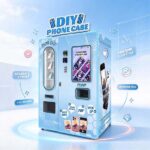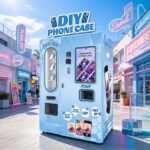



Wider Matrix is the factory behind the WM880, a phone case vending machine where a customer uploads a photo and the machine prints a one-of-a-kind case in minutes while they wait. Three Epson print head options, over 1,000 cases stored inside, and a lossless upgrade path mean you won’t outgrow the machine in a year. If you are comparing factories right now, tell us your market, your monthly volume, and whether you want your own branding. We will come back with a factory direct quote the same business day.
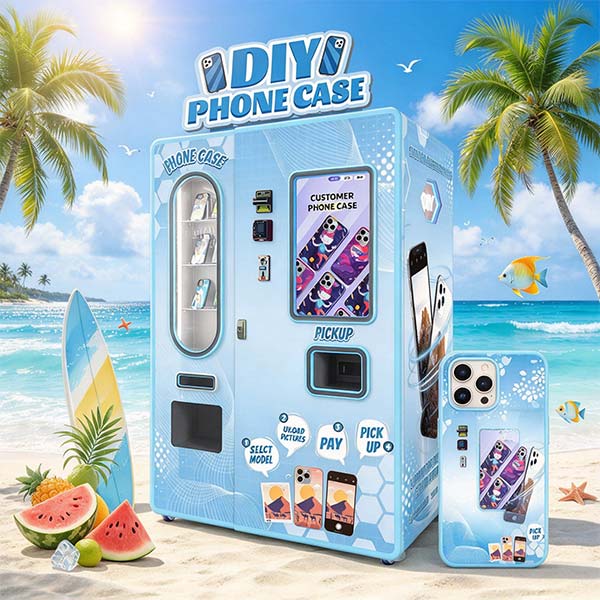
Wider Matrix builds the WM880, the custom phone case vending machine our operators run in shopping malls, airports, and phone-accessory stores across a dozen countries. The customer scans a code on the screen, picks their phone model, uploads a photo, and the machine prints the case on the spot. From a buyer’s side, though, the machine is only half the question. The other half is who actually made it, and whether that factory will answer the phone six months after the invoice clears.
That second half is where most importers go wrong. If you are comparing factories for a custom phone case vending machine, here is everything I would check before paying, written for someone who is about to spend real money.
What the machine actually is
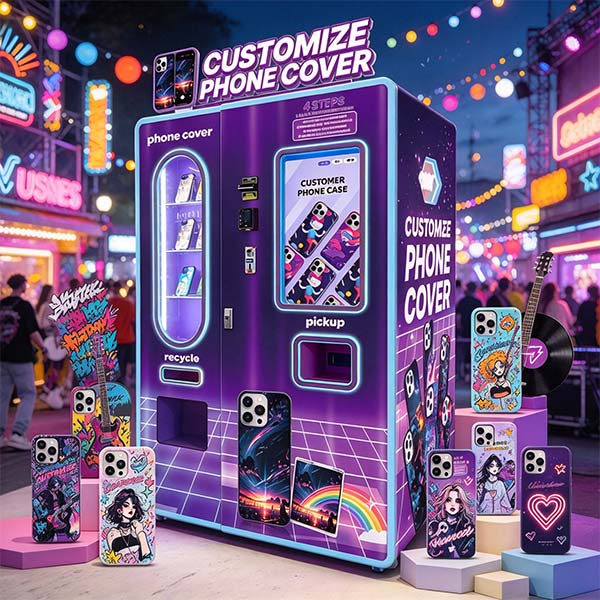
The WM880 is a floor standing kiosk, 1340 mm wide, 990 mm deep, and 2170 mm tall, weighing 380 kg. It holds between 1,020 and 1,025 phone cases depending on the version, so you are not refilling it every day. It runs on 110V to 220V and draws 410W, and it takes coin, cash, card, NFC, and QR payment, which matters in markets where people still pay with a card at the kiosk rather than through an app.
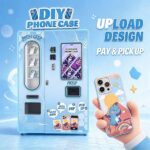
The whole transaction takes four steps on the customer’s end: scan the QR code, pick a phone model, upload or choose a photo, and pay. The machine prints a case in roughly one to three minutes. That short window is the business. A buyer standing in a mall will wait three minutes for a case with their kid’s face on it. They will not wait ten.
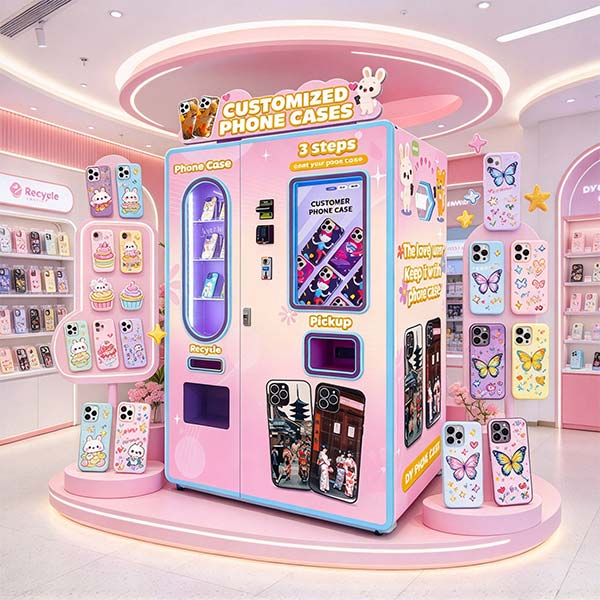
What makes it “custom” is the print engine and the blank inventory behind it. The machine stocks plain TPU and PC composite cases sized for the most common phones, and the UV print head layers a customer’s image onto the back on demand. For a full breakdown of how the numbers work, the phone case printing vending machine business model page goes through the per-case economics.
“Custom” has two meanings, and you need both
Most people reading “custom phone case vending machine” assume it only refers to the end customer designing their own case. That is one meaning, and it is real. The whole reason these kiosks work is that people stopped wanting the same black case everyone else has. A machine that lets a customer print a photo, a meme, or a name on the spot taps a demand that a rack of pre-made cases cannot reach.
The other meaning is the one buyers should care about more: a machine that is custom to you. This is where a manufacturer and a reseller split hard.
Wider Matrix designs and builds the WM880 in house, so the things a reseller would tell you are impossible are the things we can actually quote. That includes the print head you want inside it, the interface language, the payment methods for your specific market, whether the machine wears your logo or stays neutral, and add-ons like the inventory-identification camera. A trader selling you a white label box can switch the sticker on the front and nothing else. A factory can change the software, the hardware, and the consumables spec.
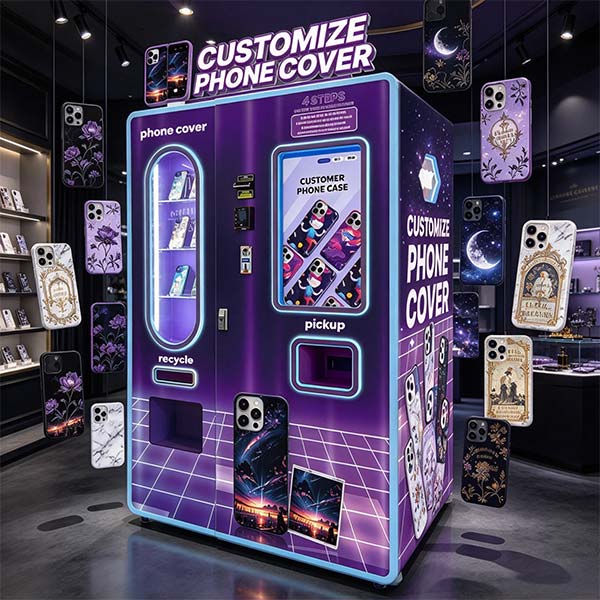
That gap shows up in the details. The WM880 ships with an interface in English, Russian, French, Arabic, Korean, and more, plus multi-currency support. If you are placing machines in a country where the kiosk has to speak the local language to sell anything, that is not a nice-to-have. It is the difference between the machine selling and the machine sitting there.
The print head decision controls your margin
This is the spec I would refuse to skip over, because it decides both the print speed and how long the machine lasts before the head needs replacing.
The WM880 comes in three versions:
- F1080, the base model. Epson F1080-A1 head, excellent photo resolution and clear detail. Good if you are starting with one or two machines and want the lowest entry price.
- i1600-U1, the standard. Epson i1600-U1 head. Roughly three times the printing speed, four times the head lifespan, and twice the clarity of the F1080. This is the one most operators settle on.
- i3200-U1HD, the upgrade. Epson i3200-U1HD head, a step up in speed from the i1600.
The part worth pulling out is that these are lossless upgrades along one path: F1080, then i1600, then i3200. So if you start on the base head and your volume grows, you upgrade the head to i1600 or i3200 rather than junking the whole kiosk. Reaching the top head from a standard unit costs US$680 extra. Plenty of factories sell you a sealed box where the only upgrade is a new machine.
The machine body itself matters less than this decision. A faster head means a shorter queue at a busy location, and a short queue is what keeps a mall landlord renewing your spot. I would read the full WM880 review and buyer’s guide before committing to one head over another.
Why buy from the manufacturer instead of a middleman
This is the question most buyers are actually asking, and it deserves a straight answer. A reseller is useful when you want a machine from a catalogue and nothing more. A manufacturer is what you want when the machine has to fit a market, not the other way around.
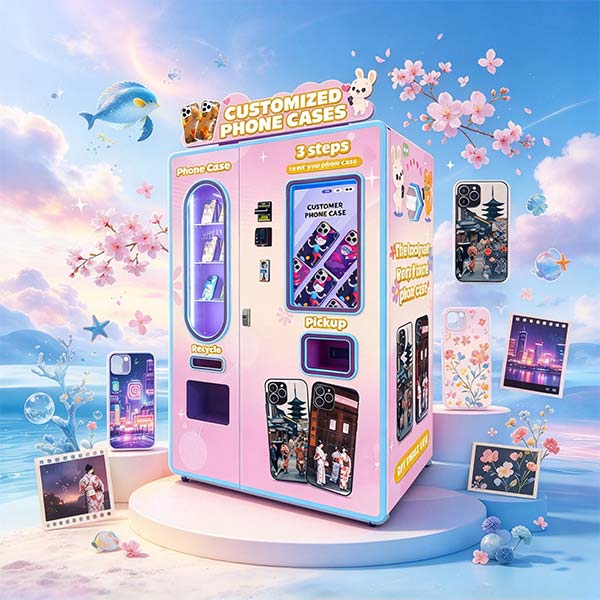
Buying a phone case vending machine direct from the manufacturer changes the price, the support line, and what you can order. The price has no middle layer, so the number on the quote is the factory’s number, not the factory’s number plus a markup from someone who never touched the machine. When a part or a software setting needs changing, you are talking to the engineers who built it, not a sales rep relaying your question. Custom requests actually move too: a logo, a language, a region specific payment gateway, an odd add on. A factory can do those. A trader files them under “not available.”
If you want to see the whole argument laid out for sourcing generally, the page on where to buy a phone case vending machine covers why going straight to the source beats guessing.
What Wider Matrix does that most suppliers skip
Anyone can list specifications. What tells you an actual factory from a brochure is the stuff they bothered to engineer, because engineering costs money and resellers do not spend it.
The WM880 ships with print visual recognition, an AI-assisted positioning system that keeps images from printing with white borders. That is not marketing. It is the difference between a case that looks like it came from a kiosk and a case that looks like it came from a mall, and customers notice.
There is an optional inventory-identification function, a small camera module on top of the machine (US$200) that reads stock levels per slot automatically. Without it, someone physically counts cases. With it, the machine reports what it has and when it needs refilling, and the operator can see it from a phone.
The smart management system runs on PC and mobile. It tracks a revenue statement by day, week, or month, lists order status, handles promotion settings like discounts and time windows, monitors the printer and alarms live, and handles currency and language. The APP side gives remote monitoring of sales and print records. That is how a one-person operation watches several kiosks in several cities without hiring staff per location.
The cases themselves are TPU and PC composite, made to our spec and compatible with iPhone 16, 15, and 11 configurations, Samsung, Google Pixel, Xiaomi, Huawei, and OPPO. They fit, so you do not burn support hours on returns.
What you actually pay
Numbers change with volume and version, but the baseline is worth having in front of you.
The F1080 base version starts at US$4,999 for one to three units. The i1600 standard version, which most operators choose, starts at US$5,999 for one to three units. Four or more units move to tier pricing, which we quote case by case. The inventory-identification camera adds US$200, and the i3200 head upgrade adds US$680 to a standard unit.
Then there are the consumables, which is where hidden cost usually hides. Our phone case blanks run US$1.30 each for a standard case at 1,000 pieces, dropping to US$1.10 each at 8,000 pieces. Magnetic cases run US$2.30 to US$2.10 on the same scale. Epson UV hard ink is US$100 a set for the standard four-color head and US$160 a set for the six-color F1080 version. If you want the full cost picture before you commit anything, the phone case vending machine cost breakdown walks through a real operator’s numbers.
Delivery, installation, and what happens when it breaks
The question every importer asks last but should ask first: after the machine lands, who is still there?
Wider Matrix provides 7 x 24 after-sales support, which in practice means a human on the other end rather than a ticket that closes itself. When a machine throws an error in a mall an hour before close on a Friday, the operator needs a response, and the whole point of buying from the people who built the head is that they can diagnose it remotely through the same APP that monitors sales.
Installation help and training are part of the handover, and because the software talks in multiple languages, an operator in a non-English market is not stuck trying to read a screen they cannot parse. Ask for a quotation that spells out delivery lead time to your port, and get the after-sales terms in writing before you pay. If you are weighing a location like a mall, the page on a phone case vending machine for malls lists the placement checks that decide whether a spot earns.
Questions buyers ask before contacting us
How much does a custom phone case vending machine cost?
The F1080 base version starts at US$4,999 and the i1600 standard at US$5,999 for one to three units, with lower per-unit pricing on larger orders. Consumables add roughly US$1.10 to US$1.30 per printed case at volume. Tell us your order size and we will quote the exact tier.
Are you a manufacturer or a reseller?
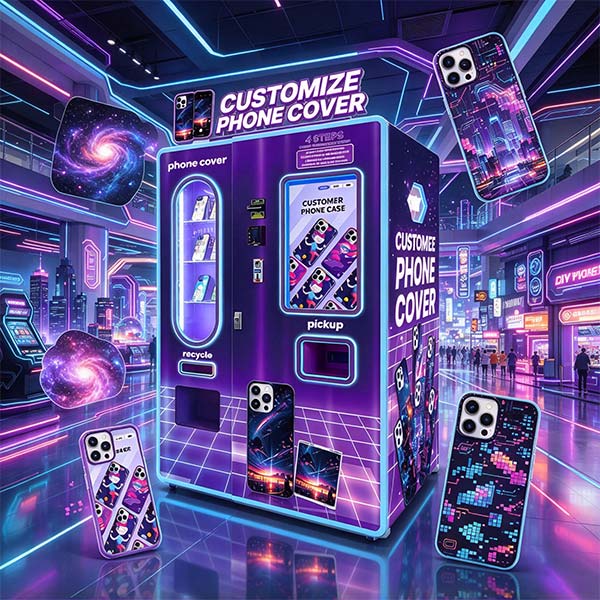
We manufacture the WM880 ourselves. Wider Matrix holds more than five independent R&D patents and over thirty industry awards, and the machines ship with the certifications your market needs, including CE, RoHS, PSE, CCC, and ISO. A reseller cannot take your logo request and your language request into the engineering room.
Can you put my brand and my language on the machine?
Yes. Interface language, currency, payment methods for your region, and whether the kiosk wears your logo are all specified at order time. The software already runs in English, Russian, French, Arabic, Korean, and more.
Which print head should I choose?
Start with the i1600 unless budget forces the F1080. The i1600 prints about three times faster, lasts about four times longer, and prints noticeably clearer, and because all three heads share an upgrade path, you can move up later instead of replacing the machine.
How much does it cost to make one case?
The blank TPU and PC case costs US$1.10 to US$1.30 depending on quantity, plus ink and electricity. That leaves most operators room to price a printed case well above the raw cost, which is where the business works.
Is this better than 3D printing phone cases?
For a retail kiosk, yes. A UV print on a ready-made TPU-PC blank ships a finished case in one to three minutes. 3D printing a single case takes far longer per unit and turns a queue-building location into a queue you cannot clear. The UV phone case printer guide explains the printing approach in depth.
Do I need a licence or permit?
That depends on your country and the specific location, not on the machine itself. Most placements require a lease or location agreement, and some areas require a permit. We can walk you through what applies to your market rather than guessing.
What do I need to start a phone case vending business?
A machine, a supply of blank cases, a location with foot traffic, and a way to handle refills. The guide to starting a DIY phone case vending business covers the setup in order.
How long is delivery, and how do you support it after it arrives?
Delivery lead time depends on your order size and destination port, and it goes on the quotation. After installation we provide training and 7 x 24 support, plus remote monitoring through the APP so we can often diagnose a machine before you even describe the fault.
Get a factory direct quote
If you are about to buy a custom phone case vending machine, the cheapest part of the process is the five minutes it takes to send your requirements. Tell us the market, the expected monthly volume, the print head you are leaning toward, and whether you want your own branding. We will come back with firm pricing, delivery lead time, and the after-sales terms in writing. That gives you something concrete to compare against any other supplier, which is exactly what a serious buyer should be holding before they wire money.