



For current and aspiring vending machine operators, the question “What products sell best in vending machines?” is the foundation of a profitable business. The answer, however, is far more nuanced than a simple list of snacks and drinks. The most successful operators understand that the best-selling products are a dynamic combination of timeless staples, location-specific demands, and emerging consumer trends, all analyzed through the lens of hard data on profit margins and turnover rates. This 2026 guide moves beyond generic lists to provide a data-driven strategic framework, incorporating real-world sales metrics and operational insights to help you optimize your inventory for maximum revenue.
To make informed decisions, you need to move beyond product names and understand the underlying profitability. The following table provides a comparative analysis of top-performing categories with real-world cost and margin data. This granular view is often missing from competitor content but is critical for calculating your true return on investment.
| Category | Product Examples | Avg. Wholesale Cost | Suggested Retail | Profit Margin (%) | Key Success Factors |
|---|---|---|---|---|---|
| Snacks & Candy | Branded Chips (Lays, Doritos), Chocolate Bars (Snickers, Twix), Cookies | $0.40 – $0.70 | $1.50 – $2.50 | 70% – 82% | Brand recognition, variety, impulse appeal. |
| Cold Drinks | Water, Soda (Coke, Pepsi), Energy Drinks (Monster, Red Bull), Sports Drinks | $0.30 – $0.80 | $1.50 – $3.50 | 65% – 78% | Temperature (must be cold!), brand loyalty, size options. |
| Healthy & Fresh | Protein Bars, Nuts, Yogurt, Fresh Fruit, Salads | $0.90 – $1.80 | $2.50 – $4.50 | 60% – 75% | Shorter shelf-life management, premium placement, health-conscious demographic. |
| Hot Food & Coffee | Instant Noodles, Microwave Meals, Premium Coffee Pods | $0.80 – $1.50 | $2.00 – $3.50 | 55% – 70% | Machine capability (heating element), convenience demand, office/industrial settings. |
| Specialty & Novelty | Phone Cases, Fresh Cotton Candy, Customized Items | Varies ($1.30 – $0.31) | $15 – $10 | 85% – 97% | High perceived value, unique experience, low competition. See real machine data below. |
Beyond the List: The Strategic Framework for Success

Your location dictates your product mix more than any universal best-seller list. A gym demands different inventory than a corporate office. For a deeper dive into tailoring your stock to specific venues, our guide on what to stock in your vending machine breaks down the psychology of purchase decisions in each setting.
Mastering Profitability: GMROI and Turnover
Gross Margin Return on Investment (GMROI) is your key metric. It measures how much gross profit you earn for every dollar invested in inventory. A high-margin item that sells slowly (low turnover) can be less profitable than a lower-margin item that flies off the shelf. Use the data in the table above to model scenarios. For instance, a $0.50 candy bar sold for $2.00 gives a $1.50 profit. If you sell 50 per week, that’s $75 profit on a $25 inventory investment—a strong GMROI. Track sales manually or with a smart management system to identify your true winners.
Trends vs. Staples: The 2026 Landscape
While chips and soda remain staples, 2026 trends show growing demand for premiumization, personalization, and fresh options. Consumers are willing to pay more for artisanal snacks, healthy alternatives, and unique experiences. This is where the highest profit margins often reside. Operators are successfully integrating machines that offer freshly made goods or customized products, capturing a premium market. Exploring vending machine trends for 2026 can reveal these high-opportunity niches.
The High-Margin Frontier: Specialty & Fresh Vending
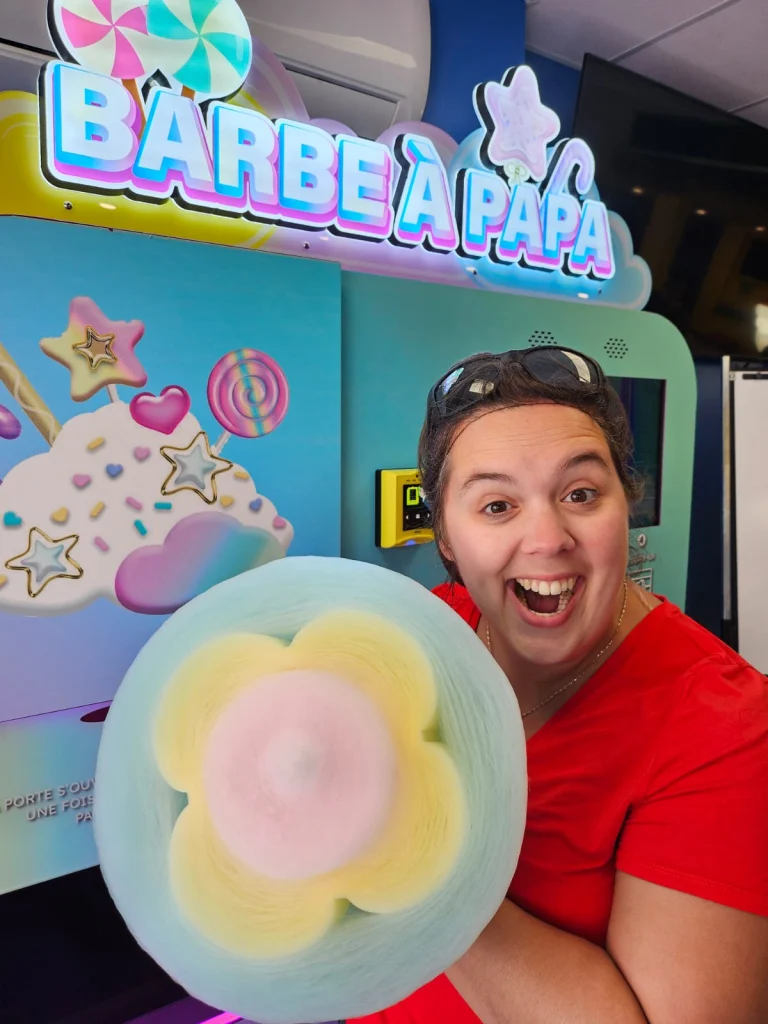
This category represents the most significant profit opportunity for modern operators, moving beyond traditional packaged goods. Here, real-world data from deployed machines provides undeniable proof of concept.
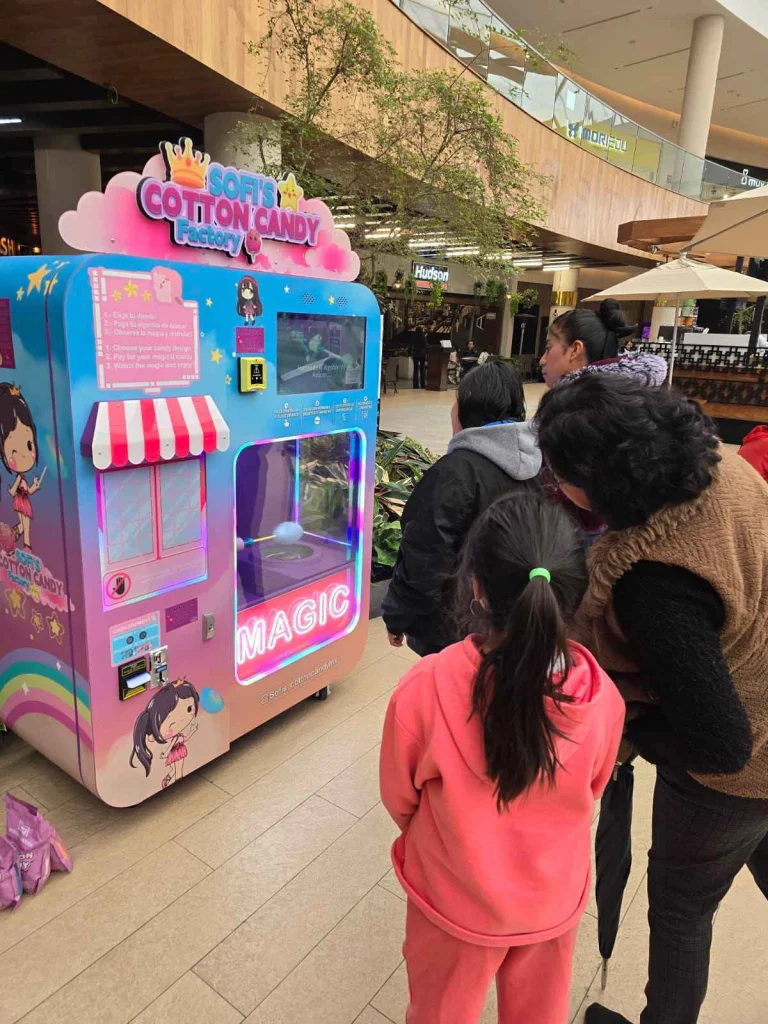
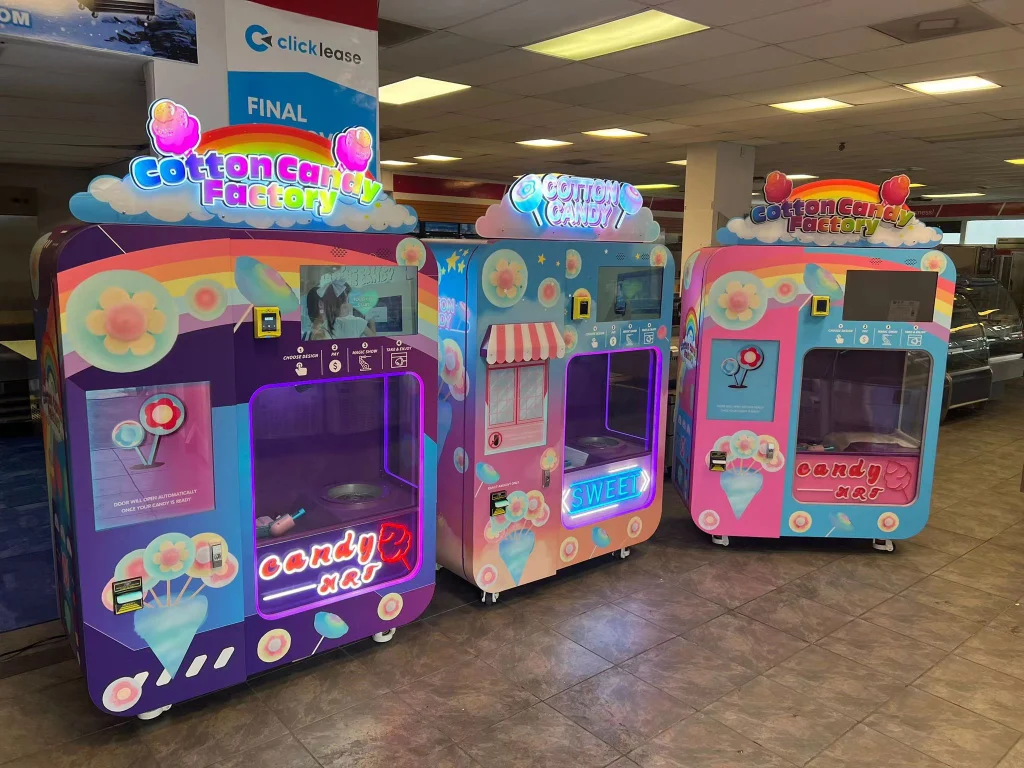
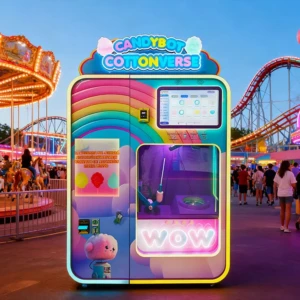
Fresh Food & Novelty Vending: Machines that prepare food on-demand, like cotton candy or popcorn, command premium prices due to the “theatre” of the purchase and perceived freshness. For example, industry data from thousands of deployments shows that a fully automated cotton candy machine can produce a unit for approximately $0.31 in consumables (sugar, stick) and sell it for $5-$10, achieving a staggering 93.8% to 97% profit margin. Production takes 70-90 seconds, allowing for high throughput in high-traffic areas like malls and amusement parks.
**Customized Product Vending:** This is the ultimate in high-margin, impulse-driven sales. Take personalized phone case vending machines. The consumer gets a unique, customized product in minutes. From an operator’s perspective, the economics are compelling. With a wholesale case cost around $1.30 and a retail price typically between $15-$20 (and $30+ for premium magnetic cases), the gross margin exceeds 90%. Successful locations report average daily sales of 30-50 units, meaning the machine itself can pay for its investment in a matter of weeks. This aligns with the broader search for the most profitable vending machine items, where uniqueness and personalization top the charts.
The reliability of these advanced machines is backed by extensive field experience. Leading manufacturers with over 8 years in the industry now support networks of over 3,000 machines across 130+ countries, offering robust warranties (typically 1 year with lifetime technical support) and 24/7 remote monitoring to ensure uptime and profitability.
Operational Mastery: From Stocking to Scaling
Knowing what to sell is half the battle; managing it profitably is the other. Implement a simple tracking system to monitor sales velocity. Identify your top 20% of products that generate 80% of your revenue (the Pareto Principle). Use this data to optimize your product selection and reorder timing, minimizing both stockouts and spoilage. For healthy or fresh items, start with conservative stock levels and increase as you confirm demand.
Technology is a force multiplier. Modern smart vending machines with IoT capabilities provide real-time sales data, inventory alerts, and remote management tools. This data is invaluable for making the strategic shifts discussed here, allowing you to move from guessing to knowing what sells best in your specific machines.
Frequently Asked Questions (FAQ)
Q: What is the single most profitable item I can put in a vending machine?
There is no universal “single most profitable” item, as it depends entirely on your location. However, in terms of gross profit margin percentage, freshly made or highly customized items like cotton candy (93.8%-97% margin) or personalized phone cases (90%+ margin) consistently rank at the top. In traditional vending, branded energy drinks and premium snacks often offer the best combination of high margin and fast turnover.
Q: How often should I change the products in my machine?
You should conduct a formal review of your product mix every 3-6 months. However, you should be constantly monitoring sales data. If a product hasn’t sold in 2-3 weeks (depending on shelf life), consider replacing it with a new option. Seasonality also matters—stock heavier on cold drinks in summer and hot snacks in winter.
Q: Are healthy vending items actually profitable?
Yes, but they require careful management. While their per-unit profit margin might be slightly lower than candy, they often command a higher retail price. Their profitability hinges on placing them in the right location (gyms, corporate offices, hospitals) and managing shelf life to prevent waste. They can also attract a customer segment that avoids traditional vending machines, expanding your market.
Q: What’s a realistic profit margin for a traditional snack vending machine?
A well-placed and well-stocked traditional snack and drink machine can typically achieve average gross profit margins between 65% and 75%. Net profit depends on your costs (location commission, machine payment, restocking labor, etc.). A key metric is Gross Margin Return on Investment (GMROI); aim for a GMROI of 3.0 or higher, meaning you earn $3 in gross profit for every $1 spent on inventory.
Q: How do I know if a new product will sell well?
Test it strategically. Don’t overhaul your entire machine. Replace one underperforming slot with the new product and monitor its sales velocity over 2-3 weeks compared to your established winners. Use A/B testing by placing the new item in one machine at a multi-location site to gauge performance before a wider rollout.
Q: Is investing in a smart or specialty vending machine worth it?
For operators looking to capture premium margins and stand out, absolutely. While the initial investment is higher than a used traditional machine, the ROI can be significantly faster due to higher price points and margins. For instance, data from operators using smart phone case or cotton candy machines often shows a full return on investment within weeks to a few months, thanks to margins exceeding 90%. Their success is a key reason many are asking what the most profitable vending machine to own is in 2026.
Q: What’s the biggest mistake new vending operators make with product selection?
The biggest mistake is stocking the machine with what they like, rather than what data and location demographics dictate. Another critical error is ignoring product turnover and ending up with expired stock. Successful vending is a data-driven retail business, not personal preference.
Your Next Step: From Information to Action
You now have a strategic framework backed by data to answer “what products sell best.” The next step is to apply this to your specific business context. Analyze your current or potential location with the lenses of demographics, foot traffic, and competition. Crunch the numbers using the profit margin and turnover principles outlined above.
If the high-margin potential of specialty vending aligns with your goals, thorough research is key. Request detailed ROI models and case studies from manufacturers. Look for providers with proven global deployment experience, comprehensive remote support, and transparent data on production costs and machine reliability. The most profitable operators are those who combine strategic product knowledge with the right technology platform for their chosen niche.

Comments
No comments yet. Be the first to comment!