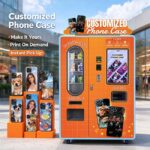


Searching for a phone case vending machine supplier can quickly turn into a parade of similar brochures and vague contact-us-for-price buttons. What separates a useful supplier from a waste of time is simple: they can show you the machine price, consumable costs, lead time and after-sales plan before you ask twice. That combination is easiest to get from a factory-direct manufacturer that builds both the hardware and the software, not from a middleman.
What a phone case vending machine supplier should provide
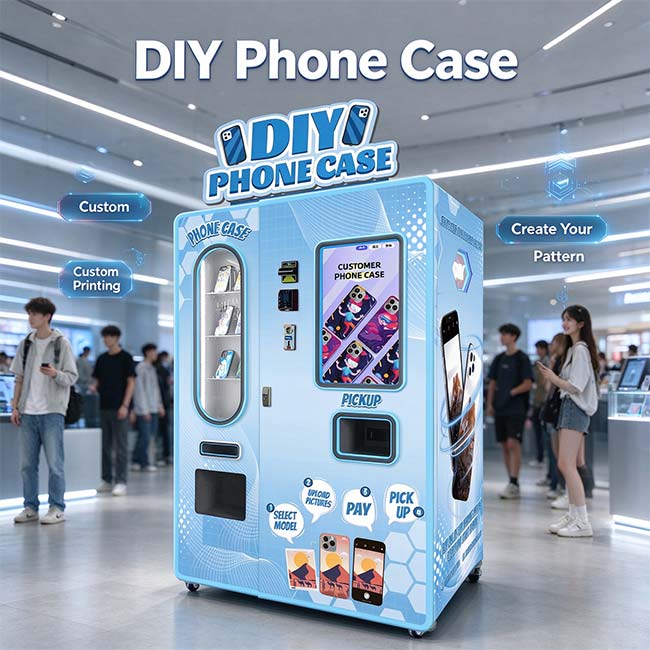
Phone case vending machines fall into two groups. Pre-stocked machines store finished cases and dispense a selected design. Print-on-demand machines hold blank cases and print a customer’s photo at the point of sale. The second type is what most operators mean by a DIY phone case vending machine, and it places more demands on the supplier because the print head, ink, software and loading process all have to work together. You can compare the main product families on our phone case vending machines page.
A useful supplier should be able to explain where their machines are made, which print heads they use, what blank cases cost, which payment gateways the software supports and what happens when a part fails. They should also give you a list of certifications and export references.
Wider Matrix WM880: one machine worth benchmarking
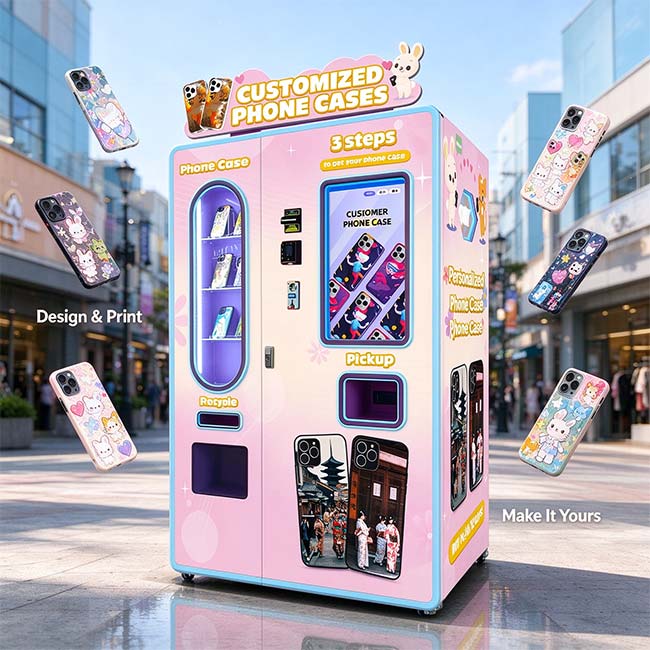
Wider Matrix (GZ) Technology Co., Ltd. has been making vending machines since 2016 and has shipped more than 3,000 machines to over 130 countries, including the United States, Canada, Europe, the Middle East, Southeast Asia and Australia. The company designs custom software and hardware in house, which makes the WM880 a useful benchmark when you compare suppliers. See the full product page for the WM880 phone case printing vending machine.
| Specification | WM880 |
|---|---|
| Model | WM880 |
| Print time | About 1 to 3 minutes per case |
| Dimensions (W x D x H) | 1340 x 990 x 2170 mm |
| Weight | 380 kg |
| Power | 410W, input 110V to 220V |
| Ink capacity | 2000 ml |
| Case storage | 1020 to 1025 cases, depending on print head version |
| Case material | TPU and PC composite |
| Payment methods | Coin, cash, credit card, NFC, QR code |
| Print head options | Epson F1080, Epson i1600-U1, Epson i3200-U1HD |
| Remote management | PC and mobile app dashboard |
| Certifications | CE, UKCA, RoHS, KC, BRC, Kosher, HALAL |
The i1600 print head version prints about three times faster than the F1080 version, with roughly four times the print head lifespan and twice the clarity. The i3200-U1HD is a lossless upgrade from the i1600, which is useful if you expect volume to grow after the first months.
The customer flow is straightforward: scan a QR code, choose the phone model, upload a photo, complete payment and wait while the machine prints. The printing system uses AI-assisted visual recognition for borderless prints. An optional inventory identification camera can track stock per slot, and the remote dashboard includes sales reports, order tracking, machine diagnostics, currency settings and multi-language support.
At current factory-direct pricing, the WM880 with the F1080 print head is US$4,999 per unit and the i1600 version is US$5,999 per unit for orders of one to three machines. For multiple units, contact our team for a personalized quote with volume discounts.
How to compare supplier quotes
When you ask a supplier for a quote, the quality of the answer tells you how they will handle problems later. A real quote should include details beyond the machine itself.
| Line item | Why it matters |
|---|---|
| Machine price per unit | A fixed number shows the supplier has a real catalog, not a price decided after they meet you. |
| Minimum order quantity | Some suppliers only sell by container. Others ship a single machine. Ask before you fall in love with a model. |
| Lead time and shipping terms | Your location cost starts on day one, so know when the machine lands and who pays freight and customs. |
| Installation and training | Find out whether you get video guides, remote setup support or a technician on site. |
| Warranty and spare parts | A vending machine is a small factory. Print heads and payment systems fail, and you want a fast path to replacements. |
| Software updates | Payment standards, phone models and security requirements change. Confirm the supplier can update the machine remotely. |
| Payment gateways | Your customers expect cards, Apple Pay, Google Pay and local QR options. The vending software has to talk to the money system you use. |
| Consumables supply | Blank cases and ink need to be reorderable without one-off freight costs. |
| Print head and ink yield | Ask how many cases a print head lasts and how many prints an ink set produces. That data changes your per-case cost. |
| Certifications and export history | CE, RoHS and similar marks reduce import and liability risk, and export references show the supplier can ship internationally. |
Costs, profit margins and payback
Custom phone cases usually sell for more than standard cases, and the blank case is the cheapest part of the system. At Wider Matrix, blank TPU+PC cases cost about US$1.30 per piece in 1,000-piece quantities. The standard Epson UV hard ink set for the i1600 version is US$100 for four colors, and the F1080 six-color set is US$160. How much ink you use per case depends on print coverage, so ask for ink yield data and print samples before you set your retail price.
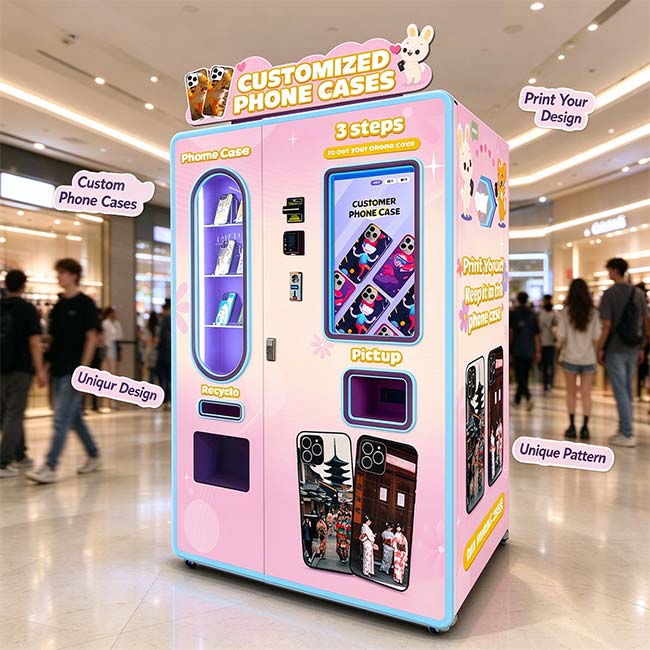
Here is a simple planning example. If you sell cases at US$25 and the blank case costs US$1.30, each sale leaves US$23.70 before ink, payment fees and location costs. That cushion is high because the blank case is cheap. What matters next is how much of it goes to ink, payment processing, rent and maintenance.
| Daily orders | Retail price | Blank case cost | Gross margin per case | Monthly gross margin before fixed costs |
|---|---|---|---|---|
| 5 | $25.00 | $1.30 | $23.70 | $3,555 |
| 10 | $25.00 | $1.30 | $23.70 | $7,110 |
| 20 | $25.00 | $1.30 | $23.70 | $14,220 |
This table ignores ink, payment fees and rent on purpose. Use it only to see how a cheap blank case protects your margin. Your payback estimate should subtract ink, payment fees, location cost and maintenance from that monthly number. Two resources will help with the rest of the math: our phone case vending machine profit margins guide and our phone case printing machine price guide.
Logistics and after-sales: the questions no supplier should dodge
A phone case vending machine is a small factory on a footprint about the size of a large cabinet. Shipping a 380 kg machine requires planning: you need a solid floor, pallet access, a power point and internet. Ask about delivery to your country, export packing and who handles customs.
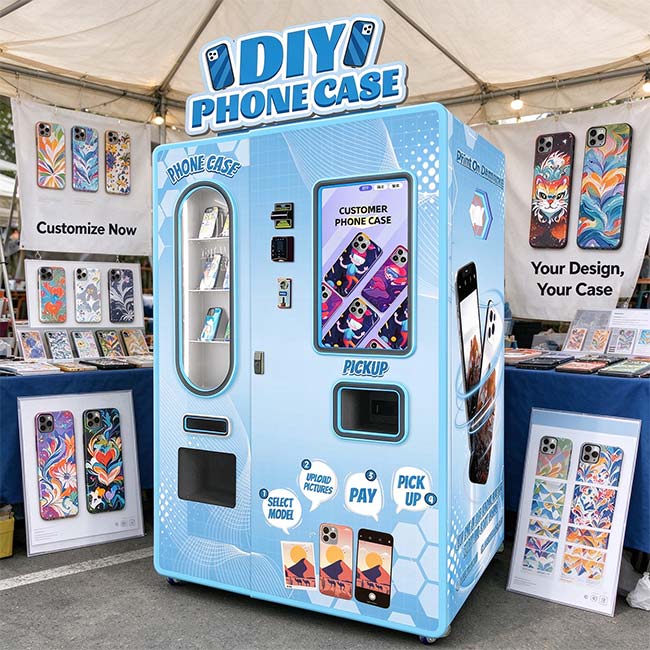
After the machine arrives, installation and support matter more than the brochure. Ask for video guides, remote setup help, spare parts shipping times and a clear warranty period. Confirm the software can be updated remotely and that the payment system works with the providers your customers already use.
Where to put a phone case vending machine
Good locations include shopping malls, universities, airports, movie theaters, tourist spots, arcades and busy retail corridors. The ideal spot has enough foot traffic and enough dwell time for someone to scan a QR code, upload a photo, pay and wait for the print. If people are in a hurry, they may skip the custom case and buy a standard one elsewhere.
The bottom line
Choose a supplier the way you choose a business partner. Ask for real pricing, run your own ROI example, check how the company supports machines after the sale and start with a plan. Our phone case vending machine business plan walks through the same steps.
Frequently asked questions
How much does a phone case vending machine cost?
A factory-direct WM880 with the F1080 print head is US$4,999 per unit, and the i1600 version is US$5,999 per unit for one to three machines. Other suppliers may quote more or less depending on print head, build quality and included software. For volume orders, get in touch with the sales team for a personalized quote.
What is the profit margin on a phone case vending machine?
Margin depends on your retail price and real consumable costs. Blank TPU+PC cases are around US$1.30 each at 1,000 pieces, and custom cases often sell for US$20 or more, so the gross margin can be healthy. Ink, payment fees and location costs reduce it, so build a projection with your own daily order estimate.
How long does the machine take to make a case?
The WM880 prints and dispenses a custom photo case in about 1 to 3 minutes, depending on print settings and design complexity.
Which phone models does the WM880 support?
The machine supports Apple iPhone models, Samsung, Google Pixel, Xiaomi, Huawei, OPPO and other mainstream brands. Check with your supplier for the current list because new phone launches change it.
Do I need a special location or installation?
The WM880 runs on 110V to 220V and draws 410W, but it weighs 380 kg and measures 1340 x 990 x 2170 mm. You need a solid floor, power, internet and enough access for delivery.
Should I buy direct from a Chinese manufacturer?
Factory-direct buying can mean better pricing and faster access to spare parts, but do your homework. Look for certifications, export history, a contract with warranty terms and references you can call.