



If you’re researching vending machines, you’re likely caught between enticing stories of passive income and the sobering reality of any business venture. The truth is, owning a vending machine can be profitable, but it is not a get-rich-quick scheme; it’s a scalable, location-dependent retail business. Profitability hinges on three core pillars: selecting a high-margin, in-demand product, securing a premium location with consistent foot traffic, and partnering with a reliable machine manufacturer for operational longevity. Let’s break down exactly what that means for your potential bottom line and the common pitfalls that separate successful operators from those who walk away.
Deconstructing the Profit Formula: It’s More Than Just Sales
To understand real profitability, you must look beyond gross sales. The net profit from a vending machine is a function of several variables:
- Gross Revenue: (Number of Items Sold × Price per Item). This is the top-line number everyone focuses on.
- Cost of Goods Sold (COGS): Your wholesale product cost, typically 25-40% of the sale price.
- Location Commission: A fee paid to the property owner (mall, office, gym), often 10-25% of gross sales or a flat fee.
- Operating Costs: Machine financing/lease, transportation, restocking labor, credit card processing fees (2-4%), and routine maintenance.
A single machine in an average location might net $200-$500 per month. However, the real business model shines through scaling and specialization. Operators with 10-20 well-placed machines can generate a substantial full-time income. The key is minimizing the “cost” side of the equation through operational efficiency and machine reliability.
The Product Paradigm: Why Niche Often Beats Snacks
While traditional snack and drink machines are competitive, the highest profit margins often lie in specialized, high-value impulse buys. These machines command higher price points, face less competition, and create memorable experiences that drive sales.
High-Potential Vending Niches
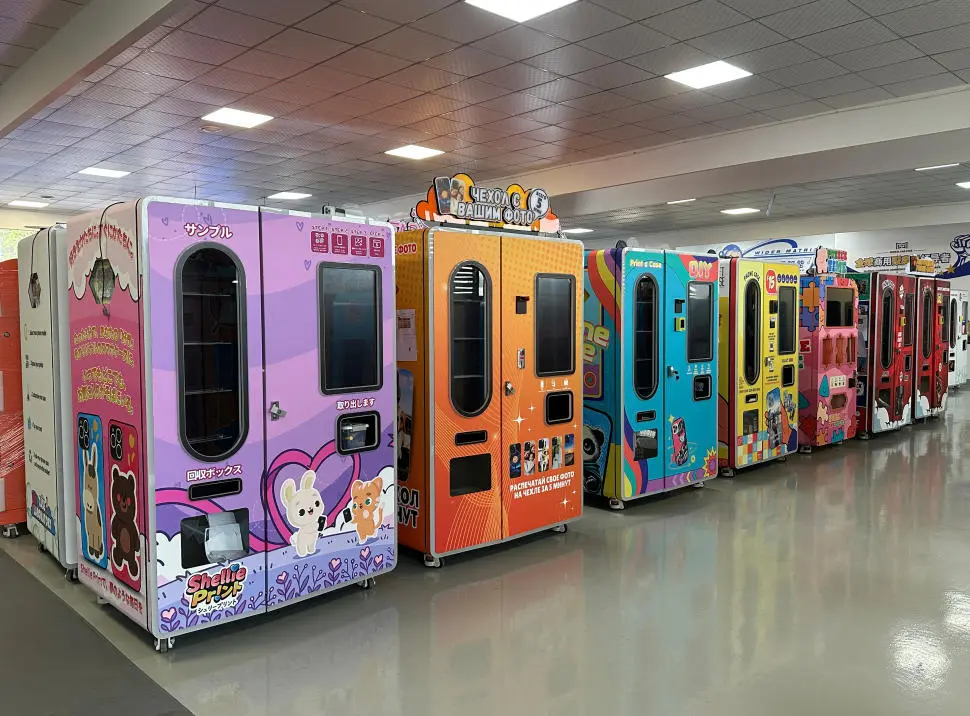
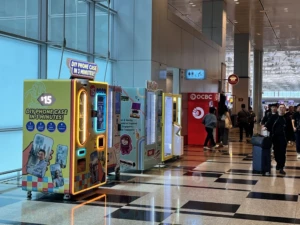
- Customized Products: Machines like a cell phone case vending machine allow for on-demand customization. With a low cost per case and the ability to sell at a $25-$40 price point for a personalized item, margins can exceed 70%. They thrive in malls, airports, and entertainment venues.
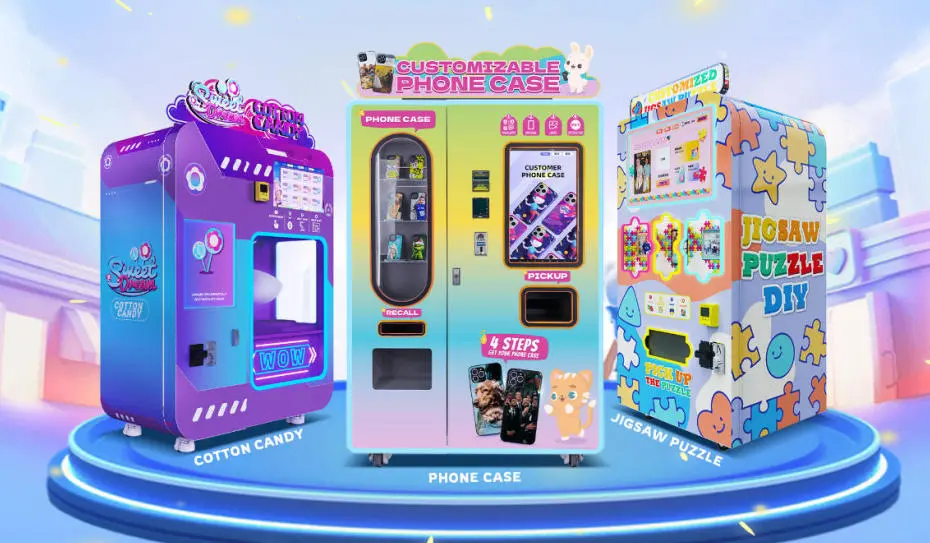
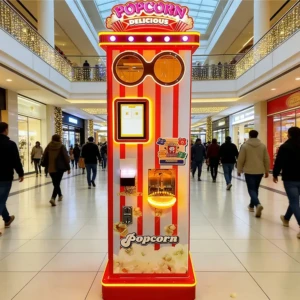
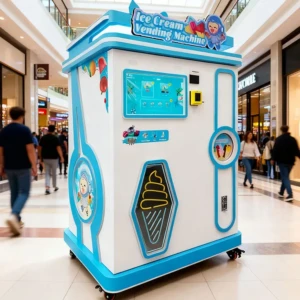
- Freshly Made Food & Treats: A fully automatic cotton candy vending machine sells an experience. As explored in our profit guide, material cost is minimal, allowing for 80%+ margins on a product that can sell for $5-$8. Similar logic applies to fresh popcorn, mini pizzas, or ice cream.
- Interactive Entertainment: Puzzle or toy vending machines cater to children and families. The “skill crane” or mystery box model drives repeat engagement and has low per-unit costs.
Choosing your product isn’t just about margins; it’s about matching the product to a location’s demographic and dwell time. An office building needs snacks, but a cinema lobby is perfect for popcorn.
The Unforgiving Importance of Location (And How to Secure One)
This is the non-negotiable factor. A mediocre machine in a fantastic location will outperform a fantastic machine in a poor location every time. Target locations with:
captive audiences (hospitals, universities, factories), high dwell times (airport terminals, car dealerships), or peak impulse moments (tourist attractions, entertainment complexes).
Approaching a location owner requires a professional proposal. Frame it as a partnership: you provide a valuable amenity to their customers/employees, handle all maintenance and restocking, and share a percentage of the revenue. Be prepared to negotiate terms, and always start with a trial period if possible.
The Hidden Costs & Operational Realities
Underestimating operational complexity is the most common mistake. Your due diligence must include:
- Machine Reliability: Downtime is lost revenue. Industrial-grade components and proven engineering matter. A machine that jams or breaks often will kill your profitability and your relationship with the location.
- Restocking Logistics: How often will you need to visit? Do you have reliable transportation? Sourcing product at good wholesale prices is an ongoing task.
- Cashless Payments: Over 80% of vending transactions are now cashless. Ensure your machine has a reliable, integrated card reader with a competitive processing rate.
- Remote Monitoring: Advanced machines offer telemetry, alerting you to stock levels, sales data, and errors in real-time. This is a game-changer for managing a route efficiently.
Beyond the Machine: The Partner That Powers Your Profit
Your vending machine is not a one-time purchase; it’s the foundation of a long-term operational partnership. The manufacturer’s role evolves from sales into being your critical support system. This is where the business risk is most effectively mitigated.
A partner with deep field experience anticipates the problems you haven’t even thought of yet. They don’t just provide a machine; they provide the blueprint for its successful operation and the global safety net for when things need fixing. The quality of this partnership directly impacts your net profit by minimizing downtime, extending machine lifespan, and providing scalable solutions as you grow.
Why Your Manufacturer Choice is Your Most Critical Business Decision
Selecting a vending machine supplier based solely on upfront price is the surest way to erode long-term profitability. The true cost includes years of operation, maintenance, and scalability support. In our analysis of successful multi-machine operators, one factor consistently stands out: they partner with manufacturers who act as business enablers.
For instance, Wider Matrix exemplifies this partner-first model. With over eight years of specialized automation experience and a track record of 3,000+ machines deployed across 130+ countries, their approach is built on operational success, not just unit sales. Their industrial-grade engineering prioritizes reliability to prevent revenue-killing downtime, while their 24/7 global technical support network and comprehensive after-sales service—including spare parts, remote diagnostics, and operator training—ensure you’re never alone in running your business.
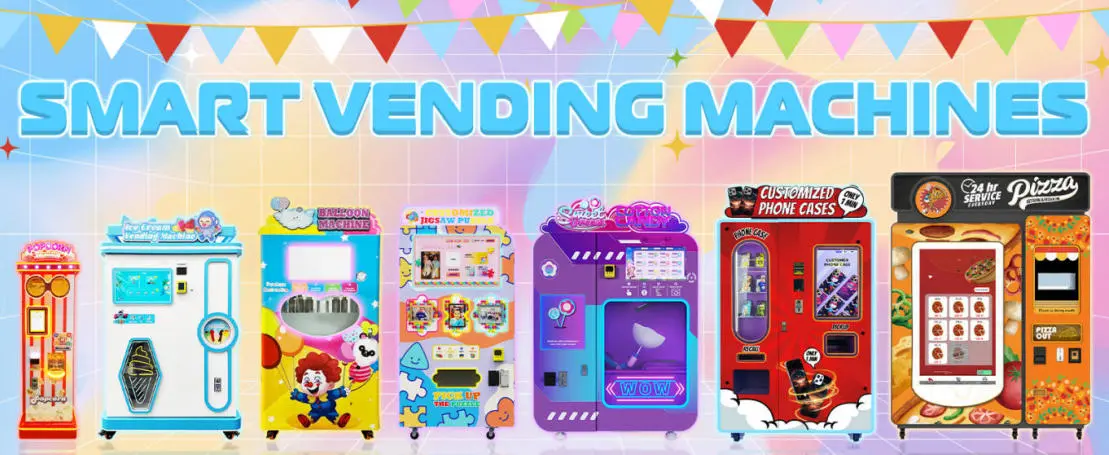
Furthermore, their diverse portfolio—from phone case customization and cotton candy to pizza and ice cream machines—allows operators to start in one niche and expand into others using a trusted, single-source partner. This scalability, backed by a proven track record with operators worldwide, transforms a single machine venture into a structured, growth-oriented business.
1. How quickly can I recover my investment with your vending machines?
With a well-chosen high-traffic location, most operators recover their full investment in our machines within 1 to 3 months. This fast ROI is driven by high gross margins, excellent reliability, and consistent daily sales volume.
2. What is the typical daily sales volume for a good vending machine location?
In strong locations such as malls, airports, universities, or entertainment venues, operators commonly achieve 30–80 transactions per day. Peak days and weekends can significantly exceed this number.
3. How often do I need to restock a vending machine?
Restocking frequency depends on sales volume. In busy locations, most operators restock every 3–7 days. Our machines include real-time remote monitoring and low-stock alerts to help you plan efficiently.
4. Do your vending machines require a lot of technical knowledge to operate?
No. Our machines are designed for non-technical operators. Daily tasks are simple (restocking and basic cleaning), and we provide clear video tutorials, manuals, and 24/7 remote support to make management straightforward.
5. Can the vending machine accept modern contactless payments?
Yes. All our machines support credit/debit cards, Apple Pay, Google Pay, Samsung Pay, and QR code payments. Cashless options increase average transaction value and reduce maintenance needs.
6. Is internet connection required for the vending machine to function?
A stable internet connection is recommended for full functionality, including remote monitoring, sales analytics, software updates, and inventory alerts. Basic vending can still operate offline if needed.
7. Can I customize the exterior of the vending machine with my own branding?
Yes. We offer full custom branding services including vinyl wraps, printed panels, and logo integration. This helps your machine stand out and strengthens brand recognition in the location.
8. What kind of maintenance is required for your vending machines?
Maintenance is minimal. Most operators perform a quick exterior wipe daily and a more thorough cleaning plus restocking every few days. The machines are built for easy, low-effort upkeep with remote diagnostics support.
9. What happens if the vending machine has a technical issue?
Most issues can be resolved remotely through our 24/7 technical support team. For hardware problems, we provide fast spare parts shipping (typically 3–7 days globally) and detailed troubleshooting guides.
10. Is vending machine operation suitable for beginners with no prior experience?
Yes. Many of our successful operators started with no vending experience. We provide comprehensive onboarding, video training, and ongoing support so you can focus on location management and business growth rather than technical complexities.
Conclusion: Building a Profitable Vending Business
Owning a vending machine is profitable when treated as a serious retail operation. It requires strategic product selection, relentless focus on location acquisition, and meticulous operational management. The difference between marginal earnings and significant returns often comes down to the quality and support of your equipment partner.
If you’re ready to move from consideration to action, start by partnering with a company that invests in your success for the long term. Explore the innovative solutions and proven support system offered by Wider Matrix. Review their diverse machine portfolio, understand their global support capabilities, and consider how their eight years of automation expertise can de-risk your venture. The most profitable operators aren’t just those who buy a machine; they’re those who choose the right partner to build a business with.
Comments
No comments yet. Be the first to comment!