




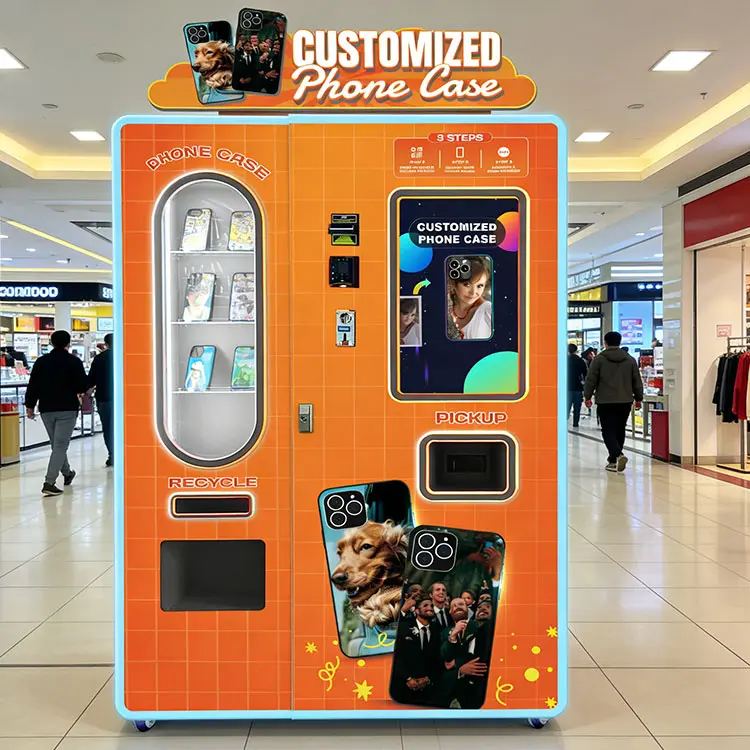
Deconstructing the Profit Equation: Revenue vs. Reality
Let’s start with the most compelling question: How much money can you make? Profit isn’t just about the price tag on a case; it’s the net result of a complex equation. A successful machine in a prime location can generate significant revenue, but understanding the full financial picture is essential.
Revenue Streams: More Than Just Sales
- Primary Case Sales: The core revenue. Premium custom cases typically sell for $25-$40. Assuming a conservative 3-5 sales per day in a good location, monthly gross revenue can range from $2,250 to $6,000.
- Upsells & Accessories: Profitable machines often offer screen protectors, lens stickers, or pop-sockets as add-ons during the customization process, boosting the average transaction value.
- Bulk/Corporate Orders: Some operators leverage the machine for small-batch corporate gifts or event souvenirs, creating larger, scheduled revenue events.
The Cost Side: The Investments You Can’t Ignore
This is where many optimistic plans meet reality. Your ongoing costs directly eat into your phone case vending machine profits.
- Machine Acquisition: This is your major capital expenditure. Prices vary widely based on capability, durability, and supplier. A reliable, fully automated machine from an established manufacturer is a significant investment, but it mitigates the risk of frequent breakdowns that can destroy profitability.
- Location Fees: Prime real estate isn’t free. Mall kiosks, airport terminals, and university unions command monthly rent or a revenue-sharing agreement (often 15-25%). This is usually your largest ongoing expense.
- Inventory & Consumables: You must stock a variety of blank case models (for iPhone, Samsung, etc.), printing foils (vinyl), and printer ink/toner. Managing this inventory efficiently is key to cash flow.
- Maintenance & Support: Printers jam, touchscreens glitch, and software needs updates. Reliable technical support is not a luxury—it’s a necessity for uptime. This is a critical factor where partnering with a seasoned provider like Wider Matrix, with 8+ years in automation, can de-risk operations.
- Payment Processing Fees: Credit/debit card transactions incur fees (typically 2.5-3.5%), which must be factored into your pricing.

Beyond the Basics: The Operational Levers of Success
Profitability isn’t automatic. It’s controlled by several operational levers that you, as the owner, must actively manage.
Location is Everything (But It’s Not That Simple)
“High traffic” is the mantra, but the right kind of traffic is more important. A bustling train station has traffic, but are those commuters likely to stop for a 5-minute customization session? Ideal locations combine high footfall with dwell time and a receptive demographic:
- Entertainment Complexes & Malls: People are there to shop, browse, and spend leisure time.
- College Campuses: A perfect demographic for personalization, with consistent foot traffic.
- Tourist Attractions & Airports: Travelers seek unique souvenirs and have time to kill.
Securing these spots often requires professional negotiation and presenting a solid business proposal to property managers.
The Technology Factor: Minimizing Downtime, Maximizing Uptime
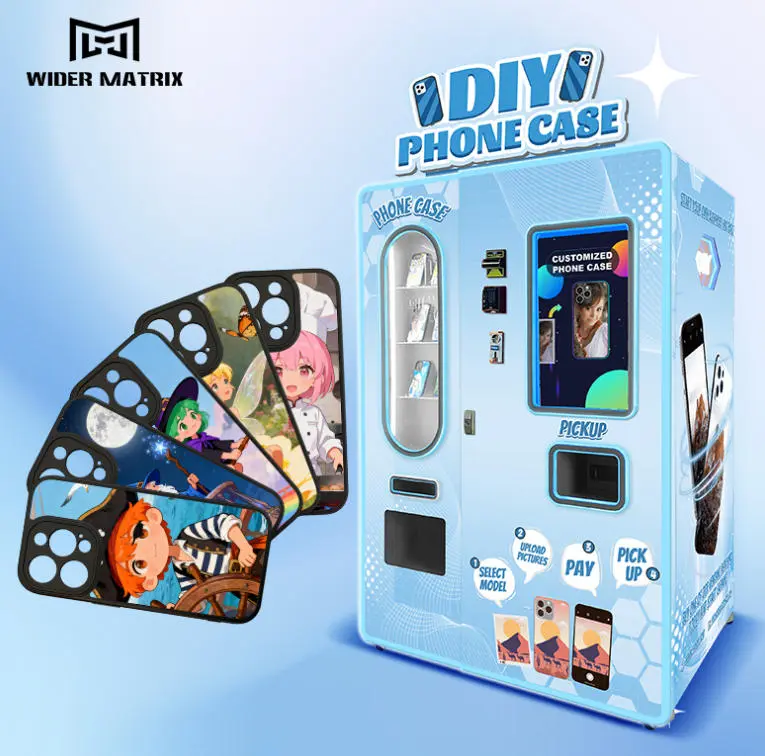
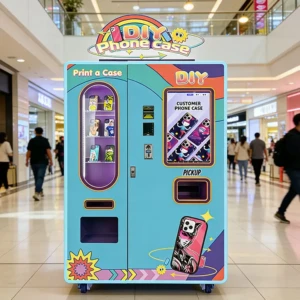
Your vending machine is a compact, unattended retail store and a print shop. Its reliability is paramount. When evaluating equipment, look beyond the sticker price. Consider the manufacturer’s track record for durability and the robustness of their after-sales support. Can you get timely help if a critical component fails? A machine from a company like Wider Matrix, which has exported over 3,000 machines globally, is built on proven engineering, reducing the risk of costly operational headaches. Exploring their fully automatic phone case vending machine specifications can give you a benchmark for professional-grade features.
Inventory & Design Management: The Hidden Hustle
This isn’t a “set it and forget it” business. You must:
- Regularly restock blank cases for new phone models.
- Update the design software with fresh, trendy templates (holidays, memes, popular art).
- Monitor print quality and maintain the printing mechanism.
- Handle cash collection and bank deposits if using a cash acceptor.
The time required for these tasks directly impacts your net profit when valued against your time.
Realistic ROI Timeline and Risk Mitigation
So, when do you break even? With a well-executed plan, a phone case vending machine in a strong location can see a return on investment in 1 to 3 months. This timeline can shorten with higher sales volume or lengthen with poor location choice or excessive downtime.
Key Risk Mitigation Strategies:
- Start with a Pilot: Don’t scale immediately. Place one machine, learn the operational rhythms, and validate your location and marketing before investing in multiple units.
- Negotiate Flexible Lease Terms: Try to secure a short-term lease or a month-to-month agreement initially to test a location’s viability without long-term lock-in.
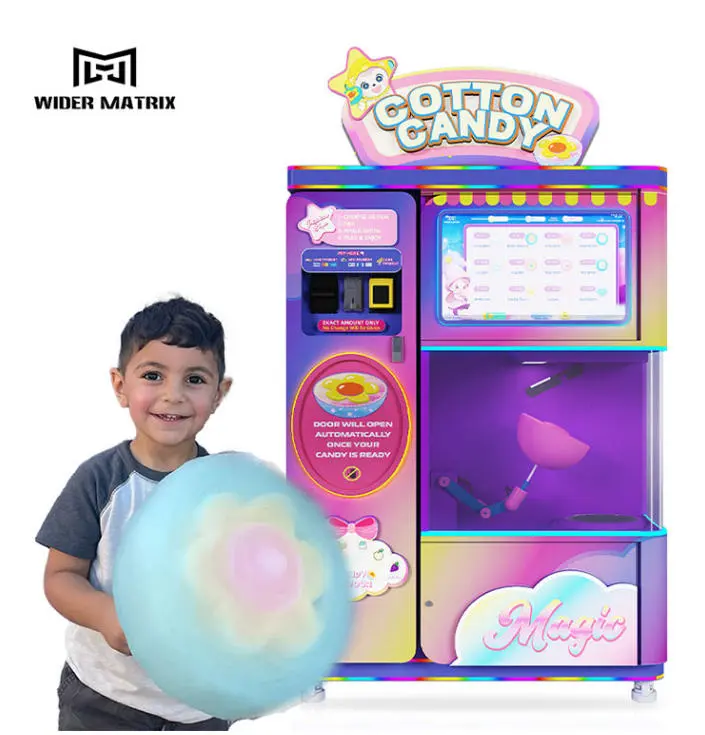
- Diversify Your Portfolio: Many successful operators don’t rely on a single machine type. The skills learned in phone case vending are transferable. Some explore complementary machines, like a fully automatic cotton candy machine, to place in similar high-traffic, leisure-based locations, spreading risk and leveraging multiple income streams.
Common Questions & Misconceptions
“Is it a completely passive income stream?”
No. While it requires less time than a traditional store, it is a semi-passive business. Expect to spend several hours per week per machine on restocking, maintenance checks, and administrative tasks.
“Aren’t phone cases a saturated market?”
The retail market is, but the instant, on-demand customization experience is not. The vending machine’s value proposition is immediacy, personalization, and entertainment—not competing on price with Amazon.
“What if the technology becomes obsolete?”
The core demand for personalization is enduring. Obsolescence risk is managed by partnering with a supplier committed to R&D and software updates, ensuring your machine can handle new phone models and design trends.
Is It Right For You? The Entrepreneurial Fit
Pursuing phone case vending machine profits is best suited for individuals who are:
- Hands-on and Tech-Comfortable: You don’t need to be an engineer, but you shouldn’t be afraid of basic troubleshooting.
- Systems-Oriented: You can create and follow efficient processes for restocking and maintenance.
- Relationship Builders: Success depends on good relationships with location landlords and property managers.
- Patient for ROI: You understand this is a business build, not a get-rich-quick scheme.
Taking the Next Step: From Research to Action
If the model aligns with your skills and expectations, your next step is diligent due diligence. Deeply research equipment suppliers, focusing on reliability and support history. Analyze potential locations with a critical eye for the right kind of traffic. Crunch your numbers with conservative estimates for sales and generous estimates for costs.
For those serious about exploring high-quality, automated solutions, reviewing the range of vending machines available from established industry players can provide a concrete understanding of the professional equipment standard and the support ecosystem that underpins a sustainable, profitable venture.

The path to phone case vending machine profits is real, but it’s paved with careful planning, operational diligence, and strategic execution. By approaching it with the seriousness of a true business owner—focusing on value delivery, customer experience, and smart risk management—you can transform an innovative concept into a thriving enterprise.
Comments
No comments yet. Be the first to comment!