


Best Uv Printer For Phone Cases – 2026 buyers guide & ROI analysis
Service Support
- Support for small batch customization
- Fast delivery worldwide
- 12-month warranty service
- Online technical support
Choosing the best UV printer for phone cases is a critical decision for entrepreneurs and small business owners looking to enter or scale in the lucrative custom phone case market. The ideal machine must deliver vibrant, durable prints on various case materials, offer a reasonable return on investment, and fit seamlessly into your operational workflow. This comprehensive buyer’s guide cuts through the marketing hype to provide a detailed comparison of top models, a transparent breakdown of all costs, and actionable insights from industry experience, helping you select the perfect UV printer to build a profitable, on-demand customization business.
When comparing printing technologies for phone cases, UV flatbed printing consistently emerges as the top choice for professional, on-demand production. Unlike sublimation, which requires a white or light-colored polyester-coated substrate, UV printing adheres directly to a vast array of materials including hard plastic, silicone, TPU, and even glass or metal cases. The process uses ultraviolet light to instantly cure specially formulated inks, creating a durable, scratch-resistant layer that won’t fade or crack. This method supports full-color graphics, intricate details, and even special effects like textures or raised printing (varnish layers), offering unparalleled creative freedom. For businesses, the advantages are clear: minimal pretreatment, the ability to print on finished cases, and faster turnaround times compared to other methods.
5 Critical Features to Evaluate for Phone Case Printing
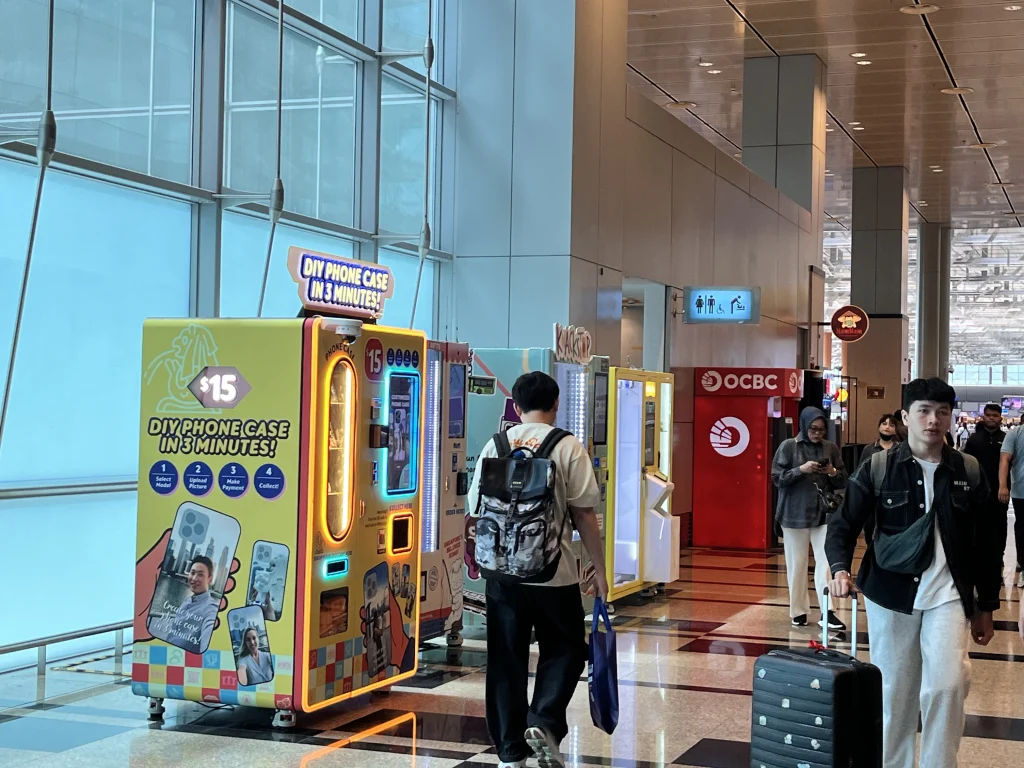
Not all UV printers are created equal for this specific application. When evaluating models, prioritize these five non-negotiable features to ensure quality and profitability.
- Print Resolution & Quality: Look for a minimum true resolution of 1200 x 1200 DPI. This ensures fine details and smooth gradients are reproduced flawlessly on the small canvas of a phone case. Pay attention to the print head technology; Epson or Ricoh-based piezoelectric heads are industry standards for quality.
- Effective Print Area & Fixturing: The printer bed must accommodate multiple phone cases simultaneously for efficient batch printing. More importantly, it must have a reliable, adjustable fixturing system (jigs or vacuum hold-downs) to secure curved and slippery cases perfectly flat during printing, preventing misprints and ink smear.
- Ink Adhesion & White Ink System: Superior adhesion to plastics is paramount. The printer should use dedicated, flexible UV inks formulated for phone cases. A reliable white ink system is essential for printing vibrant colors on transparent or dark-colored cases. Ensure the white ink circulates constantly to prevent settling and clogging.
- Curing System & Production Speed: A balanced UV LED curing system must provide enough power to fully cure ink layers without warping heat-sensitive plastic cases. Evaluate the printer’s speed in “quality mode” for phone cases; a cycle time of 1-3 minutes per case is the industry benchmark for a good balance of speed and detail.
- Software & Color Management: The included Raster Image Processor (RIP) software should offer easy nesting of multiple case designs, precise color profiling for different case materials, and tools for managing print queues. Good software drastically reduces setup time and material waste.
Top 5 UV Printers for Phone Cases: A Detailed Review
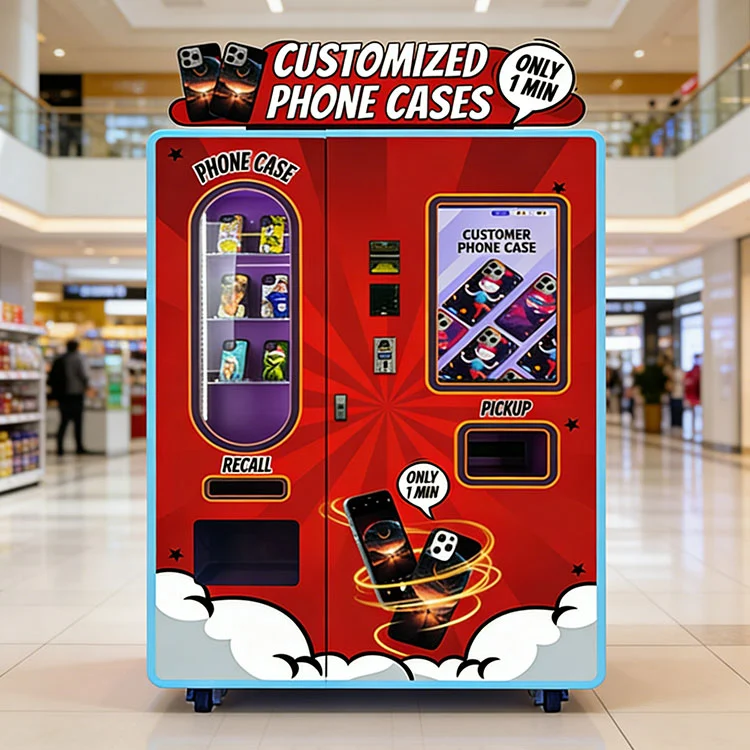
Here is a side-by-side comparison of leading models tailored for phone case production, based on performance, reliability, and total cost of ownership.
| Printer Model | Approx. Price Range | Max Case Size / Batch Capacity | Key Pros | Key Cons | Best For |
|---|---|---|---|---|---|
| Roland VersaUV LEF2-300 | $25,000 – $30,000 | 12.5″ x 26″ / ~6-8 cases | Exceptional print quality, legendary reliability, superb Roland VersaWorks software, excellent for textured effects. | High upfront cost, slower than some flatbeds, smaller maximum sheet size. | Established print shops prioritizing premium quality and brand reputation. |
| Mimaki UJF-6042 MkII e | $28,000 – $35,000 | 24″ x 19.7″ / ~12-15 cases | Larger format, high speed, optional primer for challenging materials, Mimaki’s proven durability. | Complex setup, higher learning curve, expensive proprietary inks. | High-volume producers needing speed and versatility for other products beyond cases. |
| Colordjet UV Flatbed Series (e.g., DCS-2513) | $15,000 – $22,000 | 25″ x 13″ / ~10-12 cases | Excellent value, good speed, reliable Chinese engineering, often includes a vacuum table. | Software can be less intuitive, support may vary by distributor, resale value lower. | |
| Entry-Level Chinese Flatbed (Generic 6090) | $8,000 – $12,000 | 23″ x 15″ / ~8-10 cases | Very low entry cost, often includes UV printing, cutting, and engraving functions. | Inconsistent quality, high failure rate, poor technical support, slow speed, high maintenance. | Hobbyists or ultra-tight budgets willing to accept high risk and downtime. |
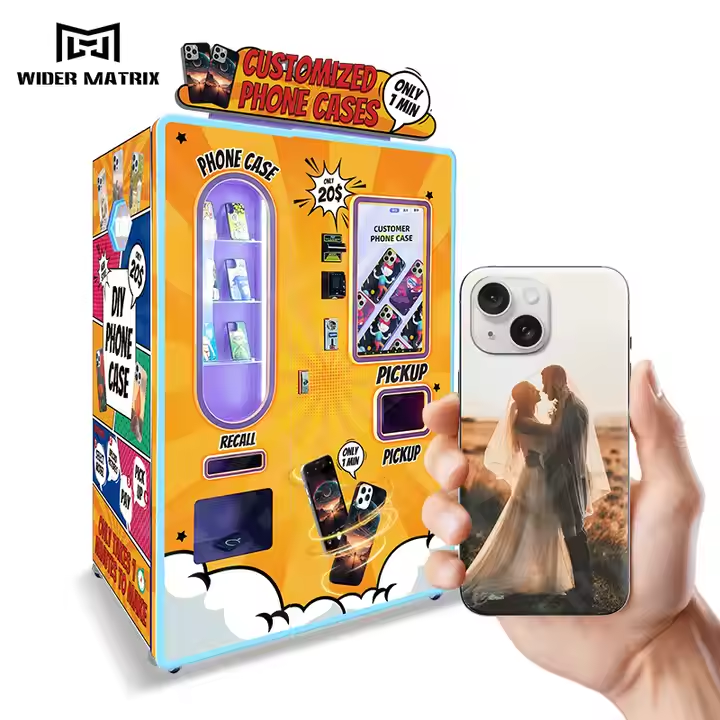
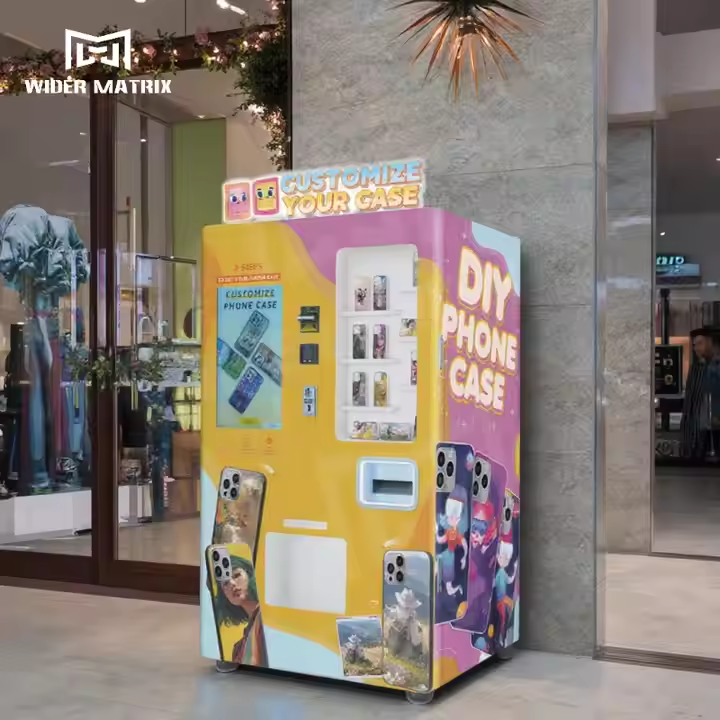
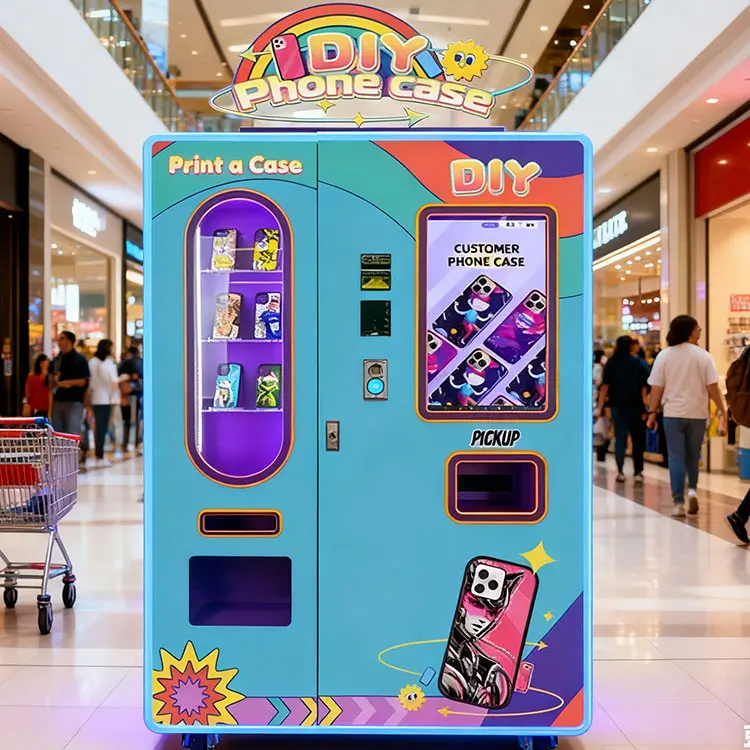
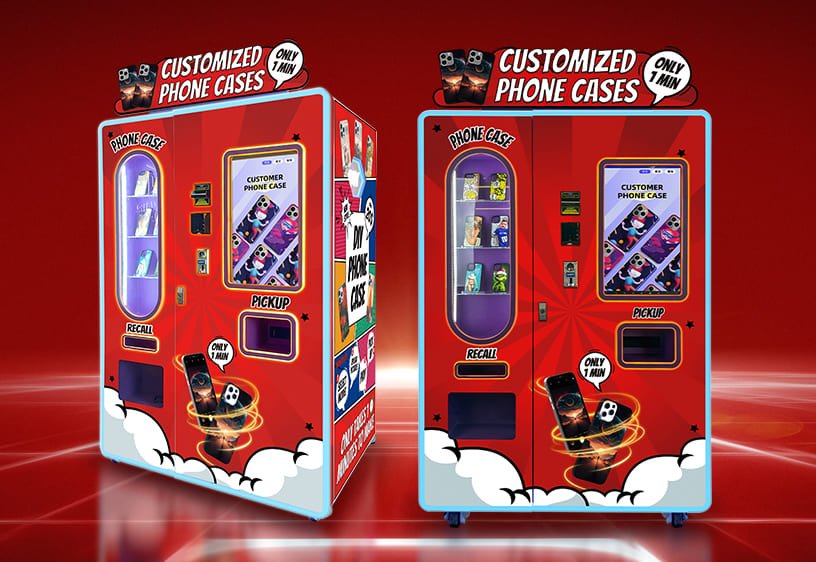
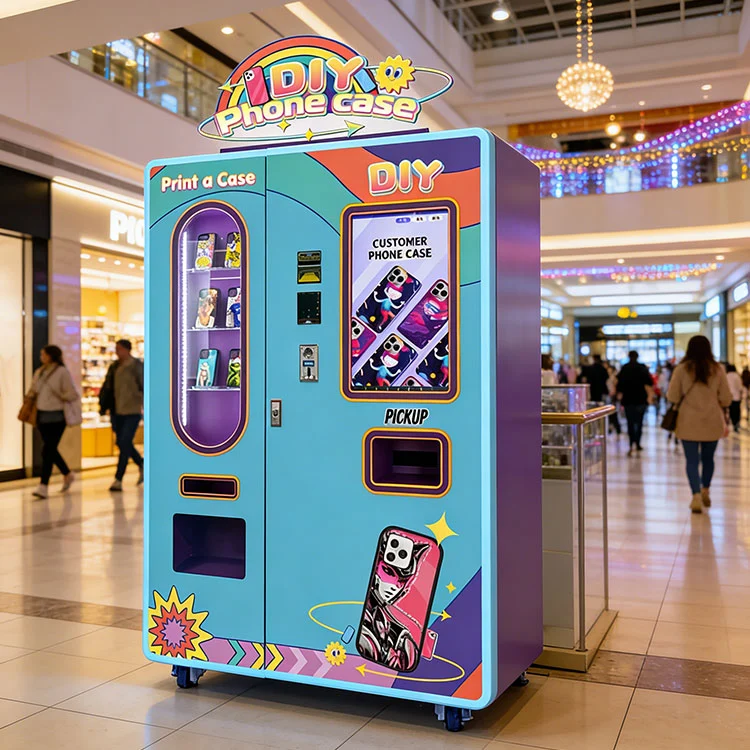
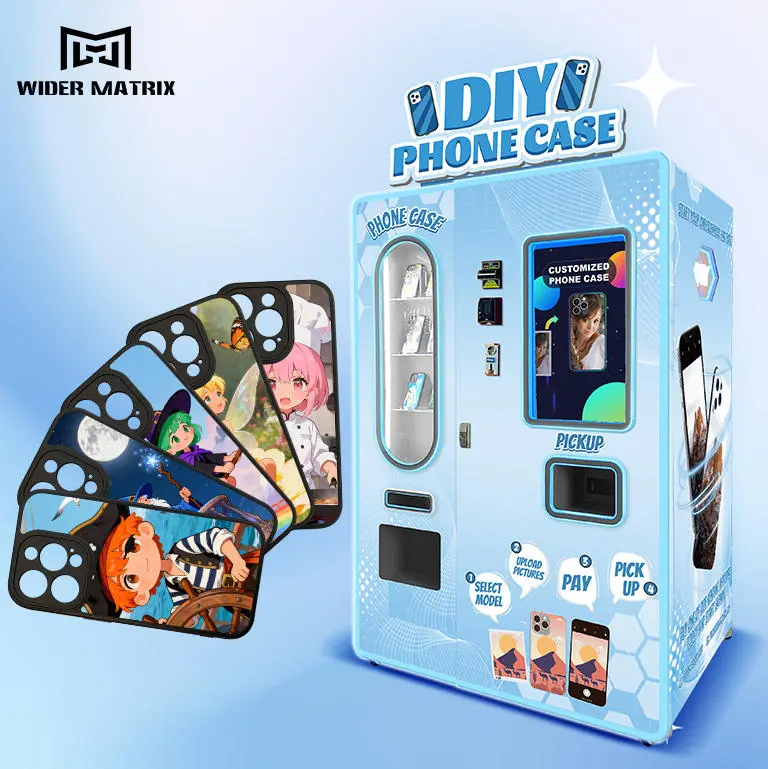
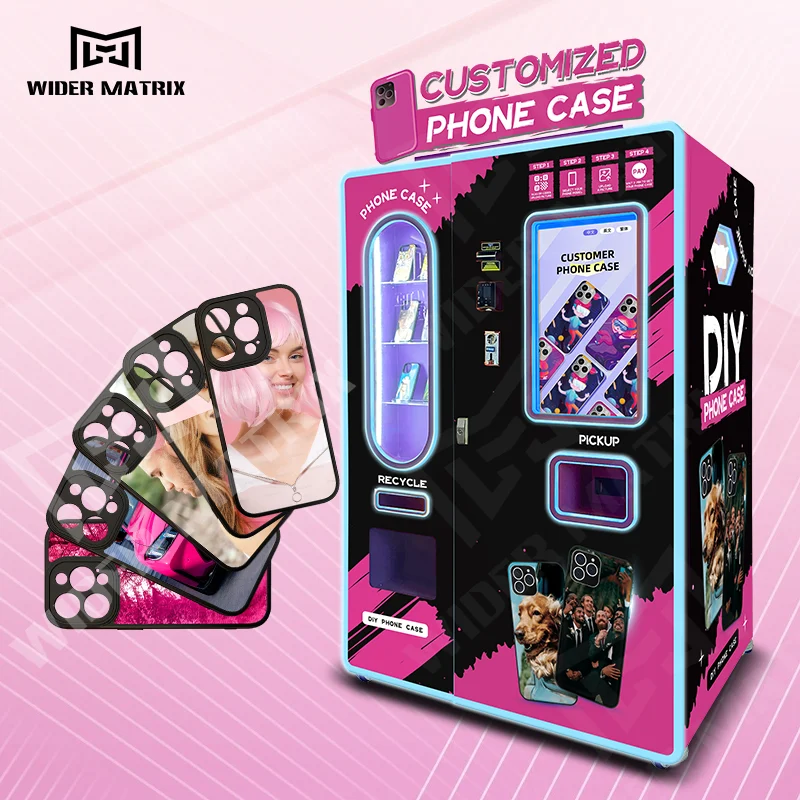
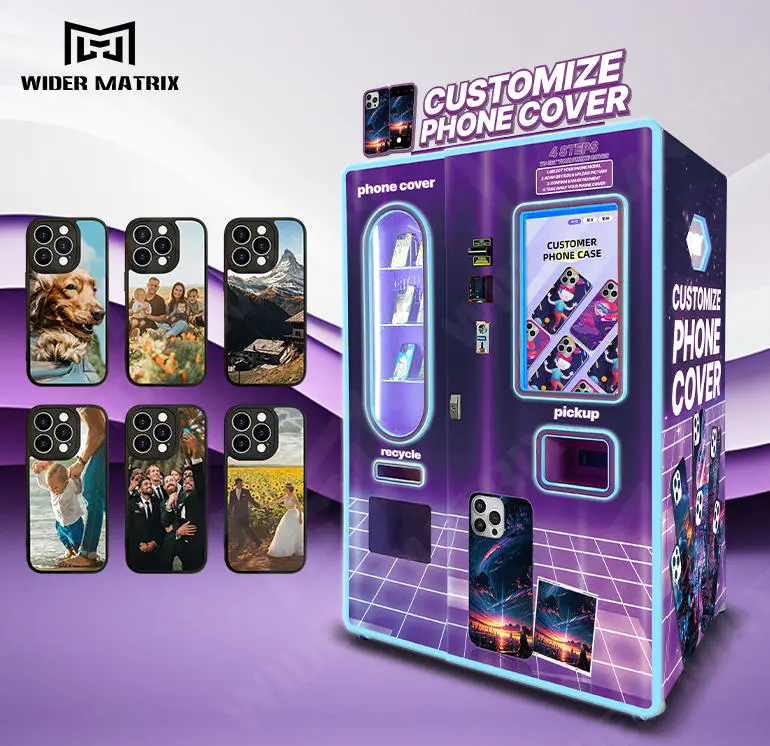
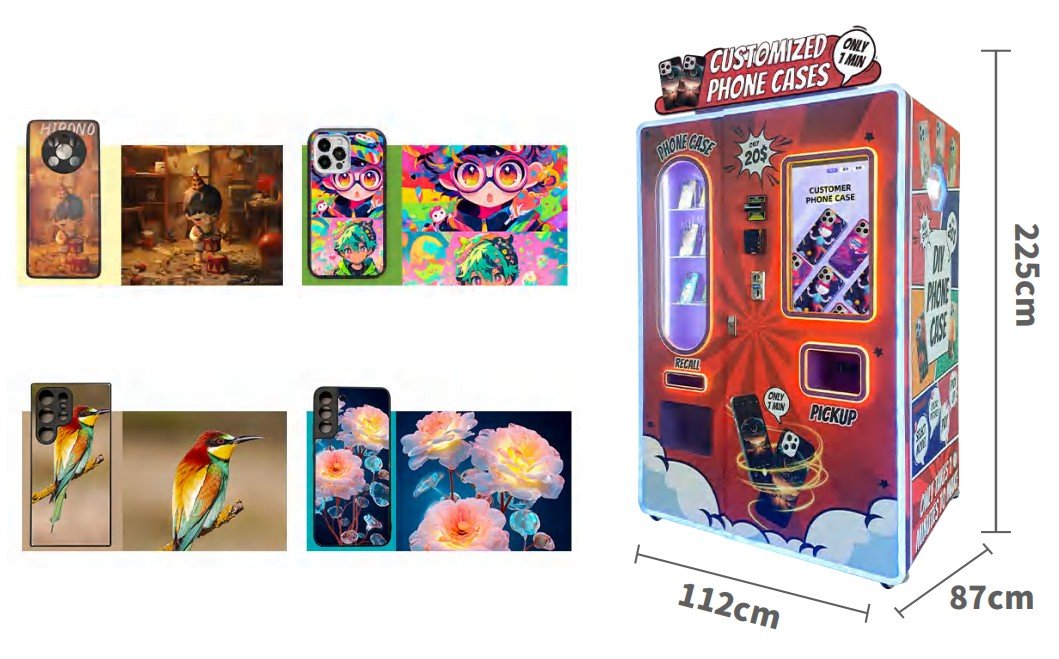
| Integrated Smart Vending Solution (e.g., Wider Matrix WM880) | $6,499 (MSRP $8,100) | On-demand, single-case production | Complete business-in-a-box: printer, software, inventory, payment. 1-3 min production, 24/7 unattended, AI-assisted operations. Learn more about DIY phone case machine brands. | Not for bulk wholesale production; designed for direct-to-consumer retail. | Entrepreneurs seeking a turnkey, high-margin retail business in malls or high-traffic areas. |
The Real Investment: Your Complete Cost Breakdown
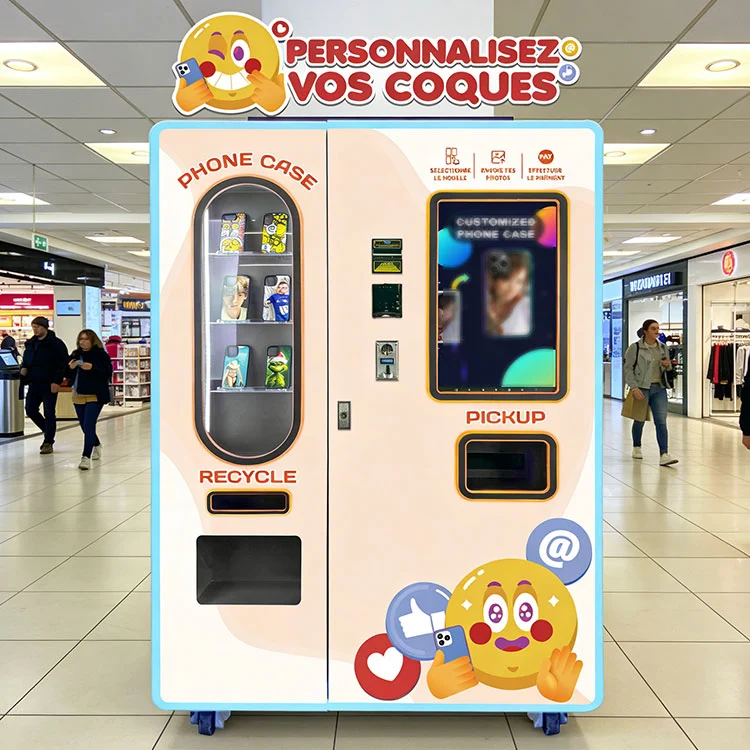
Understanding the total cost of ownership (TCO) is crucial. The printer’s sticker price is just the beginning.
- Printer & Setup: This ranges from $6,500 for a smart vending unit to $35,000+ for an industrial flatbed. Include $500-$2,000 for installation, calibration, and basic training.
- Software & Computer: A dedicated design computer and RIP software (if not included) can cost $1,500-$3,000.
- Consumables: Budget for UV inks ($150-$300 per liter), primer (if needed), and regular maintenance parts like print head wipers and UV lamps/LED arrays.
Blank Phone Cases: Your raw material cost. Wholesale prices for quality TPU/PC cases start around $1.30-$2.30 per unit in bulk. Sourcing is key; this guide to the best machines from China can offer insights into reliable supply chains.
- Per-Case Production Cost: For a standard case, this typically includes the case ($1.30), ink ($0.05-$0.10), and a fraction of electricity/maintenance. A total cost of $1.35-$1.50 per case is realistic. With retail prices between $15-$30, the gross profit margin is substantial, often exceeding 85%. Operators of integrated systems like the WM880 report recovering their investment in a matter of weeks with average daily sales of 30-50 cases.
Beyond the Printer: Essential Tools & Workflow
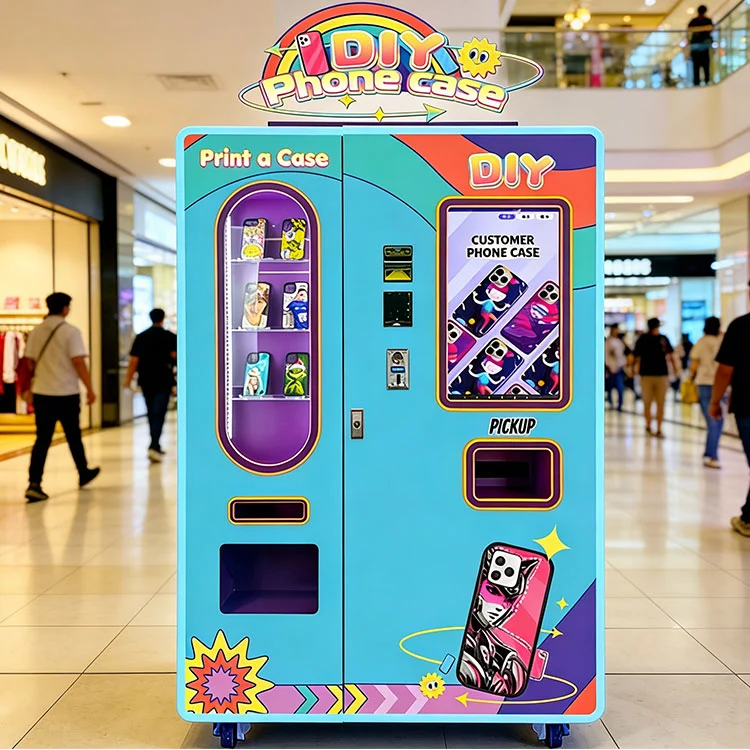
Your printer is the heart of the operation, but a successful workflow requires supporting elements.
- Pre-Treatment & Cleaning: You’ll need lint-free wipes and isopropyl alcohol (99%) for cleaning every case before printing to ensure perfect ink adhesion.
- Design & Mockup Tools: Software like Adobe Photoshop or Illustrator, plus online mockup generators, are essential for creating and presenting designs to customers.
- Curing & Finishing: While UV printers cure instantly, a separate UV curing station can be useful for double-checking or for applying additional protective coatings.
- Packaging: Have branded poly bags or boxes ready to deliver a professional final product.
- Workflow Integration: Streamline from order intake (via website or in-person kiosk) to design, printing, quality check, and packaging. Automation here is a major competitive advantage.
Common Phone Case Printing Problems & Solutions
Even with the best equipment, challenges arise. Here’s how to troubleshoot common issues.
- Poor Ink Adhesion/Peeling: This is almost always due to improper surface cleaning. Clean thoroughly with 99% IPA. If problems persist, the case material may be incompatible, or you may need to apply a primer/ adhesion promoter.
- White Ink Clogging or Streaking: Ensure the white ink circulation system is always on and agitated. Run daily nozzle checks and cleans. Use the printer’s “flush” function if streaks appear.
- Bandings or Lines in Print: This indicates a clogged nozzle. Perform a head cleaning cycle. If it continues, you may need to manually clean the print head or replace a damper.
Misprints on Curved Cases: Your fixturing is inadequate. Invest in custom-made jigs or adjustable vacuum fixtures that hold the case perfectly flat and stable. A dedicated UV mobile cover printing machine often solves this with built-in, model-specific fixtures.
- Cured Ink Feeling Tacky: The UV lamps may be underpowered, failing, or the print speed is too fast. Check lamp health, reduce print speed, or increase UV power settings.
Ready to Launch Your Custom Phone Case Business?
The journey from selecting equipment to making your first sale requires careful planning and trusted guidance. With over 8 years of industry experience and a global network of 3,000+ successful deployments across 130+ countries, we’ve seen what works. The most successful operators combine the right technology with a clear understanding of their costs, market, and operational workflow.
If you’re serious about building a profitable venture, we invite you to take the next step with confidence. Request a personalized, no-obligation ROI calculation and product consultation. Simply provide your contact details, and our technical advisory team will send you a detailed proposal within 24 hours, including a side-by-side comparison of suitable models, a transparent breakdown of all costs, and a tailored deployment plan based on your target location and goals. We provide lifetime technical support, comprehensive warranty coverage, and the proven tools to turn your investment into a thriving business.
Choosing the best UV printer for your phone case venture is a strategic investment in your future. By prioritizing the features that matter most for durability and production efficiency, understanding the full scope of costs, and learning from common industry challenges, you can select a machine that becomes the engine of your profitability. Whether you opt for a versatile industrial flatbed or a high-margin, turnkey smart vending solution, success lies in matching the technology to your specific business model and committing to quality at every step of the customer experience.

Specifications
| Model | WM880 |
| Device Dimensions | 128cm*87cm*230cm |
| Device Weight | 220KG |
| Power | 220W |
| Voltage | 220V/110V (Optional) |
| Payment Methods Supported | Coin/Cash/Credit Card/NFC/WeChat/Alipay |
| Printing Technology | 6-color UV printing |
| Printing Resolution | 1440DPI |
| Printing Speed | 2-3 minutes/piece |
| Supported Phone Models | 96 mainstream models |
| Phone Case Storage Capacity | 300-500 pieces |
| Display Screen | 27-inch touch display, supports video ad rotation |
| Remote Management | Supports cloud monitoring and management |
Product Certificates
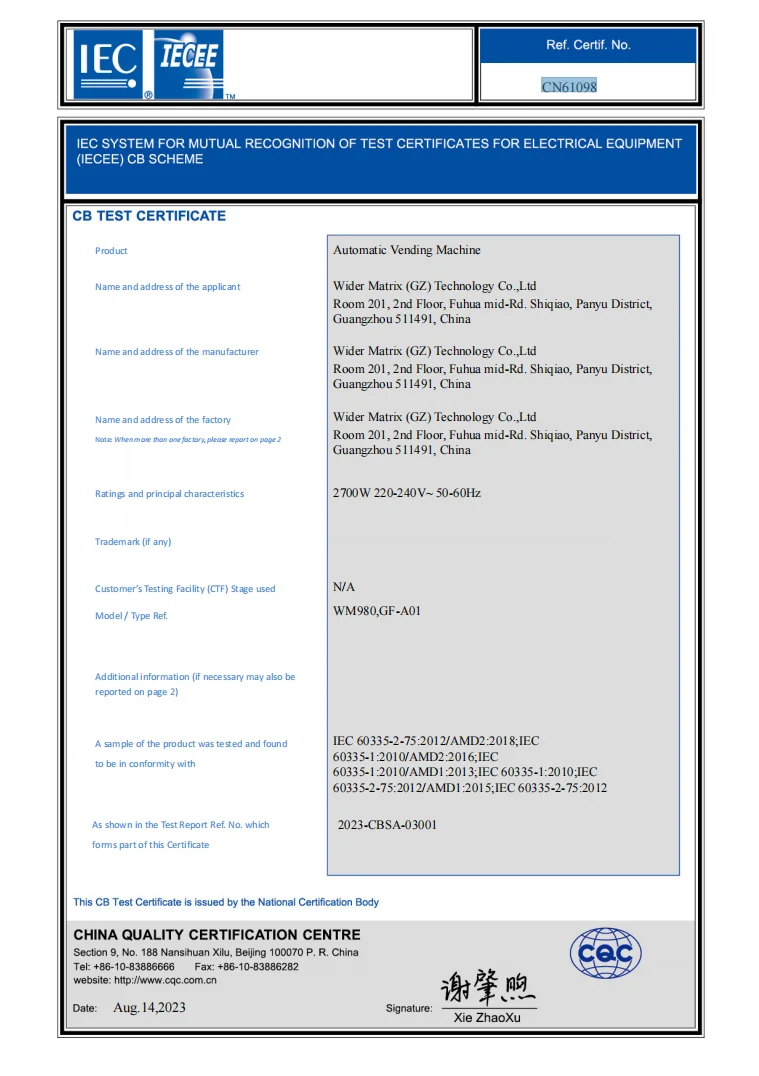
CB
CN61098
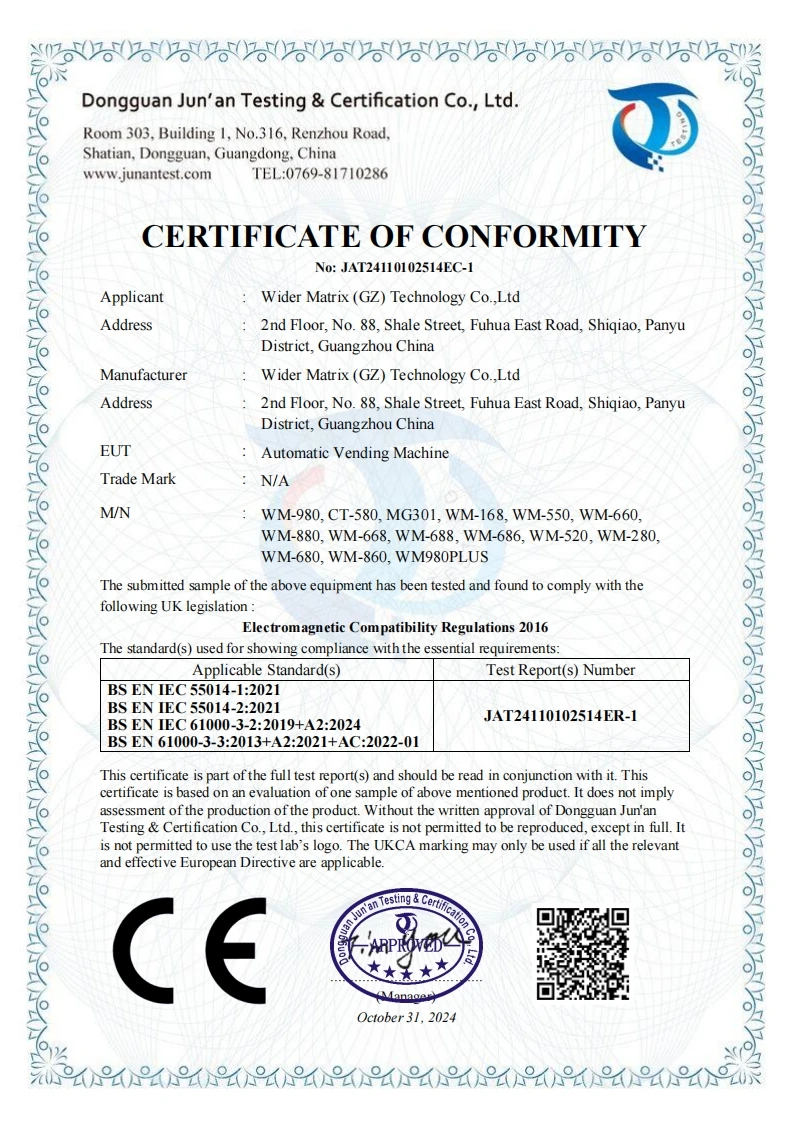
UKCA
JAT24110102514136
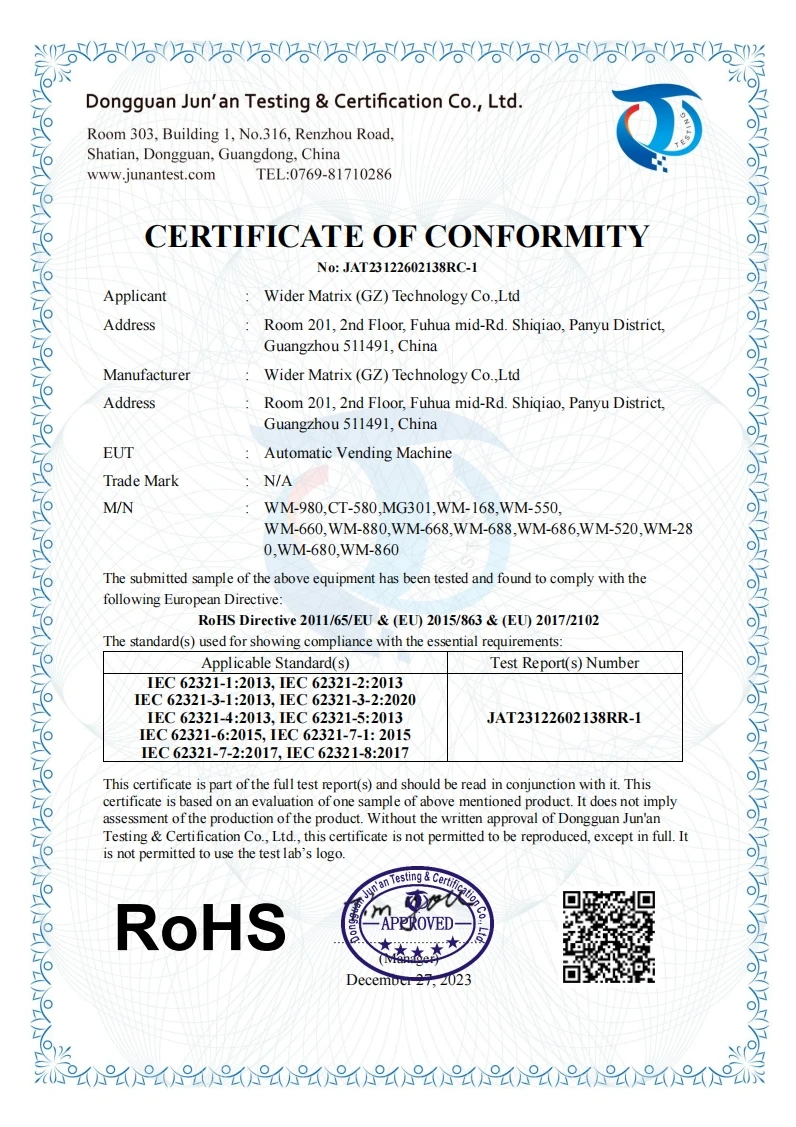
RoHS
JAT23122602137123
Company Introduction
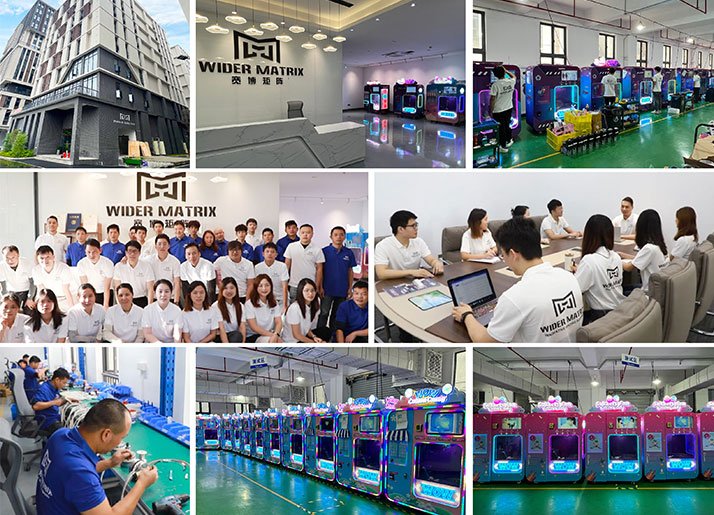
Wider Matrix (Guangzhou) Technology Co., Ltd. is a scientific and technological enterprise that attaches importance to R&D and user experience, We started to research and develop vending machines in 2016, and achieved a leading position in the field of unattended vending machines.
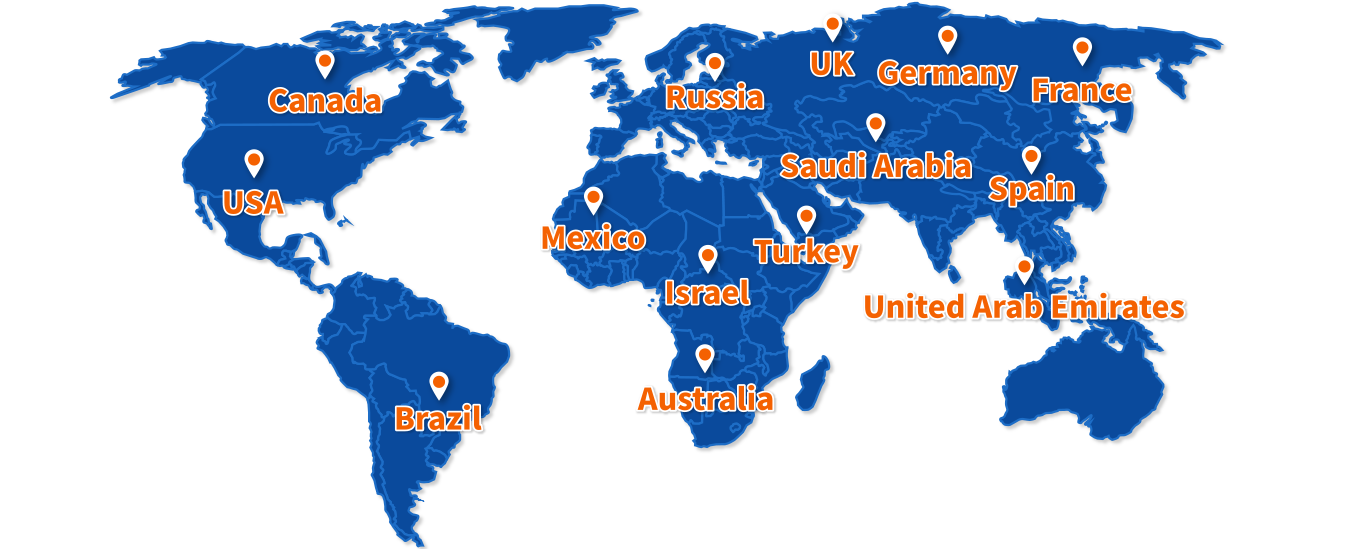
In 2019, we manufactured the first automatic cotton candy vending machine. After testing in domestic market, refining our product for years, fixing the issues you might run into while operating, the performance of our machines are stable enough and reach the standard for export finally. Till now, our machine has been exported to more than 130 countries such as the United States,Canada,Europe, Southeast Asia, Australia and Israel.
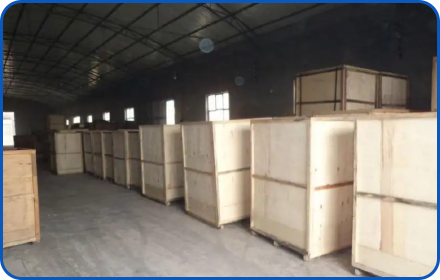
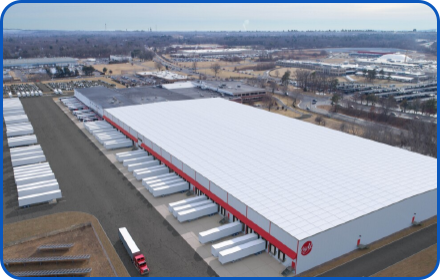
We set up overseas warehouses in the United States, Canada, Britain and Israel to provide customers with consumables and accessories support. All machines support remote control, which has the advantages of easy operation, convenient maintenance and high operating efficiency. After our cotton candy vending machines are delivered and put into use, they can bring you considerable benefits.
Every customer's success and satisfaction are the driving force for us to pursue innovation and climb the peak forever. In the future, we will uphold the business philosophy of customer first and quality first, and constantly create more good products for the market. Join us now and start your intelligent and innovative vending machine business!
Exclusive Services
Overseas Support Service
Local transfer warehouse support, ensuring your operational stability.
Custom Design
We offer machine appearance customization, branding, and large-scale custom packaging services.
Initial Tools & Spare Parts Kit
Machine comes with complementary tools and spare parts kit, including initial consumables package for early operations.
Functional Customization & Software Optimization
Custom functionality based on client needs, including hardware and software optimization updates.
Lifetime Technical Support & Updates
We provide lifetime technical support and software update services for all customers.
Frequently Asked Questions
Q: What is the typical ROI for a phone case printing business?
The ROI can be exceptionally fast with the right model and location. For a standalone UV printer, producing cases for $1.50 and selling for $20, each sale nets ~$18.50. Selling 10 cases a day covers a significant portion of the machine payment. For integrated smart vending solutions like the Wider Matrix WM880, with a machine cost of $6,499 and a per-case cost of ~$1.35, operators often see a full return on investment within a few weeks, thanks to 24/7 unattended sales in high-foot-traffic areas.
Q: Can I print on any type of phone case?
UV printers are highly versatile but work best on hard plastic (polycarbonate), TPU, and silicone. Glossy or overly flexible “jelly” cases can present adhesion challenges and often require pre-treatment with a primer. Always test a new case material before offering it to customers.Q: How difficult is it to operate and maintain a UV printer?
Modern UV printers are designed for semi-automated operation. The daily workflow involves cleaning the print bed, running nozzle checks, and loading designs. Weekly maintenance includes cleaning the encoder strip and wiping down the interior. Major print head cleans or part replacements are less frequent but require following the manufacturer’s guidelines closely. Comprehensive support is critical; for instance, industry leaders provide lifetime technical support and step-by-step video guidance.Q: Do I need special software or design skills?
You will need a basic understanding of design software to prepare, resize, and position images. However, many turnkey systems come with user-friendly software that includes templates for every phone model, allowing customers to simply upload their photo. You can also partner with freelance designers or use pre-made design libraries.Q: Is white ink necessary?
Absolutely. White ink is fundamental for printing vibrant, opaque colors on transparent, black, or dark-colored cases. Without it, your design options are severely limited. Ensure the printer you choose has a reliable, continuously circulating white ink system.Q: What’s the difference between a standard UV flatbed and an all-in-one vending machine?
A standard UV flatbed is a production tool. You buy it, source blanks, create designs, and fulfill orders (online or wholesale). An all-in-one smart vending machine (like the WM880) is a complete retail business model. It houses the printer, blank inventory, payment system, and software in one secure kiosk, allowing consumers to customize and receive a case on the spot, 24/7, with no staff required. The choice depends on your business model: B2B production vs. direct-to-consumer retail.Q: How long does it take to print one phone case?
Production time varies by printer and print quality settings. On a well-tuned industrial flatbed in high-quality mode, a detailed full-color case can take 2-4 minutes. Dedicated phone case printers in vending setups are optimized for speed, typically delivering a finished case in 1-3 minutes, which is ideal for an impatient retail customer.User Reviews
Widermatrix has been so great to work with especially Taylor. Taylor sends pictures and testimonials and data to help the decision process. Once decided the process is smooth and Taylor sends updates with pictures and videos of YOUR phone case vending machine along the way. Once it arrived the 24 hr tech support was patient with me as we worked hard to get it all dialed in. The claims are real, this automated phone case dispenser is half paid back on my initial invest just after 2 months! Kids and adults love these protective case kiosks.
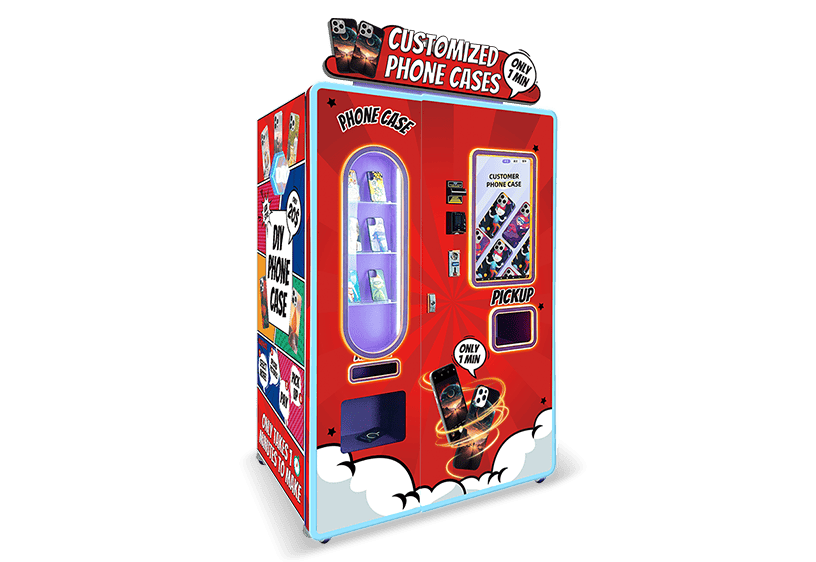
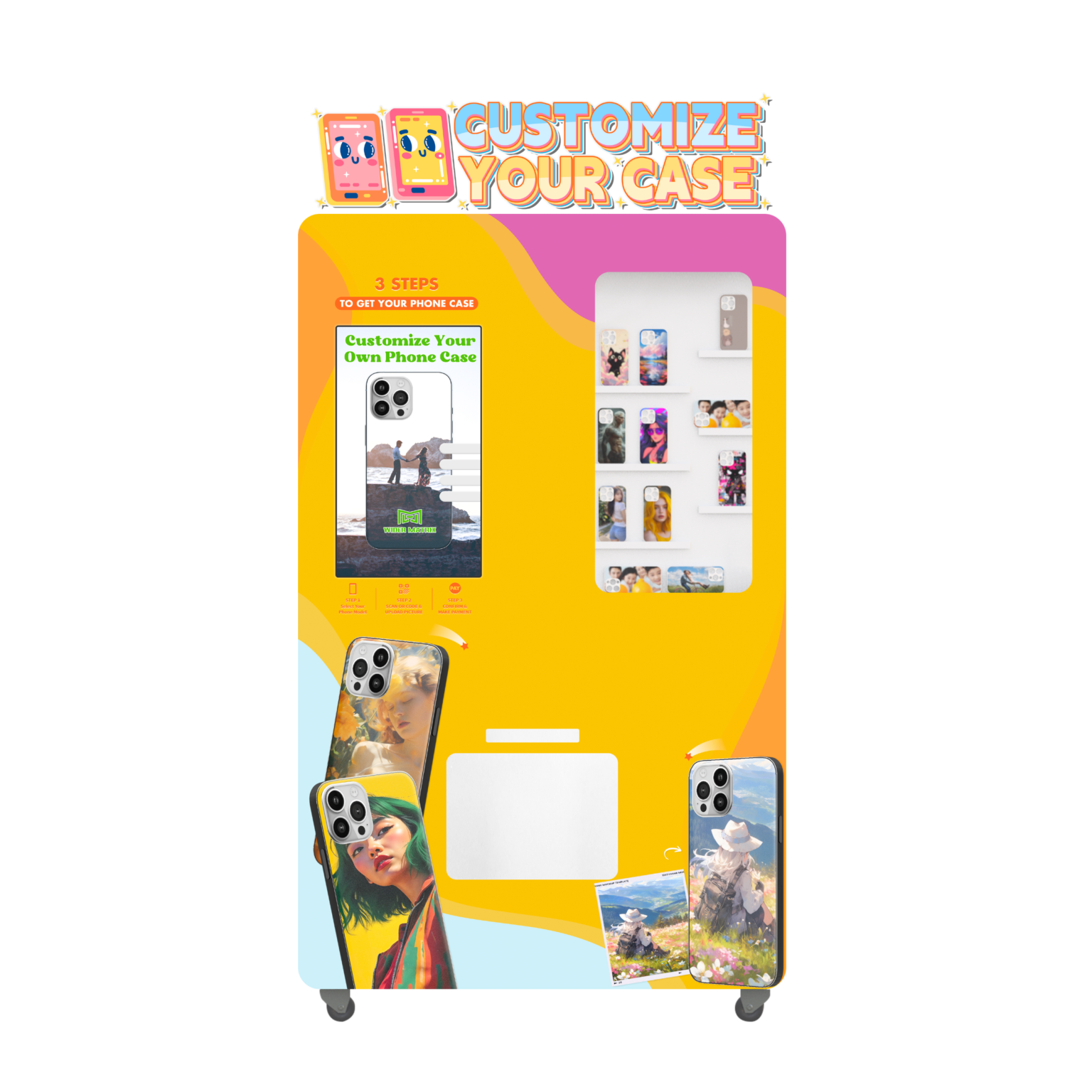
I bought two phone case vending machines, and they have been in operation for over three months and are very stable. The smartphone accessory kiosks have excellent reliability and require minimal maintenance.
This is my first time running a phone case vending machine business and it looks great. The automatic mobile accessory dispenser attracts many customers in my shopping mall location.