



Cotton Candy Vending Machine USA – 2026 Buyers Guide & Profit Calculator
Service Support
- Support for small batch customization
- Fast delivery worldwide
- 12-month warranty service
- Online technical support
Looking for a cotton candy vending machine in the USA means you’re likely investigating a high-margin, automated business opportunity. You’re not just browsing—you’re actively researching where to buy, how much it costs, and whether this venture can be profitable in the American market. This guide cuts through the generic sales pitches to deliver what you truly need: a data-driven, step-by-step blueprint for launching and scaling a successful cotton candy vending operation. We’ll provide hyper-local U.S. market analysis, a transparent comparison of top suppliers, a detailed breakdown of state-by-state regulations, and the real-world profitability data that competitors often gloss over. By the end, you’ll have a clear, actionable plan to turn this sweet idea into a serious revenue stream.
The demand for experiential, automated retail is surging across the United States. This isn’t just about selling sugar; it’s about capitalizing on impulse purchases in high-foot-traffic environments where entertainment and convenience merge. Industry data from operators with over 8 years of experience and 3,000+ machine deployments shows that successful locations leverage specific venue characteristics. The most profitable U.S. locations typically share a few key traits: captive audiences with disposable income, dwell times of 30 minutes or more, and a family-friendly or celebratory atmosphere.
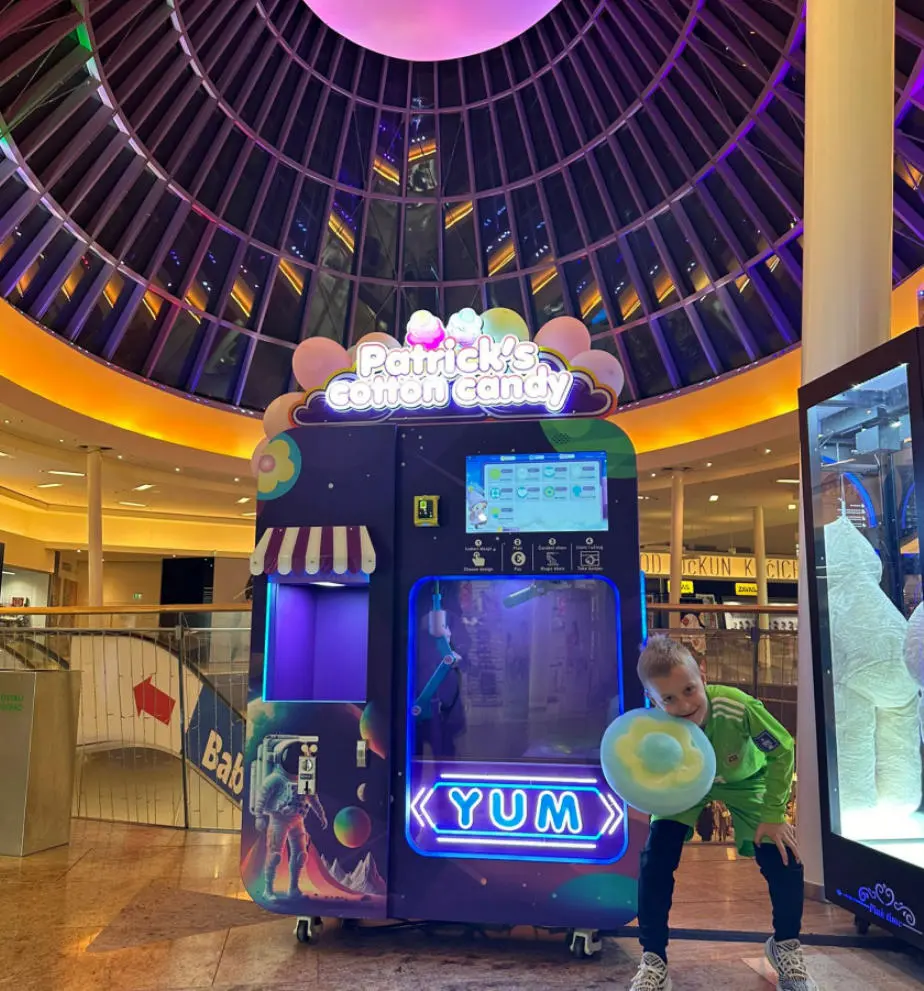
Top-performing venues in the current market include major league sports stadiums (particularly during family-day promotions), large regional shopping malls with play areas, multiplex cinema lobbies on weekends, and seasonal attractions like county fairs or holiday markets. For instance, operators in coastal tourist destinations like Florida or California often report 20-30% higher per-machine revenue during peak seasons compared to similar machines in Midwest shopping centers, highlighting the importance of localized strategy. The key is matching the machine’s placement with predictable, high-volume foot traffic where a colorful, automated spectacle becomes an irresistible draw.
Decoding the Machines: Technology, Specs & U.S. Supplier Comparison
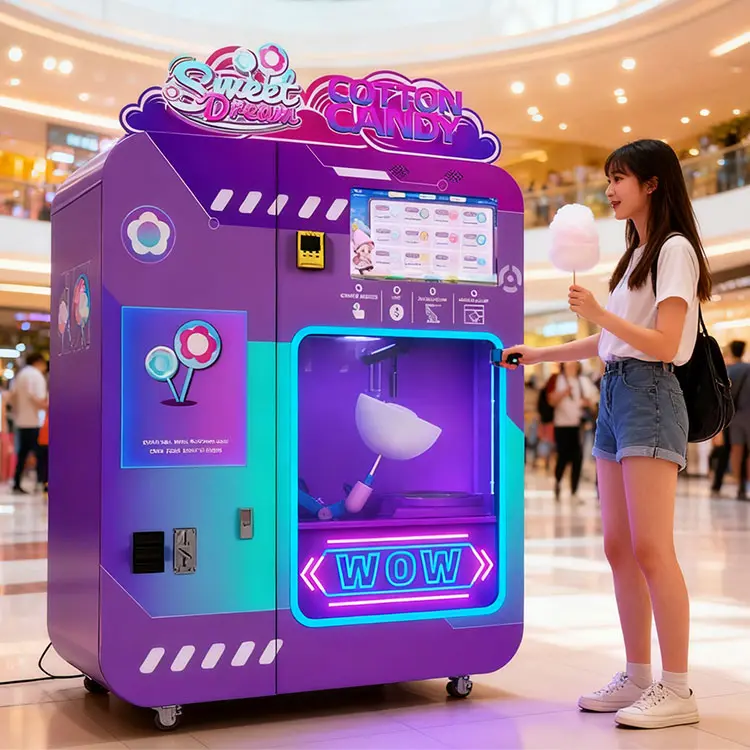
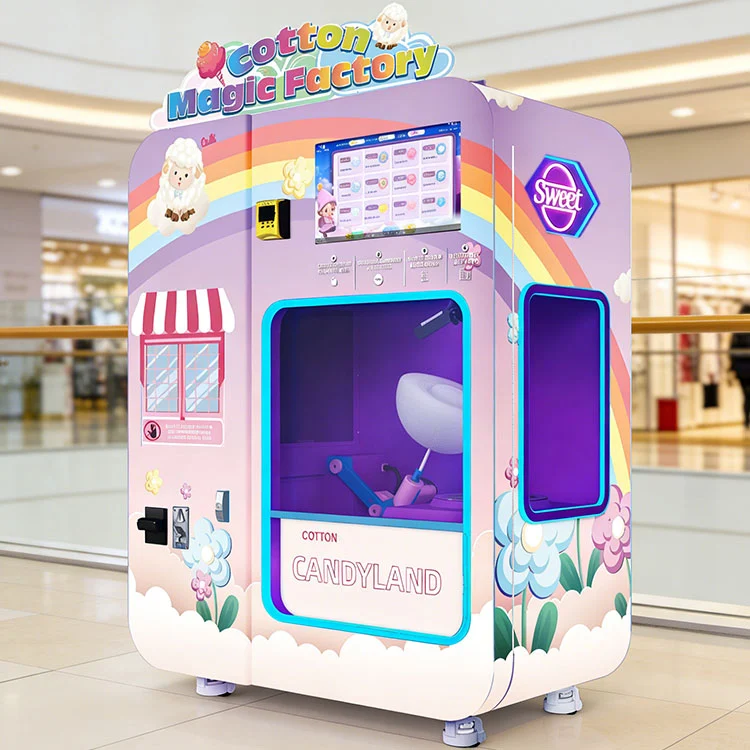
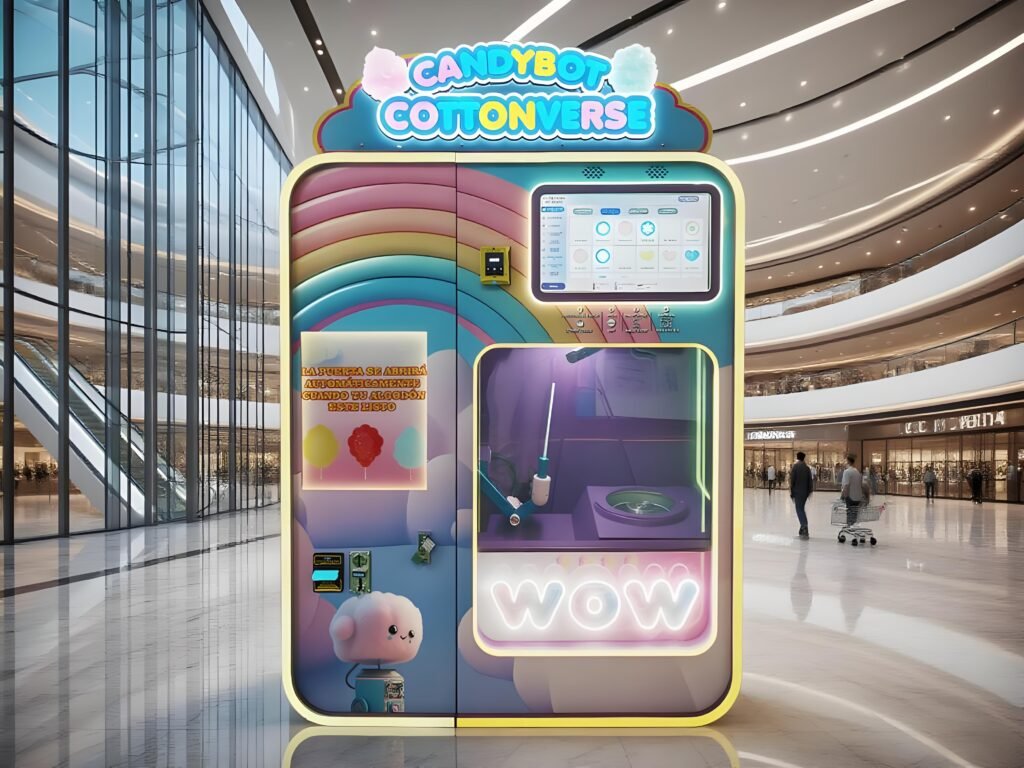
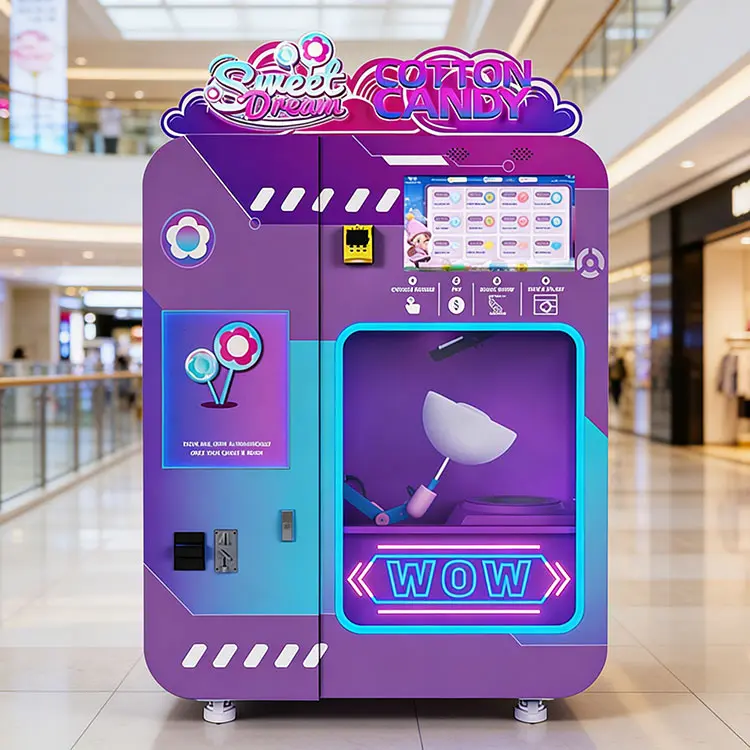
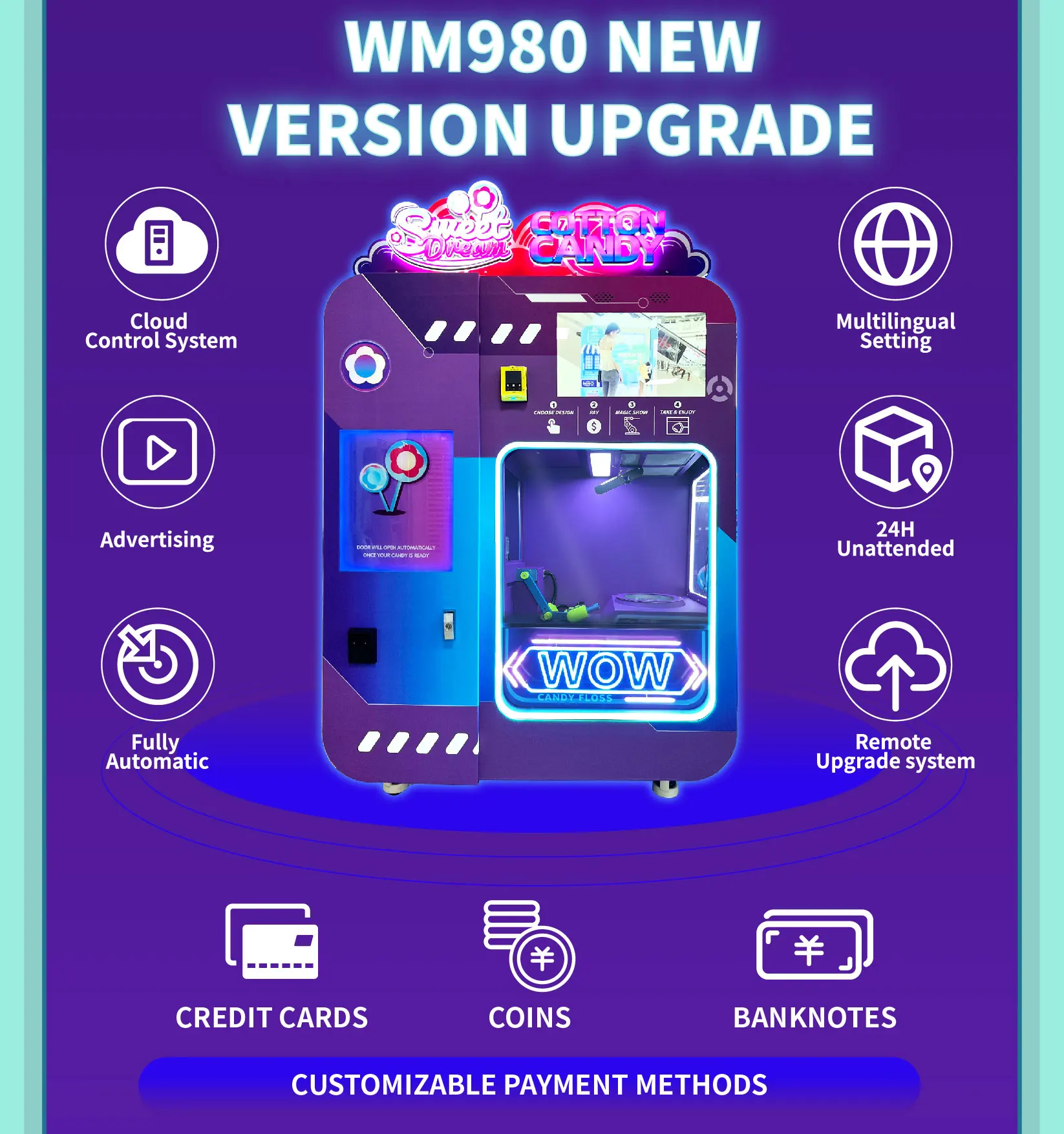
Not all cotton candy vending machines are created equal. Your business’s reliability and profitability hinge on understanding the core technology and specifications. Modern commercial machines are fully automated, integrating a robotic arm, a heating element, a spinning head, and a dispensing mechanism, all controlled by a PLC (Programmable Logic Controller) system. Critical specs to evaluate include production speed (aim for 60-90 seconds per serving), power requirements (typically 110V/60Hz for the USA), sugar capacity, and physical dimensions to ensure it fits your target location.
When evaluating U.S. suppliers and importers, a head-to-head comparison is essential. Look beyond the initial price tag to the total cost of ownership, which includes maintenance, part costs, and ongoing support. Based on market analysis and feedback from a network of operators, here is a comparison of key considerations for major channels:
| Supplier Type | Pros | Cons | Best For |
|---|---|---|---|
| Domestic Distributors & Resellers | Faster shipping, local warranty support, may handle some compliance. | Higher markup (often 30-50%), limited model selection. | First-time buyers prioritizing convenience and local support. |
| Direct from Manufacturer (Overseas) | Lower factory-direct pricing, custom configuration options, access to latest models. | Longer lead times, self-managed import logistics, need for due diligence on manufacturer quality. | Volume buyers, experienced operators, those comfortable with international trade. |
| B2B Marketplaces (Alibaba, etc.) | Wide variety of suppliers for price comparison. | High risk of quality variance, communication barriers, minimal after-sales support. | Highly price-sensitive buyers with strong technical vetting skills. |
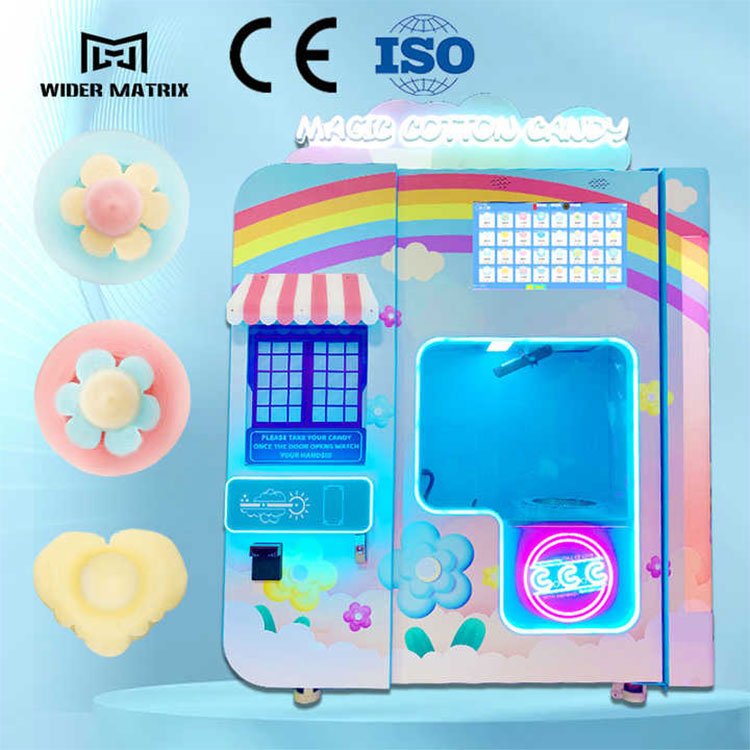
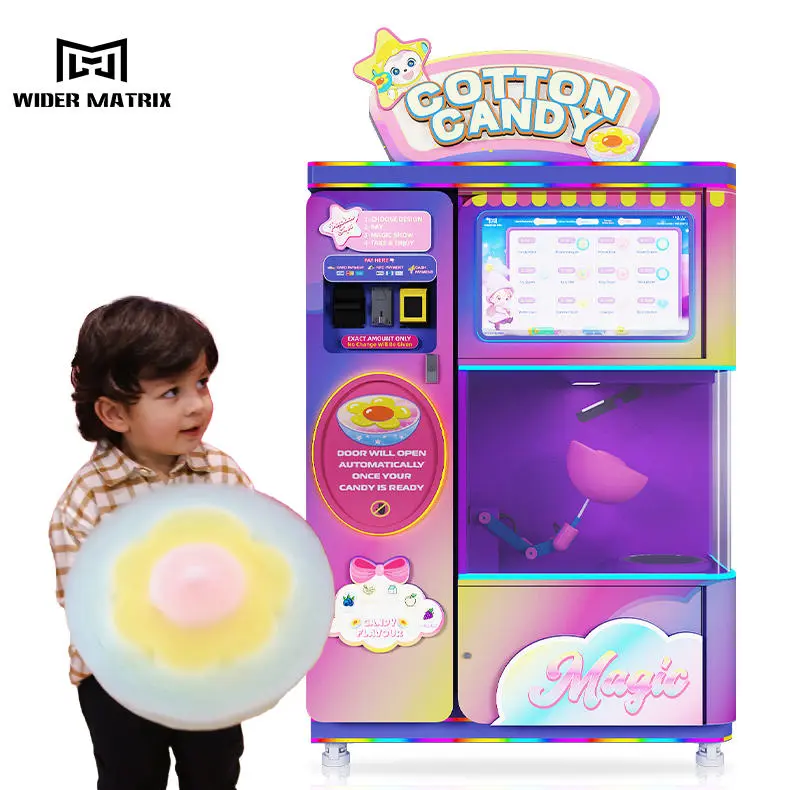
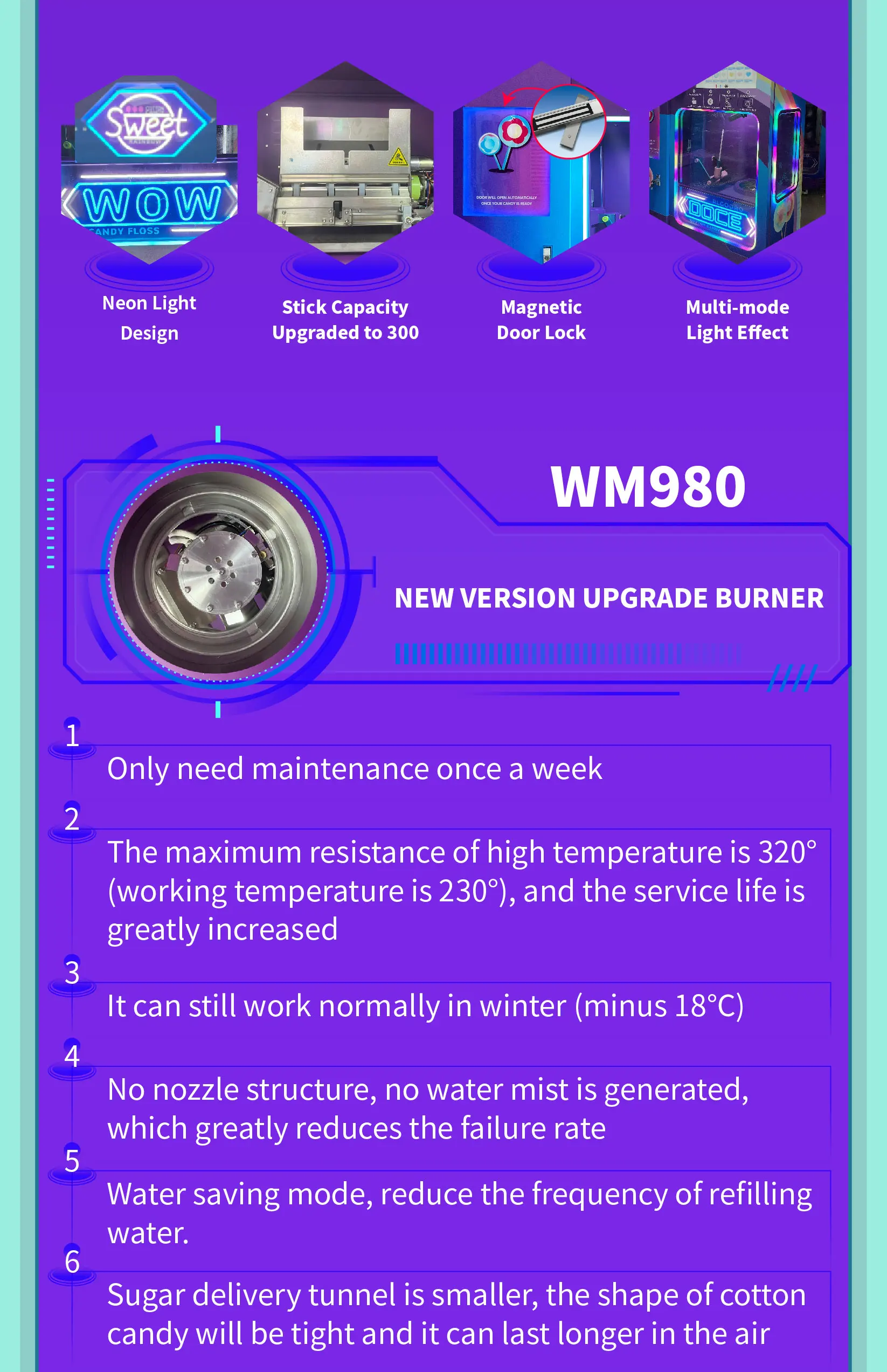
For a deep dive into vetting manufacturers, our guide on Which Cotton Candy Vending Machine Manufacturer is the Best? provides a critical framework. Leading manufacturers with proven U.S. deployments, like Wider Matrix, engineer machines specifically for durability and ease of service. For example, the Wider Matrix WM980 Plus Smart Cotton Candy Vending Machine is priced at US$4,999 (MSRP: US$6,700) and is designed with a hygienic sealed chamber and smart IoT for remote monitoring, reflecting the industry shift toward connected, reliable equipment.
The Business Blueprint: Setup, Regulations & ROI
Turning the machine on is the easy part. The real work is in the setup. Your blueprint must start with business structure (LLC is highly recommended for liability protection) and a dedicated business bank account. Next, navigate the regulatory landscape, which is the most common hurdle for new operators. Requirements vary significantly by state, county, and even city, typically involving a general business license, a sales tax permit, and specific health department approvals for unattended food vending.
A state-by-state checklist is invaluable. In California, for instance, you’ll likely need a CFPM (Certified Food Protection Manager) certificate and permit from the local Environmental Health Department. In Texas, regulations can be more county-specific, while in Florida, Department of Agriculture and Consumer Services (FDACS) guidelines apply. Always contact your local health department before purchasing equipment, as some jurisdictions have rules about fully enclosed production chambers or specific cleaning log requirements. This due diligence is non-negotiable.
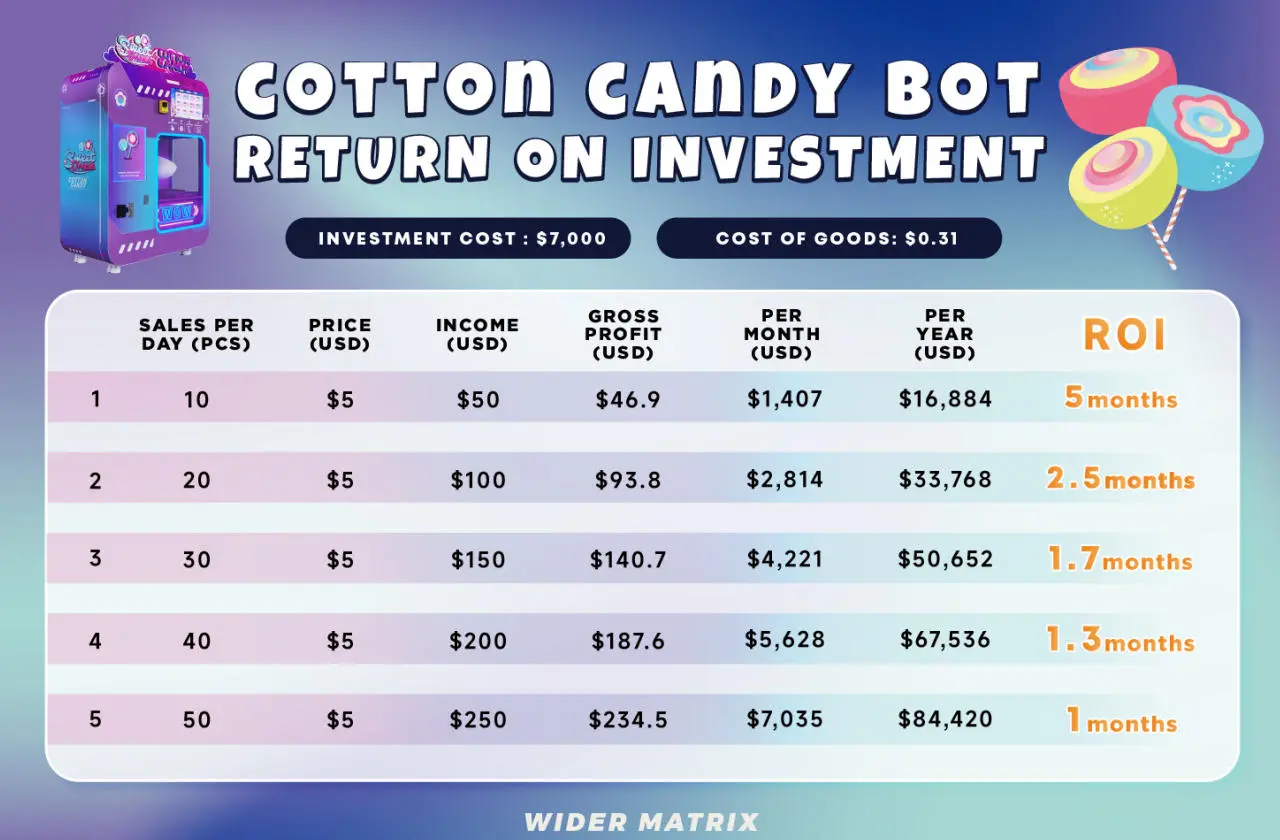
Now, let’s talk numbers. The profitability is real, but it must be calculated precisely. Using industry-standard data from thousands of deployments, here’s a realistic ROI framework:
- Production Cost: Approximately $0.31 per candy (including sugar and stick).
- Average U.S. Retail Price: $5 – $10, depending on venue and presentation.
- Gross Profit Margin: 93.8% – 97%.
- Key Variables: Location foot traffic, pricing strategy, and machine uptime.
A machine selling just 10 units per day at $6 generates about $1800 in monthly revenue with costs around $93, yielding a gross profit of over $1,700. At this rate, the initial investment in a machine like the WM980 Plus can be recovered in a matter of months, not years. For a detailed breakdown, explore our analysis on What is the ROI for a Cotton Candy Vending Machine?, which debunks common myths with hard data.
Daily Operations, Sourcing & Scaling Your Venture
A successful operation hinges on efficient daily management. This involves regular restocking of consumables—specifically floss sugar (1.2-1.7mm diameter works best in automated machines) and paper sticks. Establish a reliable supply chain; many operators source sugar in bulk from restaurant supply companies or directly from machine manufacturers to ensure compatibility. Daily tasks should include a visual inspection, wiping down the exterior and payment interface, checking the sugar hopper level via the remote cloud management system, and ensuring the waste bin is empty.
Technical issues are inevitable, so preparedness is key. The most common maintenance items are clearing sugar clogs from the spinneret, ensuring the heating element is functioning correctly, and troubleshooting payment system connectivity. Choosing a supplier that offers comprehensive support is critical. For instance, standard industry support includes a 1-year warranty, lifetime technical assistance, and access to step-by-step troubleshooting videos. This level of support directly impacts your machine’s uptime and profitability.
Once your first machine is consistently profitable, you can consider scaling. Strategies include placing additional units in new, vetted locations, exploring different venue types (like transitioning from malls to corporate campuses or festivals), or even diversifying into complementary vending like phone cases or ice cream. The operational model is inherently scalable, as one person can often manage multiple machines with the help of remote monitoring software. For insights on launching this journey, how to start a cotton candy vending machine business offers a structured, step-by-step approach.
Your Next Step: From Research to Action
You now have the foundational knowledge, comparative data, and regulatory roadmap that most buyers search for in vain. The difference between those who simply research and those who build a profitable business is decisive action. The next logical step is to transform this information into a personalized plan.
We recommend you begin by requesting a detailed, itemized quote from a shortlist of suppliers. This quote should clearly separate machine cost, shipping, duties, and any initial spare parts. Use the comparison framework from this guide to evaluate them. Secondly, conduct your local regulatory check. A single phone call to your city’s business licensing office and county health department will clarify your exact permitting path and timeline. Finally, draft a simple location proposal. Identify one or two potential venues and outline the mutual benefits of hosting your machine.
To support this phase, we offer a personalized consultation and ROI projection. Based on your target city and venue type, we can provide a customized financial model and connect you with insights from our network of operators. This moves you beyond generic online figures to a plan grounded in real-world U.S. operational data. If you’re ready to move forward with clarity and confidence, reach out for a detailed proposal tailored to your specific goals in the American market.
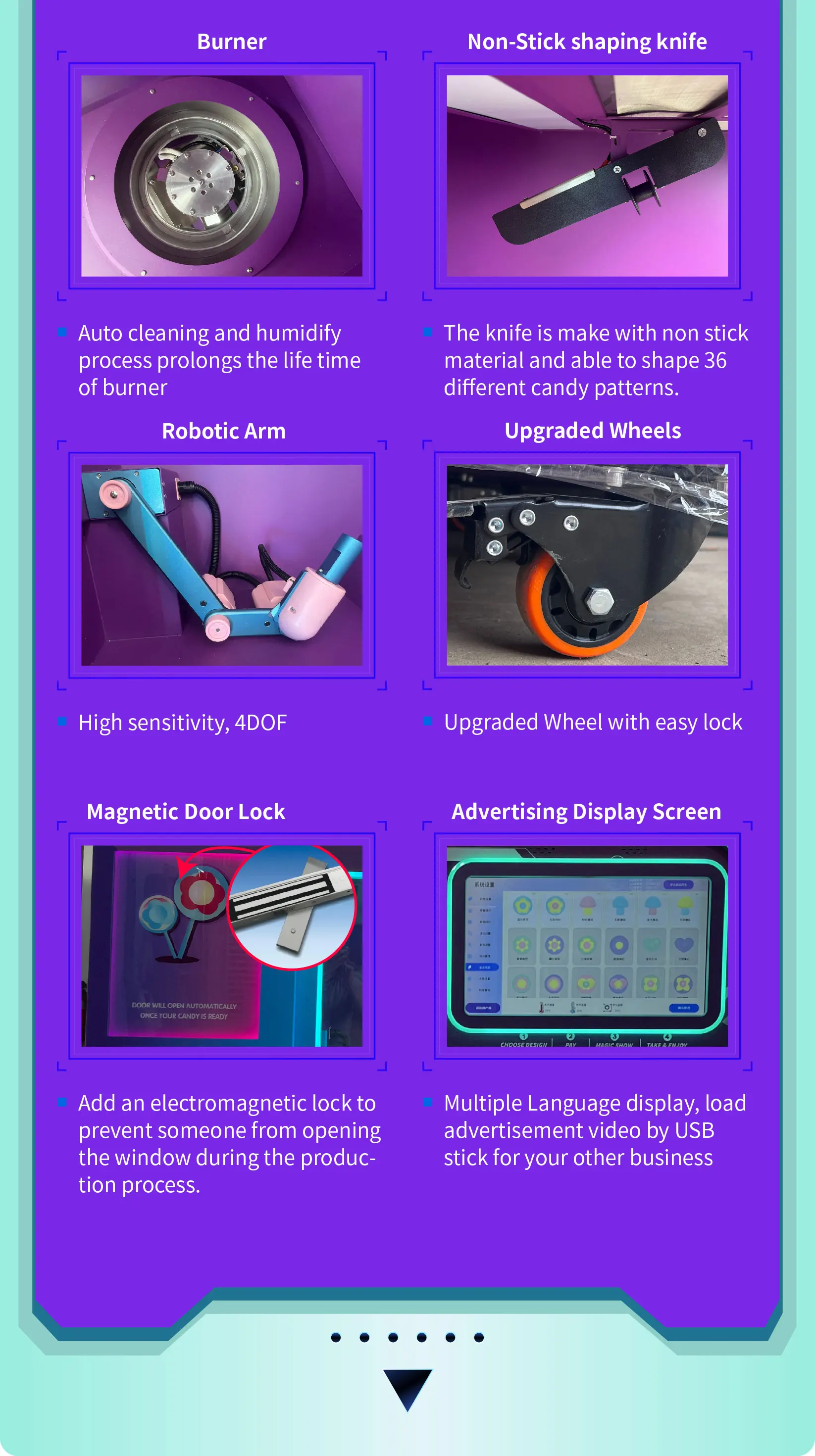
Specifications
| Model | WM980 |
| Dimensions | 132cm*195cm*67cm |
| Power | 500W when Standby, 3000W when processing |
| Net Weight | 300KG |
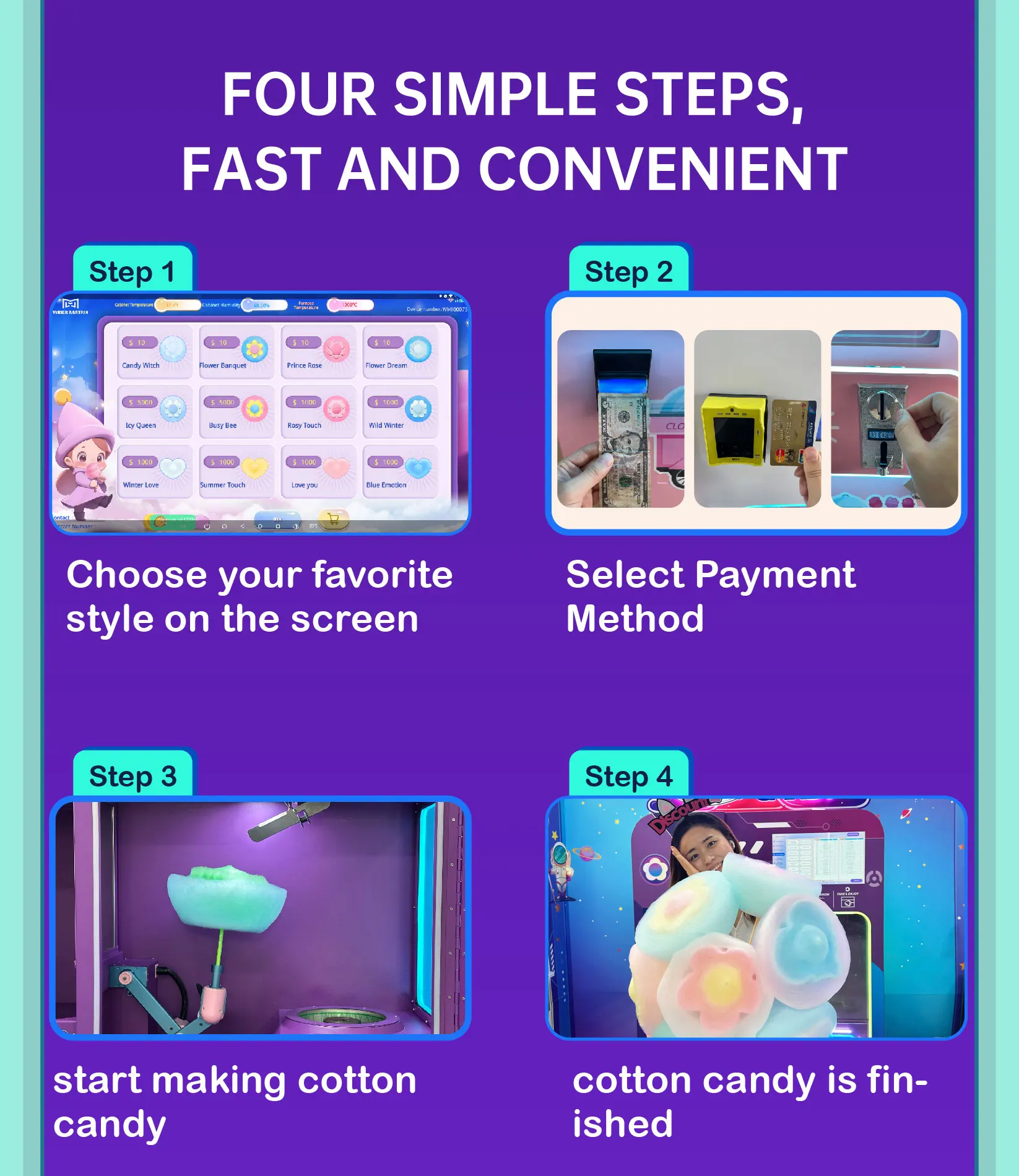
| Payment Methods | Coin/Cash/Credit Card/NFC |
| Sugar Consumption | 28~30g per candy |
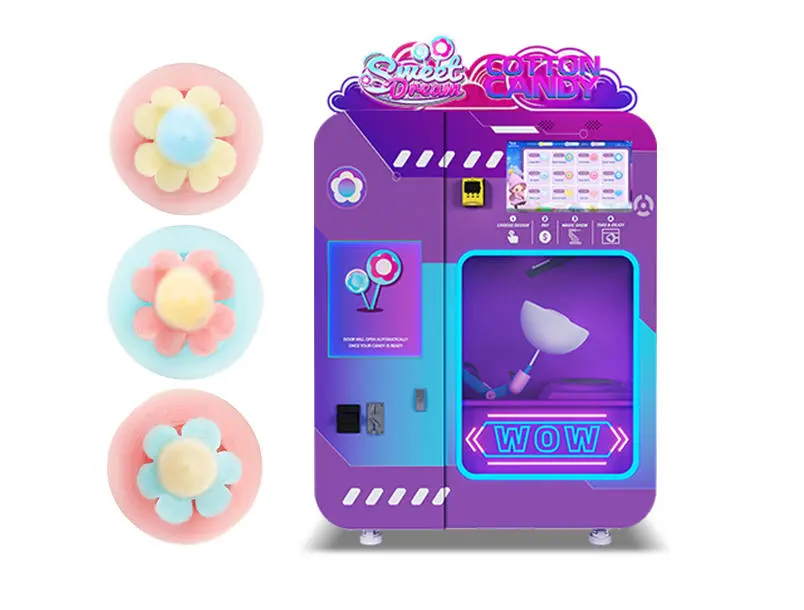
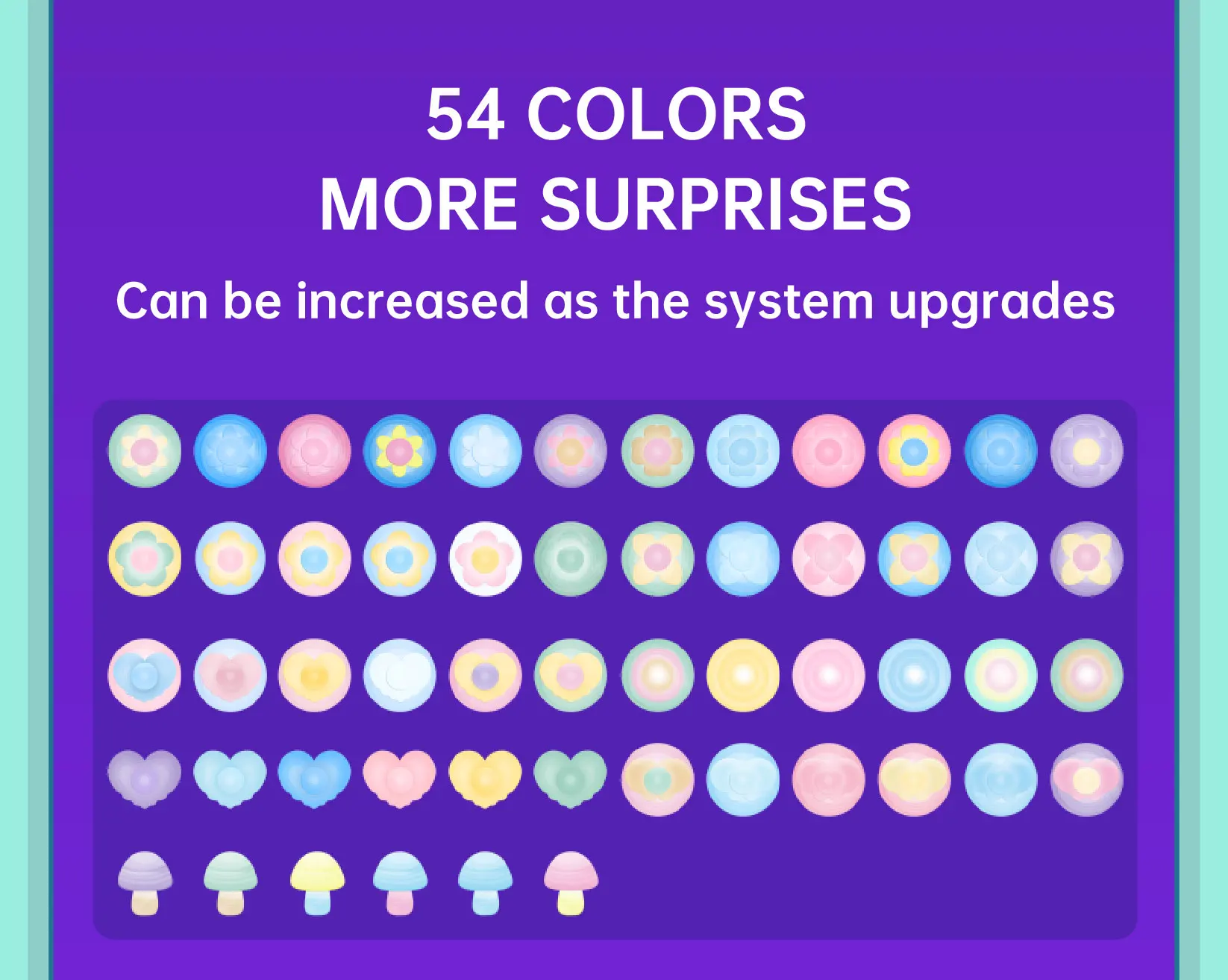
| Cotton Candy Designs | 54 designs and keeping updating |
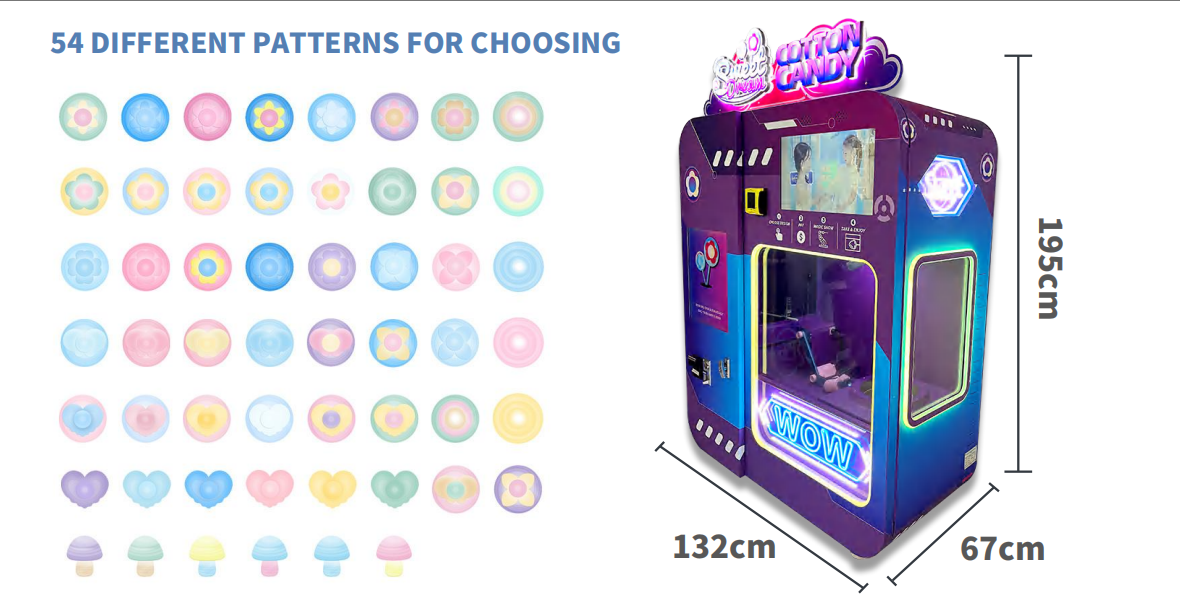
Product Certificates
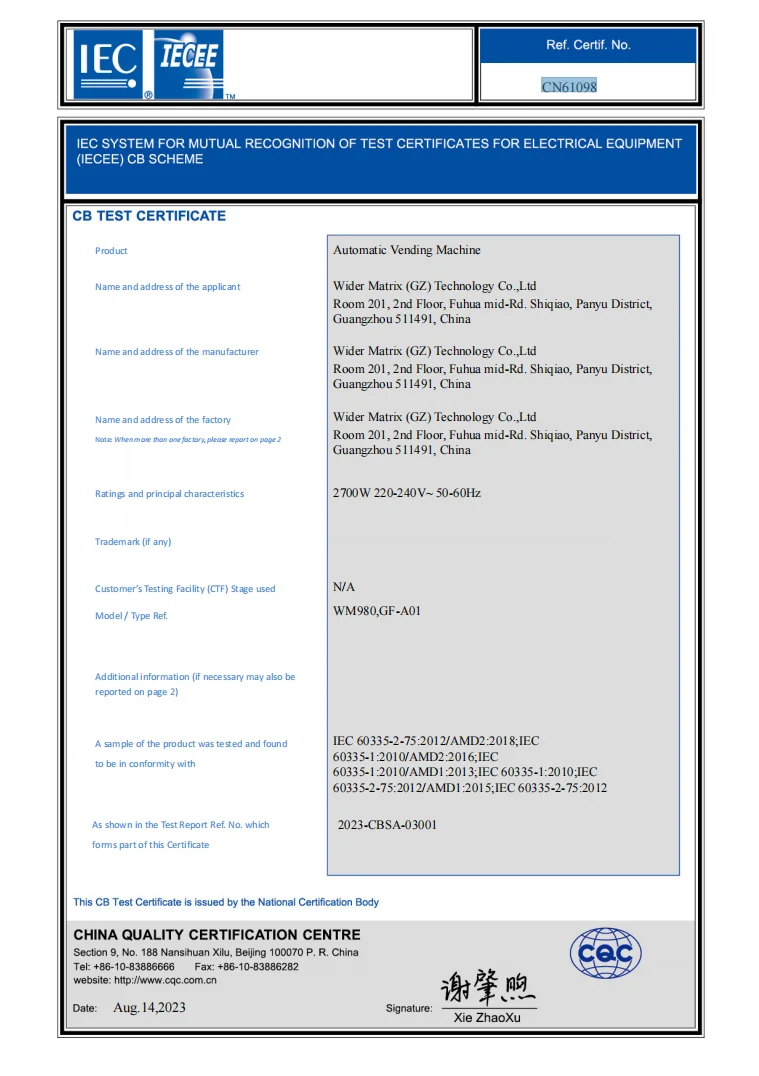
CE
EN71-1:2014+A1:2018
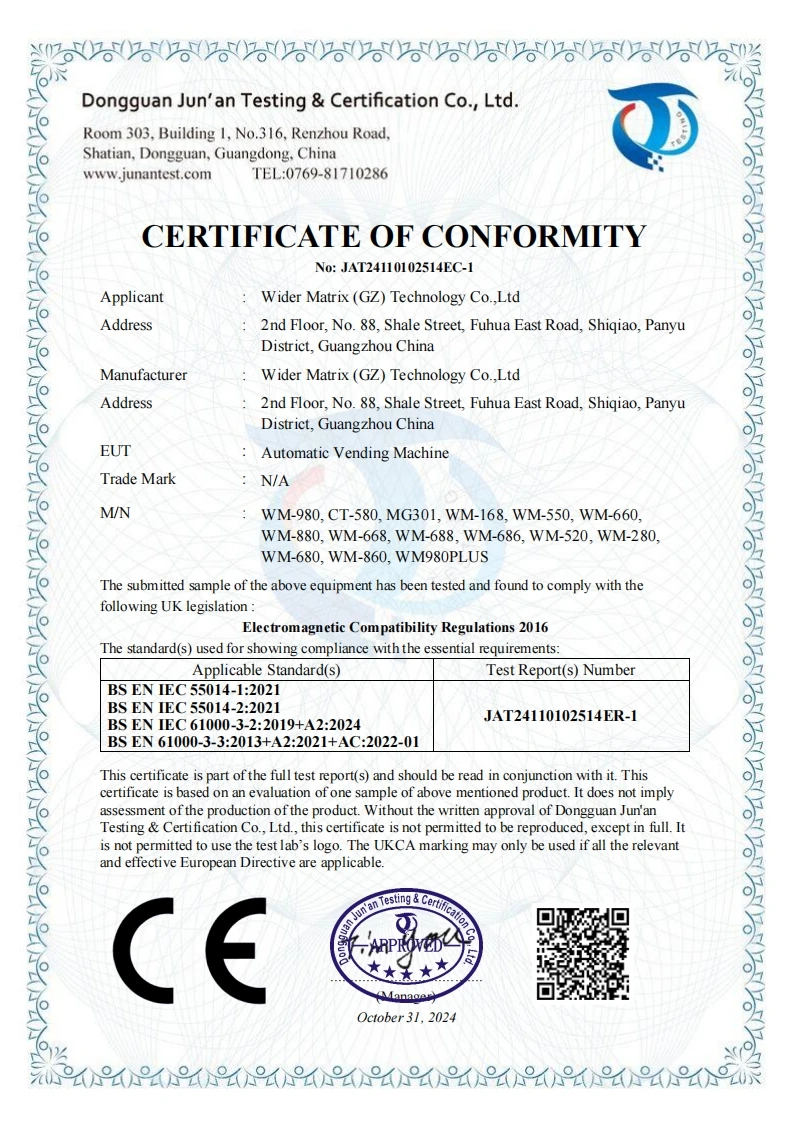
ASTM
F963-17
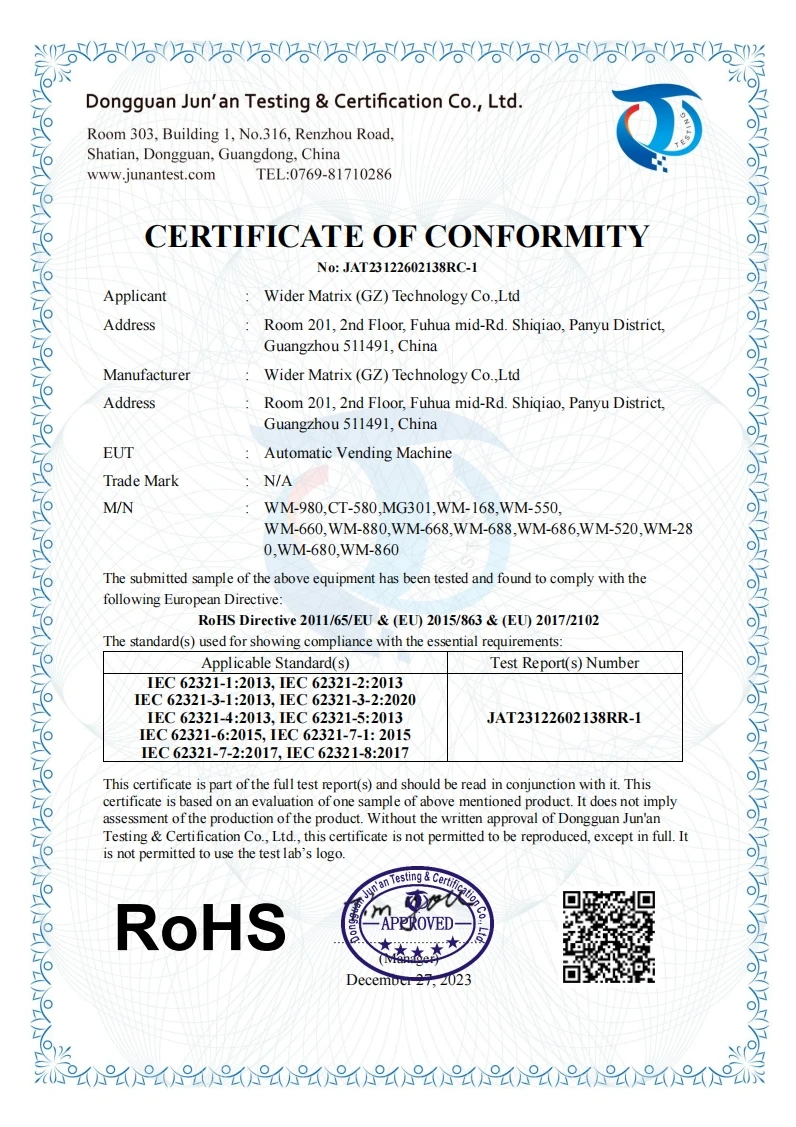
FSC
SGS-COC-010200
Company Introduction
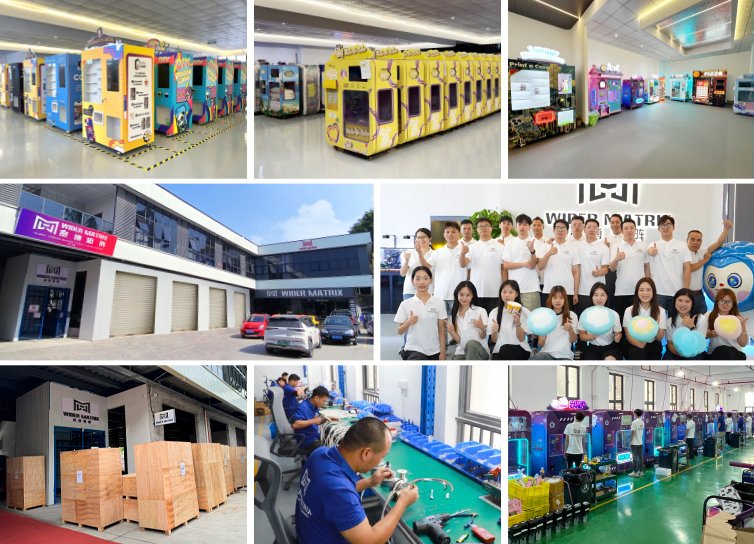
Wider Matrix (Guangzhou) Technology Co., Ltd. is a scientific and technological enterprise that attaches importance to R&D and user experience. We started to research and develop automated vending solutions in 2016, and achieved a leading position in the field of interactive vending machines.
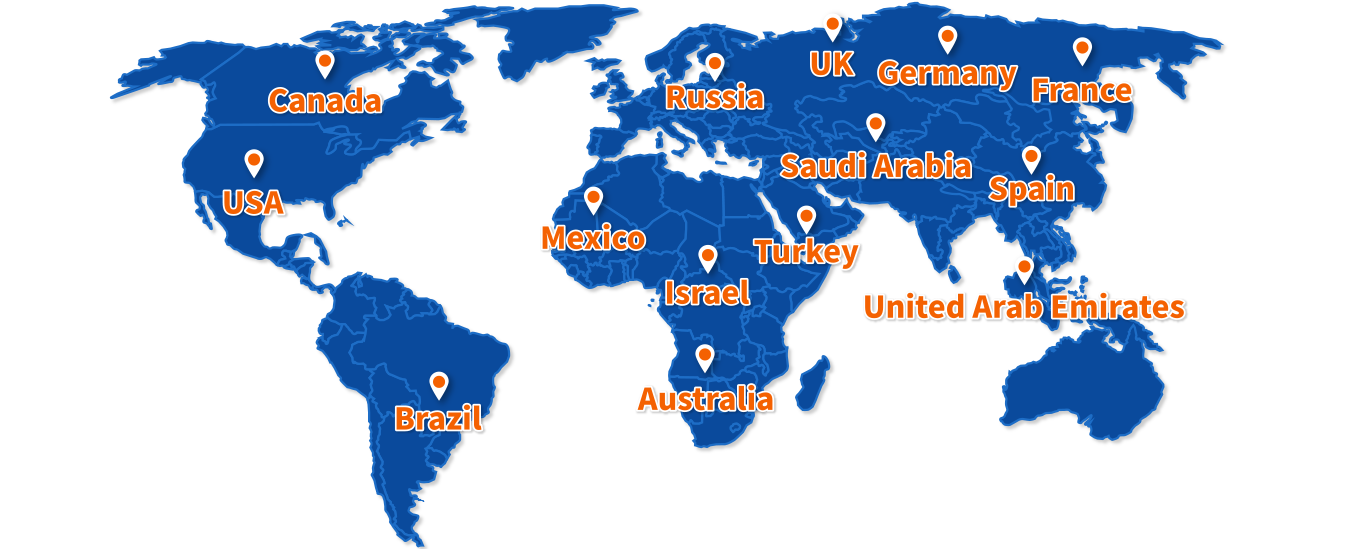
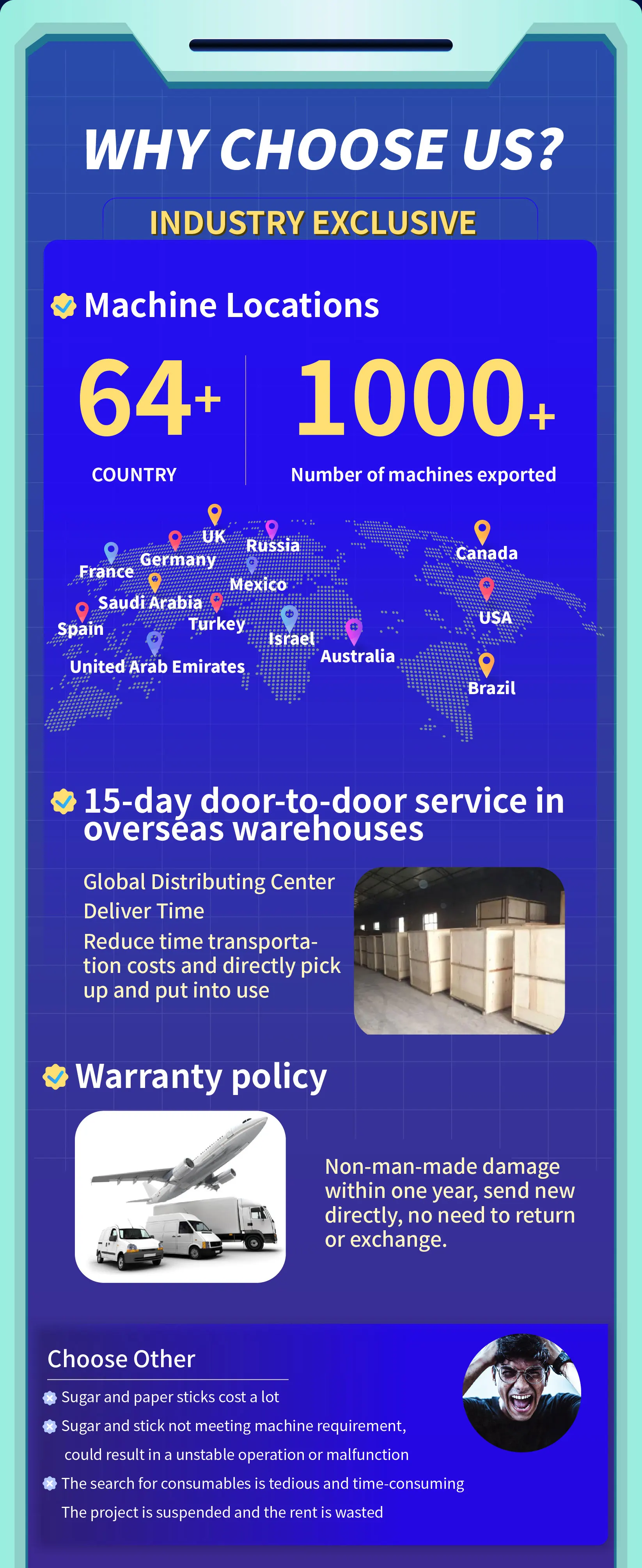
With years of experience in automated retail technology, we've perfected our puzzle vending machines through rigorous testing and continuous innovation. Our commitment to quality and user experience has allowed us to expand globally, with our products now operating successfully in more than 130 countries including the United States, Canada, throughout Europe, Southeast Asia, Australia, and Israel.
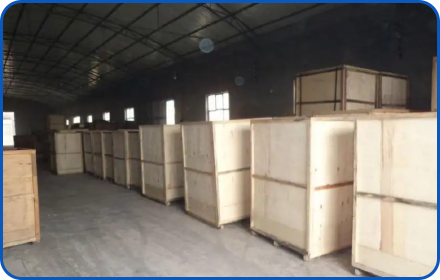
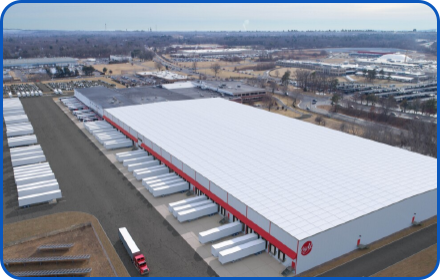
We set up overseas warehouses in the United States, Canada, Britain and Israel to provide customers with consumables and accessories support. All machines support remote cloud management, which has the advantages of easy operation, convenient maintenance and high operating efficiency. After our puzzle vending machines are delivered and put into use, they can bring you considerable benefits.
Every customer's success and satisfaction are the driving force for us to pursue innovation and climb the peak forever. In the future, we will uphold the business philosophy of customer first and quality first, and constantly create more good products for the market. Join us now and start your intelligent and innovative vending machine business!
Exclusive Services
Overseas Support Service
Local transfer warehouse support, ensuring your operational stability.
Custom Design
We offer machine appearance customization, branding, and large-scale custom packaging services.
Initial Tools & Spare Parts Kit
Machine comes with complementary tools and spare parts kit, including initial consumables package for early operations.
Functional Customization & Software Optimization
Custom functionality based on client needs, including hardware and software optimization updates.
Lifetime Technical Support & Updates
We provide lifetime technical support and software update services for all customers.
Frequently Asked Questions
Q: How much money can I really make with a cotton candy vending machine in the USA?
Profitability is highly location-dependent, but realistic data from existing operators provides a clear picture. With a production cost of about $0.31 per unit and a typical retail price between $5 and $10, your gross profit margin exceeds 93%. A machine in a decent location (e.g., a mall or movie theater) selling 15-20 units per day can generate $2,250 - $4,500 in monthly revenue. After accounting for location rental fees (which can be a flat rate or a percentage of sales), the net profit remains substantial, often allowing for a full return on investment within 4-8 months of consistent operation.
Q: What are the biggest hidden costs or challenges?
Beyond the machine purchase, operators must budget for ongoing costs: commercial liability insurance, location lease or revenue-sharing agreements, routine consumables (sugar, sticks), periodic maintenance/cleaning supplies, and potential credit card processing fees. The most significant non-financial challenge is navigating local health department permits, which can be time-consuming. Furthermore, machine reliability is paramount; downtime is lost revenue. This is why choosing a machine with a strong warranty (like a standard 1-year parts warranty and lifetime support) and proven durability from a manufacturer with U.S. experience is a critical investment, not just a purchase.Q: Do I need a food handler's license or special permits?
In almost all U.S. jurisdictions, yes. Requirements vary by state, county, and city. At a minimum, you will need a general business license and a sales tax permit. For the machine itself, most local health departments require a permit for a "vending machine dispensing potentially hazardous food," even though cotton candy is low-risk. Some areas may require you or a manager to obtain a food handler's certificate. The key is to contact your city and county health departments before you buy your machine to understand the specific, local requirements. Failure to do this can result in fines or an inability to operate.Q: How do I find and secure a good location?
Securing a prime location is a sales and negotiation process. Start by identifying high-foot-traffic venues that align with your target customer (families, tourists, event-goers). Approach location managers (mall leasing offices, theater district managers, stadium concession heads) with a professional proposal. Be prepared to offer either a flat monthly rental fee or a revenue-sharing agreement (typically 10-20% of gross sales). Emphasize the benefits to them: a new attraction for their customers, additional foot traffic, and revenue with zero labor cost on their part. Start with one location to prove your concept before expanding.Q: Is it better to buy from a U.S. distributor or import directly?
This depends on your priorities. U.S. distributors offer faster delivery, easier communication, and often handle some domestic compliance, but this comes at a premium—sometimes 30-50% above factory prices. Importing directly from a reputable overseas manufacturer offers significant cost savings and access to the latest models but requires you to manage shipping, customs clearance (including potential duties), and vet the manufacturer thoroughly for quality and after-sales support. For most first-time buyers, a supplier with a strong U.S. support presence, like those with warehouses in California, offers a balanced middle ground.Q: What happens if the machine breaks down?
Reliability is a major concern, which is why post-purchase support is as important as the machine itself. Reputable suppliers offer comprehensive support packages. For example, standard support includes a 1-year warranty on parts, lifetime technical assistance via phone or video call, and detailed online repair guides. For critical parts, some manufacturers expedite shipping from their U.S. warehouses. The best way to minimize downtime is through preventative maintenance (regular cleaning as per the manual) and choosing a machine known for robust construction and simple, modular components that are easy to service or replace.Customer Reviews
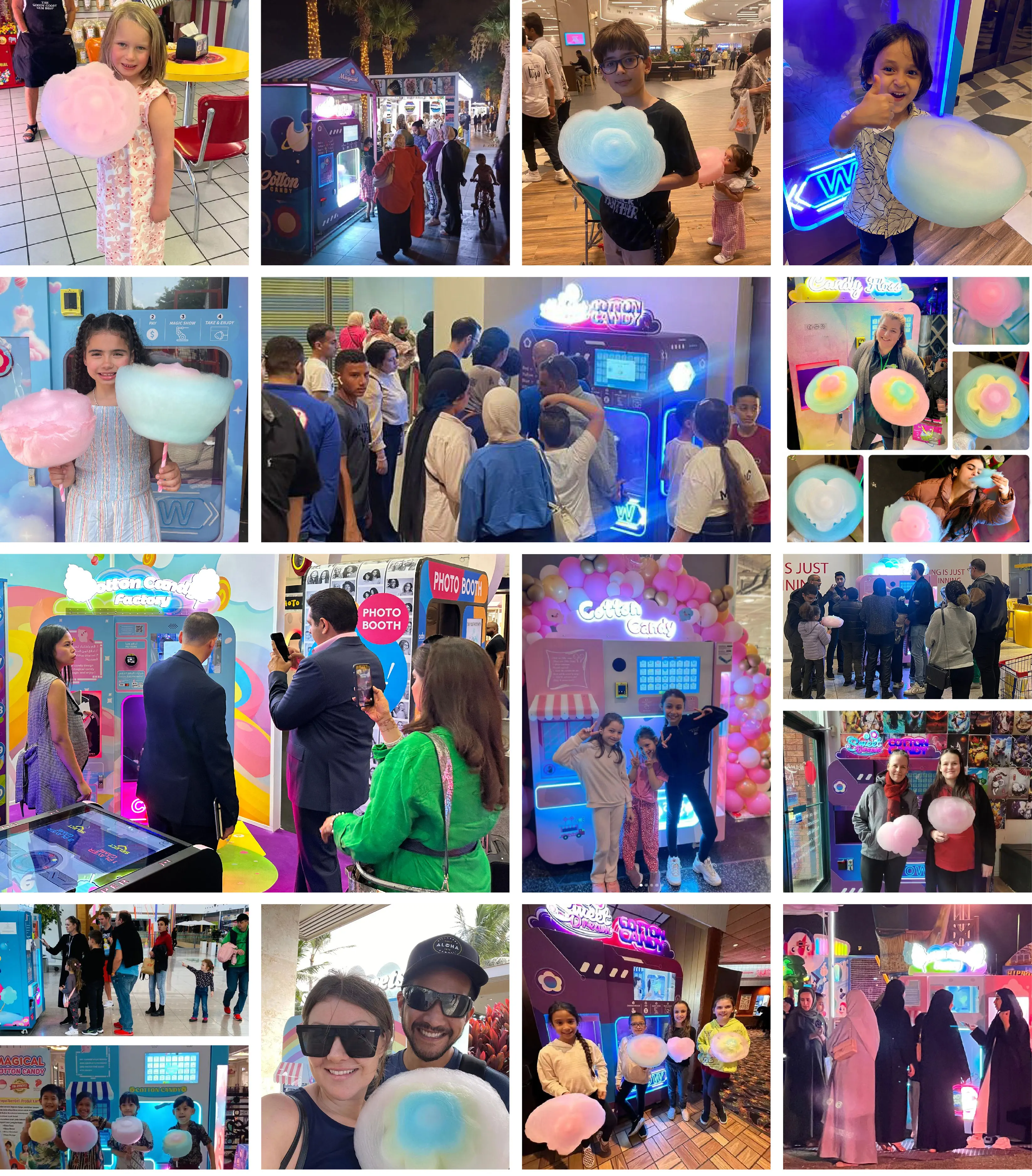
The cotton candy vending machine from Widermatrix has been an incredible addition to our theme park. Visitors are amazed by the automated process and variety of designs. The machine operates flawlessly even during peak hours, and the cloud management system makes monitoring and maintenance incredibly simple.
I installed three cotton candy machines in my shopping malls, and they've been running perfectly for over four months. The 54 different candy designs are a huge hit with customers of all ages. Sugar consumption is exactly as advertised, and the remote monitoring system allows me to check inventory levels without visiting each location.
As a first-time business owner, the cotton candy vending machine has exceeded my expectations. The colorful designs attract crowds at my family entertainment center, and children are mesmerized watching the automated process. The payment system accepts all methods as advertised, and technical support has been outstanding whenever I've had questions.
The cotton candy vending machine has revolutionized our carnival business. Setup was straightforward, and the machine began generating profits from day one. The power consumption is exactly as specified, and the machine handles high-volume periods without any issues. The variety of candy designs keeps customers coming back to try new patterns. Perfect investment for event businesses.
Our cotton candy vending machine achieved ROI within just five months! The 300kg machine is surprisingly easy to maintain despite heavy daily use. We love how the machine creates perfect cotton candy designs consistently, and our customers are always delighted by the experience. The technical team responds quickly whenever we need assistance with new features.
I operate several food courts and decided to add cotton candy machines to diversify offerings. The WM980 model has been phenomenal - customers are fascinated by the automated process and unique designs. The branding customization option allowed us to match our corporate identity perfectly. The machines have become such attractions that we've ordered five more for our newest locations.
Excellent cotton candy machine, though installation took longer than expected due to its size (132cm*195cm*67cm). Once operational, performance has been outstanding. The 54 different candy designs are a huge hit with our customers. Sugar consumption is efficient at 28-30g per candy. Technical support was very responsive when we needed help configuring the payment system.
Our university cafeteria installed this cotton candy machine six months ago, and it's been a massive success. Students are fascinated by the automated process and artistic designs. Even during rush periods, the machine handles high demand without issues. The power efficiency is impressive - only 500W on standby as advertised. The cloud management system makes inventory tracking and maintenance scheduling incredibly simple.
As the owner of a candy store chain, adding this cotton candy machine was the best decision I've made. It's become the centerpiece attraction in our flagship store. The machine creates beautiful cotton candy art that customers photograph and share on social media, bringing in new customers daily. The multiple payment options (Coin/Cash/Credit Card/NFC) accommodate all customer preferences. Worth every penny!
Our airport lounge installed the WM980 cotton candy machine eight months ago, and it's been operating flawlessly 24/7. Travelers are delighted by the unexpected treat, especially families with children during long layovers. The machine's reliability is impressive - zero downtime despite constant use. The remote monitoring system allows our staff to check sugar levels and maintenance needs without interrupting service. A perfect addition to our premium lounge experience.