



The WM186 is a self-service protein shake kiosk made for high traffic venues. It mixes a fresh shake in about 60 seconds, runs unattended around the clock, and keeps roughly 60 to 75 cents of every dollar after powder cost. Stadium and arena operators use it to catch the sales a concession line misses at halftime and after close. If you run a venue, send us your event numbers and we will send back a revenue projection, landed cost, and delivery timeline for your situation.
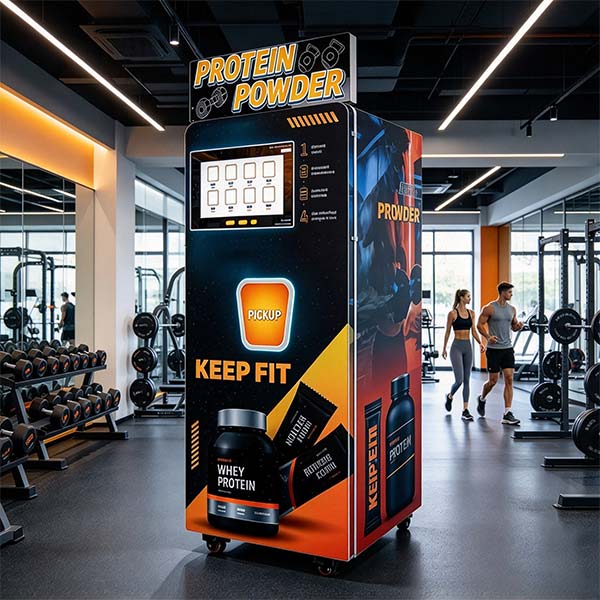
A protein vending machine for a sports stadium is a self-service kiosk that mixes a fresh protein shake in about 60 seconds and takes card or phone payment at the door. Stadium and arena operators dig into protein vending machines for sports stadiums for the same reason every time: they want to catch the post-workout and post-game crowd without adding staff or opening a second concession line. This page runs through the machine we keep coming back to for that job, the Wider Matrix WM186, what it costs, how fast it really dispenses, and the checks to run before you write a check.
Why protein shakes, and why a vending machine, inside a stadium
Stadium food runs in a narrow window. Fans eat before kickoff, at halftime, and sometimes once more near the end. In those windows the concession lines back up, and plenty of the crowd walks away rather than wait. A آلة بيع مشروبات البروتين ذاتية الخدمة sits outside that bottleneck. It does not replace the concession stand; it catches the people who want something quick and would rather skip the queue.
The appetite is already in the building. Athletes and lifters want a shake after a session, and a stadium that hosts youth leagues, college teams, or a training facility feels that demand every day, not just on game day. A growing slice of regular fans order the high protein option instead of the fried one. Where a sports complex is running an event, we usually see the machine selling in the $6 to $8 per cup range, and the machine can keep up because of how it dispenses.
The WM186 at a glance
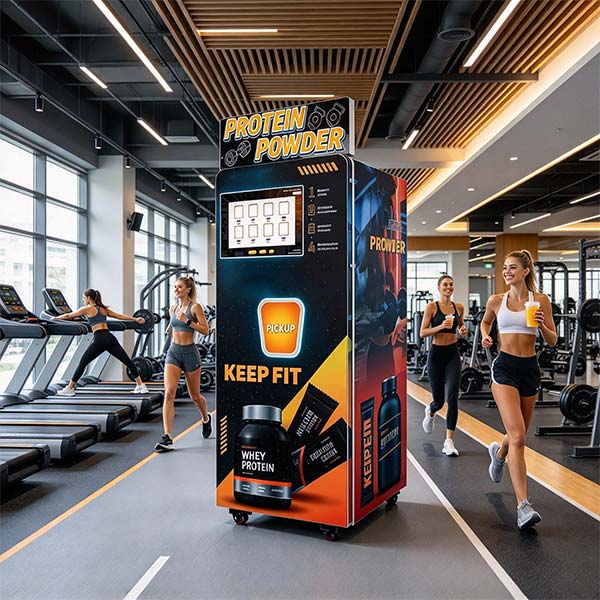
The WM186 is a freestanding kiosk with a 21.5 inch touchscreen. Inside are seven powder hoppers at 4 liters each, plus three temperature zones so it can serve a cold, room temperature, or hot drink. A customer walks up, picks a base, and pays in under 30 seconds. The machine then mixes the drink in about 60 seconds using what Wider Matrix calls in-cup mixing, which means the powder and liquid are combined inside the disposable cup instead of passing through pipes. That detail matters if you have ever cleaned a machine with powder residue caked inside. Nothing clumps, and nothing carries over between flavors.
The seven hoppers are why one machine can serve a broad crowd. You can load whey protein, plant-based protein, mass gainer, BCAA, creatine, and pre-workout in six slots and keep the seventh for whatever brand you already stock. Payment runs on Nayax and Pax readers with card, Apple Pay, Google Pay, NFC, WeChat Pay, and Alipay all supported, on top of the standard MDB protocol, so it drops into most cashless setups without new hardware.
Speed is the whole point on game day
Halftime is 15 to 20 minutes. In that stretch you need a machine that does not become the new line. The WM186 dispenses one shake roughly every 60 seconds and tops out around 60 cups an hour at peak, which works out to about a cup a minute. A single unit near a busy concourse will stay busy, and a venue expecting a real rush usually places a second machine or positions one beside the locker room where traffic spreads out.
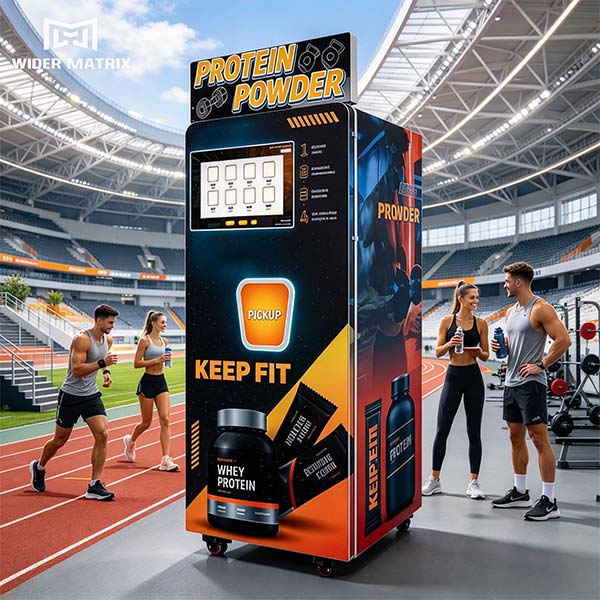
Between cups the machine runs a high temperature self-cleaning cycle on its own, and it runs unattended around the clock. You do not staff it for a late night youth-league practice or a 6 a.m. lifting session. On game day someone tops up the hoppers and cups; everything else is the machine. This is the same unit gyms use to skip the manual blender, tuned for the heavier traffic a stadium brings.
What it costs, and the numbers that matter
The machine sells for US$4,150 factory direct. Cups go for US$3 to US$8 depending on what you mix and where you are, and the powder plus cup runs US$0.80 to US$1.50, averaging about US$1.20. That leaves a gross margin in the 60 to 75 percent range for most operators.
What that becomes in practice depends on foot traffic, so treat these as planning figures rather than promises. Sell 15 cups in a day at $4 and you clear about $45. Thirty cups at $5 puts you near $120. A 50 cup day lands around $200, and an event day that moves 80 cups at $6 clears close to $400. Over a month the range runs from $2,000 to $8,000 depending on volume and pricing. For a yardstick, one midsize gym running the same machine reports around 45 cups a day at $5.50 each, a gross margin near 78 percent, and payback in about three months. Most operators recover the purchase cost within one to three months, and Wider Matrix lays out a fuller profit breakdown if you want the full table.
ما يجب التحقق منه قبل الشراء
A stadium is a demanding room for a machine, so a few checks separate the units that hold up from the ones that turn into a service headache.
Food safety is the part people skip
A machine that mixes and dispenses drinks in a public venue usually has to meet local health and food handling rules, so ask the supplier for the written certification and check it against what your city or state requires. The WM186 carries CE, and the in-cup mixing plus the automatic high temperature clean after every drink are the two features that keep a health inspector calm. This is the same checklist we walk gym owners through before they buy a whey shake machine, and it applies just as hard in a stadium.
Payments and connectivity
Confirm the reader talks to your existing network. The WM186 uses the MDB protocol with Nayax and Pax readers, plus Apple Pay, Google Pay, and NFC, which covers most cashless stadium setups. It also carries an IoT cloud layer, so sales, hopper levels, and any fault warnings show up on your phone. One dashboard will manage 50 or more machines, which matters once you spread across several gates or venues.
How a supplier behaves after the sale
A machine that goes down on game day costs more than it earns. Ask for the warranty in writing, the response time, and whether spare parts ship quickly to where you are. Wider Matrix ships with a one year warranty and lifetime technical support, and its team answers within 24 hours. If a supplier will not put the warranty and response time on paper, walk away.
How this differs from a regular drink or snack machine
A standard drink machine sells the bottle it was stocked with. A protein vending machine mixes the drink on the spot, which is why the WM186 carries three temperature zones and seven hoppers. You can sell a hot drink in the morning, a cold shake at lunch, and a room temperature option at night from the same cabinet, and point the seventh hopper at whatever brand your venue already carries.
On cheaper units you often see two or three hoppers, a single temperature, and two to four minutes per cup, with an internal stirring paddle that is hard to clean. The WM186 mixes inside the cup, holds seven hoppers across three temperatures, and dispenses in under a minute, and it is managed remotely instead of by an on site visit. Six months of warranty is common elsewhere; Wider Matrix gives a year plus lifetime support. If you are shortlisting, that is the difference in a sentence.
Buying straight from the factory, or through a middleman
Wider Matrix builds its own machines in its Guangzhou factory and sells factory direct. The company has been making vending equipment since 2016, has shipped more than 3,000 units across over 130 countries, and runs an engineering team of roughly 50 people. Buying direct means the price you are quoted is the factory price, with no reseller markup, and it is the same route international buyers take when they import by container.
Direct buying is not a zero risk purchase, and it should not feel like one. Get the certification and the warranty in writing, confirm the lead time and shipping terms, and ask for references from operators who run a venue like yours. When you compare suppliers, the things that actually matter are factory ownership, response time, and whether the seller will own a problem after it ships. Here is what to look for in a protein vending machine manufacturer, and a wider view of من هي الشركة التي تصنع آلات بيع البروتين؟ around the world.
Common questions venue operators ask
Are protein vending machines actually suited to a sports stadium?
Yes, if the machine is built for speed and unattended use. A stadium needs a dispense time under a minute, cashless payment, and self-cleaning between cups, which is why we point venue operators at the WM186 rather than a repurposed drink cabinet. Sports complexes in our data run 60 or more cups on event days.
How much does a protein vending machine for a stadium cost?
The WM186 is US$4,150 factory direct. Freight, duties, and any customization are extra. For a landed cost figure for your country, send us your location and we will quote it.
How long does one shake take?
About 60 seconds from order to cup, and the machine peaks near 60 cups an hour. On the customer side, browsing, choosing, and paying runs under 30 seconds.
هل أحتاج إلى موظفين لتشغيله؟
No. It runs 24/7 unattended, and the high temperature clean after each cup is automatic. You refill hoppers and cups and collect cashless takings from the dashboard.
What can it sell?
Seven hoppers cover whey protein, plant-based protein, mass gainer, BCAA, creatine, and pre-workout, with a seventh slot for any brand you want. Three temperature zones mean cold, room temperature, and hot drinks from one cabinet.
Does it take card, Apple Pay, and Google Pay?
Yes. Nayax and Pax readers handle card, Apple Pay, Google Pay, NFC, WeChat Pay, and Alipay over the MDB protocol.
How much can it earn me?
That depends on foot traffic and pricing. Gross margin runs 60 to 75 percent, most operators recover the cost in one to three months, and a venue month typically lands between $2,000 and $8,000. The full real-world profit numbers are in a separate breakdown.
Can I put my team or stadium branding on it?
Yes. Wider Matrix does OEM and ODM work, so logo, colors, and even recipes can match your venue, and new recipes and promotions can be pushed to the machine remotely.
What certification does it carry?
CE. Ask for the certificate in writing and check it against the health rules where you are before you commit.
If you run a stadium, arena, or sports complex, protein vending machines for sports stadiums come down to one question: how much does this earn against my gate numbers. We will put that answer together at no charge. Tell us your average event attendance and the price point you have in mind, and we will come back with a projection for your venue, a landed cost, and a delivery timeline. Reach us through the صفحة التواصل, and someone answers within a day.