

The fastest honest answer to how to start a vending machine business is this: secure the site before you buy the machine, match the machine to the traffic you can see, and treat the first 90 days as a small route, not a passive investment. A vending machine can make money. It will not do it in a storeroom while you hunt for a location.
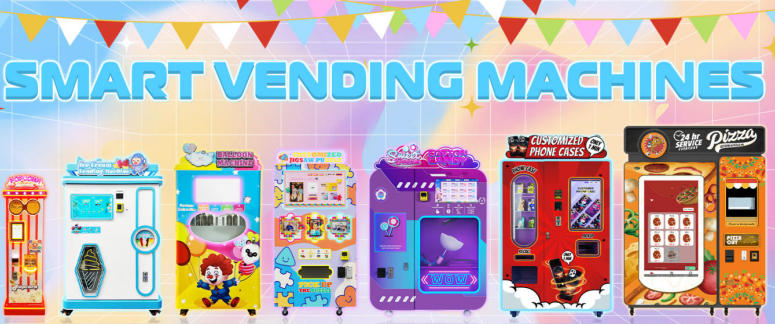
Wider Matrix builds machines in Guangzhou and ships them to operators in more than 130 countries. The pattern that repeats is boring: the operators who win understand the site, the product cost and the restock loop before they place an order. The operators who struggle usually bought a machine first and looked for a home second.
The short answer to how to start a vending machine business
Run the launch as a sequence. Each step below has a decision that can kill the route if you skip it.
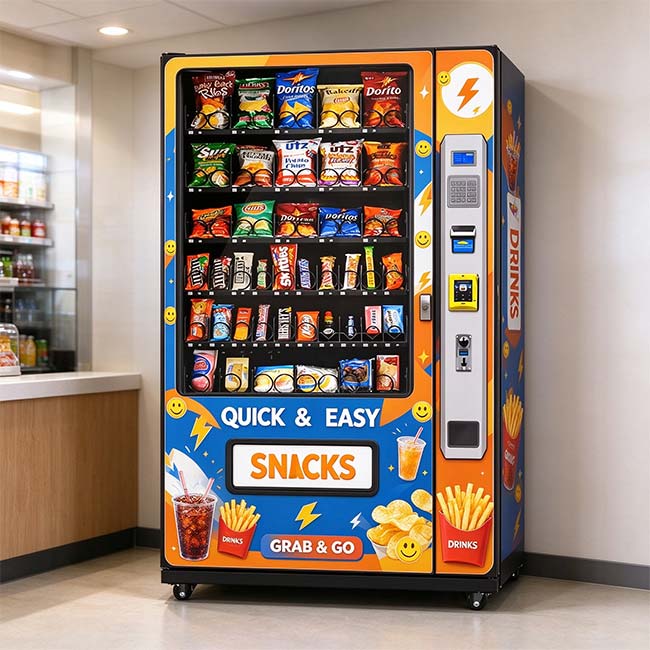
- Choose a product category and a location type together. A 60-channel snack and drink machine fits an office floor. A fresh popcorn machine fits a cinema queue. The machine follows the traffic, not the other way round.
- Scout 10 sites in person. Count people at three times of day, check the existing machine, look for nearby food, and confirm a power outlet and door width.
- Get written placement terms before you buy. A handshake is not enough when a property manager changes.
- Register the business and open a bank account. Most markets also need a tax ID, a sales tax permit and liability insurance.
- Buy a tested machine or inspect a used one properly. Check the compressor, coin mechanism, bill validator and card reader compatibility.
- Source stock and set a planogram. Planogram means the map of which product goes into which channel.
- Install, test every payment method, load and launch. Do a full vend test before the first customer touches the screen.
- Track each site for 90 days. Keep, move or add a machine based on revenue per site, not on how much you like the machine.
Match the machine to the site, then buy it
The machine type changes the startup budget more than any other choice. A snack and drink machine can be cheap to test. A fresh-food or specialty machine costs more and needs a site with the right dwell time. Here are six factory-direct examples from the Wider Matrix range.
| نوع الجهاز | Wider Matrix example | السعر المرجعي للوحدة الواحدة | Works when |
|---|---|---|---|
| Snack and drink | WMT-B02 keypad, 60 channels, 300 items | US$1،800 | Office, factory, hospital, school or lobby with repeat foot traffic. |
| Popcorn | WM680, 140 cups pre-loaded, 120 seconds per serving | US$1،800 | Cinema, mall, theme park or event site with impulse buyers. |
| حلوى القطن. | WM980, 4 sugar tanks, 36 patterns | US$4,800 | Family venue, mall or tourist spot where the making is part of the show. |
| الآيس كريم | WM550 single flavor, 15 seconds per cup | US$5،799 | Mall, campus or transport hub with steady warm-weather traffic. |
| مشروب البروتين | WM186, 7 powder hoppers, 60 seconds per shake | US$4,150 | Gym, sports center or corporate fitness room with health-focused buyers. |
| Flowers | WMT-F01 with 8 slots and 15.6-inch screen | US$3,500 | Convenience store, hospital, station or mall corner with gift traffic. |
These are base machine prices for one unit. Payment modules, shipping and site work change the final quote. For orders of multiple units, contact our team for a personalized quote with volume discounts.
New, used, lease or franchise all have a place. New gives you a warranty and known payment compatibility. Used can save cash but may need a card reader retrofit and spare parts. A lease lowers the upfront payment and adds a fixed monthly cost before the site is proven. A franchise buys brand, training and sometimes route support. Pick the one that matches how much risk you can carry, not the one with the lowest sticker price.
If budget is the constraint, this guide to starting a vending machine business with low investment covers the trade-offs between a simple snack machine and a specialty machine.
How to find a location that can carry the machine
Location work is sales work. You are asking a property manager to give up a corner, a power outlet and a small slice of their day, so bring a short pitch and a clear answer on service.
Before the pitch, audit the site. Count foot traffic at opening, lunch and late afternoon. Check the existing machine: is it empty, broken or full of dead stock? Look for a nearby cafe or convenience store that already serves the same need. Confirm the machine will fit through the door and that the outlet can carry the load.
- Say what you install and how much space it takes. Measure the door and the corner first.
- Say how often you will restock and who fixes faults. A busy snack site needs a visit every couple of days, a quiet one about once a week.
- Offer a clean service promise: refunds handled, stale product removed, machine cleaned.
- Ask for a trial or a short termination window. A 30-day out clause protects both sides.
Put the key terms in writing: commission or flat fee, who pays for power, who handles damage, notice period, and what happens if the property changes owner. Red flags include an exclusive deal with no performance target, a long lock-in with no exit, and a commission that rises after year one.
If you want a deeper walkthrough on approaching property managers, this guide on how to go about putting a vending machine somewhere covers the conversation in more detail.
Legal setup, insurance and permits without the paperwork spiral
The legal side of how to start a vending machine business is usually smaller than people fear. Most first-time operators do not need a complicated structure. They do need a clean separation between personal and business money. Register a business name, get a tax ID, open a business bank account and keep receipts from day one. An LLC or local equivalent is common because it separates liability, but the right choice depends on your country and risk tolerance.
Permits vary by city and by product. Check three things before you sign a placement deal: sales tax on vended food, rules for age-restricted products, and food handling rules if you sell perishables. General liability insurance is standard for property access. If you hire a restocker, add employment cover. Accessibility matters too: leave a clear route to the machine and make the payment point reachable.
The setup side is covered in more detail in this guide to how to set up vending machines.
The unit economics: a snack route and a shake route
Numbers are where most vending guides go quiet. Here is the math from the product database, using conservative examples. Your site, product mix and pricing will change the result.
A 300-item snack and drink machine in a mid-traffic office building doing 30 transactions a day at US$1.80 average brings in about US$54 a day. Product cost is roughly 65% of retail, so gross profit is about US$19 a day, or US$570 a month. If the site asks for a 10% revenue share, subtract about US$5.40 a day before you pay for power, repairs or your own time.
| آلات | Monthly gross profit before commission, power and labor | ماذا يعني ذلك |
|---|---|---|
| 1 | US$570 | One site can cover its machine cost if the traffic holds. |
| 5 | US$2,850 | A small route needs a restock day and a simple spreadsheet. |
| 20 | US$11,400 | Route density starts to matter more than machine count. |
That is gross profit, not take-home. A route of 20 machines at 30 minutes per restock is about 10 hours of stocking per cycle, before travel.
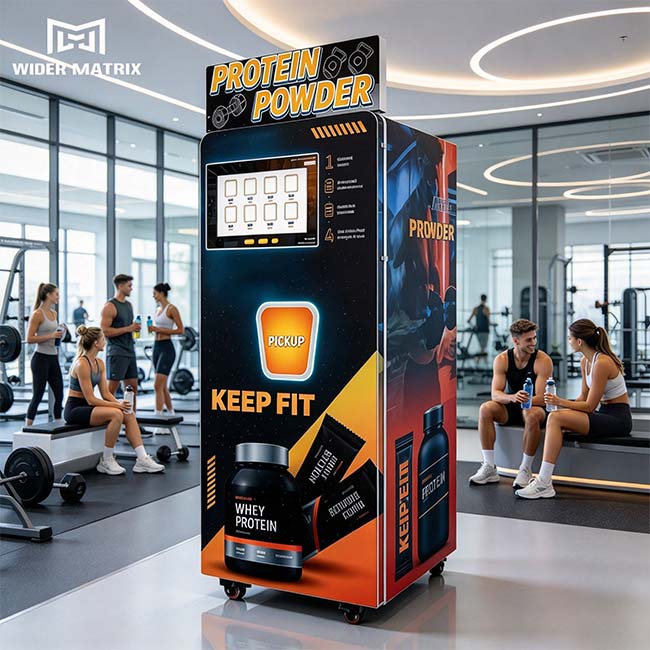
The protein shake machine shows a higher-ticket model. A WM186 is listed at US$4,150. In a Wider Matrix reference case, a mid-size Miami gym sold about 45 cups a day at US$5.50, with US$1.20 in material cost. That is US$193 daily profit, more than US$5,800 a month at a 78% gross margin, with a three-month payback. Wider Matrix puts typical payback on the WM186 at 1 to 3 months. The gym case sits at the slower end.
The difference is not the machine alone. The gym has a captured audience, a health-focused product and a price that fits the setting. A snack machine in a low-traffic lobby will not copy that result.
If you want this math run for your city and machine mix, ask Wider Matrix for a personalized quote and configuration.
For a line-by-line breakdown, see this guide to vending machine business startup costs.
Stock, pricing and restock math for a real route
Vending margins are made at the supplier, not at the machine. Buy from wholesale accounts, track which SKUs turn, and cut products that sit. A planogram by location type helps: water and isotonic drinks in a gym, coffee and snacks in an office, single stems in a campus flower machine.
A 60-channel snack machine restocks in 20 to 30 minutes. A busy site needs a top-up every couple of days; a quiet one about once a week. Collect cash weekly on cash sites and reconcile it against the machine report. Snack machines perform best below 32°C ambient, so a hot loading dock is a poor home unless you control the temperature.
For perishable or fresh-made products, spoilage is a real cost. Check the temperature log, rotate stock and set a clear refund rule. A refund is cheaper than a complaint that kills the site relationship.
Payments, monitoring and the first 90 days
Cash still matters, but card and mobile payments widen the buyer pool. Most Wider Matrix machines use an MDB protocol controller, which is the standard connection between the vending machine and a payment terminal. That lets you fit a local card reader, QR payment or mobile wallet for your market. Card and contactless are configured per market, so confirm the exact terminal before shipping.
Remote monitoring is optional on snack machines and standard on some specialty models. It sends sales reports, stock alerts and fault alarms to your phone. That data is useful, but it does not replace a restock visit. Use it to plan the route, not to assume the machine runs itself.
The first 90 days should be boring. Clean the glass, test the bill acceptor, check the coils and log temperature if the machine chills. Track revenue per machine, transactions per day, gross margin, stockouts, refunds and service calls. Keep a machine that covers its costs and has room to grow. Move one that does not. Add a second machine only after the first site is stable.
Route density decides when you hire. One person can restock several machines, but travel time eats the margin. When the route gets too spread out, a part-time restocker can help. If you later sell the business, buyers pay for clean records, placement agreements and steady route revenue, not for a list of machine models.
Common ways new operators lose money
The first mistake is buying before the site. The second is ignoring the commission. A 10% revenue share on a thin snack route can turn a small profit into a hobby that costs money. The third is choosing a product mix that does not match the traffic: candy in a gym or a high-price specialty item in a low-income area.
Used machines can be a false saving if the payment system is obsolete or spare parts are hard to find. Vandalism, jams, refunds and downtime are normal costs, so keep a small spares kit and a clear fault process. If a site has no secure access or no clean power, walk away.
For a grounded look at the risks nobody puts in the brochure, read what nobody tells you before you buy a vending machine business.
Questions buyers ask before they place the first machine
كم تكلفة بدء عمل ماكينات البيع؟
A single snack and drink machine can be listed at US$1,800, and a popcorn machine at US$1,800. The full startup cost adds stock, payment hardware, insurance, permits, transport and site work. Ask for a landed quote for your city and order size before you compare prices.
How much profit does one machine make?
It depends on the site. A snack machine doing 30 transactions a day at US$1.80 average gives about US$570 monthly gross profit before commission and running costs. A WM186 protein shake machine in a busy gym can do more than US$5,800 monthly profit on the Wider Matrix reference case. Treat both as examples, not guarantees.
Do I need a company and a business bank account?
Many operators start as a sole trader, but a company or LLC separates personal and business liability. A separate bank account is worth the paperwork even if you stay small. Check local rules for tax and food permits.
Can I run the route without a shop or staff?
Yes. A vending machine is designed for unattended sale. You still need a restock plan, a fault process and a way to collect cash or reconcile digital payments. Most first routes are run by the owner.
What should I ask a machine factory before I order?
Ask for the exact model number, the payment modules supported in your country, the warranty terms, the spare parts list and the shipping lead time. A factory that tests every unit before shipment will give you a clear answer on all five.
If you want your own numbers, send Wider Matrix your city, location type and target machine. You will get exact pricing for your destination and order quantity, a recommended configuration, shipping lead time and a reply within 24 hours. There is no obligation.