




Searching for “cotton candy machine cost” means you’re past the daydreaming phase and into serious planning. You’re not just looking for a single price tag; you’re researching a spectrum of costs to understand what you get for your money, from a simple home party gadget to a serious commercial investment. This guide cuts through the noise of endless product listings to give you a clear, expert breakdown of cotton candy machine pricing in 2026. We’ll decode the factors that drive cost, provide specific price ranges for every use case, and reveal the often-overlooked ongoing expenses so you can make a confident, value-driven purchase.
The cost of a cotton candy machine isn’t arbitrary. It’s directly tied to its intended use, construction, and output capability. Before looking at numbers, you must categorize your need. A machine for a child’s birthday party has vastly different requirements and price points than one destined for a busy mall or festival circuit. The core factors determining cost are machine type (home vs. commercial), wattage and production speed, build quality and materials, brand reputation, and included features like temperature controls or digital displays. Ignoring these factors and buying solely on the lowest upfront cost is the fastest way to waste money on a machine that can’t handle your needs.
Detailed 2026 Price Breakdown & Machine Recommendations
Here is a clear breakdown of what you can expect to pay across the three primary tiers of cotton candy machines.
| Tier & Best For | نطاق الأسعار (USD) | Key Specifications | Pros & Cons | Example Models/Notes |
|---|---|---|---|---|
| Budget / Home Use Occasional family events, small parties. |
$20 – $80 | 300W – 500W, plastic construction, includes 10-20 paper sticks. | إيجابيات : Extremely low entry cost, simple to use. عوائق: Slow, small batches, prone to overheating or breaking with frequent use, “floss” quality is often poor. |
Brands like Nostalgia, Cuisinart. Often found on Amazon. Perfect for trying the hobby but not for consistent results. |
| Mid-Range / “Home Professional” Frequent home use, school fairs, small community events. |
$100 - $300 | 500W – 1000W, metal bowl, better stability, may include a carrying case. | إيجابيات : Better durability and output than budget models, good for semi-regular use. عوائق: Not built for daily commercial operation, may struggle with high humidity. |
Gold Medal Fun Food models are the industry standard in this range. Reliable for weekend warriors. |
| Commercial Grade Daily operation in malls, theaters, stadiums, festivals. |
$500 – $3,000+ | 1000W+, all-metal heavy-duty construction, high-volume sugar hoppers, industrial-grade motors. | إيجابيات : Built for durability and speed, consistent high-quality product, can operate for hours. عوائق: High upfront investment, heavier and larger. |
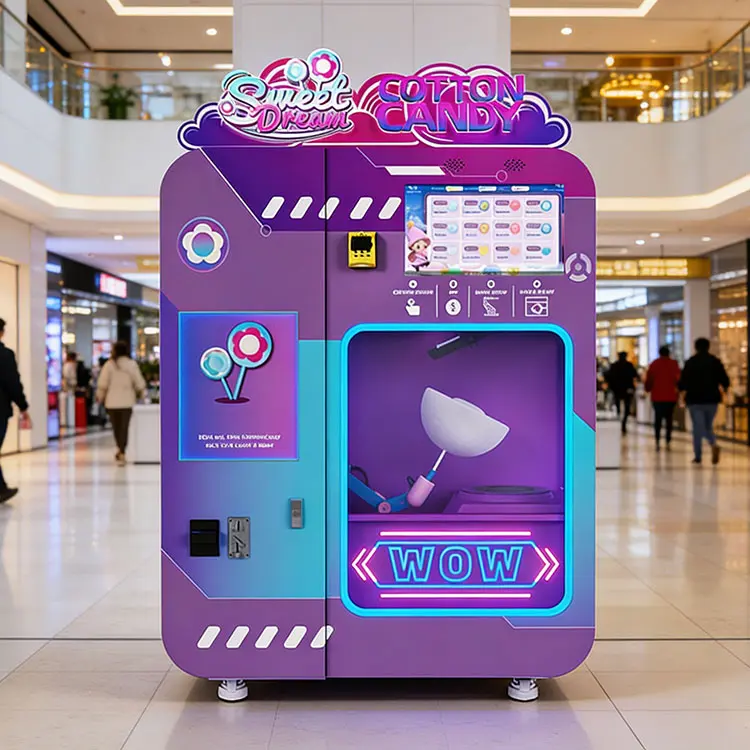
Vending Machines: This is where the business model shifts. A fully automated, smart cotton candy vending machine represents a higher tier of commercial investment. For example, the مصفوفة أوسع WM980 Plus is priced at $4,999 (MSRP $6,700) and includes smart payment, remote monitoring, and produces candy in 60-90 seconds. Leading manufacturers with over 8 years of experience, like Wider Matrix, have deployed 3,000+ such machines globally, demonstrating the proven ROI of this automated model. |
For a deep dive into identifying a reliable commercial partner, especially when considering automated options, our guide on finding a reliable cotton candy vending machine supplier in 2026 is an essential read.
The Hidden & Ongoing Costs of Ownership
The machine’s sticker price is just the beginning. To calculate true cost, you must factor in consumables and operation.
- Sugar/Floss Cones: This is your largest recurring cost. Commercial-grade floss sugar costs $2-$5 per pound. A standard cone uses about 1 ounce of sugar. Industry data shows that with efficient machines and proper sourcing, the production cost per candy can be as low as $0.31.
- Paper Sticks & Cones: Budget $0.05-$0.15 per unit in bulk.
- Power Consumption: A commercial machine draws significant power (e.g., 2500W when heating). Factor this into your venue cost calculations.
- Maintenance & Parts: Commercial units need occasional deep cleaning and may require replacement parts like heating elements or spinning heads over time. This is where warranty matters immensely.
- For Vending Machines: Consider location lease fees, payment processing fees (2-3% per transaction), and routine servicing. The total cost of ownership must be weighed against the high profit margins, which successful operators report can be 93.8%-97% when retailing candy for $5-$10.
Understanding these ongoing costs is critical for profitability analysis. We break down the real numbers in our dedicated article on cotton candy vending profitability.
Where to Buy & Money-Saving Tips for 2026
Your purchase channel impacts both price and post-sale support.
- Online Marketplaces (Amazon, eBay): Best for budget/home models. Use filters and read reviews carefully. Watch for lightning deals.
- Specialty Food Equipment Retailers (WebstaurantStore, Nisbets): Good for mid-range commercial machines from known brands. Better customer service than marketplaces.
- Direct from Manufacturer: Essential for high-end commercial or automated vending machines. This ensures you get full warranty support, proper training, and access to genuine parts. It also allows for customization.
- Used Equipment Markets: Can offer savings on commercial gear but inspect thoroughly for wear and verify availability of technical support.
Smart Sourcing Tip: If considering commercial vending machines, sourcing directly from experienced manufacturers can provide significant value. For insights into this process, see our veteran operator’s guide to automated cotton candy dispenser wholesale.
الأسئلة الشائعة (FAQ)
Q: Is a cheap $50 cotton candy machine worth it?
For a one-time children’s party where expectations are low, it can be a fun novelty. For anything more, it’s a false economy. These machines are slow, produce poor-quality floss, and break easily. If you plan to use it more than twice, invest in a mid-range model.
Q: How much does a true commercial cotton candy machine cost?
A serious countertop model for a concession stand starts around $500-$800. Heavy-duty carnival-style units or trailer-mounted systems run $1,500 to $3,000. Fully automated, unattended vending machines represent the premium commercial tier, with prices from $4,999 to $6,000+ for advanced models with IoT monitoring and smart payments.
Q: What’s the typical ROI for a commercial or vending machine?
It depends entirely on location, foot traffic, and pricing. For a traditional operator-run machine at events, ROI can take a season. For a well-placed automated vending machine, the calculus changes. With a production cost of ~$0.31 per candy and a retail price of $5-$10, profit margins exceed 90%. Field data from operators using machines like the WM980 Plus show that in high-traffic locations (malls, theaters), the initial investment can be recovered in a matter of weeks, not years.
Q: What ongoing maintenance do these machines require?
Daily cleaning of the bowl and head is mandatory to prevent sugar caramelization and breakdowns. Commercial machines need periodic deep cleaning and may require replacement of consumable parts like seals or heating elements over years of use. A key advantage of modern smart vending machines is remote monitoring that can alert to maintenance needs before they cause downtime.
Q: How reliable are commercial cotton candy vending machines?
Reliability is paramount for unattended retail. This is where manufacturer experience is critical. Reputable companies build machines with industrial components, offer robust warranties (e.g., 1-year comprehensive warranty and lifetime technical support), and have a proven track record. For instance, manufacturers with thousands of global deployments have refined their designs over 8+ years to ensure 24/7 operational readiness, which is why evaluating the manufacturer is as important as the machine itself. Our guide on which cotton candy vending machine is of good quality details what to look for.
Ready to Move from Cost Analysis to Investment?
Understanding cost is the first step. The next is transforming that cost into a calculated investment with a clear return. Whether you’re a parent, a school PTA member, or an entrepreneur, the right machine at the right price exists.
If your research is pointing you toward the commercial or automated vending space, generic product listings won’t give you the answers you need. You require detailed specifications, transparent ROI models, and evidence of reliable support.
Get a Data-Driven Proposal Tailored to Your Plan
Stop guessing. Provide a few details about your target location, expected traffic, and goals, and we’ll send you a customized comparison report. This isn’t just a quote; it’s a planning tool that includes:
- A side-by-side analysis of machine models suited to your scenario.
- A detailed ROI projection based on 2026 market data and real operator results.
- A checklist for site preparation and deployment.
- Full details on warranty, 24/7 support, and training.
[Click here to request your free, no-obligation Cotton Candy Machine Investment Analysis.]
By submitting, you agree to receive a personalized proposal and relevant business insights. You can unsubscribe from communications at any time.
Making an informed decision on cotton candy machine cost requires looking beyond the initial price to understand value, durability, and total cost of ownership. By matching the machine’s capability to your actual needs—whether for joyous home memories or a serious revenue stream—you ensure your investment is a sweet success.



تعليقات
لا تعليقات بعد.كن أول من يعلق!